
Reviewed · SOBA & COOKING CLASSES
Private Japanese Cooking Class in Sapporo with Local Host Kanae
The best part of this Sapporo experience is not simply learning a recipe. It is entering Kanae’s family home, hearing about daily life in Hokkaido, and cooking a meal in an open kitchen where you can ask questions as they come up. Depending on the season, you might prepare seafood, burdock, deep-fried tofu, miso soup, udon, or tempura.
In This Article
- Key Points
- A Sapporo meal that begins in a private home
- Meeting Kanae at 10:30 am
- A welcome drink and a look at Hokkaido home life
- Cooking several dishes in an open kitchen
- Eating the meal you prepared together
- The menu changes with the season
- What the private format is worth at $72
- Who will enjoy this class most
- What the strongest feedback tells you
- Booking, cancellation, and small practical details
- Should you book Kanae’s Sapporo cooking class?
- FAQ
- Where does the cooking class take place?
- What time does the experience begin?
- How long does the experience last?
- Is the cooking class private?
- What food will be prepared?
- Are vegetarian and vegan options available?
- Are drinks included?
- Is hotel pickup included?
- What happens if my group has five or more people?
I like the private format, which gives your group room to set the pace and discuss food beyond the usual tourist menu. I also like that the cooking ends with a full homemade meal and one or two glasses of local alcohol, rather than leaving you to find lunch after the class.
The main consideration is transport and group size. Kanae’s car can carry only four guests, so groups of five or more must take a taxi behind her car from the meeting station. The class begins at 10:30 am and lasts about three hours, so it takes a solid part of your Sapporo day.
Key Points
- Cook in Kanae’s home: This is a personal visit, not a large studio class or restaurant demonstration.
- Expect a seasonal menu: Ingredients may include Hokkaido seafood, vegetables, meat, burdock, tofu, soup, udon, or tempura.
- Eat what you prepare: The cooking takes about one to one and a half hours, followed by the meal.
- Ask for Hokkaido dishes: Kanae can focus on regional food instead of standard homestyle recipes if you request it.
- Private means flexible: Only your group participates, with time for conversation and questions.
- Plan transport carefully: The meeting point is in Sapporo, but hotel pickup and drop-off are not included.
A Sapporo meal that begins in a private home
Many Japanese cooking classes take place in a commercial kitchen built for visitors. This one begins at a local meeting point and leads you to Kanae’s comfortable family home in one of Sapporo’s peaceful, upscale residential areas.
That setting changes the tone. You are not just watching someone prepare a dish behind a counter. You are sharing a kitchen with a local host, sipping a welcome drink, and talking about Kanae, her family, and life in Hokkaido.
I would choose this experience if you want a personal look at everyday Japanese food. It suits people who enjoy conversation as much as cooking. If you prefer a fast lesson with exact recipes, restaurant-style presentation, and little social time, this may feel slower than expected.
The class is private, so only your own party takes part. That matters if you are traveling with children, relatives, or friends who cook at different speeds. It also gives you a better chance to ask why an ingredient is used, how a dish changes by season, or where a Hokkaido specialty fits into local meals.
A few more Sapporo tours and experiences worth a look


Meeting Kanae at 10:30 am
The published meeting point is 26 Chome-2 Odorinishi, in Chuo Ward, Sapporo. The activity begins at 10:30 am and ends back at the meeting point after the home visit and meal.
Hotel pickup and drop-off are not included. You should allow time to reach the meeting point and avoid scheduling a tight afternoon commitment, since the class runs for about three hours.
The experience is near public transportation, which keeps the start simple. The important step is to check the exact meeting instructions after booking and arrive ready to travel with Kanae to her home.
For groups of up to four guests, Kanae’s car may carry the group, including the driver. For five or more people, her car cannot fit everyone. In that case, your group needs to take a taxi and follow her car to the house after meeting her at the station.
That transport rule is easy to overlook, especially if you are booking for a larger family or tour group. Group discounts are available, but a larger party may have extra taxi costs and more coordination to handle.
A welcome drink and a look at Hokkaido home life
Kanae begins with a welcome drink and time to talk. This is not filler before the real activity. It gives you a chance to get comfortable in a private home and lets the class feel like a shared meal with a local host rather than a formal cooking demonstration.
The included drinks are one or two glasses of local alcohol. You do not need to order anything separately, and the drink is part of the meal experience. If you do not drink alcohol, you should clarify your preference when booking, since the listed inclusion is alcoholic beverages.
The conversation is one of the strongest reasons to book this class. You can ask about ingredients, family cooking, Hokkaido food, and life in Sapporo. One particularly useful option is asking Kanae to introduce Hokkaido dishes instead of a more typical home menu.
That request should be made in advance. The menu varies with the season, so you should think of the class as a chance to cook within the limits of what is fresh and available, not as a guaranteed lesson for one fixed dish.
Cooking several dishes in an open kitchen
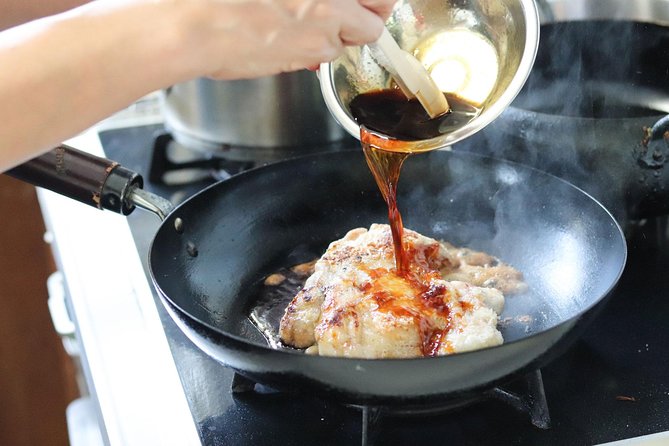
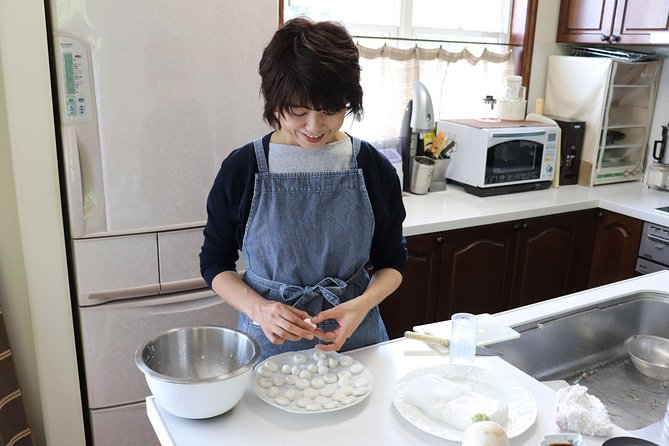
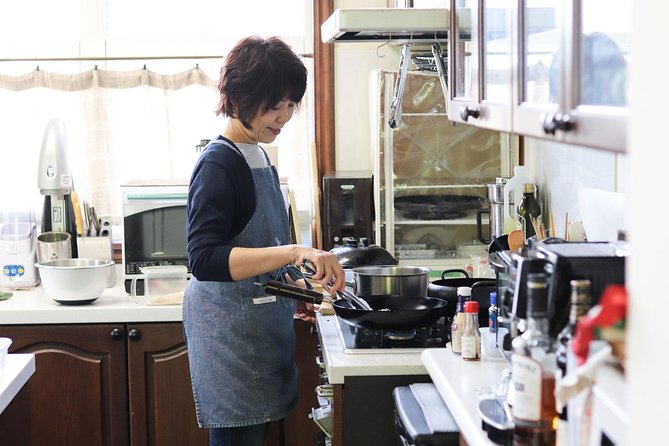
The cooking portion lasts about one to one and a half hours. You join Kanae in her open kitchen and prepare a traditional homemade Japanese meal together.
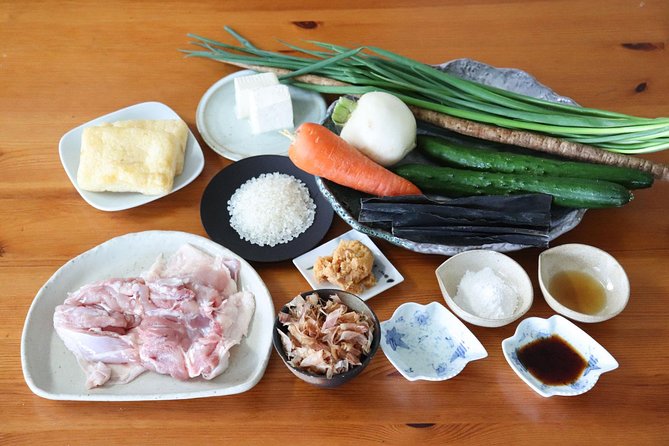
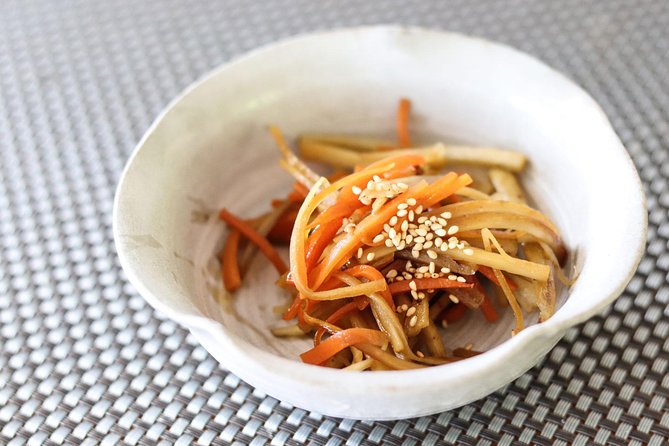
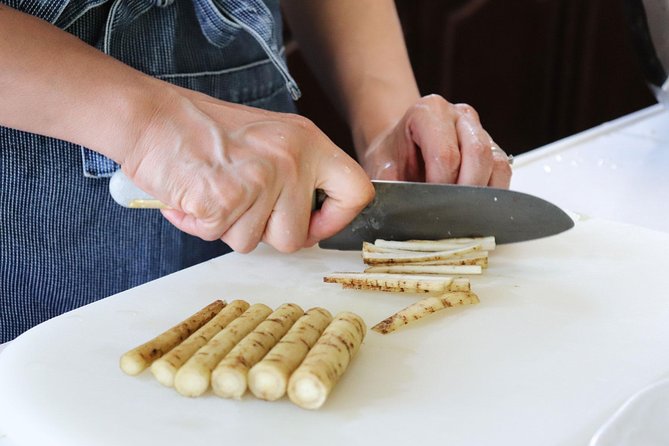
The menu may include fresh seafood, cooked burdock, deep-fried tofu, and miso soup. The exact food changes by season. This is a strength for repeat visitors or food-focused visitors who want a meal connected to Hokkaido rather than a fixed demonstration repeated all year.
The supplied details also show that udon and tempura can be part of the class. In that version, you make udon from scratch and learn how to prepare crunchy tempura before sitting down to eat it. Making noodles from scratch gives the lesson a hands-on element that a simple knife-skills class would not provide.
Tempura also makes the class useful for cooks who want practical guidance. Texture matters, and the appeal is in learning how a homemade version becomes light and crisp. The class does not promise one fixed menu, so you should not book solely because you want udon or tempura on a particular date. Ask Kanae or the provider about your preferred dishes before booking.
The same applies to Hokkaido specialties. Kanae is happy to introduce regional dishes if you are interested. Tell her what you want to learn, but understand that the final menu may depend on the season.
Eating the meal you prepared together
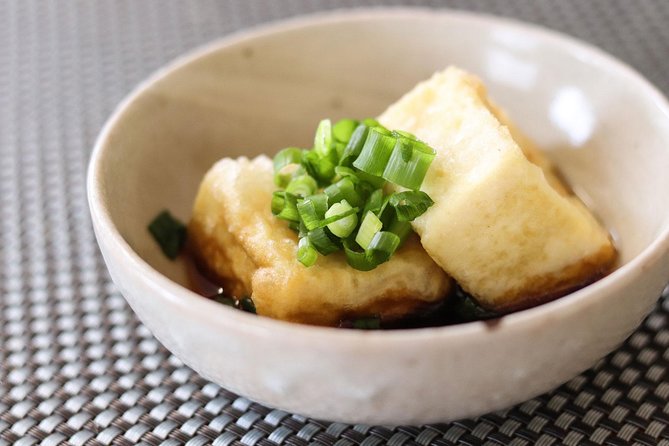
After the cooking, you sit down to eat the food you made. The meal is included, so you are not paying for a lesson and then buying lunch somewhere else.
That full meal is important for two reasons. First, you can taste the results while the preparation is still fresh in your mind. Second, you get to see how several individual dishes work together as a Japanese home meal.
The meal may include seafood, vegetables, tofu, soup, noodles, or fried food, depending on the menu. You should arrive hungry enough to enjoy it, but there is no need to worry about going without food during the experience.
I especially like the way the class links effort and reward. You chop, mix, shape, cook, and then eat the same food at the table. It is a simple idea, but it makes the meal more memorable than a restaurant dish whose preparation you never see.
The pace also leaves room for conversation. If you are interested in food customs or everyday cooking, this is the time to ask questions. The setting encourages a relaxed meal, though the exact amount of conversation will depend on your group and the flow of the class.
A few more Sapporo tours and experiences worth a look


The menu changes with the season
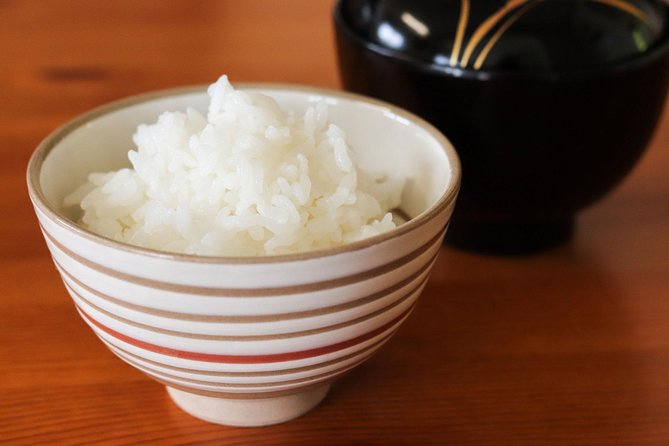
Hokkaido is known for strong agricultural and seafood traditions, and this class uses locally sourced vegetables, fish, and meat. Seasonal ingredients are a practical benefit, not just a marketing phrase. They mean your meal reflects what is available in the region during your visit.
The tradeoff is that you do not get a guaranteed menu. A spring visit and a winter visit may involve different ingredients. Even within the listed examples, the class could move from seafood and soup to noodles, fried tofu, or vegetables.
If you have a particular interest, contact the provider when you book. Kanae can adapt toward Hokkaido dishes, and she can also consider cooking preferences. The earlier you share your request, the easier it is to plan around the menu.
Allergies and dietary restrictions should be given at booking. Vegetarian and vegan options are available if requested in advance. Do not wait until you arrive, since the class is built around buying and preparing specific ingredients.
The available information does not list every possible dietary substitution, so you should explain the restriction clearly rather than simply selecting a general preference. This is especially important for seafood, meat, and ingredients used in sauces or soup.
What the private format is worth at $72
The price is $72 per person. For about three hours, that includes a private lesson, a homecooked meal, and one or two glasses of local alcohol.
I consider that fair value for Sapporo visitors who want more than a restaurant meal. You are paying for instruction, food, drinks, local conversation, and access to a private home. A standard meal may cost less, but it will not give you the same hands-on time or personal setting.
The value is strongest for a small group. You get direct attention from Kanae and can shape the conversation around your interests. Group discounts may improve the price for a larger party, though groups of five or more should budget for a taxi arrangement because of the car limit.
The price is less attractive if you are mainly looking for a specific dish at the lowest possible cost. You could likely find udon, tempura, or miso soup at restaurants for less than $72. This class earns its price through participation and personal contact, not through the amount of food alone.
The experience is booked, on average, 46 days ahead. That suggests you should not leave it until the last moment if the date matters to you, especially during a busy Sapporo visit or for a small private group.
Who will enjoy this class most
I would recommend Kanae’s class to several kinds of visitors:
- Food-focused visitors who want to learn how Japanese home cooking works.
- Couples and small groups who value a private setting and unhurried conversation.
- Families who want a shared activity with a meal at the end.
- Repeat visitors to Japan who have already eaten restaurant staples and want a more personal food experience.
- Visitors interested in Hokkaido who want regional ingredients and dishes rather than a generic Japanese menu.
It may be less suitable for someone who does not enjoy cooking, sitting in a local home, or spending time in conversation. It is also not the best choice for a group that needs fully accessible transport or a tightly timed itinerary, since the home location and transport arrangements require planning.
The class is not presented as a professional chef certification lesson. You are learning traditional homemade food from a local host. That is its strength, but it also means the tone is personal and informal.
What the strongest feedback tells you
The experience has a 4.9 rating from 20 reviews, with 100 percent recommending it. The praise centers on three things: Kanae’s warmth, the quality of the meal, and the chance to talk while learning.
One clear highlight is the udon and tempura lesson. Making udon from scratch and then eating it with homemade tempura gives you two different types of kitchen work in one session. It is a good example of why you should ask about the menu if those dishes appeal to you.
The personal welcome also receives strong attention. The class can feel like meeting an old friend, which is unusual for a paid activity. That warmth may be exactly what you want, but it also means the experience is social rather than purely instructional.
The meal itself is consistently important. You are not just practicing techniques and taking home a recipe. You sit down and eat the dishes you prepared, which gives the class a satisfying finish.
There is also a useful practical touch: Kanae may accompany you on the return trip to help with a culinary purchase. This is not listed as a guaranteed part of every session, so treat it as a possible extra rather than something to plan around.
Booking, cancellation, and small practical details
Confirmation is provided when you book. You receive a mobile ticket, and the activity is private for your group only.
Free cancellation is available if you cancel at least 24 hours before the local start time. Cancellations made less than 24 hours before the experience are not refunded, and changes inside that period are not accepted.
The class is near public transportation, but there is no hotel pickup or drop-off. Build the meeting point into your morning plans, and leave enough time to get there before 10:30 am.
Tell the provider about allergies, dietary restrictions, vegetarian or vegan needs, and cooking preferences at booking. If you want Hokkaido dishes, say so then. Also confirm the transport plan if your group has five or more people.
Should you book Kanae’s Sapporo cooking class?
Book it if you want a private, personal food experience and like the idea of cooking in a local home. The combination of seasonal Hokkaido ingredients, a full meal, local drinks, and time with Kanae offers something a restaurant cannot.
I would book early, especially if you have a fixed Sapporo schedule, since this experience is often reserved well ahead. Ask about the menu if you are hoping for udon, tempura, or a particular Hokkaido dish.
Skip it if you want a quick activity, a guaranteed menu, or a class with no transport planning. For everyone else, $72 buys a useful look at local life, a practical cooking session, and a meal you helped create yourself.
FAQ
Where does the cooking class take place?
You meet at 26 Chome-2 Odorinishi, Chuo Ward, Sapporo, Hokkaido. From there, Kanae takes you to her family home for the class, and the activity ends back at the meeting point.
What time does the experience begin?
The class starts at 10:30 am.
How long does the experience last?
The full activity lasts about three hours. The cooking portion takes approximately one to one and a half hours, followed by the meal.
Is the cooking class private?
Yes. Only your group participates in the activity.
What food will be prepared?
The menu varies by season. Possible dishes include fresh seafood, cooked burdock, deep-fried tofu, miso soup, udon, and tempura. Kanae can introduce Hokkaido dishes if you request them.
Are vegetarian and vegan options available?
Yes. Vegetarian and vegan options are available, but you must advise the provider at the time of booking.
Are drinks included?
Yes. The experience includes one or two glasses of local alcoholic beverages.
Is hotel pickup included?
No. Hotel pickup and drop-off are not included. The meeting point is near public transportation.
What happens if my group has five or more people?
Kanae’s car can carry up to five people including the driver, which means a maximum of four guests. A group of five or more must take a taxi and follow Kanae’s car to her home after meeting her at the station.
More Private Tours in Sapporo


More Soba & Cooking Classes in Sapporo
More Sapporo Tours in Sapporo

More tours in Sapporo we've reviewed




Soba & Cooking Classes, compared.
 ★ 5.0Popular in SapporoExperience authentic hand-made soba at a real soba shop!From $72
 ★ 5.0Mondo’s most popular plan! Experience making soba noodles and the king of Japanese cuisine, tempura, in Sapporo!From $85
 ★ 5.02 hours sushi classFrom $20
 ★ 5.0Private Japanese Cooking Class in Sapporo with Local Chef ShioriFrom $108
 ★ 5.0in Sapporo! Hand-made soba experience and shabu-shabu experience plan of Yezo deer meat (Gibier meat) from HokkaidoFrom $85
 ★ 5.0Private Market Tour and Cooking Class with Kanae, a Sapporo LocalFrom $82
 ★ 4.8Authentic Handmade Soba Experience!From $701 hour
 ★ 5.0Japanese Cooking Class in the Heart of Sapporo with SakuraFrom $72
The lists this tour appears in