

Reviewed · SOBA & COOKING CLASSES
Japanese Cooking Class in the Heart of Sapporo with Sakura
Sapporo has plenty of polished food tours, but this experience takes you into a local home kitchen. Sakura teaches you to make two or three seasonal Japanese dishes, then you sit at her dining table and eat what you prepared. It is a cultural visit as much as a cooking lesson.
In This Article
- Key points to know before booking
- A local kitchen near Higashi-Sapporo
- Meeting Sakura in her home
- Cooking two or three seasonal dishes
- Sitting down to eat what you made
- What the private format means for families
- Price and the value of a three-hour visit
- Who will enjoy this most
- A few practical tips for getting the most from it
- Should you book Sakura’s Sapporo cooking class?
- FAQ
- Where does the Japanese cooking class take place?
- What time does the class begin?
- What dishes will I learn to make?
- Is the class private?
- Is a vegetarian option available?
- Is alcohol included?
I like the private format, which gives Sakura time to work at your pace, and I like that the food is simple enough to repeat at home. The class also includes a home-cooked meal and one or two glasses of local alcohol. The main consideration is practical: this is not a professional studio, so expect a friendly home setting rather than restaurant equipment or chef-level training.
Key points to know before booking
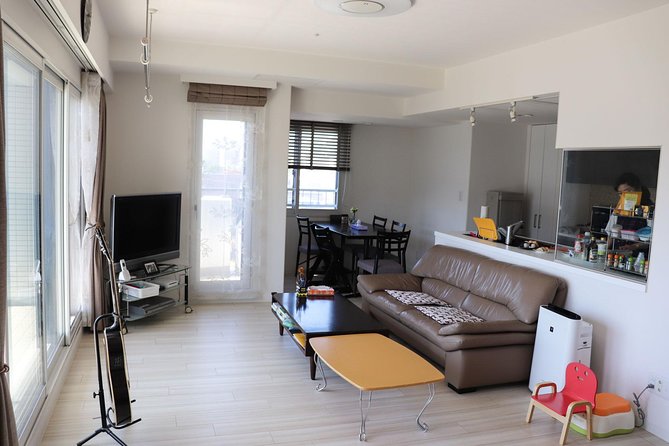
- Sakura’s apartment: You cook in a peaceful residential part of Sapporo, not in a commercial school.
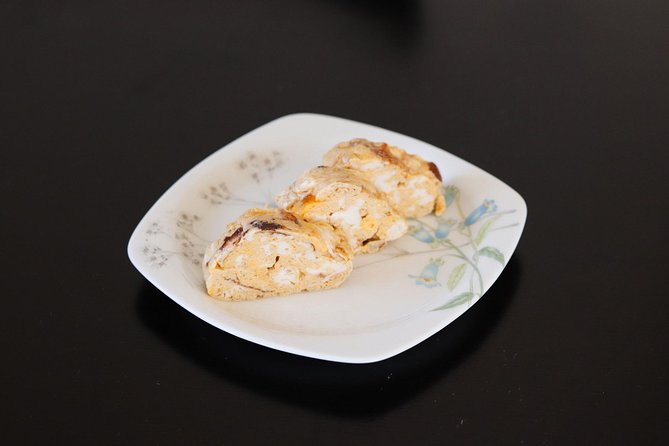
- Seasonal menu: The dishes change, with possible items including miso soup, onigiri, and tamago.
- About three hours: Cooking takes roughly one to one and a half hours, followed by a shared meal.
- Private experience: Only your group participates, making it a good fit for families and first-time cooks.
- Use the map link carefully: The meeting information has caused navigation trouble for some people, so check the Google link and address before setting out.
- Dietary needs: Vegetarian meals are available if you request them when booking.
A local kitchen near Higashi-Sapporo
The class begins at 10:30 a.m. in the Kikusui 4 Jo area of Shiroishi Ward, Sapporo. The apartment is described as being in a quiet residential area within a ten-minute walk of Higashi-Sapporo Station, and the activity ends at the same meeting point.
That setting matters. You are not entering a teaching kitchen built for large groups. You are visiting Sakura’s home, seeing how a local kitchen works, and learning dishes that fit ordinary Japanese home life. The experience has a personal scale that a standard food demonstration cannot match.
I would plan extra time for the walk. The address and navigation information have caused confusion for some participants, and one person arrived late after losing the way. The useful lesson is simple: use the Google map link supplied with your booking, check the exact address before leaving, and do not rely only on a general search for the apartment or station.
Higashi-Sapporo is near public transportation, so you do not need hotel pickup. You do need to make your own way there. Since the meeting point is also the return point, the class is easy to fit into a Sapporo day once you have found the apartment.
A few more Sapporo tours and experiences worth a look


Meeting Sakura in her home
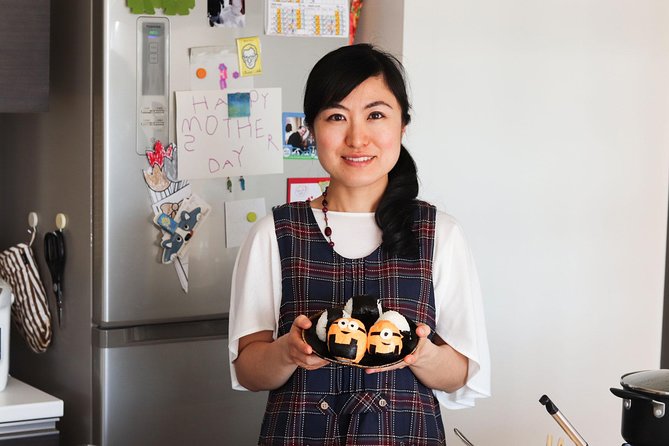
Sakura welcomes you into her apartment and brings you into the kitchen. The home setting gives the class a relaxed feel, but it also means you should arrive ready for a normal household kitchen rather than a large cooking studio with rows of identical workstations.
This is best understood as a cultural exchange with cooking at its center. Sakura is not only showing you a recipe. She is giving you a look at the food people may prepare at home, the way ingredients are combined, and how a meal comes together in a Japanese household.
The private arrangement helps here. With only your group taking part, Sakura can explain each step, slow down when needed, and answer questions without trying to keep up with a crowd. That is especially useful if you are new to Japanese cooking or are traveling with children.
You should not expect a formal chef’s lecture or advanced knife training. The stated aim is to prepare two or three home-style dishes that are easy to make again. For most visitors, that is a strength. You leave with practical ideas instead of a complicated restaurant recipe that requires special equipment.
Cooking two or three seasonal dishes
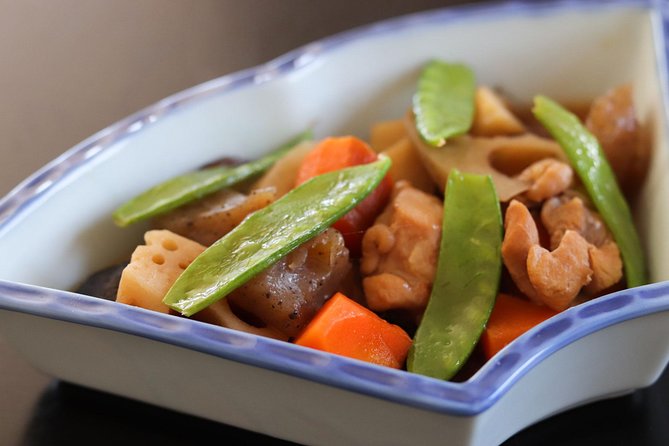
The menu changes with the season, so the exact class cannot be promised in advance. Potential dishes include miso soup, onigiri, and tamago, an egg roll cooked with stock.
These examples give you a good sense of the class. Miso soup introduces the basic balance of broth and seasoning. Onigiri shows how rice can become a simple, portable meal. Tamago adds a bit more technique, since the egg is cooked with stock and shaped into a roll.
The food is familiar enough to be approachable, but it also gives you a window into Japanese eating habits. These are not just decorative dishes prepared for a photo. They are the sort of foods that can appear in everyday meals, lunch boxes, and family kitchens.
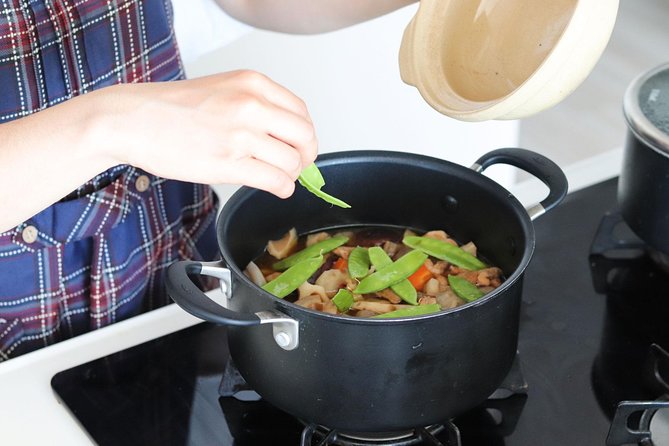
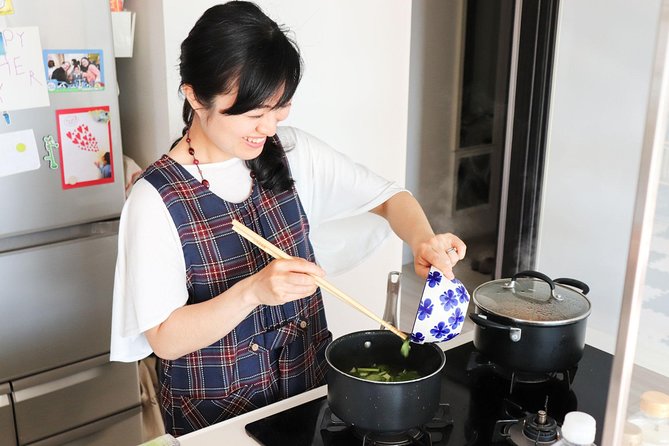
Cooking takes about one to one and a half hours. The pace should suit beginners, though the exact timing will depend on your group and the menu. You will work alongside Sakura rather than simply watch her cook, so pay attention to the small details: how ingredients are handled, how the mixture feels, and when a dish is ready.
I like that the class promises food you can recreate at home. You may not find every ingredient in your own kitchen, but the general methods are approachable. If you enjoy collecting recipes while traveling, this gives you more than a restaurant meal because you learn how the dishes are made.
The seasonal menu is also a reason to consider booking at different times of year. The experience will not be identical on every visit, and the food can reflect what is suitable for that season. The tradeoff is that you cannot select a fixed menu from the information provided.
Sitting down to eat what you made
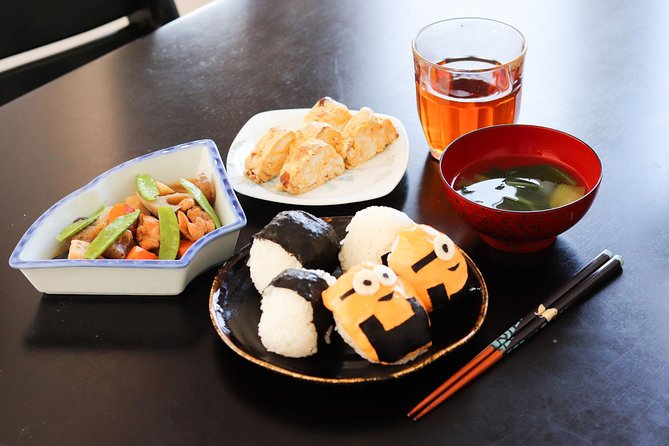
After cooking, you sit at the dining table and eat the meal together. This second half is important. You are not rushed out after the final step, and you do not leave with an empty stomach after handling food for an hour.
The meal includes everything you prepare, along with drinks. One or two glasses of local alcohol are included for those who want them. The alcohol is part of the shared meal, not a separate tasting program, so do not book this expecting a long sake or beer sampling session.
This is where the home visit becomes more personal. A restaurant can show you finished food, but a meal in a local apartment creates time for conversation and questions. The tone is informal, and the private group setup means you can focus on the food and the people at the table.
If you do not drink alcohol, the experience is still built around the cooking and meal. The supplied information confirms local alcohol is included, but it does not specify alternative drinks, so mention any needs when booking.
The food has received strong approval, and the class is particularly well suited to people who value a warm social setting. Sakura’s patience is one of the clearest strengths. It helps if you are nervous in the kitchen, unsure about Japanese ingredients, or simply slow to find your way to the meeting point.
What the private format means for families
This is a child-friendly activity, and children can take part in the cooking and meal. Families have enjoyed spending time with Sakura and her family, with the food and hands-on work giving children something active to do.
Still, remember that this takes place in someone’s home. Parents should supervise children as they would in any kitchen, especially around hot food and cooking tools. The experience is welcoming, but it is not a play area or a large class designed around children’s entertainment.
The private format is useful for families because you do not have to worry about a child slowing down a larger group. Sakura can give your party more attention, and you can share the finished food at your own table.
Couples, solo visitors, and small groups can also benefit. You will get the most from it if you enjoy conversation, want a local connection, and prefer learning by doing. If you only want to eat Japanese food, a restaurant visit will be faster and likely less expensive. If you want to understand how home dishes are prepared, this offers more substance.
A few more Sapporo tours and experiences worth a look


Price and the value of a three-hour visit
The cost is $72 per person. That is not a bargain meal, but it is reasonable for a private three-hour activity that includes instruction, ingredients, a full home-cooked meal, and one or two glasses of local alcohol.
The real value comes from the combination. You are paying for access to a local home, personal teaching, and time at the table, not just for the ingredients. A larger group class could offer a lower price per person, but it would not provide the same private attention.
I would compare this with the cost of a meal plus a separate cultural activity. Here, the cooking lesson and meal are combined, and you get the added benefit of learning dishes you can try again. The value is strongest for curious eaters, families, and visitors who want more contact with everyday Sapporo life.
The class is often booked well ahead, with an average booking lead time of 29 days. That suggests you should not leave it until the last morning of your trip, especially if your schedule is tight. Confirmation is sent within 48 hours of booking, subject to availability.
Who will enjoy this most
I would recommend the class to:
- First-time cooks who want clear, manageable Japanese recipes
- Food-focused visitors who prefer home cooking to restaurant sampling
- Families looking for a child-friendly activity
- Couples and small groups who want a private experience
- Visitors interested in local customs and conversation
- Vegetarians who notify the provider when booking
It may be less suitable if you want advanced culinary training, a fixed menu, or a large professional kitchen. The menu varies by season, and the class is intentionally informal. You are visiting a local home, so some flexibility is part of the experience.
Vegetarian options are available, but you must request one at the time of booking. The same advice applies to other dietary restrictions. Do not wait until you arrive, since Sakura needs the information while planning the menu.
Service animals are allowed, and the activity is near public transportation. Hotel pickup and drop-off are not included, so you need to handle transportation to and from the meeting point.
A few practical tips for getting the most from it
First, confirm the meeting location carefully. The stated meeting point is Kikusui 4 Jo, Shiroishi Ward, Sapporo, Hokkaido 003-0804, Japan, while the apartment is described as a short walk from Higashi-Sapporo Station. Use the provided Google link, and allow extra time in case the residential streets are unfamiliar.
Second, arrive ready to participate. You will be cooking for roughly 60 to 90 minutes, so this is not a sit-back demonstration. Wear comfortable clothes and shoes, and avoid scheduling a rushed activity immediately afterward.
Third, tell the provider about food restrictions when you reserve. Vegetarian meals are available, but the menu depends on the season and advance notice is needed.
Finally, keep the purpose of the class in mind. The best part is not mastering restaurant technique. It is learning a few useful home dishes, eating them with the person who taught you, and seeing a side of Sapporo that does not appear on a standard sightseeing route.
Should you book Sakura’s Sapporo cooking class?
Book it if you want a small, personal food experience rather than a formal lesson. Sakura’s patience, the private setting, the shared meal, and the chance to cook everyday dishes make this a strong choice for beginners and families.
Think twice if your main goal is professional instruction, a guaranteed menu, or a quick meal. Also take the directions seriously and use the map link before you leave. With that small bit of planning, the $72 price buys a meaningful three-hour introduction to Japanese home cooking and local life.
Free cancellation is available up to 24 hours before the 10:30 a.m. start time. Changes or cancellations made within 24 hours are not accepted for a refund.
FAQ
Where does the Japanese cooking class take place?
The class takes place in Sakura’s apartment in the Kikusui 4 Jo area of Shiroishi Ward, Sapporo. It is described as being in a peaceful residential area within a ten-minute walk of Higashi-Sapporo Station.
What time does the class begin?
The start time is 10:30 a.m. The activity lasts about three hours and ends back at the meeting point.
What dishes will I learn to make?
You will prepare two or three authentic home-style Japanese dishes. The menu changes with the season and may include miso soup, onigiri rice balls, and tamago, an egg roll cooked with stock.
Is the class private?
Yes. Only your group participates, so the class is private and personalized.
Is a vegetarian option available?
Yes. A vegetarian option is available, but you need to request it when booking. You should also include any other dietary restrictions at that time.
Is alcohol included?
Yes. The experience includes one or two glasses of local alcohol, along with the home-cooked meal you prepare.
More Cooking Classes in Sapporo

More Soba & Cooking Classes in Sapporo
More Sapporo Tours in Sapporo


More tours in Sapporo we've reviewed




Soba & Cooking Classes, compared.
 ★ 5.0Popular in SapporoExperience authentic hand-made soba at a real soba shop!From $72
 ★ 5.0Mondo’s most popular plan! Experience making soba noodles and the king of Japanese cuisine, tempura, in Sapporo!From $85
 ★ 5.02 hours sushi classFrom $20
 ★ 5.0Private Japanese Cooking Class in Sapporo with Local Chef ShioriFrom $108
 ★ 5.0Private Market Tour and Cooking Class with Kanae, a Sapporo LocalFrom $82
 ★ 5.0in Sapporo! Hand-made soba experience and shabu-shabu experience plan of Yezo deer meat (Gibier meat) from HokkaidoFrom $85
 ★ 5.0Private Japanese Cooking Class in Sapporo with Local Host KanaeFrom $72
 ★ 4.8Authentic Handmade Soba Experience!From $701 hour
The lists this tour appears in