
Reviewed · PRIVATE
Extraordinary Geisha Experience and Private Hokkaido Dinner
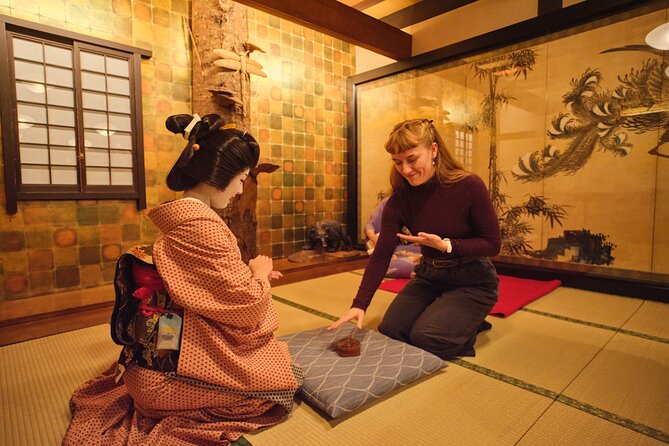
The memorable part of this Sapporo evening comes after dinner, when two geisha appear on stage for traditional dancing, commentary, and ozashiki-asobi, or Japanese seating games. You are not simply watching a show from a distant theater seat. You have time to speak with the performers, take pictures as time allows, and learn how to use a fan used in dance.
In This Article
- Key points to know before booking
- A private geisha evening in the heart of Sapporo
- The first hour: Hokkaido food before the stage show
- Two geisha, traditional dance, and a fan lesson
- Why the interpreter matters
- Choosing the right restaurant for your group
- What the $636.16 price really buys
- Meeting in Susukino and getting back afterward
- The cancellation rule deserves serious attention
- Who should book this Sapporo experience?
- Should you book it?
- FAQ
- Where does the experience begin?
- Where does the activity end?
- How long does the experience last?
- Is an interpreter included?
- How many people can join?
- Is the booking refundable if I cancel?
I like the choice of four restaurant settings, from an elegant stone building to a large dinner hall. I also like that an interpreter is included, since the cultural details and game instructions would be easy to miss without help.
The main drawback is the price: $636.16 per person is a serious splurge for roughly two to two and a half hours. The experience makes the most sense for a private celebration, a special first visit to Japan, or a group that values personal access over a lower-cost dinner.
Key points to know before booking
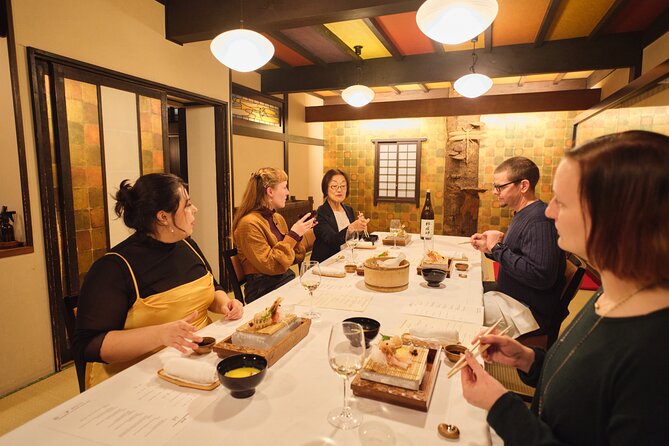
- Two geisha perform after about an hour of dinner, giving the evening a clear meal-then-show rhythm.
- An interpreter is included, so you can follow the commentary, games, and cultural explanations.
- Four dining venues are available, with different styles and group capacities.
- Ozashiki-asobi is designed for first-timers, so you do not need prior knowledge of geisha customs.
- The activity is private, with only your group participating.
- The published meeting point is COCONO SUSUKINO, and the activity ends back there.
A private geisha evening in the heart of Sapporo
This experience pairs two things that are usually booked separately: a Hokkaido dinner and a geisha performance. The arrangement is simple. You meet in the Susukino area, sit down for a meal, and after about an hour, two geisha come onto the stage for dancing and entertainment.
The core program lasts about two hours, while the overall duration is listed at approximately two hours 30 minutes. That extra half-hour may allow for arrival, seating, interpretation, and the transition between courses and the stage program. I would keep your schedule slightly open rather than planning a tight connection afterward.
The private format matters. You are not joining a large public performance where the audience remains anonymous. Your own group takes part, which should make the conversation and games feel more direct. It also means the experience works better for families, couples, business groups, and private celebrations than for someone looking for a casual drop-in show.
The activity includes dinner, consumption tax, the geisha fee, and an interpreter. Tips are not included. No separate admission charge is listed for the performance, so the main cost is built into the per-person price.
Other private tours in Sapporo


The first hour: Hokkaido food before the stage show
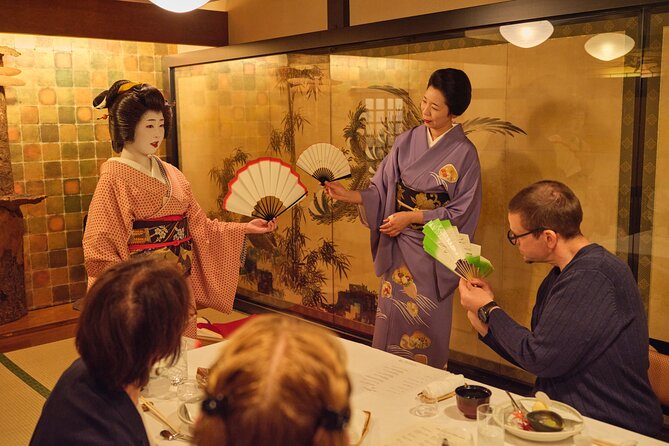
Dinner comes first, and the meal is intended to feature food found in Hokkaido. The exact menu depends on the restaurant you choose, but the four settings give the program a useful range of moods and group sizes.
At Suginome, two to 10 people can enjoy a kaiseki dinner in a historic stone building. This is the most intimate option in the group. Kaiseki is served as a series of carefully arranged dishes, so this setting should suit you if the meal itself is an important part of the evening and you prefer a quieter, more refined room.
The stone building gives Suginome a distinct sense of place. It is not just a generic dining room chosen for convenience. Still, the available details do not specify the precise menu, seating style, or whether every course is explained in English, so you should confirm those points if food presentation or dietary needs matter to you.
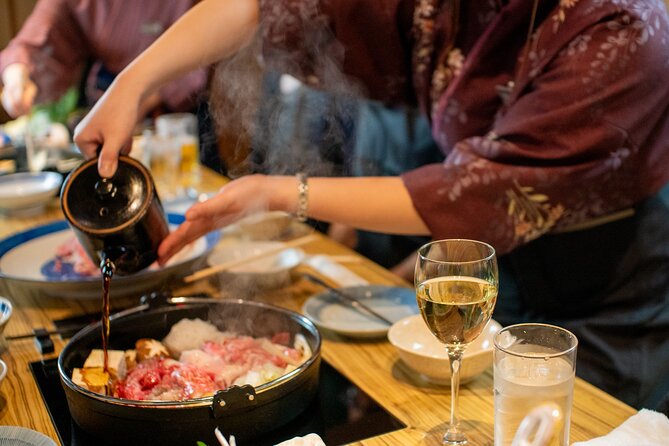
Hokkai Shabu-Shabu serves sukiyaki while overlooking the town of Susukino and accepts groups of two to 12. This is the most clearly described choice for a couple or small party that wants a lively city view with dinner.
The published description uses both shabu-shabu in the restaurant name and sukiyaki for the meal. Those are different Japanese hot-pot styles, so ask the provider which preparation will be served on your date. The supplied account of the evening specifically praises the sukiyaki as delicious, and the interpreter helped explain the traditions behind the performance. That makes this option especially appealing if you want a familiar, hearty meal before the cultural program.
The two larger choices are designed for groups of 20 to 60. Kita No Aji Ohsuke offers dinner on a custom-built Japanese cypress stage. The stage itself is the unusual feature here, and the large capacity makes this option better suited to organized parties or group events than to a couple.
Otaru Bettei provides a large hall for a dinner party of 20 to 60 people. It is the practical choice when the size of your party rules out the smaller venues. The tradeoff is intimacy. A large hall can handle a substantial group, but it may not give you the same close-up feeling as a smaller room.
The program promises a meal that can only be found in Hokkaido, but it does not provide a detailed menu in the available information. I would treat the food as an important part of the experience, while avoiding the assumption that you can select individual dishes or request a specific course sequence.
Two geisha, traditional dance, and a fan lesson
After around an hour of dining, two geisha appear on stage. Their performance includes dancing and entertainment with commentary, giving you both the visual experience and an explanation of what you are seeing.
The fan demonstration is a particularly nice touch. The geisha show you how to use a fan that is actually used for dancing. This turns the evening from a performance you watch into an activity you can understand through a small, hands-on lesson.
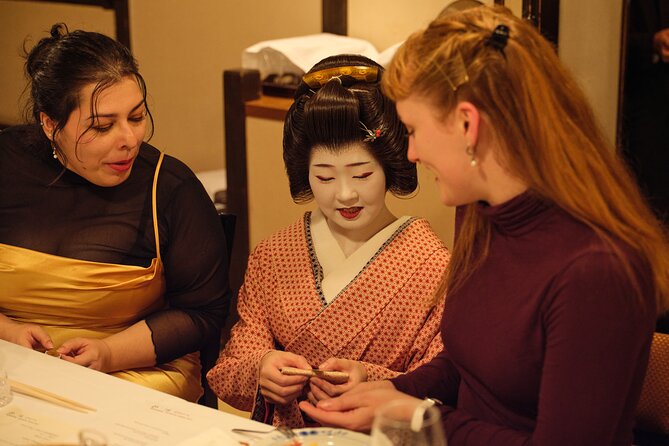
You are also invited to talk with the geisha and take pictures as time permits. That wording is worth noting. Conversation and photos are part of the opportunity, but they do not appear to be unlimited or guaranteed for a fixed amount of time. Be ready to follow the interpreter’s guidance and the flow of the program.
The entertainment includes ozashiki-asobi, a type of traditional seating game. The activity specifically offers several games suitable for people who are trying them for the first time. You do not need to arrive with knowledge of geisha etiquette or Japanese party customs.
That beginner-friendly approach is important. Without an interpreter, a game can quickly become a confusing ritual where you copy everyone else and hope for the best. Here, the interpreter can explain the rules and the meaning behind the activity, helping you take part rather than simply observe.
Why the interpreter matters
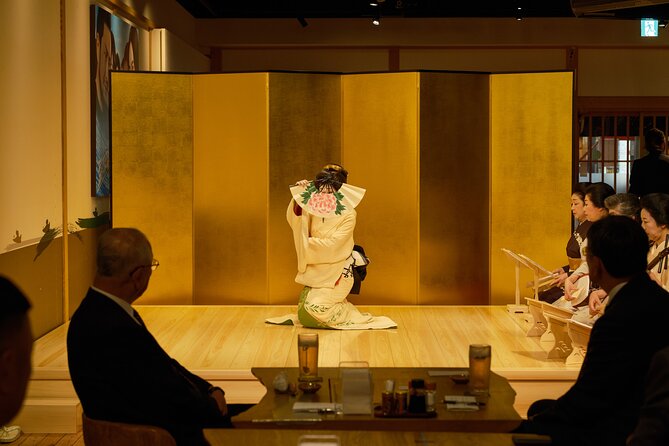
The interpreter is one of the most valuable inclusions. The evening is built around traditions that may not be obvious from a dance alone. Commentary can explain what the performers are doing, while interpretation helps you understand the games, ask questions, and follow the social rhythm of the dinner.
A published account of the experience describes the interpreter as friendly and says the explanations made the traditions behind the performances easier to understand. That is a useful clue about the role of the interpreter. This person is not merely there to translate a menu. The interpreter helps connect the meal, stage program, and conversation.
I would still keep expectations realistic. An interpreter can help you communicate, but the activity does not promise a private lecture on every aspect of geisha culture. The focus is an evening of dining, dance, games, and conversation, not an academic presentation.
If you have a question you especially want to ask, prepare it in advance. The available information does not name the interpreter or the two geisha, so you cannot request a particular performer based on the details provided.
Choosing the right restaurant for your group
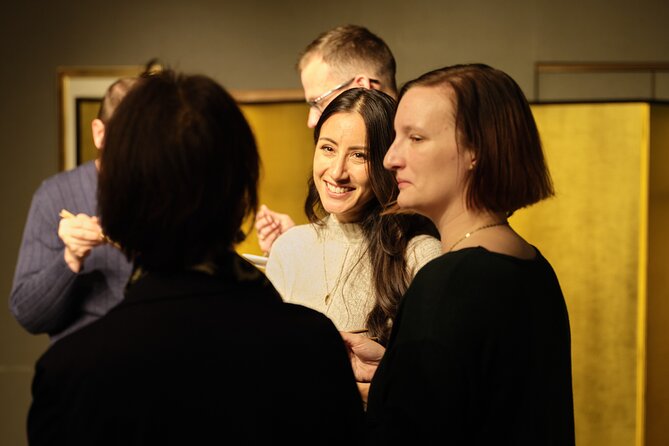
Your restaurant choice will shape the evening as much as the performance. Here is the practical breakdown:
- Suginome: Best for two to 10 people who want kaiseki in a historic stone building.
- Hokkai Shabu-Shabu: Best for two to 12 people who want sukiyaki and a view over Susukino.
- Kita No Aji Ohsuke: Best for 20 to 60 people who like the idea of dining on a custom-built Japanese cypress stage.
- Otaru Bettei: Best for 20 to 60 people planning a larger dinner party in a hall.
For a couple, Suginome and Hokkai Shabu-Shabu are the realistic choices. Suginome sounds more formal and intimate, while Hokkai Shabu-Shabu offers the stronger city setting and the meal most clearly described in the available account.
For a larger group, the decision is less about cuisine and more about room style. Kita No Aji Ohsuke has a distinctive stage setting. Otaru Bettei offers a large hall. Ask how the geisha performance will be arranged for your party, particularly if your group is close to the upper limit of 60 people.
The activity is private, but private does not mean every restaurant is small. A group of 40 or 60 will still need a large venue. Think of privacy here as your group having the booking, rather than sharing the program with unrelated diners.


What the $636.16 price really buys
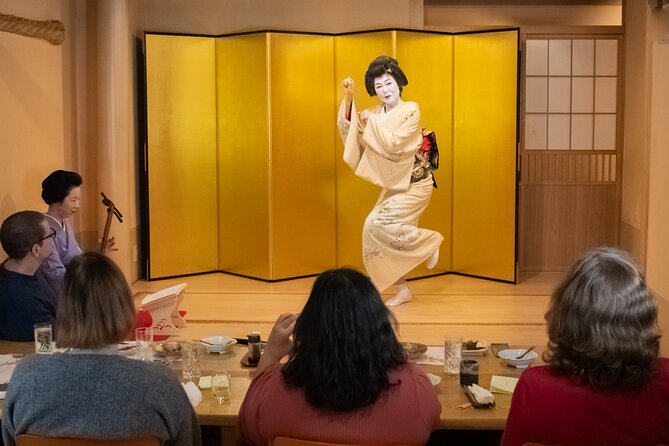
At $636.16 per person, this is not a value dinner in the usual sense. You are paying for a private cultural program, two geisha, a dedicated interpreter, dinner, and the arrangements needed to bring those elements together.
The price becomes easier to assess when you compare it with the alternatives. A regular restaurant meal will cost much less. A public dance performance may also be cheaper, but it may not include a private interpreter, dinner, games, a fan demonstration, or time for conversation and pictures.
For a group splitting a special event, the private setup may justify the cost. It could suit a milestone birthday, a family gathering, a corporate dinner, or a carefully planned first night in Sapporo. For a solo diner or a couple watching expenses, the price will feel harder to defend unless meeting the geisha and taking part in the games is the main purpose of the night.
Group discounts are listed as a feature, but no discount amount or group-size threshold is provided. Ask the provider for the exact rate before assuming that a larger booking will lower the per-person price.
Consumption tax is included, as are dinner, the interpreter, and the geisha experience fee. Tips are not included. Since tipping customs can be unclear in Japan, ask the operator how gratuities should be handled rather than guessing at the end of the meal.
Meeting in Susukino and getting back afterward
The published start point is COCONO SUSUKINO, at 4-chōme-1-1 Minami 4 Jōnishi, Chuo Ward, Sapporo. The activity ends back at the meeting point.
That central location is practical if you are staying in Sapporo or already spending the evening in Susukino. The meeting point is near public transportation, which makes it easier to reach without arranging a separate taxi.
Pickup is listed as offered, but the specific meeting point is also given. Confirm the pickup arrangement when you book. Do not assume that hotel pickup is automatic, especially since the published end point is the original meeting place.
Confirmation is issued within 48 hours of booking, subject to availability. Plan ahead, particularly because the experience is booked an average of 29 days before the date. That advance pattern suggests that last-minute availability may be limited, though no guarantee is made.
The activity is mobile-ticket friendly, and most people can participate. No special fitness requirement is stated. The main practical issue is the dinner format and the need to follow the interpreter’s instructions during the games.
The cancellation rule deserves serious attention
This booking is non-refundable and cannot be changed for any reason. If you cancel or request an amendment, the amount paid will not be returned.
That is a major consideration at this price. Confirm your date, party size, restaurant preference, and meeting details before paying. If one member of your group has uncertain plans, this is not a flexible booking to make casually.
The provider is Hokkaido Treasure Island Travel Inc. Since availability affects confirmation, contact the provider about questions that are not answered in the basic details, including menu information, seating, pickup, dietary needs, and the exact dinner venue available for your date.
Who should book this Sapporo experience?
I would recommend it most strongly to you if you want a private cultural evening and are willing to pay for access, interpretation, and personal interaction. It is especially well suited to a small celebration or a larger private group that wants one coordinated dinner rather than several separate activities.
It also works for first-time visitors to geisha entertainment. The games are intended for beginners, the interpreter explains the program, and the fan lesson gives you a clear way to participate.
I would be more cautious if your main goal is a low-cost meal, a long performance, or a detailed explanation of Japanese culture. The program is short, and the advertised sequence suggests roughly one hour of dining followed by the geisha appearance. It is a compact special event, not a full evening of theater.
Should you book it?
Book this if the private geisha interaction is worth more to you than the cost of an ordinary dinner. The combination of Hokkaido cuisine, two performers, an interpreter, traditional dance, fan instruction, and beginner-friendly games is unusual, and the private format gives the evening a personal feel.
Skip it if $636.16 per person strains your budget or if you need flexible cancellation. Before booking, choose the restaurant that fits your group, confirm whether Hokkai Shabu-Shabu serves sukiyaki or shabu-shabu on your date, and verify pickup details. For the right occasion, this is a polished and memorable Sapporo night. For a casual dinner, it is simply too expensive.
FAQ
Where does the experience begin?
It begins at COCONO SUSUKINO, 4-chōme-1-1 Minami 4 Jōnishi, Chuo Ward, Sapporo, Hokkaido 064-0804, Japan.
Where does the activity end?
The activity ends back at the meeting point.
How long does the experience last?
The duration is listed as approximately two hours 30 minutes. The dinner and geisha program itself is described as a two-hour program, with the geisha appearing after about an hour of dining.
Is an interpreter included?
Yes. An interpreter is included in the experience.
How many people can join?
The activity is private, so only your group participates. The restaurant options accommodate different group sizes: Suginome accepts two to 10 people, Hokkai Shabu-Shabu accepts two to 12, and Kita No Aji Ohsuke and Otaru Bettei accept 20 to 60 people.
Is the booking refundable if I cancel?
No. The experience is non-refundable and cannot be changed for any reason. Cancellation or amendment does not result in a refund.
More Private Tours in Sapporo


More tours in Sapporo we've reviewed





Private, compared.
 ★ 5.0Sapporo Private Tour with a Local – Highlights & Hidden GemsFrom $109
 ★ 5.0【Private Car】Asahiyama Zoo, Blue Pond, Shirahige Falls, Ningle Terrace (from Sapporo)From $465
 ★ 5.0Sapporo 6hr Private Tour with Government Licensed GuideFrom $155
 ★ 5.0[Biei/Furano] One-day sightseeing by private car!From $596
 ★ 5.0Sapporo 4hr Private Tour with Government Licensed GuideFrom $122
 ★ 5.0[Departure from Sapporo] Noboribetsu Jigokudani, Lake Toya, Cape Chikyu by private carFrom $404
 ★ 5.0Private Japanese Cooking Class in Sapporo with Local Chef ShioriFrom $108
 ★ 4.9Sapporo: Private Customized Guided TourFrom $1194 - 6 hours
The lists this tour appears in