
Reviewed · SAPPORO TOURS
Sapporo: Hokkaido Shrine Tour with Rituals, History & Sweets
Hokkaido Shrine gives you a quick, hands-on introduction to Sapporo’s spiritual life and Hokkaido’s pioneer story. You’ll walk from leafy Maruyama Park into a major Shinto shrine, take part in a water purification ritual, and finish with a sweet rice cake at the historic Jingu Chaya. I especially like the Kaitaku Shrine stop, which adds human history to the usual shrine visit, and the Ezo Squirrel Omikuji, a local twist on a familiar Japanese custom.
In This Article
- Key points at a glance
- Starting beneath Maruyama Park’s great torii
- Meeting the pioneers at Kaitaku Shrine
- Learning the temizu water ritual
- Passing the Furanui Shimenawa and praying at the main hall
- Drawing the Ezo Squirrel Omikuji
- Taking tea-house time at Jingu Chaya
- What the one-hour schedule really means
- Is $41 good value?
- Who should book this shrine visit?
- Practical tips before you go
- Should you book the Hokkaido Shrine tour?
- FAQ
- Where does the Hokkaido Shrine tour meet?
- How long does the experience last?
- Is the tour conducted in English?
- Is this a private tour?
- What is included in the price?
- Can I cancel or pay later?
The main drawback is the tight one-hour schedule. You’ll get a clear introduction rather than a slow, wandering visit, and the tour involves walking through park and shrine grounds. At $41 per person, the price makes the most sense if you want a private English-speaking guide to explain the rituals and connect the shrine to Hokkaido’s past.
Key points at a glance
- Kaitaku Shrine: Learn how early settlers and soldiers from Honshu helped develop Hokkaido in the 19th century.
- Hands-on temizu ritual: Practice the traditional cleansing of hands and mouth before prayer.
- Furanui Shimenawa: See one of Japan’s largest sacred ropes at the main gate.
- Ezo Squirrel Omikuji: Draw a fortune from a cute squirrel-shaped charm found only at Hokkaido Shrine.
- Jingu Chaya treat: Taste Fuku-Rei Mochi, a sweet rice cake linked with good fortune.
- Private one-hour format: Meet at Maruyama Park Center and return there after the shrine visit.
Starting beneath Maruyama Park’s great torii
Your visit begins in front of the Maruyama Park Center, at 43.054675, 141.3143009. Look for the guide holding a yellow sign marked DeepExperience. This clear meeting point matters in a city where a small delay or wrong entrance can eat into a short tour.
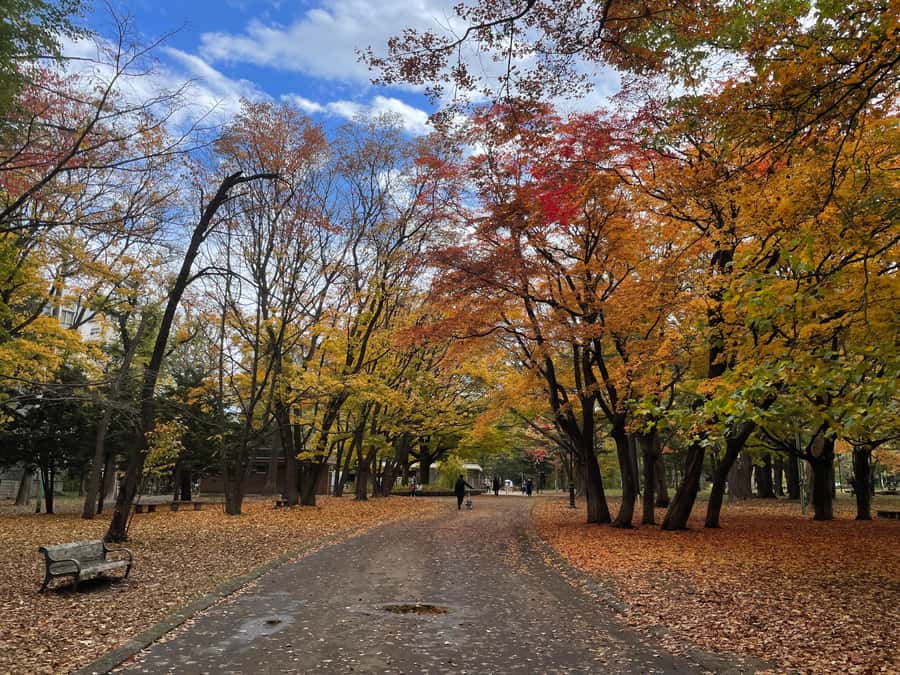
Maruyama Park is more than a place to gather. It provides a soft transition from Sapporo’s streets to Hokkaido Shrine. Native trees fill the park, and small birds and squirrels live among them. You may find the setting calmer than the city center, even before you pass through the shrine gate.
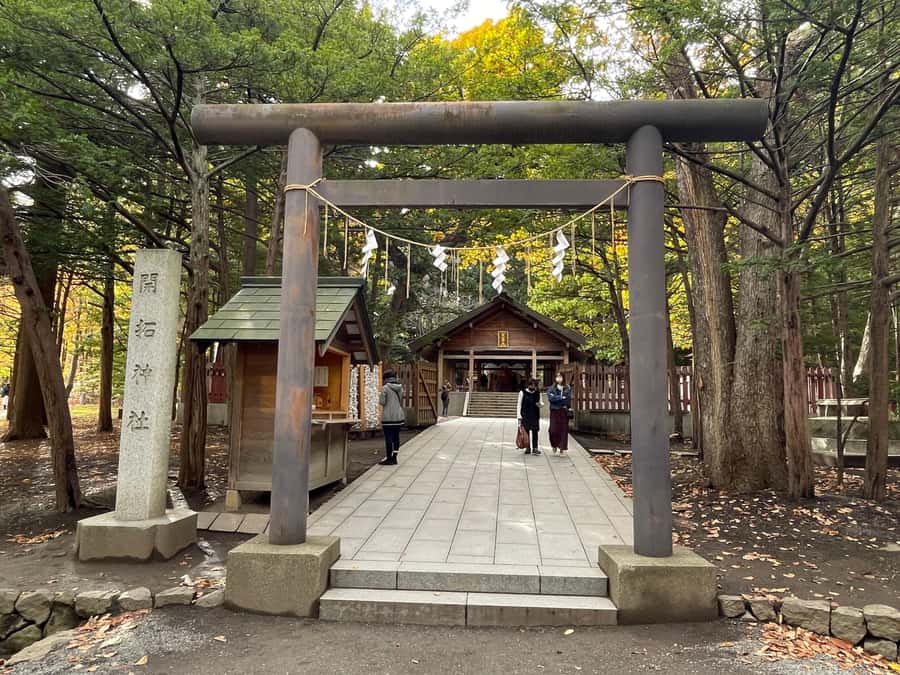
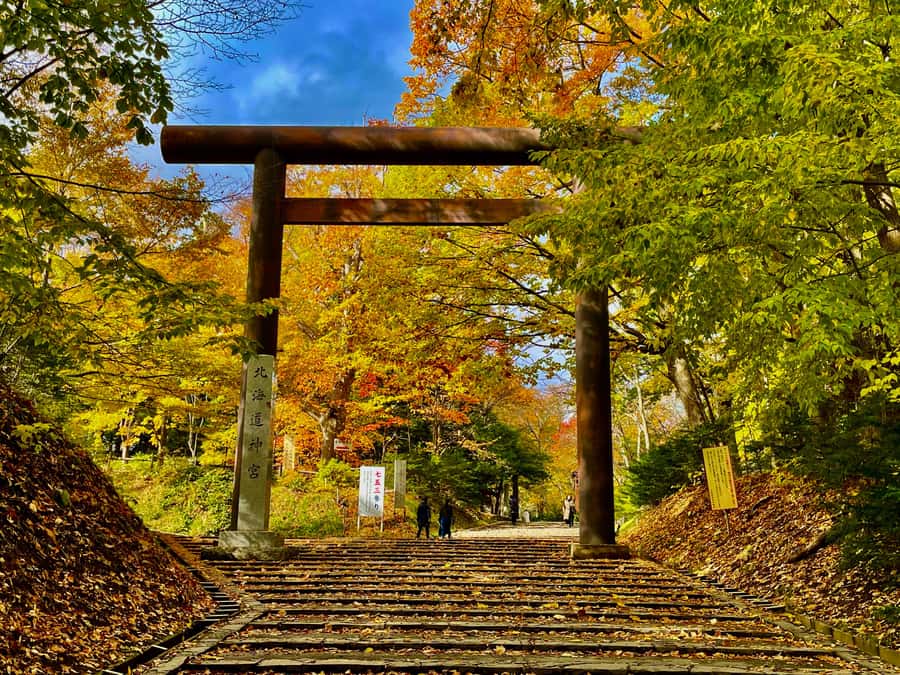
The great torii marks a change in mood. In Shinto practice, a torii separates ordinary space from a sacred precinct. Your guide can explain how to approach it and help you notice details that are easy to miss when you simply walk through for photographs.
The route is on foot, so wear comfortable shoes. The supplied details do not give a distance or accessibility rating, but you should expect walking in both the park and shrine grounds. The one-hour timing is useful for a short Sapporo stay, though it leaves little room for lingering.
A few more Sapporo tours and experiences worth a look


Meeting the pioneers at Kaitaku Shrine
One of the best features of this experience comes early: a stop at Kaitaku Shrine. This smaller shrine within the grounds is dedicated to the early pioneers of Hokkaido.
That focus gives the visit a local purpose. Hokkaido Shrine is not only a beautiful religious site. It also reflects the island’s development during the 19th century, when settlers and soldiers from Honshu were sent north to cultivate the land.
Your guide explains how these people faced harsh winters and wide stretches of wilderness while building the foundation of modern Hokkaido. The story is not treated as a vague tale of progress. It is tied to a specific place where you can pause and pay respects.
I like this stop because it gives you a way to think about Hokkaido beyond food, skiing, and snowy scenery. The island’s identity was shaped by migration, government settlement, work, hardship, and contact with the land. Kaitaku Shrine brings that story into the shrine visit without requiring a long museum tour.
The stop also helps explain why Hokkaido Shrine feels different from a small neighborhood shrine. Its history is tied to the creation and development of Hokkaido itself. You’ll hear about the people honored here before moving on to the rituals practiced by worshippers today.
Learning the temizu water ritual
At the water basin, you’ll learn temizu, the traditional purification ritual performed before approaching the sacred buildings. The basic purpose is to cleanse your hands and mouth, preparing you to enter the shrine area with the right frame of mind.
This is a simple act, but guidance helps. Visitors often copy others without understanding what they are doing. Here, you can learn the sequence and the reason behind it, then take part respectfully rather than treating the basin as a photo stop.
The ritual is also one of the strongest reasons to choose a guided visit. A shrine can look beautiful from the outside while its customs remain unclear. Temizu gives you something practical to remember and repeat at other Japanese shrines.
Take your cue from the guide and the people around you. Keep the ladle from touching your mouth directly, and avoid rushing the process. The point is not performance. It is a brief preparation before prayer.
Passing the Furanui Shimenawa and praying at the main hall
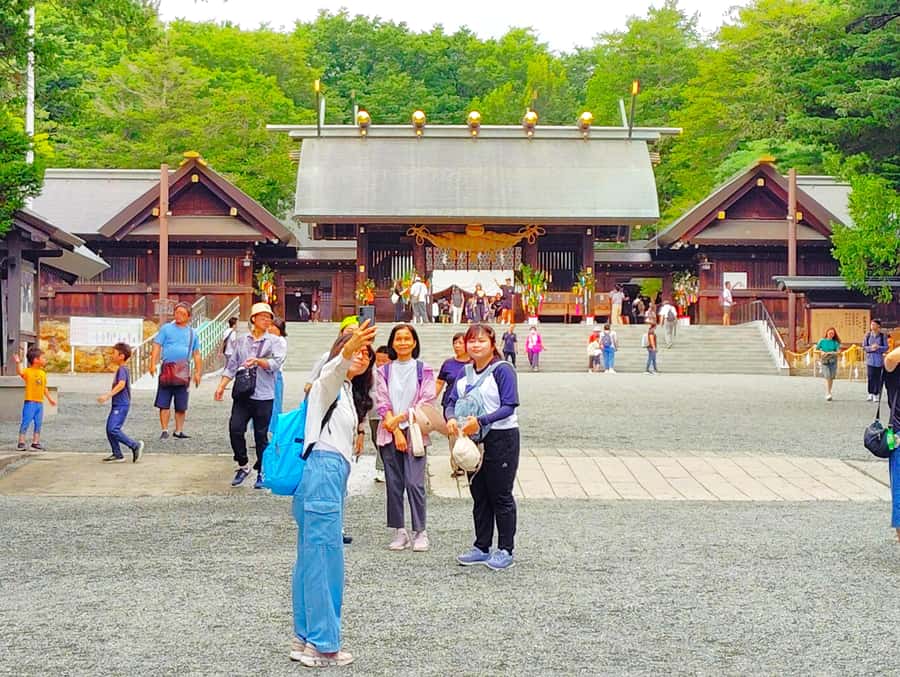
At the main gate, you’ll see the Furanui Shimenawa, described as one of the largest sacred ropes in Japan. A shimenawa marks a sacred area, and its size makes the boundary especially easy to notice.
The rope symbolizes a connection between the divine and human worlds. That idea helps explain the design of many Shinto spaces: gates, ropes, purification basins, and carefully ordered approaches all guide you from everyday life toward a place of prayer.
After passing through the gate, you’ll approach the main hall and learn how to offer prayers in the manner used by local worshippers. The experience does not stop at telling you that the building is important. It shows you how to behave there.
If you have never visited a Shinto shrine, this guidance is useful. You’ll know when to bow, how to make an offering, and how to give others space. The precise details of the prayer sequence are best learned from the guide on site, since the tour is designed around taking part rather than reading a set of instructions.
The main hall is also where the wider story of Hokkaido Shrine comes together. The shrine was established in 1869 to enshrine three deities connected with pioneering Hokkaido. Emperor Meiji was later enshrined as well, adding another layer to the shrine’s role in the island’s development.
That mix of faith and public history is important. You are not simply seeing an old building. You are visiting a place linked to the hopes, politics, labor, and religious ideas surrounding Hokkaido’s early modern development.
Drawing the Ezo Squirrel Omikuji
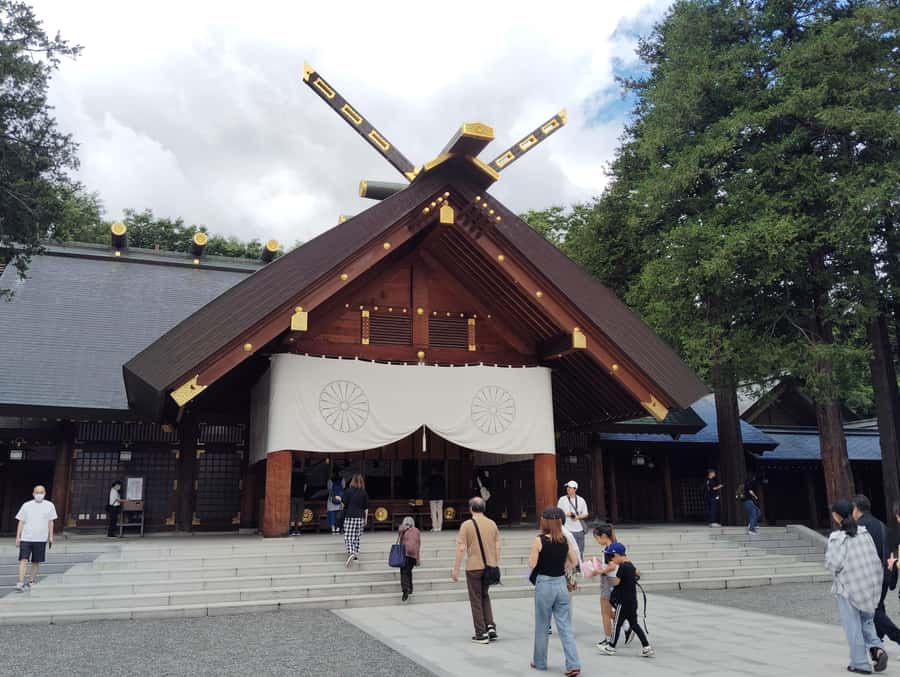
The Ezo Squirrel Omikuji is the tour’s most playful feature. You draw a fortune held inside a cute squirrel-shaped charm, a design associated with Hokkaido Shrine.
Omikuji are traditional written fortunes. The squirrel shape gives this custom a local character and makes it easy to remember, especially if you are visiting Japan with children or want a small keepsake connected to Sapporo.
This is not presented as a replacement for prayer. It is a light way to connect with a Shinto tradition after you have learned how to enter the shrine space and offer respects. The charm links the forested Maruyama setting with the shrine’s cultural practices.
The Ezo Squirrel Omikuji is described as unique to Hokkaido Shrine, which gives it more value than a generic souvenir. Still, remember that the omikuji experience is included, while the information does not say that any additional charm purchases are included. The included experience is the fortune drawing itself.
I would save a moment to read the fortune rather than rushing straight to the tea house. Even if you do not take the prediction literally, it offers a small personal pause in an otherwise history-focused visit.
Other historical tours in Sapporo


Taking tea-house time at Jingu Chaya
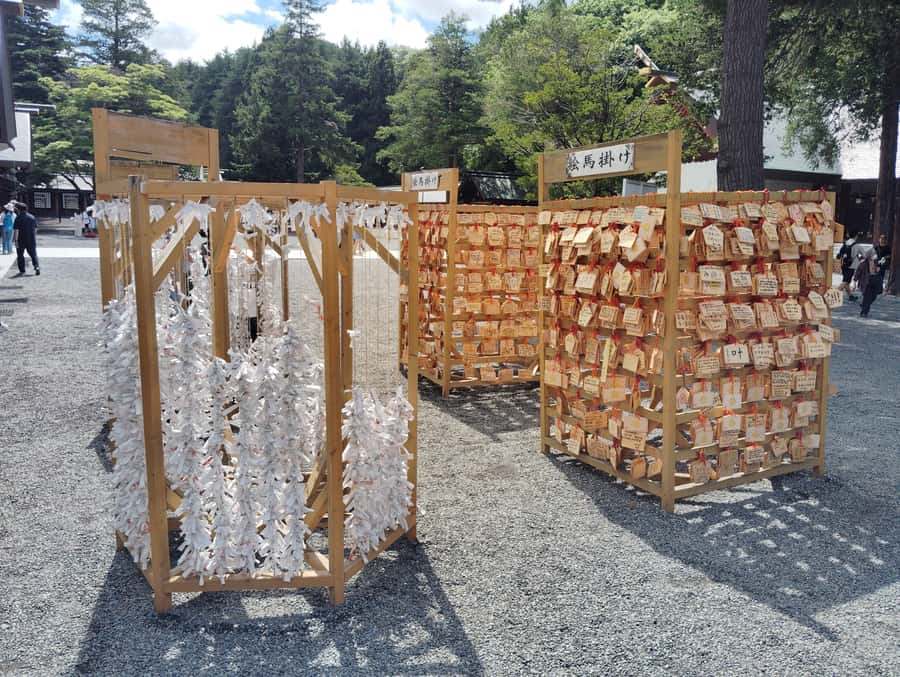
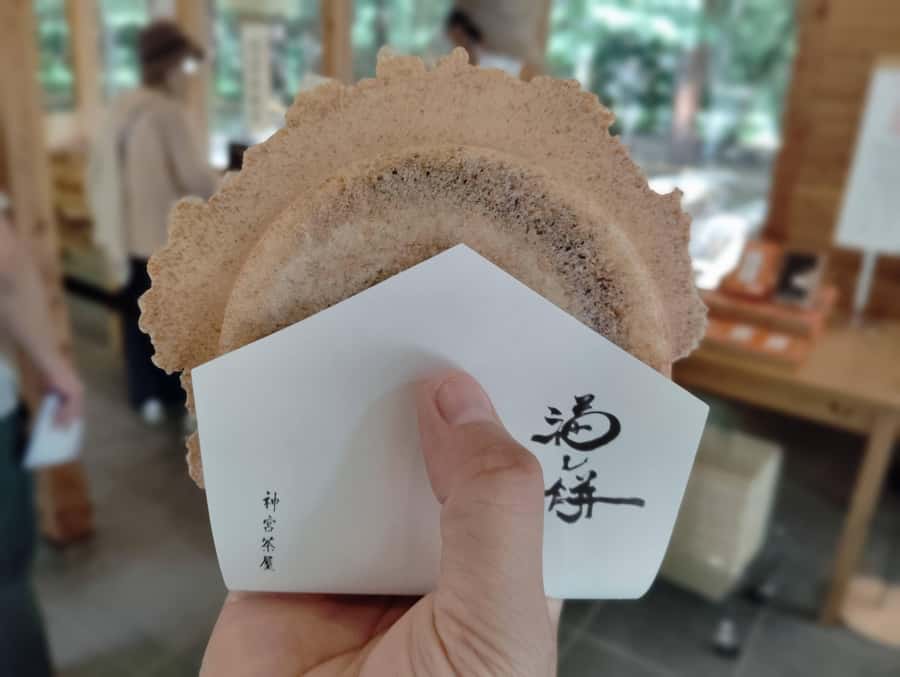
The final stop is Jingu Chaya, or the Shrine Tea House. Here you’ll enjoy Fuku-Rei Mochi, a sweet rice cake associated with good fortune.
This closing snack works well because it changes the pace. The first part of the tour asks you to listen, observe, and take part in rituals. The tea house gives you a chance to sit with what you have seen while trying a traditional sweet in the shrine setting.
Fuku-Rei Mochi is more than a random treat added to the booking. Its connection with good fortune echoes the omikuji and gives the visit a neat cultural thread: purification, prayer, fortune, and a lucky sweet.
The information provided does not specify a full tea service, a choice of drinks, or the exact flavor and preparation of the mochi. You should expect the included tasting rather than a full meal. If you are hungry, plan food separately.
Jingu Chaya is also a useful reminder that shrine visits are not only about architecture. Food, small rituals, seasonal customs, and quiet social moments are part of how people experience Japanese religious sites. The mochi helps make the visit feel grounded in daily culture.
What the one-hour schedule really means
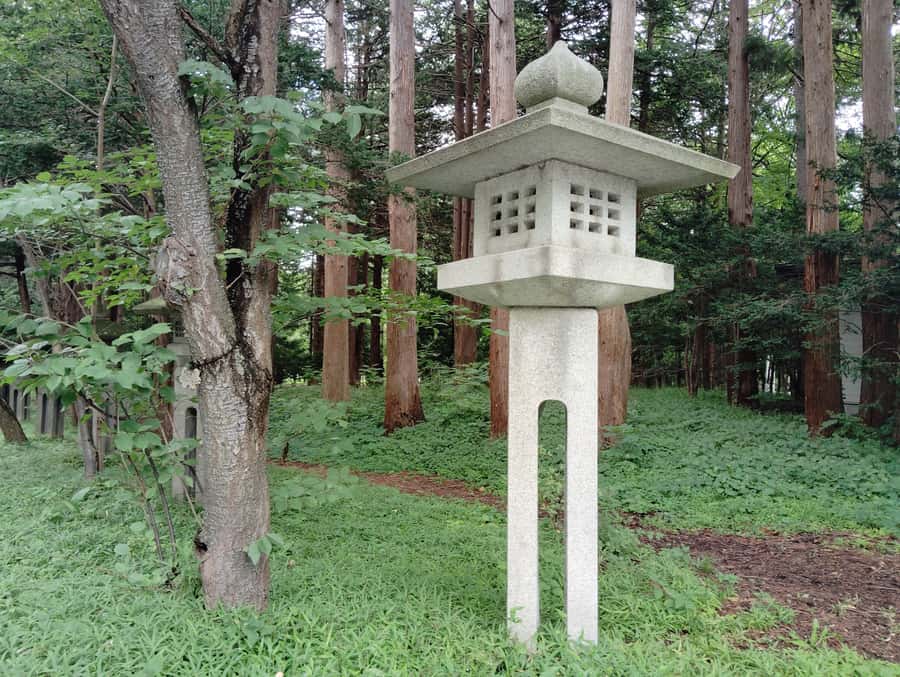
An hour is short for a shrine precinct with several stops, so the tour works best as an introduction. You’ll cover Maruyama Park, Kaitaku Shrine, the purification ritual, the main gate, the main hall, the squirrel fortune, and the tea house. Expect a purposeful route, not free time at every building.
That compact schedule is a strength if you have only a morning or afternoon in Sapporo. It can fit neatly before another activity, and the start and end point are the same. You do not need to arrange a complicated transfer between stops.
The private group format is another advantage. You can ask questions about Shinto, Hokkaido’s development, or the customs as they come up. A private format also means the pace is not set by a large crowd, though the one-hour limit still applies.
The tour is in English, and a live guide leads it. No guide name is provided, so you should not book this expecting a particular named host. The important point is that the explanations and ritual instructions are delivered in English during the walk.
Is $41 good value?
At $41 per person, this is not the cheapest way to visit Hokkaido Shrine. You can enter the grounds on your own, and shrine visits in Japan are often inexpensive or free. The price pays for interpretation, a private group, the omikuji experience, and the mochi tasting.
I consider that a fair price if you want cultural context. Without a guide, you might notice the torii, rope, hall, and trees but miss why Kaitaku Shrine matters or how the shrine connects to Hokkaido’s development.
The value is less convincing if you already know Shinto customs, have visited Hokkaido Shrine before, or prefer to explore at your own speed. In that case, the one-hour guided route may feel too structured.
The included food and fortune are modest, but they add to the experience rather than carrying it. The real value is the link between the ritual steps and the history of the island. You are paying for a clear explanation of what you are seeing, not for a long list of attractions.
The booking terms also reduce some planning risk. You can reserve now and pay later, and cancellation is free up to 24 hours in advance for a full refund. Starting times depend on availability, so check the schedule before building the rest of your day around it.
Who should book this shrine visit?
I would recommend this tour to first-time visitors who want a short, guided introduction to Sapporo’s religious sites. It suits you especially well if you are curious about how Hokkaido’s pioneer story connects with Shinto practice.
It is also a good choice for couples, families, and small private groups who prefer to ask questions without joining a large public group. The squirrel charm and mochi tasting give younger visitors something concrete to enjoy, while the history gives adults more to think about.
You should also consider it if you feel unsure about shrine etiquette. The temizu ritual and prayer instructions remove the guesswork and let you participate with respect.
I would be more cautious if you want a long, unhurried photography walk, a full tea ceremony, or extensive time inside every part of the grounds. The supplied details promise a one-hour guided visit, not a full-day cultural program.
Practical tips before you go
Meet directly in front of the Maruyama Park Center and look for the yellow DeepExperience sign. Arrive ready to walk, since the route passes through both park areas and shrine grounds.
Keep clothing and behavior respectful for a religious site. Follow the guide’s instructions at the torii, purification basin, main hall, and fortune area. The rituals are easy to follow once explained, but they deserve more care than a quick tourist photo.
Allow time to enjoy the transition through Maruyama Park. The trees, birds, and squirrels are part of the setting, and they help explain why the shrine precinct feels separate from the city.
If you are planning another Sapporo activity afterward, leave a little breathing room. The formal tour lasts one hour, but you may want a few extra minutes at the end for the tea house, the grounds, or your own photographs. The listed route returns you to the Maruyama Park Center.
Should you book the Hokkaido Shrine tour?
Book it if you want a short private introduction to Hokkaido Shrine that combines history, ritual, a local fortune charm, and a traditional sweet. The best reason to choose it is the connection between Kaitaku Shrine and the wider story of Hokkaido’s pioneers.
Skip it if you prefer independent sightseeing or already understand shrine customs. At $41, the cost is justified by the English guidance and included experiences, not by the length of the tour. For a first visit to Sapporo, though, the compact route gives you a useful cultural footing without taking half a day.
FAQ
Where does the Hokkaido Shrine tour meet?
The meeting point is in front of the Maruyama Park Center. Your guide will be holding a yellow sign marked DeepExperience. The coordinates are 43.054675, 141.3143009.
How long does the experience last?
The tour lasts one hour. It begins and ends at the Maruyama Park Center.
Is the tour conducted in English?
Yes. The experience includes a live English-speaking guide.
Is this a private tour?
Yes. The group type is listed as a private group.
What is included in the price?
The price includes a guided tour of Hokkaido Shrine, the Ezo Squirrel Omikuji experience, and a tasting of mochi sweets.
Can I cancel or pay later?
You can reserve now and pay later. Free cancellation is available up to 24 hours in advance for a full refund.
More Historical Tours in Sapporo
More Sapporo Tours in Sapporo


More tours in Sapporo we've reviewed







Sapporo Tours, compared.
 ★ 5.0Sapporo Bar Hopping Food TourFrom $108
 ★ 5.0Sapporo Private Tour with a Local – Highlights & Hidden GemsFrom $109
 ★ 4.9Sapporo: Sumo Show Experience with Japanese food & PhotoFrom $772 hours
 ★ 5.0Mondo’s most popular plan! Experience making soba noodles and the king of Japanese cuisine, tempura, in Sapporo!From $85
 ★ 5.0【Private Car】Asahiyama Zoo, Blue Pond, Shirahige Falls, Ningle Terrace (from Sapporo)From $465
 ★ 4.0Hokkaido Noboribetsu Lake Toya Tour from SapporoFrom $66
 ★ 5.0Sapporo 6hr Private Tour with Government Licensed GuideFrom $155
 ★ 4.6From Sapporo: Hokkaido Highlights Day TripFrom $64
The lists this tour appears in