
Reviewed · SAPPORO TOURS
Sapporo 4hr Private Tour with Government Licensed Guide
Sapporo is a city best understood through its contrasts: wide streets and quiet shrines, snowy festival grounds and warm beer halls, modern shopping areas and Hokkaido’s early western-style buildings. This private four-hour tour lets you choose two or three sights with a licensed English-speaking guide, rather than racing through a fixed route.
In This Article
- Key points to know before booking
- How the four-hour format really works
- Start with the story of Sapporo
- Central Sapporo for food and city life
- Beer, chocolate, and Hokkaido flavor
- Parks, shrines, and a quieter Sapporo
- Big views at Mt. Moiwa and Okurayama
- The Historical Village and the edge of the city
- What the guides add
- Price, pace, and practical limits
- Family choices and rainy-day options
- Who should book this Sapporo tour?
- FAQ
- How long is the Sapporo private tour?
- How many sights can I visit?
- Does the tour include a private vehicle?
- Where do I meet the guide?
- Are transportation and entrance fees included?
- Is this a private group activity?
- Can I cancel for a full refund?
I like the hotel-area meeting arrangement, since you do not waste time finding a group meeting point. I also like the human touch: guides such as Roy, Kumiko, Teri, Tamaki Yakuwa, and Waka have helped visitors shape days around food, local history, family interests, and public transportation. The main consideration is simple: you pay for a walking guide, not a private car, and entrance fees and transport are extra.
Key points to know before booking
- Choose only two or three sights: The long list of possible places is a menu, not a promise to visit them all.
- Meet on foot: Pickup means the guide comes to you within the designated Sapporo area, with no private vehicle included.
- Build the day around your interests: Pick food at Nijo Market, history at the Clock Tower, views from Mt. Moiwa, or family stops such as the Science Center.
- Expect local conversation: Guides can add context about Hokkaido culture, Sapporo’s development, food, and practical subway use.
- Allow for extra costs: Transportation, admission tickets, lunch, and personal spending are not included.
- Best for a first look: Four hours is enough to get your bearings, but not enough for a full tour of Sapporo’s outer sights.
How the four-hour format really works
At $122.20 per person, this is not a bargain sightseeing bus. You are paying for private attention, a flexible route, and help making sense of a large city in a short time. The value improves when your group has different priorities or when you want to avoid planning a route through unfamiliar streets and train stations.
The important detail is the limit of two or three selected sites. The 18 places listed as possibilities can make the tour look like a grand citywide circuit, but that is not what four hours allows. Each listed stop shows 30 minutes, yet simply moving between distant areas can take substantial time, especially if you use public transportation.
I would choose sights that fit together geographically. For example, Odori Park, the Clock Tower, the Former Hokkaido Government Office Building, Sapporo TV Tower, and Nijo Market all suit a central-city day. Maruyama Park and Hokkaido Shrine work well as a western Sapporo pairing. Moerenuma Park, the Historical Village of Hokkaido, Jozankei Onsen, Mt. Moiwa, and Okurayama Ski Jump Stadium require more careful planning.
The guide meets you on foot within a designated area of Sapporo. That wording matters. You should not expect a car waiting outside your hotel, and the experience is described as a walking tour. A taxi or subway ride may be useful between stops, but you pay those fares yourself.
A few more Sapporo tours and experiences worth a look


Start with the story of Sapporo
A good guide can turn Sapporo’s broad streets into a readable map. The city was developed relatively recently compared with many Japanese cities, and several stops show how Hokkaido’s capital took shape through Japanese, western, agricultural, and industrial influences.
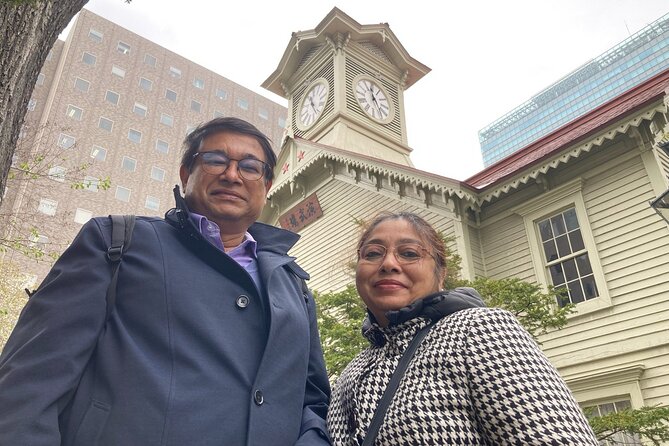
The Former Hokkaido Government Office Building is one of the clearest examples. Its red-brick western style makes it visually different from the traditional architecture you may have seen elsewhere in Japan. The Clock Tower, built in 1878 as a drill hall for Sapporo Agricultural College, gives another glimpse of the city’s early development.
These two stops make sense for history-minded visitors, but they are not large attractions that need half a day each. A short explanation from the guide can add useful meaning, followed by a walk through the central streets. If you are interested in how modern Sapporo was planned, pair them with Odori Park, the long green belt that separates the city’s north and south sides.
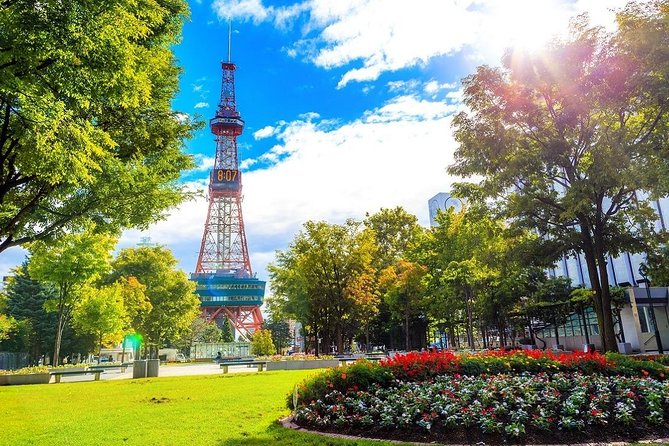
Odori Park is more than a place to sit. It is a central reference point, a seasonal event space, and one of the easiest places to understand Sapporo’s layout. During the Sapporo Snow Festival in February, the park becomes one of the main display areas for huge snow and ice works. The festival lasts about one week, so it is a seasonal choice rather than a year-round stop.
Central Sapporo for food and city life
For an easy introduction, I would consider a central route with Nijo Market, Odori Park, and Susukino. Nijo Market occupies roughly one city block and sells local produce and seafood, including crab and salmon. It is a practical place to ask your guide about Hokkaido foods and how to choose what interests you.
Nijo Market is compact, so do not expect a full morning market expedition. Its value comes from pairing it with nearby sights and using the guide to explain what you are seeing. Lunch is not included, and any food purchases are your responsibility, but this can be a useful place to add an informal meal if your schedule allows.
Odori Park gives you an outdoor break and a clear sense of central Sapporo. From there, Susukino offers a different side of the city, with restaurants, bars, karaoke shops, stores, pachinko parlors, and nightlife venues. It is Japan’s largest entertainment district north of Tokyo, according to the supplied description, and it can be interesting even if you have no interest in nightlife.
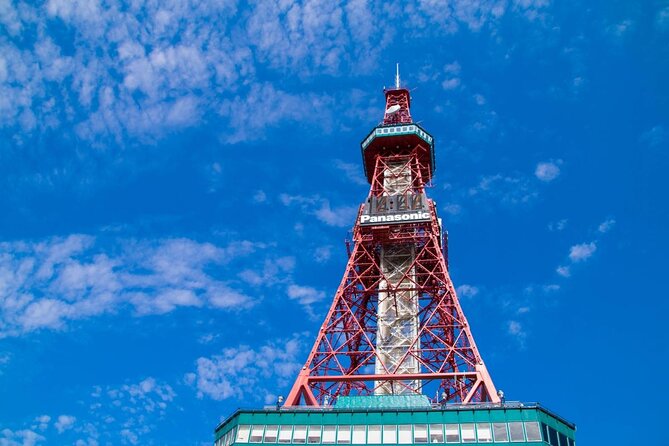
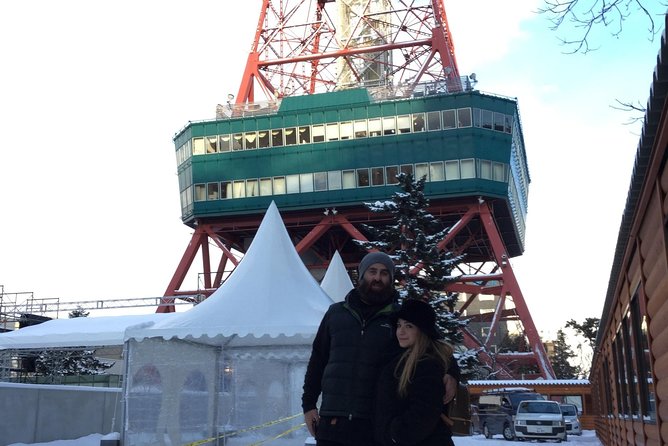
Sapporo TV Tower sits at the eastern end of Odori Park. Built in 1957, it rises 147 meters and has an observation area with city views. The admission fee is extra, so ask yourself if you want a paid lookout or if you would rather spend the time walking through central Sapporo. The tower is a strong choice for someone who wants an overview of the city, but it can crowd out another stop.
Beer, chocolate, and Hokkaido flavor
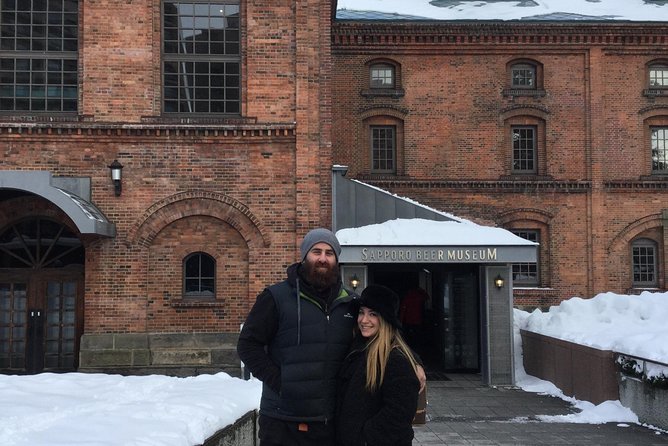
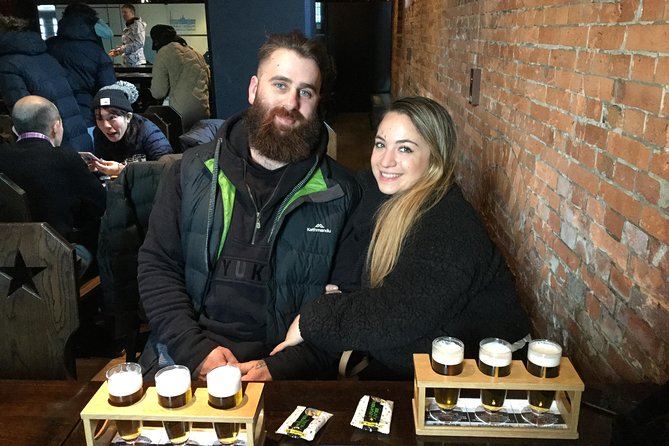
Sapporo Beer has been brewed in the city since 1877, and the Sapporo Beer Museum explains why beer matters to Hokkaido’s story. It is a natural choice for adults interested in food, industry, and local brands. Admission is not included, and the stop may involve paid tasting or other personal spending, so confirm the day’s costs with your guide.
The museum can pair well with Sapporo Factory, a central shopping and entertainment complex with about 160 stores, restaurants, and cafes. Sapporo Factory opened in 1993 and occupies the site connected with the city’s brewing past. It is useful when your group wants a meal, shopping, or a comfortable indoor stop, though it offers less traditional atmosphere than a market or shrine.
Shiroi Koibito Park takes a sweeter approach. It is a theme park operated by Ishiya, the local company behind the Shiroi Koibito cookie, made with two thin butter cookies and a chocolate layer. The attraction can suit families and anyone curious about a famous Hokkaido confection, but admission is extra.
A food-focused guide can make these stops more useful. Kumiko, for example, has helped visitors combine sightseeing with an okonomiyaki lunch and beer tastings. Waka has been praised for explaining food in a way that appealed to teenagers. Those particular guides may not be available for every booking, so treat the names as examples of the guide team rather than a guarantee.
Parks, shrines, and a quieter Sapporo
Maruyama Park and Hokkaido Shrine form one of the best pairings for a calmer half-day. Maruyama Park is a multipurpose natural area on the western side of Sapporo, with seasonal appeal including spring flowers. Hokkaido Shrine, founded in 1871, is one of the country’s important Shinto sites and sits next to the park.
This combination gives you a chance to slow down after central streets. You can ask about Shinto customs, local festivals, and the role of Hokkaido Shrine in Sapporo life. Admission to the shrine and park is free, though the supplied information lists admission for Maruyama Park as not included, so check the exact plan and any paid areas before you set your budget.
A guide can also help you use the subway or arrange a taxi between areas. One guide, Tom, has assisted with subway navigation, which can be especially useful if you plan to continue sightseeing after the tour. Still, the tour does not include transport fees, and its walking format means you should wear comfortable shoes and prepare for the weather.
Moerenuma Park offers a very different setting. It is on Sapporo’s outskirts, surrounded by marshland, with a circumference of about four kilometers. The grounds include large designed spaces and striking park features, but its distance from central Sapporo makes it a poor choice to combine with several downtown sights in only four hours.
Other guided tours in Sapporo


Big views at Mt. Moiwa and Okurayama
If your priority is seeing Sapporo from above, choose Mt. Moiwa or Okurayama Ski Jump Stadium, not both unless your guide confirms the timing works. Mt. Moiwa is a forested mountain southwest of central Sapporo, known for broad views over the city. The supplied information lists the admission ticket as free, but you should still ask what access is included in your exact route, since mountain facilities and transport can affect the day.
Okurayama recalls the 1972 Winter Olympics, when its 90-meter ski jump hosted competitions. Today, the stadium is a sightseeing site as well as a sports venue, with a high viewpoint over Sapporo. Admission is not included, so factor that into the price.
These stops are visually rewarding, but they are not simple extensions of a downtown walk. You may need a taxi or public transport, and every transfer cuts into your four hours. I would choose one viewpoint if this is your first visit, then use the remaining time for a nearby central or western stop.
The Historical Village and the edge of the city
The Historical Village of Hokkaido, also called Kaitaku-no-Mura, is an open-air museum in Sapporo’s suburbs. It presents about 60 buildings from across Hokkaido, dating mainly from the Meiji and Taisho periods. For anyone wanting more than a quick city overview, this may be the most rewarding history stop.
It also requires time. You pay admission separately, and the village is not in the central sightseeing zone. A 30-minute visit would offer only a taste, so I would make it the main purpose of the tour rather than squeeze it between downtown stops.
Jozankei Onsen is an even larger commitment. The hot-spring town lies in Shikotsu-Toya National Park, among the cliffs of the Toyohira River, about one hour from central Sapporo. That travel time makes it unsuitable for a typical four-hour walking tour unless the plan is built almost entirely around Jozankei.
The listing describes admission as free for Jozankei, but transportation and personal expenses remain your responsibility. If you want a hot-spring visit, ask the provider directly whether the selected route can accommodate it. Do not assume the broad list of possible sights means you can combine Jozankei with city-center attractions.
What the guides add

The strongest reason to choose a private guide is not simply getting from one landmark to another. It is the chance to ask questions as you go and adjust the pace around your interests.
Roy has helped shape custom routes and explain Sapporo and Japanese culture. Teri has guided visitors looking for a broad introduction to the city. Kumiko has combined sightseeing with local food, shrine visits, festivals, and long conversations about life across Japan. Waka has worked well with families and food-focused teenagers.
The guide team also includes Tamaki Yakuwa, known as Tom, whose help with the subway can matter as much as the sightseeing itself. You can leave the tour with a clearer idea of how to get around on your own, what food to try, and which parts of Hokkaido deserve another day.
The service is listed as government licensed and English speaking. English ability and guiding style can differ from one person to another, but the high 4.9 rating from 42 submitted ratings and 98 percent recommendation figure suggest a consistently strong service. I would still send your interests in advance: food, architecture, family activities, photography, shopping, gardens, or winter sights.
Price, pace, and practical limits
At $122.20 per person, the price is easiest to justify for a small private group that wants focused help. Group discounts are available, though the group cannot be combined with another tour party. For a larger family or group of friends, the cost may compare favorably with booking several separate activities, especially if the guide saves you time and confusion.
You must budget separately for subway or taxi fares, admission tickets, lunch, tastings, and other personal expenses. This is particularly important for Mt. Moiwa, Okurayama, Shiroi Koibito Park, the Beer Museum, the Historical Village, the Science Center, Sapporo Factory, and the TV Tower, where admission is listed as not included.
The tour runs about four hours, and the route is customizable. Most people can participate, and service animals are allowed. Confirmation arrives at booking, and free cancellation is available if you cancel at least 24 hours before the start time. Changes or cancellations inside that window are not accepted for a refund.
Family choices and rainy-day options
The Sapporo Science Center is the clearest family choice. It has more than 200 displays and hands-on exhibits covering natural science. Admission is extra, but it gives children something active to do if the weather is poor or if shrines and historic buildings are not holding their attention.
Shiroi Koibito Park also suits families, especially those interested in sweets. Maruyama Park offers outdoor space, while the Beer Museum is better for adults. Discuss ages and interests with the guide before the tour so the route does not become a compromise that pleases nobody.
A family can also use the guide for practical help, such as finding food or learning the subway. Waka’s reported focus on family needs and food knowledge makes that style of guiding worth requesting, though specific guide assignments are not guaranteed.
Who should book this Sapporo tour?
I would book this experience if you have only one day in Sapporo, prefer personal attention, or feel unsure about combining public transportation with sightseeing. It is particularly useful on a first visit, when a guide can help you get your bearings and point out what deserves more of your time later.
It also suits couples, families, and small private groups with different interests. One person can ask about history, another about food, and another about shopping or city views. A private route is much easier to adjust than a large group schedule.
I would skip it if you want a vehicle, a full city circuit, or a deep visit to several museums and outlying attractions. Four hours passes quickly, and the extra fees can push the total well above the advertised per-person rate. For a simple downtown walk, you may be able to explore independently. For a carefully chosen introduction with a local English-speaking guide, the price can be fair.
FAQ
How long is the Sapporo private tour?
The tour lasts approximately four hours.
How many sights can I visit?
The included service covers a customizable tour of two or three sites from the available choices.
Does the tour include a private vehicle?
No. This is a walking tour, and a private vehicle is not included.
Where do I meet the guide?
You meet the guide on foot within the designated area of Sapporo. The guide comes to your hotel or another agreed location within that area.
Are transportation and entrance fees included?
No. Transportation fees, entrance fees, lunch, and personal expenses are not included. Guide entry fees are covered only for sights listed under the included sightseeing choices.
Is this a private group activity?
Yes. Only your group participates, and groups cannot be combined with other tour groups.
Can I cancel for a full refund?
Yes, if you cancel at least 24 hours before the experience start time. Cancellations or changes made less than 24 hours before the start time are not refunded or accepted.
More Private Tours in Sapporo


More Guided Tours in Sapporo
More Sapporo Tours in Sapporo


More tours in Sapporo we've reviewed



Sapporo Tours, compared.
 ★ 5.0Sapporo Bar Hopping Food TourFrom $108
 ★ 5.0Sapporo Private Tour with a Local – Highlights & Hidden GemsFrom $109
 ★ 4.9Sapporo: Sumo Show Experience with Japanese food & PhotoFrom $772 hours
 ★ 5.0Mondo’s most popular plan! Experience making soba noodles and the king of Japanese cuisine, tempura, in Sapporo!From $85
 ★ 5.0【Private Car】Asahiyama Zoo, Blue Pond, Shirahige Falls, Ningle Terrace (from Sapporo)From $465
 ★ 4.0Hokkaido Noboribetsu Lake Toya Tour from SapporoFrom $66
 ★ 5.0Sapporo 6hr Private Tour with Government Licensed GuideFrom $155
 ★ 4.6From Sapporo: Hokkaido Highlights Day TripFrom $64
The lists this tour appears in