
Reviewed · SAPPORO TOURS
Sapporo Highlights: Golden Route Morning Guided Walking Tour
Sapporo’s central sights fit neatly into this 3.2-kilometer morning walk, but the real value is the story connecting them. You begin high above Odori Park at the TV Tower, then follow the city’s streets, trees, and civic buildings toward the Red Brick Government Building.
In This Article
- Key points at a glance
- Why this morning route works in Sapporo
- Beginning beneath the TV Tower
- Sapporo City Hall and the city’s original idea
- The Clock Tower’s quirky local story
- Walking Kita-1-Jou Dori
- Aka-Renga Plaza and the red-brick story
- Finishing at the Red Brick Government Building
- What the guides add
- Small group comfort, with some limits
- Is $36 a fair price?
- Weather, clothing, and daily planning
- Who should book this walk?
- Should you book the Sapporo Highlights walk?
- FAQ
- Where does the tour begin?
- Where does the tour end?
- How long is the tour?
- What languages are available?
- How many people can join the group?
- Is admission to Sapporo TV Tower included?
- Is the Clock Tower admission included?
- What should I bring?
I like the small groups, limited to eight people, and the chance to ask questions without shouting across a crowd. I also like the guides’ personal touch. Tom is praised for his friendly English and helpful directions, while Iku has made rainy walks engaging and added useful restaurant and sento suggestions.
The main consideration is the weather. Sapporo can be cold, wet, or snowy, and this is an outdoor walking tour with moderate fitness requirements. You’ll cover about 3.2 kilometers in two hours, so bring sensible shoes and rain gear rather than a heavy suitcase.
Key points at a glance
- Panoramic start at Sapporo TV Tower: Your included tower visit gives you a quick view of the city before you walk through it.
- Eight-person maximum: The small format makes it easier to ask questions and can feel almost private when the group is tiny.
- A clear route through central Sapporo: You’ll see City Hall, the Clock Tower, Kita-1-Jou Dori, Aka-Renga Plaza, and the Red Brick Government Building.
- Guides who add useful local advice: Tom and Iku have been singled out for clear English, warmth, historical detail, and practical suggestions.
- Strong value at $36: The price includes the guide, walking tour, and TV Tower admission, with only the Clock Tower fee and refreshments extra.
- A brisk but manageable morning: The tour ends at noon, leaving your afternoon free for markets, museums, shopping, or lunch.
Why this morning route works in Sapporo
Sapporo is easier to understand once you see its basic plan. Wide streets, long sight lines, and a regular grid give the city a different feel from Japan’s older, more tightly packed urban centers. This walk uses that layout well.
Instead of sending you between isolated monuments, the route links several major places on foot. You get a first look from above, then move through the civic center and hear how Sapporo grew from a planned frontier city into Hokkaido’s main urban center.
The tour runs for two hours, generally from 10:00 to 12:00. That timing is useful at the start of a trip. You can get oriented early, learn which central landmarks deserve a second look, and still have most of the day ahead.
I would especially consider booking it for your first full morning in Sapporo. The route gives you a practical map of downtown, while the guide’s comments can help you decide where to return later.
A few more Sapporo tours and experiences worth a look


Beginning beneath the TV Tower
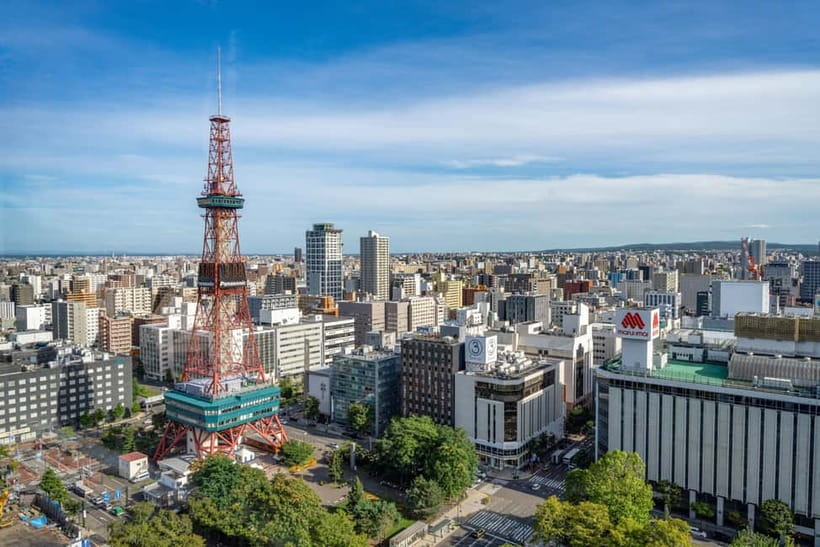
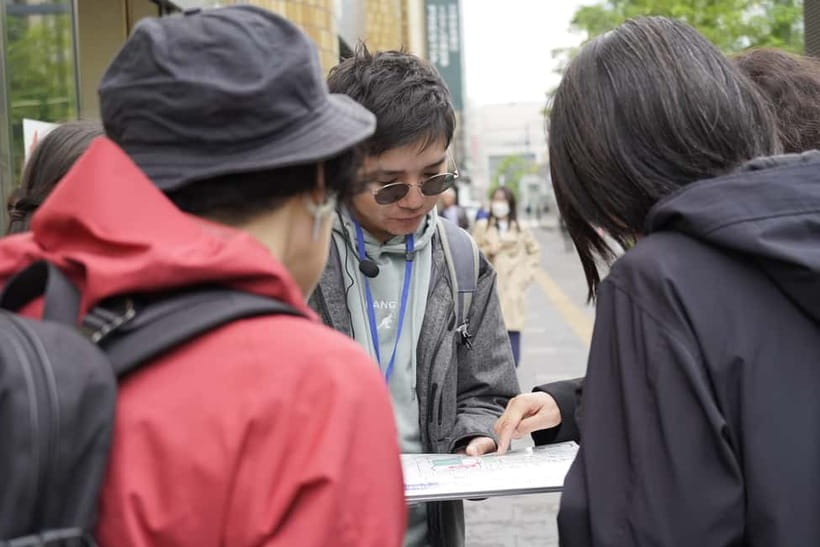
Meet your guide at ground level beneath Sapporo TV Tower. Look for the guide holding a board marked KAPPO SAPPORO. This is a useful detail in a busy central area, and arriving a little early gives you time to find the tower without rushing.
The TV Tower is more than a meeting point. Admission is included, so you begin with a visit rather than simply photographing the structure from the pavement. The elevated view helps you make sense of Sapporo’s broad streets and central districts before you start walking.
You can expect about 35 minutes here, including the guided visit, photo time, and views. The exact balance may depend on the group and the guide, but this is the first major stop and not a quick glance from outside.
The tower also gives you a useful perspective on the route ahead. From above, the city’s orderly design becomes easier to read. Afterward, the streets and street trees are not just scenery. They become part of the story about how Sapporo was planned and developed.
Sapporo City Hall and the city’s original idea
From the tower, you walk for about 10 minutes to the next stop. The route is short, but this is where the tour shifts from sightseeing to interpretation.
At Sapporo City Hall, the guide asks you to think about whether the city has become what its founder imagined two centuries ago. That question gives the stop a little more weight than a standard photograph outside a government building.
You’ll hear about Sapporo’s development and the ideas behind its streets and civic center. The supplied information does not promise entry into City Hall, so expect a guided outdoor visit and sightseeing stop rather than an interior tour.
This part should appeal to you if you like knowing why a city looks the way it does. The buildings are only half the subject. The roads, open spaces, and planted trees also show the choices made as Sapporo took shape.
The Clock Tower’s quirky local story
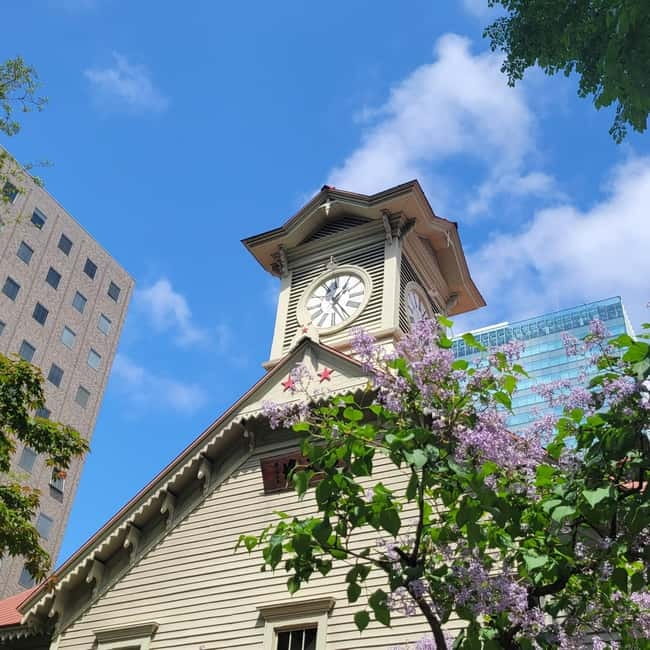
The Clock Tower comes next, after roughly five minutes on foot from the previous stop. You’ll have about 15 minutes for a guided visit and photo stop, with the building also viewed as you pass through the surrounding area.
Sapporo Clock Tower is one of the city’s best-known symbols, but its story is less grand and formal than its status might suggest. The guide presents its quirky history and invites you to form your own opinion about why this small building matters so much locally.
Entry is not included. The additional admission is approximately 200 Japanese yen per person, a minor extra cost but one worth knowing before you book. If you are carefully controlling your spending, you can decide whether the interior visit matters to you.
The stop is relatively brief, which suits the tour’s purpose. You are not spending half a day at one monument. You are building a connected picture of central Sapporo through several places that each explain a different part of the city.
Walking Kita-1-Jou Dori
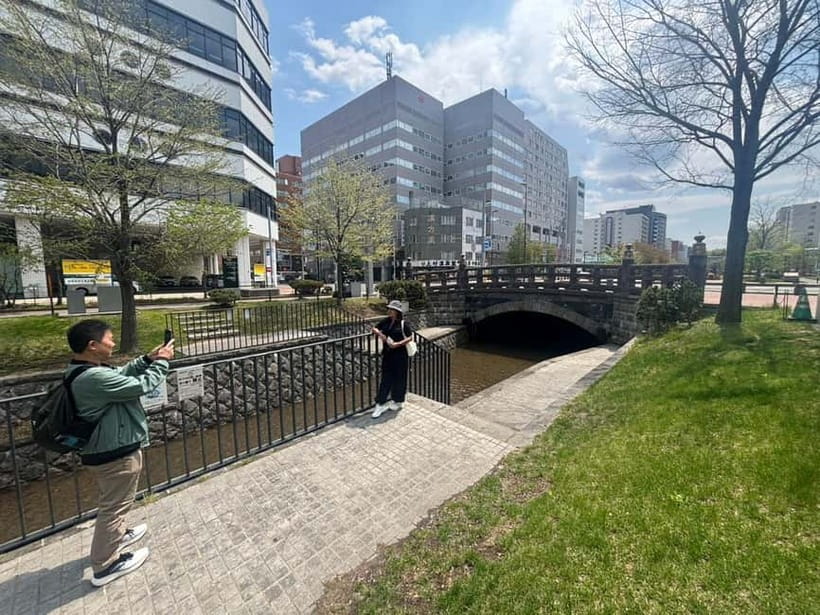
After the Clock Tower, the group continues on foot for about 10 minutes toward Kita-1-Jou Dori. This section is important because it lets you experience Sapporo between the headline sights.
The guide draws attention to the roads and street trees, showing how the city’s past remains visible in ordinary public spaces. That is one of the stronger ideas in this tour. You are not limited to famous facades and formal plaques. The route encourages you to notice the design of the streets themselves.
You’ll spend about 10 minutes on this guided walk. It is not presented as a shopping stop or food tour, so come expecting city history and observation rather than tasting opportunities.
The walking distance is moderate, but the route is still active. Comfortable shoes are essential, especially if rain, snow, or winter ice changes the feel of the pavements. The activity information also recommends comfortable clothing, drinks, rain gear, and a change of clothes.
Other walking tours we've reviewed in Sapporo



Aka-Renga Plaza and the red-brick story
The next section takes you toward Aka-Renga Plaza, with about 15 minutes for a guided walk and photo stop. The name refers to the red-brick setting associated with the old government district.
This is a good point for photographs, but the guide’s commentary gives the place its purpose. The red brick reflects Hokkaido’s pioneer era and the effort to establish a political and administrative center in the north.
The route helps you read these buildings as working parts of Sapporo’s past rather than decorative backdrops. The bricks, road lines, and planted streets all carry clues about the city’s early ambitions.
You may find this stop more rewarding if you have already heard the earlier discussion at City Hall and the Clock Tower. The tour is designed as a sequence. Each place adds another piece to the same question: how did Sapporo become the city you see today?
Finishing at the Red Brick Government Building
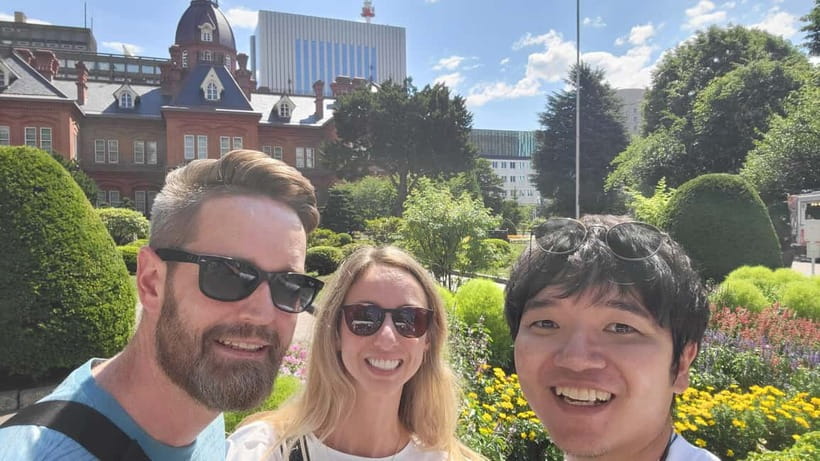
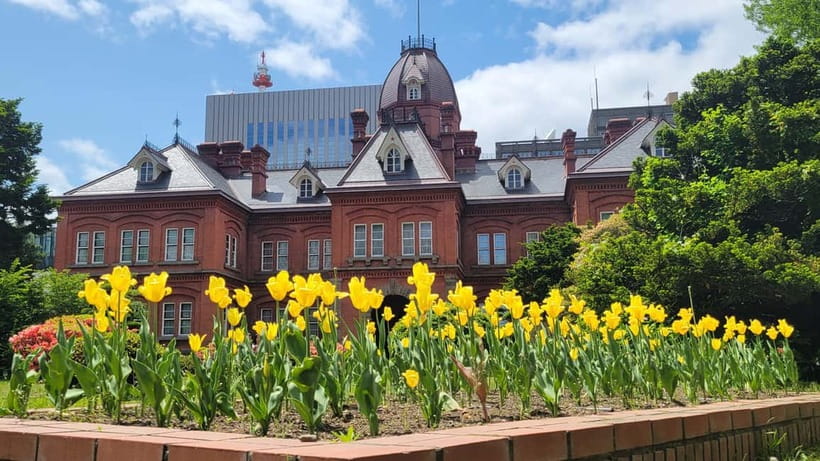
The tour ends at the Red Brick Government Building, also known as the former Hokkaido Government Office. This is the final stop, scheduled for around noon.
The building was the political heart of Hokkaido, and the guide explains the stories associated with its red-brick construction and pioneer spirit. The tour information describes a visit and guided sightseeing here, but it does not guarantee a particular interior access arrangement, so plan on the building and its setting being the main focus.
Ending here is practical. You finish near one of central Sapporo’s key civic landmarks instead of returning to the tower. From this point, you can continue your day independently, using what you learned to choose your next stop.
The finish also gives the tour a satisfying arc. You start with a broad view from above, walk through the planned center, and end at the building that represents Hokkaido’s government and early development.
What the guides add
The strongest praise has centered on the guides, especially Tom and Iku. Tom has been described as friendly, relaxed, clear in English, and generous with local information. One particularly useful quality is his willingness to help with directions after the tour, which matters when you are still finding your way around Sapporo.
Iku has handled wet and cold conditions well, keeping the walk informative and enjoyable even in heavy rain. She has also offered suggestions for restaurants and a sento, a Japanese public bath, which can be welcome advice after a damp morning outside.
Guide quality can vary by date, and you should not assume you will receive a specific person unless your booking confirms it. Still, the repeated pattern is clear: this experience depends on a personable guide who explains rather than simply points.
The language options are Japanese and English. If you want a detailed conversation about Sapporo’s past, the small group makes that easier than a large coach tour. A group of four can feel almost private, and a solo booking may be especially personal if no other participants join.
Small group comfort, with some limits
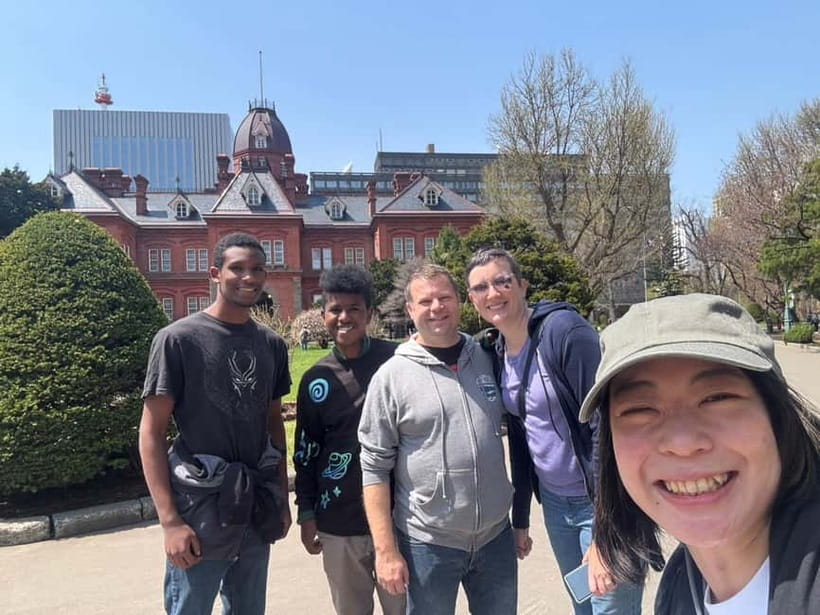
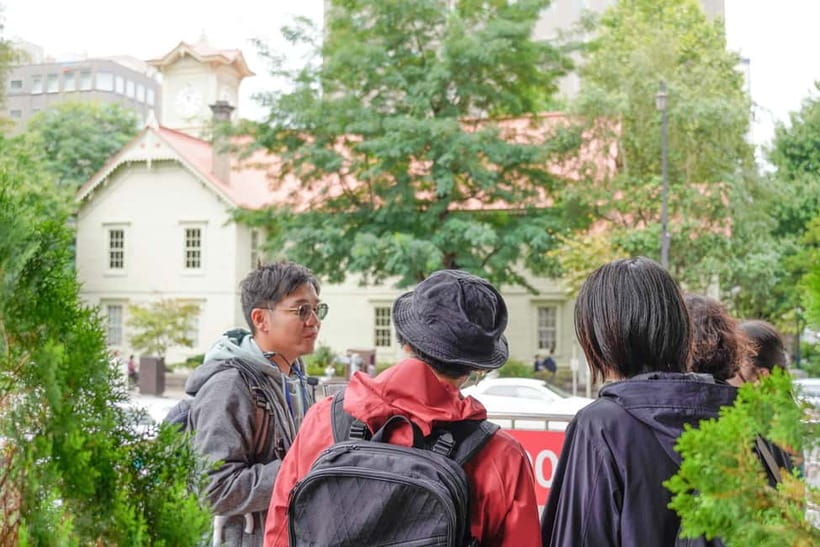
The maximum group size is eight. That is small enough for a guide to hear your questions and adjust the pace within reason. It also makes photo stops less awkward than they can be with a large crowd.
The format is relaxed, but it is not a private custom tour. You will follow a set two-hour route, and the guide needs to keep moving so the group reaches the final building by noon.
This arrangement suits you if you want structure without a rigid, crowded feel. It is less suitable if you want to linger inside each landmark, stop for a long coffee, or change the route around personal interests.
The tour is not suitable for wheelchair users, people with a cold, or people over 95. The stated fitness level is moderate, and luggage or large bags are not recommended. Pets, bikes, drones, smoking, alcohol, drugs, party groups, and oversized luggage are not allowed. Assistance dogs are allowed.
Is $36 a fair price?
At $36 per person, the cost is reasonable for a two-hour guided city walk that includes entry to Sapporo TV Tower. You are paying for a local guide, a planned route, interpretation at several central landmarks, and the convenience of seeing the main sights without working out the order yourself.
The Clock Tower admission, about 200 yen, is extra. Food and drinks are also extra, but this is not a food-focused experience, so those exclusions are easy to understand.
The value is strongest if you are new to Sapporo and want context quickly. You could walk past these places independently for less, but you would miss the questions about the city’s design, the local stories attached to the landmarks, and the practical advice guides such as Tom and Iku have offered.
The value is less obvious if you already know central Sapporo well or prefer to explore at your own pace. In that case, the TV Tower admission and human guidance may not justify the fee.
Weather, clothing, and daily planning
Sapporo’s weather should shape your decision. The walk operates outdoors, and several people have completed it in rain, including heavy rain. That does not make poor weather harmless, though. Bring rain gear, comfortable clothes, sturdy walking shoes, and a drink.
The request for a change of clothes is sensible in wet conditions. You should also avoid bringing a suitcase or heavy bag. The route covers 3.2 kilometers, and carrying luggage would make the morning less pleasant.
There is no food or drink included. Since the tour ends at noon, you can plan lunch afterward, but do not expect café time during the route.
Free cancellation is available up to 24 hours before the start for a full refund. You can also reserve and pay later, which helps if your Sapporo plans are still changing.
Who should book this walk?
I would recommend it to a first-time Sapporo visitor who wants a clear introduction without giving up the rest of the day. It also works well for solo visitors, couples, and small families who prefer a guide they can actually talk with.
History-minded visitors will get the most from it, especially if they enjoy learning how streets, public buildings, and local symbols fit together. The route is also useful for anyone who wants restaurant, sento, and general orientation tips from a local guide.
It may not suit you if you have limited mobility, need frequent rest stops, are carrying luggage, or want a leisurely photo tour. The schedule is compact, and the morning includes steady walking in changing weather.
Should you book the Sapporo Highlights walk?
Book this tour if you want Sapporo’s essential downtown sights explained in one focused morning. The TV Tower visit, small group size, and strong guide feedback make $36 a fair price, particularly at the beginning of your stay.
Skip it if you already know the central landmarks or would rather explore without a schedule. For everyone else, this is a practical introduction with enough history to make the Clock Tower, city streets, and red-brick government buildings more meaningful when you see them again later.
FAQ
Where does the tour begin?
Meet your guide at the ground level beneath Sapporo TV Tower. The guide will hold a board marked KAPPO SAPPORO.
Where does the tour end?
The walk ends at the Red Brick Government Building, also called the former Hokkaido Government Office.
How long is the tour?
The tour lasts two hours and covers approximately 3.2 kilometers on foot.
What languages are available?
The live tour guide speaks Japanese or English.
How many people can join the group?
The group is limited to eight participants.
Is admission to Sapporo TV Tower included?
Yes. Entry to Sapporo TV Tower is included in the tour price.
Is the Clock Tower admission included?
No. Entry to Sapporo Clock Tower costs approximately 200 Japanese yen per person.
What should I bring?
Bring comfortable shoes, comfortable clothing, drinks, rain gear, and a change of clothes. Heavy bags, luggage, and large bags are not recommended.
More Guided Tours in Sapporo


More Walking Tours in Sapporo
More Sapporo Tours in Sapporo


More tours in Sapporo we've reviewed



Sapporo Tours, compared.
 ★ 5.0Sapporo Bar Hopping Food TourFrom $108
 ★ 5.0Sapporo Private Tour with a Local – Highlights & Hidden GemsFrom $109
 ★ 4.9Sapporo: Sumo Show Experience with Japanese food & PhotoFrom $772 hours
 ★ 5.0Mondo’s most popular plan! Experience making soba noodles and the king of Japanese cuisine, tempura, in Sapporo!From $85
 ★ 5.0【Private Car】Asahiyama Zoo, Blue Pond, Shirahige Falls, Ningle Terrace (from Sapporo)From $465
 ★ 4.0Hokkaido Noboribetsu Lake Toya Tour from SapporoFrom $66
 ★ 5.0Sapporo 6hr Private Tour with Government Licensed GuideFrom $155
 ★ 4.6From Sapporo: Hokkaido Highlights Day TripFrom $64
The lists this tour appears in