
Reviewed · SOBA & COOKING CLASSES
2 hours sushi class
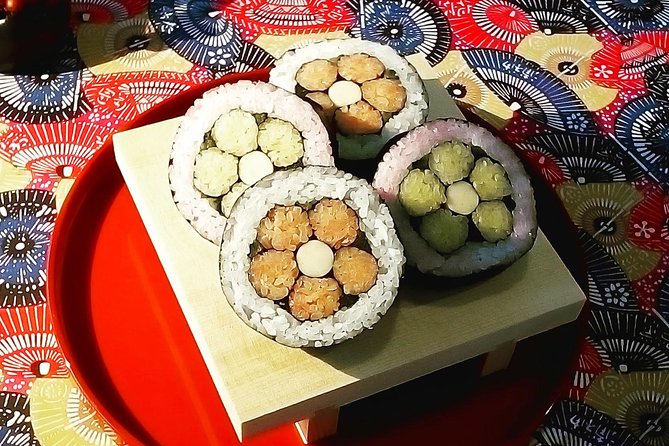
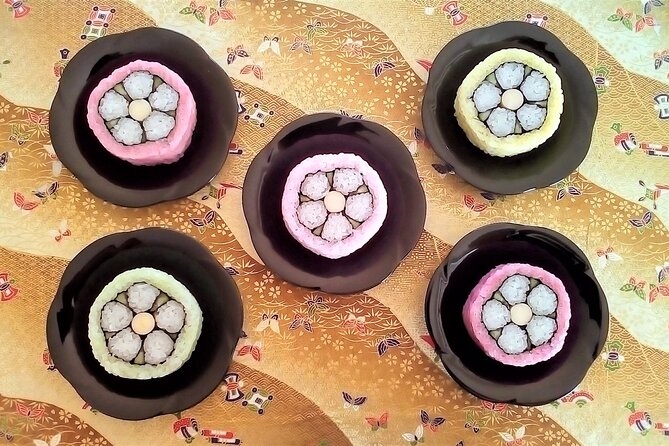
Flower-shaped sushi is the star here. In a Sapporo home, decorative sushi instructor Yuki shows you how colored rice and careful rolling turn simple ingredients into edible blossoms. You make the rolls yourself, then take them home with an English recipe.
In This Article
- Key points to know before booking
- Making sushi flowers in southern Sapporo
- A warm start with tea and introductions
- Why the sushi rice lesson matters
- Take-home sushi and the best part of the lesson
- Optional bento and Japanese home cooking
- English instruction and dietary planning
- Pickup from Makomanai Station
- Is the $20.08 price good value?
- Who will enjoy this class most?
- Cancellation and booking advice
- Should you book the Sapporo sushi class?
- FAQ
- How long does the sushi class last?
- Where does the class take place?
- Is pickup available?
- How much does the experience cost?
- Can I take the sushi home?
- Is instruction provided in English?
- Are ingredients and an apron provided?
- Can dietary needs be accommodated?
I like the free pickup from Makomanai subway station if you need it, and I like that the class suits families as well as adults. Yuki is known for patient, clear instruction, and her friendly cat, TiTi, may add a little homey charm.
The main caution is communication at the meeting point. Confirm the address and pickup details carefully before class. One poor experience involved going to the wrong location and waiting in the rain, so this is not the time to rely on a vague map pin.
Key points to know before booking
- Make flower-shaped decorative sushi: The focus is on presentation, not just rolling an ordinary sushi log.
- Learn in Yuki’s home: Tea, conversation, and a small class setting make this feel more personal than a formal cooking studio.
- English support is included: You receive English instruction, ingredients, an apron, and a recipe to use at home.
- Pickup can simplify the journey: Free pickup is offered from Makomanai subway station when requested.
- Take your sushi with you: Your finished rolls become both lunch and a useful souvenir.
- Optional Japanese cooking lessons are available: You can add bento decoration, miso soup, rice, beef, rice balls, and other dishes.
Making sushi flowers in southern Sapporo
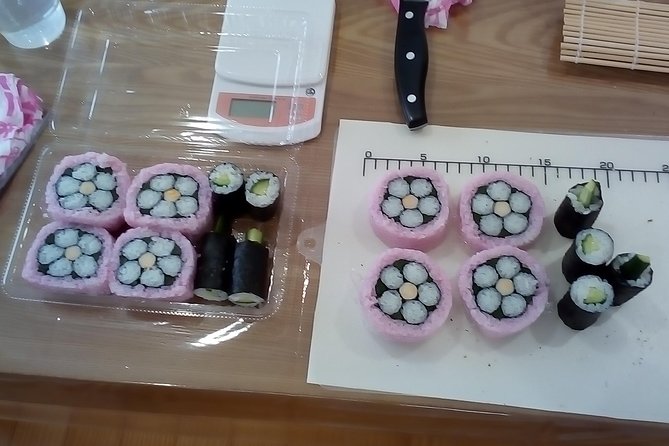
This is a two-hour hands-on workshop built around decorative sushi rolls, often shaped like flowers. You are not simply watching Yuki prepare lunch. You work through the process yourself, with her explaining how the pieces fit together before the roll is cut open to reveal the pattern.
That reveal is part of the fun. Decorative sushi can look complicated from the outside, but the class breaks it into manageable steps. You learn how to arrange rice and fillings so that the finished roll forms a design when sliced. The aim is beauty, but the result is still food you can eat.
Yuki has appeared on Japanese television for her decorative sushi instruction. In 2024, she demonstrated and served decorative rolls at a Sapporo celebration marking the 65th anniversary of the sister-city partnership between Sapporo and Portland, Oregon. That background gives the class a clear specialty rather than making it a general cooking lesson.
You should expect to prepare sushi rice and work with the supplied ingredients. The information does not specify the exact flower design for every session, so the finished pattern may vary. If you have your heart set on a particular design, ask before booking.
A few more Sapporo tours and experiences worth a look


A warm start with tea and introductions
The class takes place at Yuki’s home in the Ishiyamahigashi area of Minami Ward. Several details point to a relaxed beginning: tea is served, introductions are made, and the cooking starts in a conversational setting.
I like this format for visitors who want more than a quick demonstration. You have time to ask about Japanese food, hear about Yuki’s experiences, and settle into the lesson before handling the rice. It also gives children a chance to get comfortable before the more careful rolling work begins.
The home setting has a tradeoff. You get a personal experience, but it is not a polished restaurant kitchen or a private chef studio. The class is not private, and the maximum group size is 12 people. A group of that size can still work well, though the feel will depend on the number of people booked that day.
The cat TiTi has become part of the charm for some visitors. If you like animals, the cat may be a pleasant surprise. If you have allergies, contact the provider in advance, since the class takes place in a home.
Why the sushi rice lesson matters
Decorative sushi depends on structure. Rice that is too loose, too wet, or poorly seasoned will not hold the design properly. The class includes instruction on preparing sushi rice, including pink rice used for decorative effects.
That small lesson is one of the most useful parts to bring home. You may not recreate a perfect flower on your first attempt, but you can use the basic rice method for ordinary sushi, rice balls, and bento lunches.
The class also comes with an English recipe. That makes the experience more than a pleasant morning in Sapporo. You leave with written guidance, ingredients knowledge, and a method you can try again in your own kitchen.
Keep your expectations sensible. This is an introductory workshop, not professional sushi training. Yuki’s patience helps, especially when your first roll is less tidy than the example. The emphasis is on learning by doing and enjoying the result.
Take-home sushi and the best part of the lesson
At the end, you can take away the sushi rolls you make. This is practical for a morning class, since the food becomes a ready meal or snack later in the day. It also makes the class easy to remember: you are not leaving with only photographs.
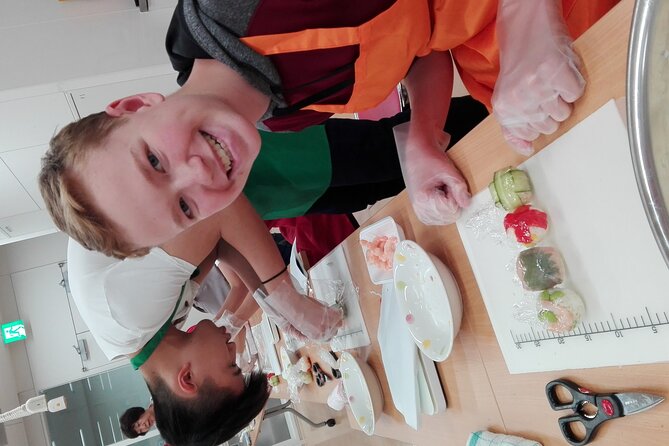
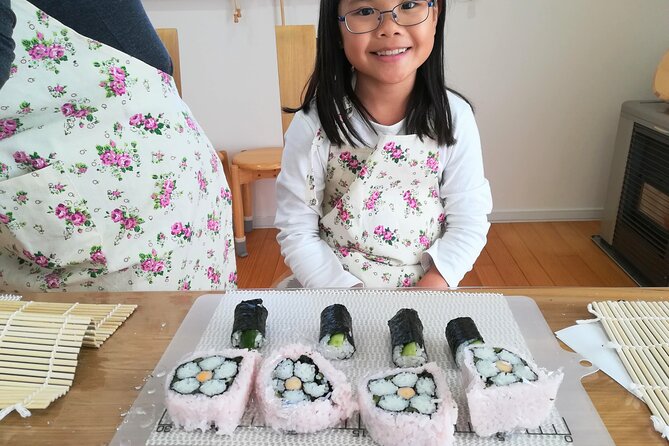
The flower shape gives the finished sushi a special purpose. You can serve it at home, show friends what you learned, or use the recipe for a family cooking activity. The class has been especially well suited to parent and child pairs, with children enjoying the colorful rice and the visual change that happens when a roll is sliced.
One family-focused account described the class as a good bonding activity, with both parent and child learning how to make the rice properly. Another family found Yuki patient with children. That does not mean every child will enjoy the careful work, but the format is more approachable than a long formal lecture.
You should plan to eat or refrigerate the sushi appropriately after class, but no specific storage instructions are provided in the tour details. Ask Yuki during the lesson if you plan to keep the rolls for later.
Optional bento and Japanese home cooking
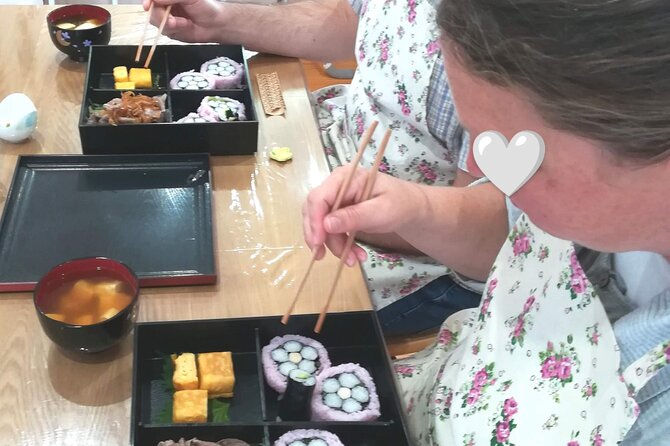
If making decorative sushi is not enough, Yuki and Yui offer additional Japanese cooking options. These are add-ons rather than the core two-hour sushi class, so confirm the extra cost, timing, and availability before you book.
One option is decorating a bento in the traditional Shokado style, then eating your own lunch box. Shokado presentation is associated with separate compartments and a careful arrangement of food, making this a useful choice if you are interested in how Japanese meals are organized as well as how they taste.
Other possible additions include:
- Hokkaido-branded beef, such as Biratori Wagyu or Shiraoi Gyu
- Rice balls and steamed rice
- Three additional dishes with miso soup
- Two additional dishes with miso soup
- One additional dish with miso soup
The miso soup option includes making dashi, or soup stock, before preparing soup with homemade miso. If you want a stronger lesson in Japanese home cooking, this may be more valuable than simply adding another finished dish.
You can also learn how to steam rice without using a rice cooker. That is a practical touch for anyone living in a kitchen without specialized equipment. Still, these options may turn a simple sushi class into a longer and more food-focused session, so check the schedule before assuming they fit into the standard two hours.
A few more Sapporo tours and experiences worth a look


English instruction and dietary planning
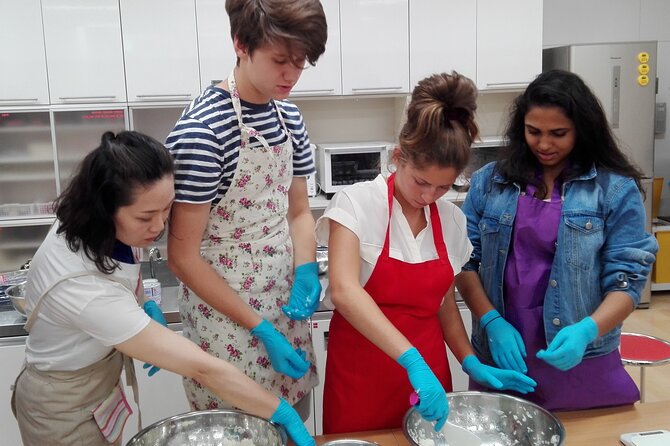
English instruction is included, along with ingredients, a free apron rental, and an English recipe. That combination keeps the class accessible even if you cannot read Japanese cooking instructions.
Yuki’s teaching style is described as patient and step-by-step. She checks the process closely and explains why each stage is done in a certain way. That matters with decorative sushi, where rushing one early step can affect the final shape.
Tell the provider about food allergies, vegan needs, vegetarian requirements, or other dietary concerns in advance. The class description specifically asks for this information before the visit. Do not wait until you arrive, since the ingredients need to be planned beforehand.
The available details do not promise that every dietary request can be met. You should receive a clear answer before booking, especially if you have a serious allergy.
Pickup from Makomanai Station
The meeting point is at 7 Chome Ishiyamahigashi, Minami Ward, Sapporo, Hokkaido 005-0850. The experience ends back at the meeting point.
Free pickup is offered from Makomanai subway station if required. Some visitors have also received help returning to the station or getting onward transportation, but you should treat that as a courtesy, not a guaranteed part of the published service.
This is the practical point to handle carefully. Confirm the exact venue and pickup plan in writing. The one serious complaint connected to the class involved a missed meeting and a wait in the rain after the person went to a different location. The provider said the address had been sent earlier, but the situation shows why you should check the details again on the day before the class.
The tour is near public transportation, but no travel time from central Sapporo is provided. Allow enough time to reach Makomanai Station and arrange pickup if you are using it. Do not assume that pickup is automatic simply because it is offered.
Is the $20.08 price good value?
At about $20.08 per person, this is an inexpensive food activity for a two-hour session. The value comes from more than the finished sushi. Your price includes instruction, ingredients, apron rental, an English recipe, and the chance to eat or take away what you make.
The home setting also keeps the experience personal without the cost of a private chef lesson. Since the class is shared and can include up to 12 people, you are paying for a group workshop rather than one-on-one tuition.
I consider the price particularly good if you want an activity that gives you a skill to repeat at home. A standard meal in Sapporo disappears quickly. Here, you also receive a recipe and a method for making decorative rolls again.
The price does not include the optional bento, beef, soup, or additional dishes unless confirmed as part of your booking. Ask about those additions before you commit, especially if you are comparing the base class with a longer cooking experience.
The activity is commonly booked well ahead, with an average booking lead time of 41 days. That suggests you should reserve early for a specific date, especially during a busy Sapporo visit or if you need a family-sized booking.
Who will enjoy this class most?
I would choose this for people who like food, hands-on activities, and conversation. It suits couples, friends, families, and visitors who want a slower morning away from the city’s main sightseeing stops.
It is also a good fit if you want to meet a local instructor in a home setting. Yuki’s friendly manner and willingness to talk about subjects beyond sushi are a large part of the experience. The class feels social as well as instructional.
Families should consider it seriously. Multiple accounts describe children enjoying the flower designs, and Yuki is praised for her patience with young participants. The careful steps may not suit a very restless child, but the colorful result gives children a clear goal.
This is less suitable if you want to eat a large restaurant-style meal, learn advanced knife skills, or have a guaranteed private class. It is also not the right choice if you dislike home-based activities, cats, or advance coordination about meeting details.
The class has a 4.9 rating from 40 reviews and a 98 percent recommendation rate. Those numbers support the strong impression of Yuki’s teaching and hospitality, but they do not remove the need to confirm dietary requests and transportation plans.
Cancellation and booking advice
Free cancellation is available if you cancel at least 24 hours before the local start time. Cancellations made less than 24 hours before the start are not refunded, and changes inside that same period are not accepted.
Booking confirmation arrives within 48 hours, subject to availability. If you have a large group, tell the provider before booking. Group discounts may be available, and the published maximum is 12 people.
Private classes are not part of the standard setup. If privacy matters to you, ask about a private arrangement before reserving rather than expecting the regular class to be exclusive.
Should you book the Sapporo sushi class?
Book it if you want an affordable, personal food activity where you make something attractive, learn a repeatable recipe, and spend time with a friendly local instructor. The flower sushi, tea, English instruction, take-home food, and possible station pickup give the class more substance than a simple cooking demonstration.
I would be most likely to recommend it to families, first-time sushi makers, and anyone with a free morning in Sapporo. Confirm the address, pickup details, group setup, and dietary needs in advance. If you handle those details carefully, this offers a memorable taste of Japanese food culture for a modest price.
FAQ
How long does the sushi class last?
The class lasts approximately two hours.
Where does the class take place?
The meeting point is 7 Chome Ishiyamahigashi, Minami Ward, Sapporo, Hokkaido 005-0850, Japan. The activity ends back at the meeting point.
Is pickup available?
Yes. Free pickup is offered from Makomanai subway station if required. Confirm the pickup details before the class.
How much does the experience cost?
The listed price is $20.08 per person.
Can I take the sushi home?
Yes. You can take away the decorative sushi rolls you make during the class.
Is instruction provided in English?
Yes. English instruction and an English recipe are included.
Are ingredients and an apron provided?
Yes. Ingredients are provided, and apron rental is free.
Can dietary needs be accommodated?
You should inform the provider in advance about food allergies, vegan or vegetarian needs, and other dietary concerns. The class details do not guarantee that every request can be accommodated.
More 2-Hour Experiences in Sapporo

More Workshops & Classes in Sapporo
More Soba & Cooking Classes in Sapporo

More tours in Sapporo we've reviewed






Soba & Cooking Classes, compared.
 ★ 5.0Popular in SapporoExperience authentic hand-made soba at a real soba shop!From $72
 ★ 5.0Mondo’s most popular plan! Experience making soba noodles and the king of Japanese cuisine, tempura, in Sapporo!From $85
 ★ 5.0Private Japanese Cooking Class in Sapporo with Local Chef ShioriFrom $108
 ★ 5.0Private Market Tour and Cooking Class with Kanae, a Sapporo LocalFrom $82
 ★ 5.0in Sapporo! Hand-made soba experience and shabu-shabu experience plan of Yezo deer meat (Gibier meat) from HokkaidoFrom $85
 ★ 5.0Private Japanese Cooking Class in Sapporo with Local Host KanaeFrom $72
 ★ 4.8Authentic Handmade Soba Experience!From $701 hour
 ★ 5.0Japanese Cooking Class in the Heart of Sapporo with SakuraFrom $72
The lists this tour appears in