
Reviewed · NOBORIBETSU & LAKE TOYA TOURS
Sapporo: Hokkaido Noboribetsu Toya-ko Otaru Full-Day Tour
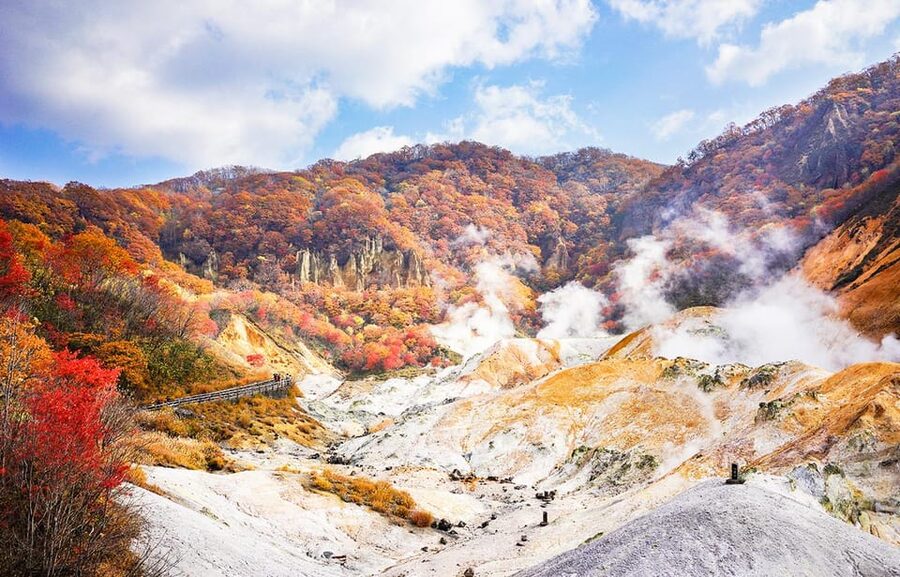
Jigokudani’s sulfur steam, bubbling springs, and yellow mineral deposits give this day trip its strongest moment. You’ll also see the remarkable Showa Shinzan, a mountain born during a 1943 eruption, then finish among Otaru’s canals, warehouses, glass shops, and music boxes.
In This Article
- Key points to know before booking
- Why this Hokkaido day trip works
- The steaming ground of Jigokudani
- Lake Toya and the mountain that appeared
- Making sense of the lunch break
- Otaru’s canals and old warehouses
- The value of $95
- Who should book this experience
- FAQ
- Where does the tour start and finish?
- How long does the tour last?
- Which languages are available?
- Is transportation included?
- Is Bear Ranch admission included?
- Can I visit Ōnunuma crater in winter?
- Can I cancel the booking?
- Should you book the Sapporo Hokkaido day trip?
I like the easy transportation and the broad sweep of Hokkaido scenery from one Sapporo pickup point. I also like the contrast between raw volcanic ground at Noboribetsu and Otaru’s old port-town charm. The drawback is time: this is a long day with plenty of bus travel, and the stops at Hell Valley and some lake viewpoints may feel rushed.
Key points to know before booking
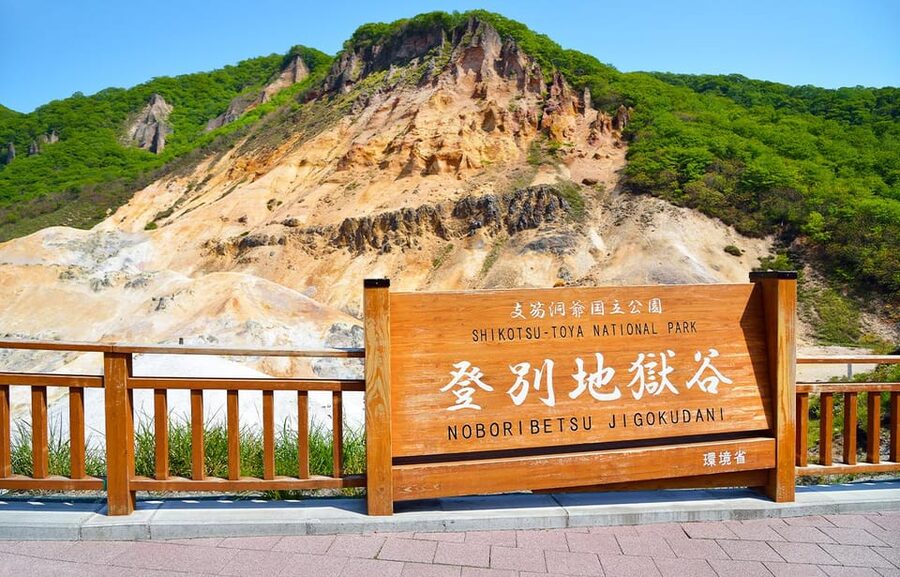
- Jigokudani’s sulfur steam: See Noboribetsu’s volcanic crater remnant, bubbling hot springs, and the strong smell of sulfur.
- Showa Shinzan’s unusual origin: Visit a mountain that rose from farmland during a 1943 volcanic eruption and is still growing.
- Lake Toya from above: Take in one of Japan’s northernmost non-freezing lakes from a high viewpoint.
- Bear Ranch costs extra: Admission is 850 yen for adults and 500 yen for children age six and above.
- Otaru closes the day: Walk past historic canals and warehouses, with time for glasswork, music boxes, and local food.
- Ten hours on the road: The trip suits you best if you want variety more than long, relaxed visits at each stop.
Why this Hokkaido day trip works
This is a greatest-hits route for southwestern Hokkaido. In one day, you move from volcanic ground to a caldera lake, then to a historic canal city. That variety is the main reason to choose it.
You begin at the Sapporo Station North Exit Group Bus Boarding Area, at North 7th West 3-chome in Chuo-ku. The meeting point is important because this tour uses a designated pickup rather than multiple hotel collections. Arrive early and look for the guide using the information sent by email. The tour ends at the same place.
The bus ride is part of the experience, though not a small part. The first ride lasts about an hour and a half, and another ride near the end lasts about 45 minutes. You’ll see Hokkaido pass by from an air-conditioned coach, but you should not book this expecting a slow walk through each town.
The guide service is available in Chinese, English, and Japanese. A driver and tour guide are included, so you do not have to work out separate trains, buses, or transfers between these spread-out sights. At $95 per person, the price makes the most sense for you if convenience and coverage matter more than choosing your own pace.
A few more Sapporo tours and experiences worth a look


The steaming ground of Jigokudani
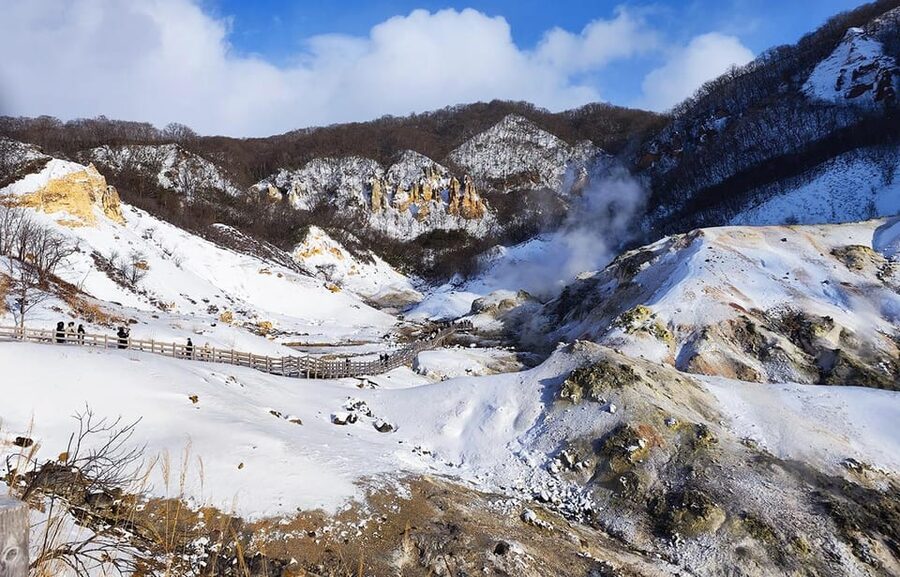
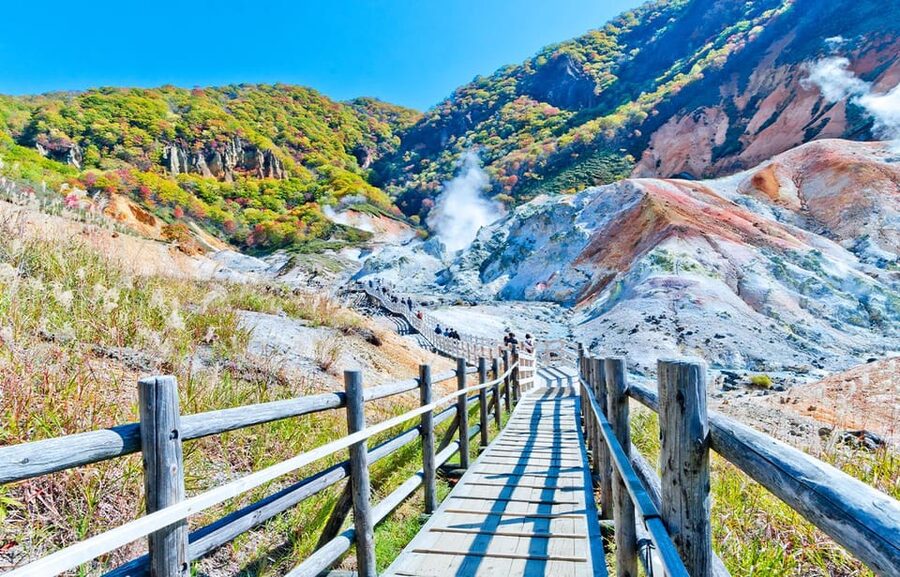
Noboribetsu’s Jigokudani, or Hell Valley, is the dramatic opener. It is the remnant of a volcanic crater formed around 10,000 years ago. White smoke rises from the ground, sulfur hangs in the air, and hot water moves through the rocks below.
This is not a polished garden or a single photo stop. The appeal comes from walking near active-looking volcanic features and noticing how the place smells, sounds, and feels. The sulfur odor is strong, so I would treat it as part of the setting rather than a nuisance.
The main visit lasts about an hour. That gives you enough time to reach the viewing areas and take photos, but not necessarily enough time for every trail. If you want the full experience, keep your pace brisk and avoid spending the entire stop at the first overlook.
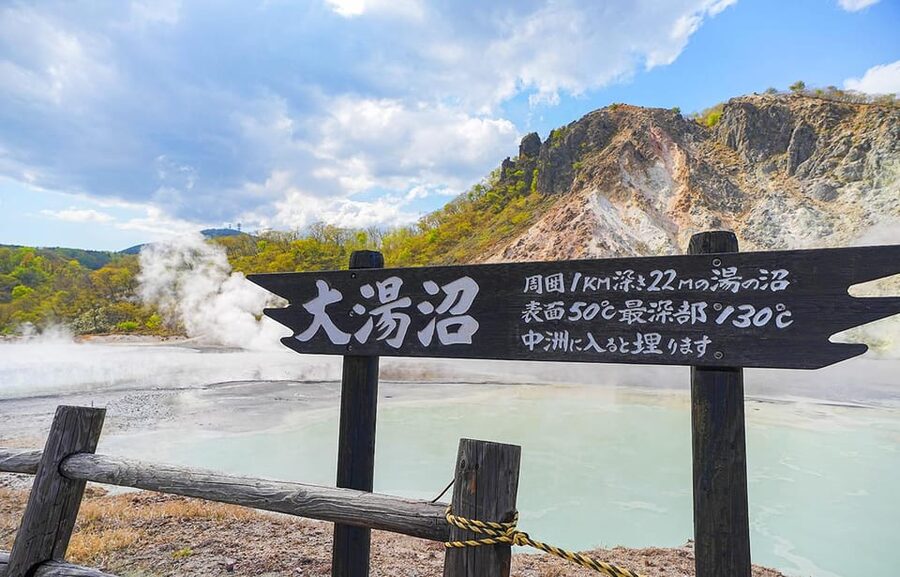
The supplied route information also refers to Ōnunuma crater, an area outside winter access. Roads close in winter, so the exact volcanic access can change with the season. The crater is linked to Mount Io’s eruption, and sulfur springs reaching about 130 degrees Celsius feed the hot spring facilities in Noboribetsu.
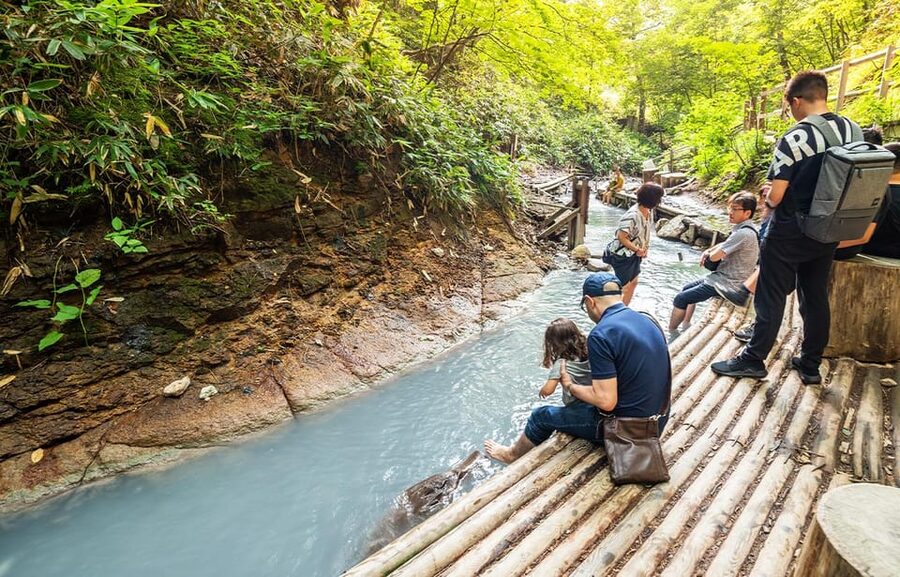
An observation deck looks over the steaming lake, and paths bring you closer to the water. You may see yellow sulfur deposits floating on the surface. There is also a wild footbath, but reaching it requires a long hike on a natural trail. If that trail is open and your schedule allows, it offers a more direct connection with the hot spring country than the short lookout visit.
Here is the practical tradeoff: Jigokudani deserves more time than the schedule may give it. One review of the day described the Hell Valley stop as too short, and I can see why. If volcanic scenery is your main reason for coming, you may leave wishing for another half hour.
Lake Toya and the mountain that appeared
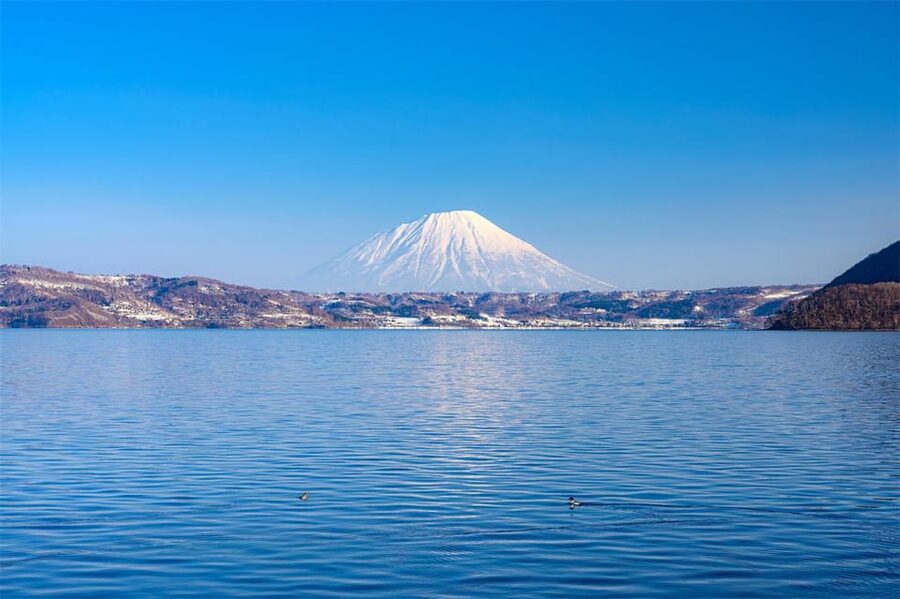
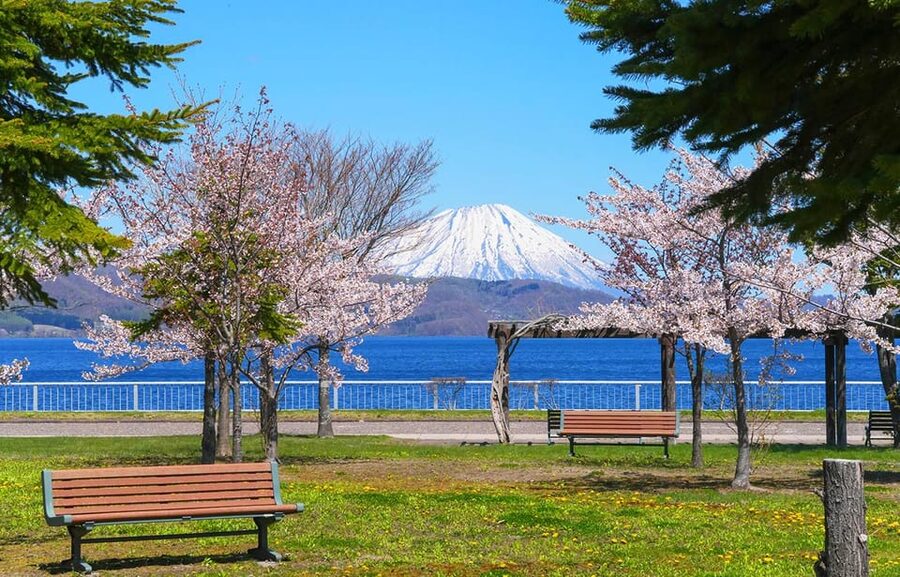
The Lake Toya section changes the mood completely. After the steam and sulfur of Noboribetsu, you get open water, distant views, and a calmer setting inside Shikotsu-Toya National Park.
Lake Toya is a nearly circular caldera lake about 10 kilometers across. It covers roughly 70.72 square kilometers, reaches a maximum depth of 180 meters, and sits at an elevation of 84 meters. It is also one of Japan’s northernmost lakes that normally does not freeze.
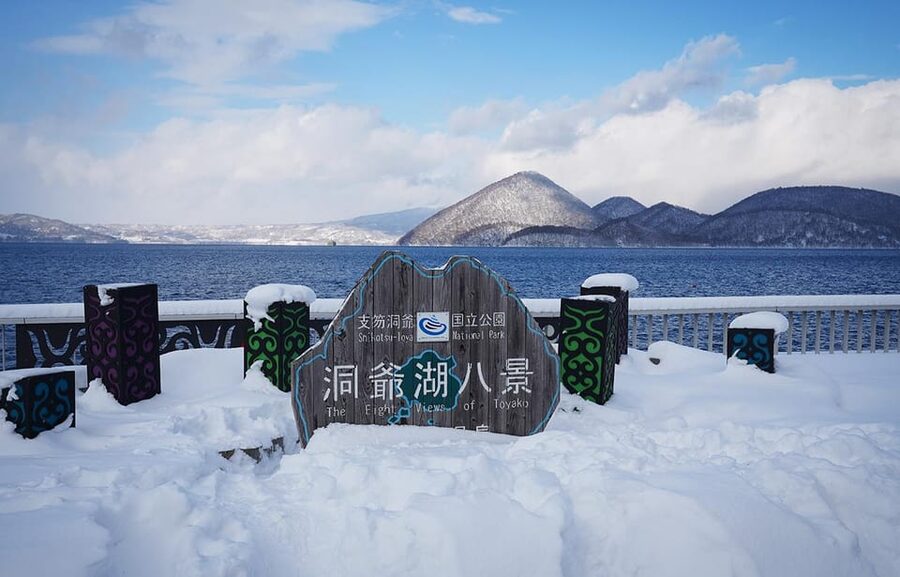
You stop briefly at one of the Lake Toya Eight Views, then spend time at the Lake Toya Observatory. The observatory visit is listed at about 10 minutes, so think of it as a panoramic photo stop rather than a long lakeside outing. The high viewpoint helps you grasp the lake’s round volcanic form in a way that a shore-level view cannot.
The wider Lake Toya visit is listed at about two hours, with Showa Shinzan included in this part of the route. The schedule gives you a useful overview, but it does not turn the area into a relaxed independent visit. Keep an eye on the departure time, especially if you stop for food or shopping.
Showa Shinzan is one of the trip’s most unusual sights. It formed during a volcanic eruption in 1943, when the ground rose and created a new mountain. The name means New Mountain, and the fact that it continues to grow makes this more than a standard scenic stop.
The nearby Bear Ranch offers the chance to see more than 100 Hokkaido brown bears. These are the largest land mammals in the region, and the close viewing makes the stop memorable. Admission is not included: adults, meaning middle school students and above, pay 850 yen, while children age six and above pay 500 yen.
The bear stop deserves a clear-eyed note. The bears are impressive animals, but the conditions at the park may trouble you. One direct account called the setting depressing despite the beauty of the bears. If animal welfare strongly shapes your sightseeing choices, you may prefer to treat this as an optional paid stop rather than the centerpiece of the day.
Making sense of the lunch break
Food is one of the less clear parts of this outing. The route includes time around Lake Toya, but it does not specify one fixed lunch restaurant or a guaranteed meal stop. You may find restaurants near the sightseeing areas, yet the bus departure time can make ordering a full meal feel uncertain.
I would plan to carry something small from Sapporo and use local restaurants only if the schedule and guide make the timing clear. That gives you a safety net without turning lunch into a stressful race. Ask the guide early where you can eat and exactly when the bus leaves.
You may also encounter shops connected to the sightseeing stops, including presentations about products such as horse oil and discount coupons. These are easy to skip if you are more interested in the scenery. Do not let a sales talk use up the few minutes you have for a volcanic trail or lake view.
Otaru’s canals and old warehouses
Otaru is the most urban and polished part of the day. Its historic canals and warehouse buildings reflect the city’s port past, while the glass shops and music-box stores give the streets a distinct old-world feel.
The canal area is easy to appreciate even on a short walk. Brick and stone warehouses line the water, and the setting feels different from modern Sapporo. You can browse the Kitaichi Glass Workshop, known for its glass art, and visit the Otaru Music Box Hall, which holds a large collection of music boxes.
This is also your best chance to eat a local specialty during the tour, though the supplied schedule does not name a particular restaurant or dish. I would use the time for a simple combination of canal photos, one shop, and a quick bite rather than trying to see every store.
Otaru often becomes the emotional finish because it is more relaxed and human-scaled than the volcanic stops. In winter, the canal is decorated with glass floats lit by candles. Snow, old warehouses, and candlelight can make the scene especially atmospheric.
There is a scheduling wrinkle. Some people may choose to end their day in Otaru instead of riding the bus back to Sapporo, and Otaru has train connections for onward travel. However, the official activity ends back at the Sapporo Station North Exit meeting point. If you plan to stay in Otaru, take the train, or carry luggage, confirm the procedure with the guide before leaving the group.
The time in Otaru may feel generous compared with the short Hell Valley stop, but that depends on what you want. If Otaru is your priority, the extra time helps. If volcanic scenery matters most, you may wish the schedule were divided differently.
A few more Sapporo tours and experiences worth a look


The value of $95
At $95, this tour is not the cheapest way to see any single one of these places. Its value comes from combining several difficult-to-link destinations in a single day with an air-conditioned vehicle and a guide.
Noboribetsu, Lake Toya, Showa Shinzan, the Bear Ranch, and Otaru are spread across Hokkaido. Organizing them independently would require checking train routes, regional buses, walking distances, and return connections. The tour removes that planning work.
You still pay extra for Bear Ranch admission, and meals are not specified as included. That means the real cost is a little above the advertised price if you choose the bear visit and buy lunch. Even so, the package can be fair for a first visit when your goal is to see a lot rather than settle into one resort town.
The price is less attractive if you prefer long walks, quiet meals, or time to explore a single place. A self-planned Noboribetsu or Otaru day would let you linger, and a separate Lake Toya visit would give you more room for the lake itself.
The strongest praise this experience earns is its range. You get a full day of Hokkaido scenery, and even the bus rides can be pleasant as the countryside passes outside the window. The main criticism is also clear: the route tries to fit a lot into ten hours.
Who should book this experience
I would recommend it to first-time Hokkaido visitors staying in Sapporo who want to cover several headline sights without renting a car. It also suits you if you enjoy a guide-led day, do not mind a long coach ride, and want both nature and town scenery.
Families may appreciate the simple transport and the bear encounter, though young children may find ten hours tiring. The same is true for anyone who wants a gentle day. The schedule has several stops, but it is not a slow-paced countryside outing.
Photography-minded visitors should like the range of subjects: volcanic steam, sulfur deposits, a caldera lake, a newly formed mountain, brown bears, canals, glass, and music boxes. Just remember that the best volcanic trails may not fit neatly into the allotted time.
Winter visitors should pay special attention to access. Ōnunuma roads close in winter, while Otaru’s candlelit canal decorations can add a memorable evening feel. Seasonal road conditions may affect which volcanic viewpoints are available, so confirm the day’s exact route.
Booking is flexible, with free cancellation up to 24 hours before departure and a reserve-now, pay-later option. Those terms are useful if your Hokkaido schedule depends on weather, but they do not change the basic need to arrive early at the Sapporo meeting point.
FAQ
Where does the tour start and finish?
It starts and ends at the Sapporo Station North Exit Group Bus Boarding Area, at North 7th West 3-chome, Chuo-ku, Sapporo City.
How long does the tour last?
The tour lasts 10 hours. Check availability for the exact starting time.
Which languages are available?
Live guide service is available in Chinese, English, and Japanese.
Is transportation included?
Yes. The price includes an air-conditioned vehicle, a driver and tour guide, and pickup and drop-off within the designated area.
Is Bear Ranch admission included?
No. Admission costs 850 yen for adults, defined here as middle school students and above, and 500 yen for children age six and above.
Can I visit Ōnunuma crater in winter?
Ōnunuma crater can be accessed outside winter. The roads are closed during winter.
Can I cancel the booking?
You can cancel up to 24 hours in advance for a full refund. You can also reserve now and pay later.
Should you book the Sapporo Hokkaido day trip?
Book it if you want maximum variety with minimum transport planning. Jigokudani and Showa Shinzan give the day real geological interest, Lake Toya supplies the views, and Otaru provides a charming change of pace.
Skip it if you want to hike deeply into Hell Valley, spend a full day beside Lake Toya, or take your time with Otaru’s shops and food. The honest choice is simple: accept the long bus rides and brisk stops, and this becomes an efficient, memorable introduction to southwestern Hokkaido. Go in expecting a leisurely tour, and the clock may frustrate you.
More Noboribetsu & Lake Toya Tours in Sapporo


More Otaru Tours in Sapporo
More Sapporo Tours in Sapporo


More tours in Sapporo we've reviewed





Noboribetsu & Lake Toya Tours, compared.
 ★ 4.7Hokkaido Seasonal: Lake Toya & Noboribetsu Jigokudani ValleyFrom $551 day
 ★ 4.0Hokkaido Noboribetsu Lake Toya Tour from SapporoFrom $66
 ★ 5.0[Departure from Sapporo] Noboribetsu Jigokudani, Lake Toya, Cape Chikyu by private carFrom $404
 ★ 3.5Hokkaido Noboribetsu Lake Toya, Otaru Panoramic Tour From SapporoFrom $120
 ★ 5.0Lake Toya and Noboribatsu Hell Valley Private Day TripFrom $365
 ★ 4.51-Day Pass for Noboribetsu Date JidaimuraFrom $19
 ★ 5.0Hike Mt. Usu and visit Lake Toya Day TourFrom $156
 ★ 5.0Noboribetsu: Orofure Pass Snowshoeing TourFrom $1545 hours
The lists this tour appears in