
Reviewed · NOBORIBETSU & LAKE TOYA TOURS
Noboribetsu: Orofure Pass Snowshoeing Tour
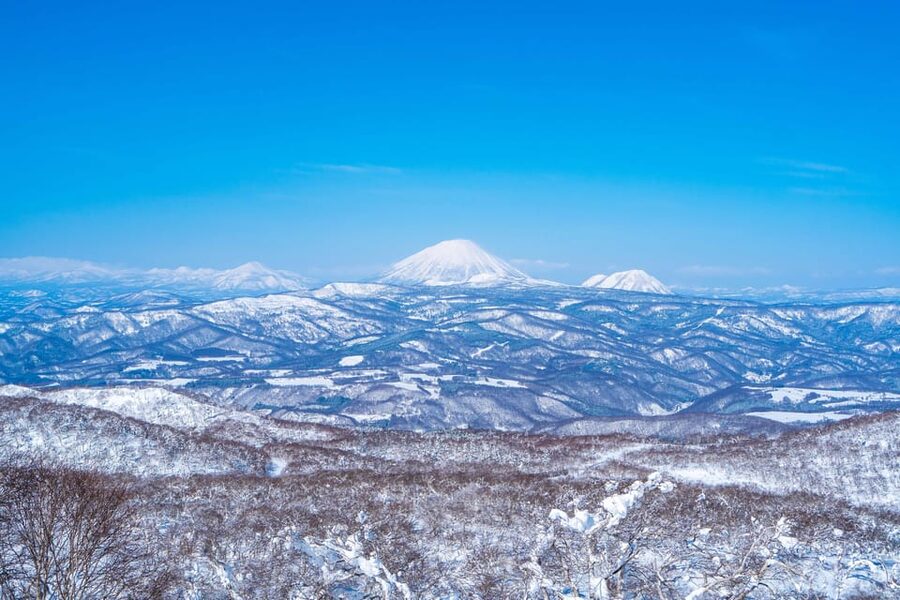
Orofure Pass turns a winter walk into something far more memorable: you snowshoe through heavy powder beneath trees coated in ice, then climb toward a ridgeline framed by Noboribetsu’s famous snow monsters. On a clear day, the view reaches Mt. Orofure, Mt. Yotei, and Lake Toya.
In This Article
- Key points to know before booking
- Why Orofure Pass makes a strong winter day out
- The drive from Noboribetsu to the trail
- Learning to snowshoe through the forest
- Meeting the snow monsters on the ridgeline
- The panorama toward Mt. Orofure, Mt. Yotei, and Lake Toya
- A sheltered lunch stop and hot drink
- What the $154 price really covers
- Clothing, footwear, and fitness advice
- The guide’s personal touch
- Should you book the Orofure Pass snowshoe tour?
- FAQ
- How long is the Orofure Pass snowshoeing tour?
- How far is Orofure Pass from Noboribetsu?
- What can I see during the snowshoe walk?
- Is transportation included?
- What snowshoe equipment is provided?
- Is food included?
- What clothing should I wear?
- Can beginners join the tour?
- How many people can join the group?
- What happens if the weather is bad?
I like the small group, limited to seven people, and the personal touch from guide Aidan, who teaches first-timers how to use snowshoes and keeps the outing friendly and relaxed. I also like that pickup, snowshoes, poles, gaiters, a hot drink, and a snack are included. The main catch is the effort: this is a real mountain walk, not a gentle scenic stroll, and weather can cancel or shorten it.
Key points to know before booking
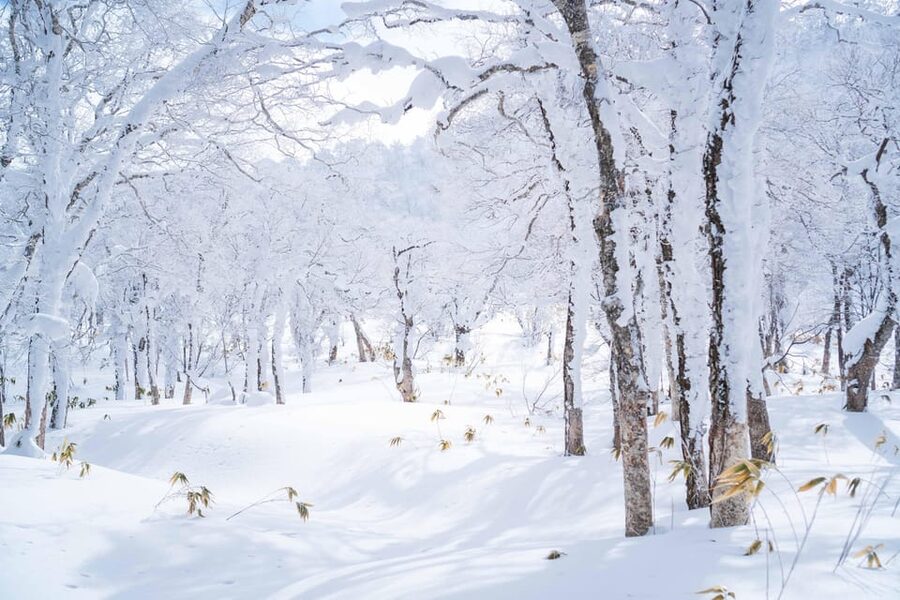
- The snow monsters are the star: Ice and snow build up on the trees at Orofure Pass, creating unusual white shapes along the ridge.
- You get a proper winter outing: The five-hour trip includes an ascent, uneven ground, a ridgeline walk, and a descent.
- Aidan guides beginners well: He explains snowshoe technique and helps you feel prepared before the route gets steeper.
- The group stays small: With no more than seven participants, the pace and conversation can feel personal.
- The views depend on mountain weather: Clear conditions may reveal Mt. Yotei and Lake Toya, but cloud, wind, or heavy snow can change the day.
- You must bring your own winter kit: Warm layers, gloves, a hat, water, outdoor shoes, and a daypack are your responsibility.
Why Orofure Pass makes a strong winter day out
Orofure Pass is about 30 minutes from Noboribetsu, but the setting feels far removed from the town’s hot springs and hotel district. The quick drive matters because you spend more of your five-hour booking outside in the snow rather than sitting in a vehicle.
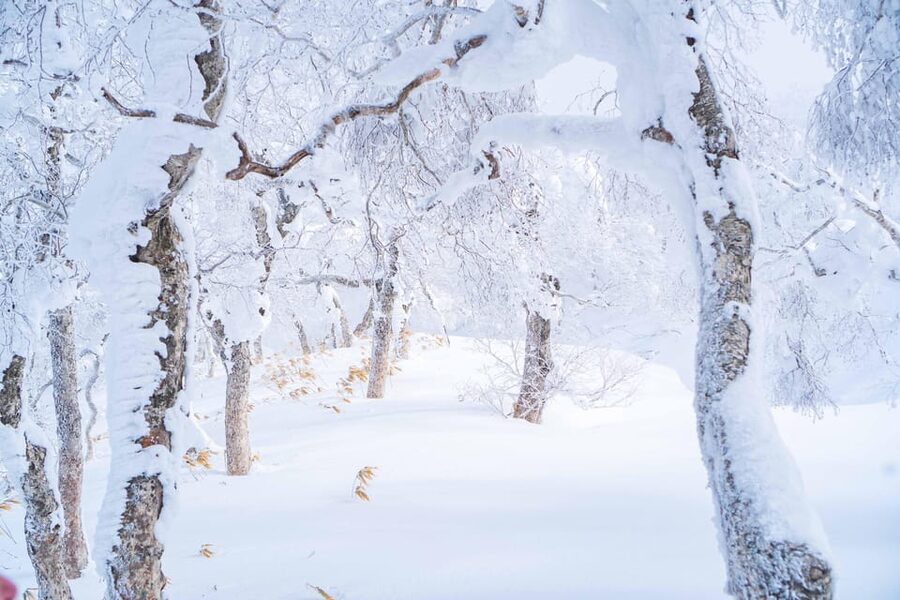
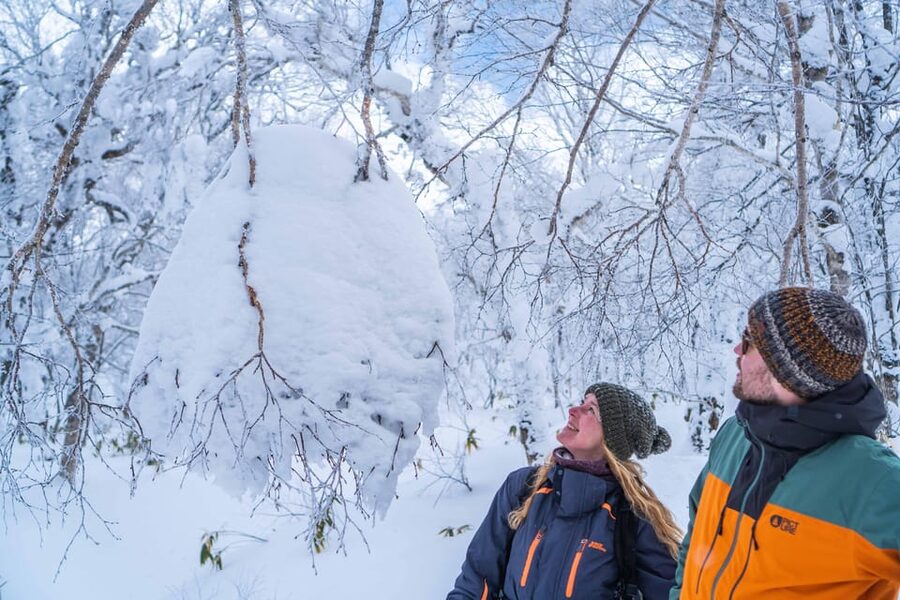
The appeal is not simply snow. Hokkaido has plenty of it. Here, wind and freezing conditions coat the trees until their branches swell into strange, rounded forms. These are the snow monsters, and they give the walk a clear sense of place. You are not just crossing a snowy forest. You are looking at a winter effect tied to this mountain pass.
I like the way the route builds its rewards. You begin in the forest, where the snow creates a quiet, enclosed setting. Then you work upward toward the ridgeline, where the trees become more heavily coated and the views open out. The route has a natural rhythm: forest, ascent, snow monsters, panorama, descent, and a sheltered break.
That rhythm also tells you what kind of activity this is. You need enough fitness to walk uphill and downhill over uneven terrain. Snowshoes make deep snow manageable, but they do not remove the work of climbing. If you have a low level of fitness, back, heart, or mobility problems, this is not the right choice.
A few more Noboribetsu tours and experiences worth a look


The drive from Noboribetsu to the trail
Pickup and drop-off are included, which makes this outing easier to fit into a Noboribetsu stay. Look for a gray or black Mitsubishi Delica with license number 207, and tell the operator the name of your hotel or accommodation.
The drive to Orofure Pass takes about 30 minutes. That short transfer is useful in winter, especially if you do not have a rental car or want to avoid driving mountain roads in snow. It also keeps the tour focused on one area rather than trying to pack several distant sights into a single day.
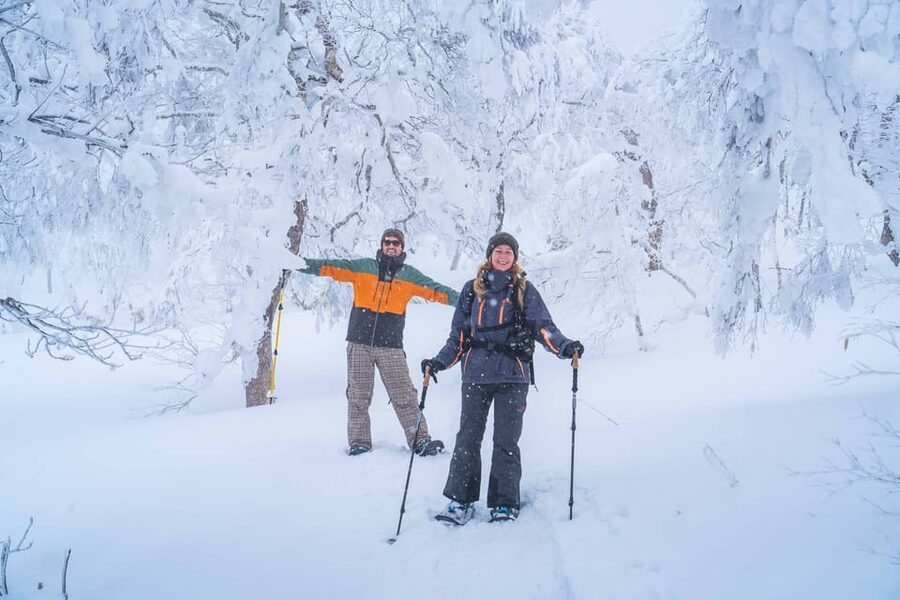
The group is limited to seven participants, and the guide speaks English and Japanese. A small party is a real advantage here. Snowshoeing over uneven snow works better when the guide can watch each person’s footing, explain the route, and adjust the pace without managing a crowded line.
Guide Aidan receives especially strong praise for his clear instruction and easy conversation. That matters most if this is your first time on snowshoes. He has also helped with practical transport details, including special pickup arrangements and drop-offs that suited a participant’s onward plans. Those extras should not be treated as guaranteed parts of the package, but they show the kind of personal service you may receive.
Learning to snowshoe through the forest
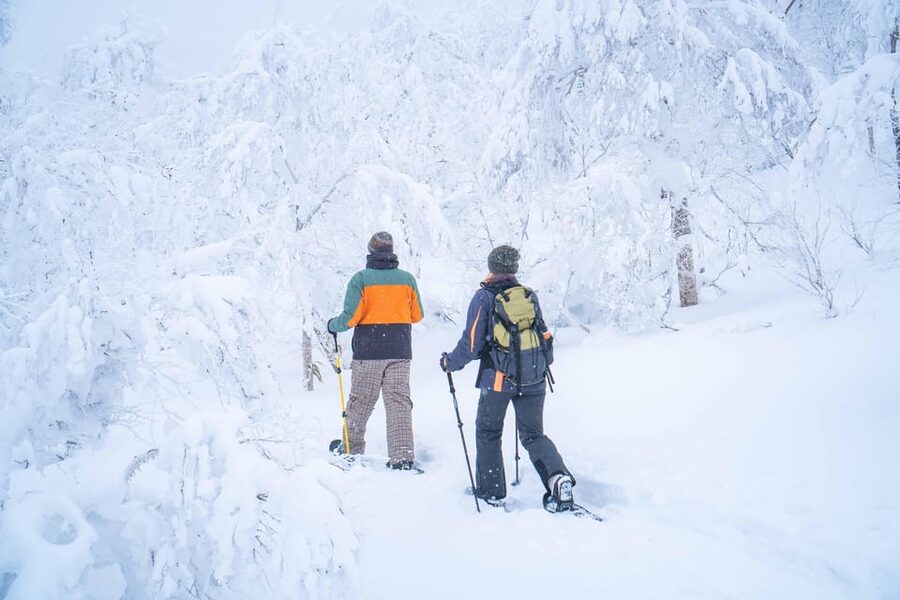
The tour supplies snowshoes, poles, and gaiters. You bring the rest of your clothing and footwear, so do not confuse included equipment with a full winter clothing rental.
Snowshoes spread your weight over a larger area, helping you walk across deep powder without sinking as quickly. Poles give you balance on slopes, while gaiters help keep snow from getting into your shoes and lower trousers. Aidan’s instruction is particularly helpful at the start, since a snowshoe stride feels different from an ordinary walk.
The forest section is where you settle into the movement. You may find the pace fairly easy in good weather, as one participant described, but the conditions can change the effort. Fresh powder, wind-packed snow, a slope, or poor visibility can all make the same route feel harder.
Use short steps and keep your pole rhythm steady. Do not dress for standing around at a resort. You will warm up as you climb, then cool down quickly during photo stops or exposed sections. Several thin layers are better than one heavy coat because you can adjust as your body temperature changes.
The operator specifically asks you not to wear jeans. That is sound advice. Denim holds moisture and restricts movement, both poor traits for a cold mountain walk. Avoid cotton where possible, and wear outdoor clothing that can handle snow, wind, and sweat.
Meeting the snow monsters on the ridgeline
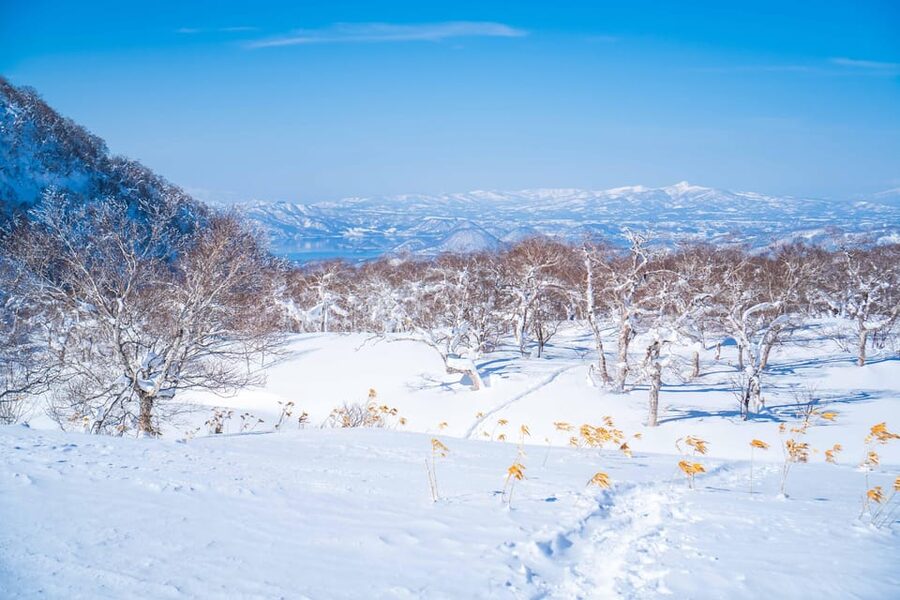
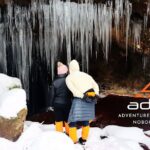
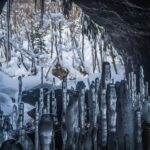
The most unusual part of the route comes when you reach the ridgeline and snowshoe beneath the ice-coated trees. Heavy snow falls on the branches, then freezes in place. Wind helps shape the buildup, producing bulky white forms that can look almost sculpted.
The effect is weather-made, not a permanent attraction with fixed viewing conditions. The shapes may change through the season, and fresh snow or strong wind can alter what you see. That is part of the appeal, but it also means you should not expect a perfectly predictable scene.
The ridgeline brings more exposure than the forest. Mountain weather can change quickly, even if Noboribetsu is sunny when you leave. Bring a windproof jacket, warm gloves, a hat, and sunglasses. Sunglasses help with glare from the snow, while a hood or hat protects you when wind picks up.
Aidan’s role becomes important here. The group needs to stay together, and the guide must judge how far it is sensible to continue. If conditions become unsafe, the tour may be canceled, postponed if possible, or ended early. If someone is injured or the guide decides the route is no longer safe, the outing finishes.
That policy may disappoint you if you have traveled a long way for a particular view, but it is the correct approach for a mountain activity. The tour is built around natural conditions, not a guaranteed photo stop.
The panorama toward Mt. Orofure, Mt. Yotei, and Lake Toya
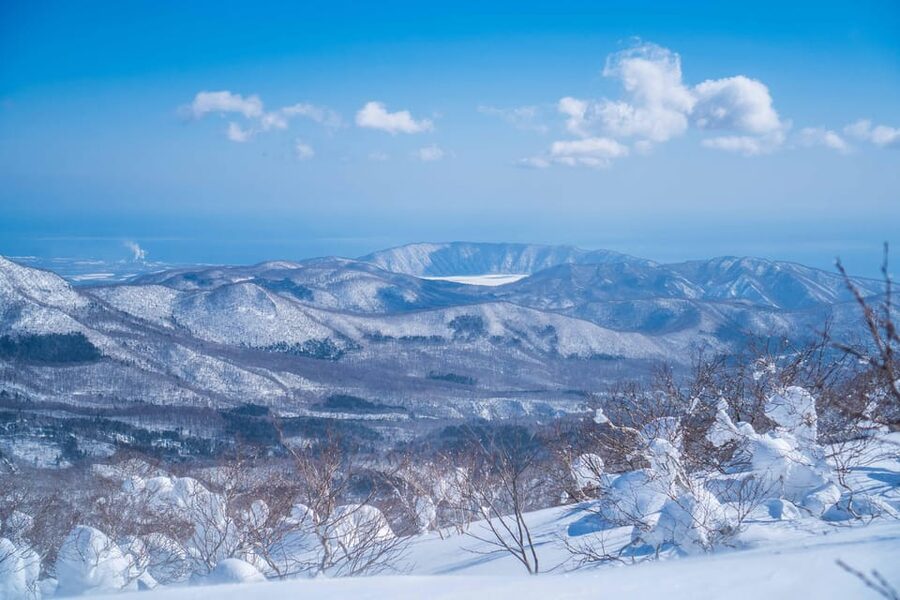
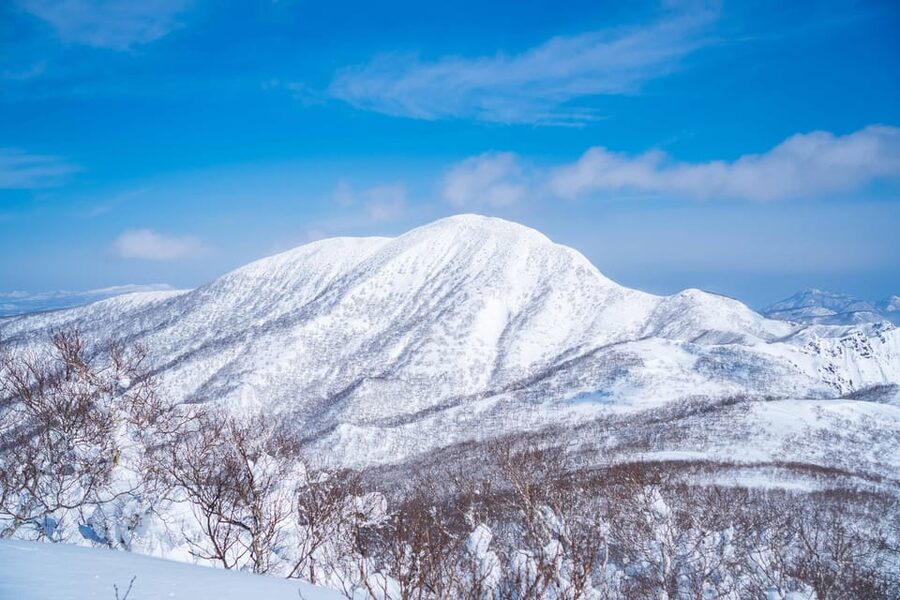
After the snow monsters, the route continues upward until the surrounding area comes into view. On a clear day, you may see Mt. Orofure, Mt. Yotei, and Lake Toya. These are not minor background details. They give you a sense of the scale of the area and make the climb worthwhile.
Mt. Orofure provides the immediate mountain context. Mt. Yotei is one of Hokkaido’s best-known peaks, and Lake Toya adds a broad, contrasting shape to the view. The exact panorama depends on clouds, snowfall, and wind, so keep your expectations flexible.
I would treat the views as a bonus rather than the only reason to book. The snow-covered forest and tree formations still give the outing value when the horizon is partly hidden. If the weather is clear, the reward grows considerably. If the mountain is cloudy, the atmosphere can still be striking, but you should not expect the full postcard view.
This is also a good place to remember that winter photography takes more effort than it appears. Batteries can drain in the cold, gloves make camera controls awkward, and bright snow can fool automatic exposure. Keep your phone or camera protected between shots, and make sure you can put it away quickly if the weather turns.


A sheltered lunch stop and hot drink
The group then makes its way back down and stops in a sheltered spot for lunch and a hot drink. The tour includes a hot drink and snack, while you are asked to bring your own water and additional food if needed.
That break is more important than it sounds. A warm drink gives you a chance to reset after the exposed ridge, and a sheltered stop lets you eat without standing in wind. On a five-hour winter outing, a small snack may not be enough for everyone, especially if you are unused to uphill snow travel. Bring something extra that you can eat easily with cold hands.
Aidan’s personal approach has included homemade cookies and a sandwich prepared by his wife for some outings. Those touches have been warmly appreciated, but they are best viewed as occasional kindnesses rather than promised inclusions. The dependable provision is the listed hot drink and snack.
The descent follows the break, continuing back toward the vehicle. Going downhill on snowshoes can be less tiring than climbing, but it still requires care. Uneven snow can catch a foot, and poles help with balance. Keep your attention on the surface instead of rushing to finish.
What the $154 price really covers
At $154 per person, this is not a cheap sightseeing transfer. You are paying for a five-hour guided mountain activity, transport from Noboribetsu, snowshoes, poles, gaiters, a hot drink, and a small-group format.
The value improves if you are a first-time snowshoer. You do not need to buy or rent the core snowshoe equipment separately, and an English-speaking guide can show you how to use it. Pickup also removes the need to arrange your own transport to Orofure Pass.
The price is harder to justify if you already own winter gear, have strong snowshoe experience, and can safely reach the pass yourself. In that case, part of what you are paying for is convenience and local guiding rather than equipment alone.
I see the strongest value in the small group. A seven-person maximum gives you more direct contact with Aidan than a large coach-based winter excursion. It also suits solo visitors, who can otherwise find outdoor activities awkward to arrange. Aidan has made solo participants feel included and safe, which is a meaningful advantage.
You can reserve and pay later, and cancellation is free up to 24 hours in advance for a full refund. Weather remains a separate issue because mountain conditions may lead to cancellation or postponement. You also need your own travel insurance, since Nobo Tours does not provide insurance for participants.
Clothing, footwear, and fitness advice
Take the packing instructions seriously. You should bring:
- Warm layers that you can add or remove
- A windproof jacket
- Gloves and a hat
- Comfortable outdoor shoes
- Sunglasses
- Water
- A daypack
- Extra snacks if you need more than the included snack
Do not wear jeans, skirts, or dresses. Movement is difficult in restrictive clothing, and jeans are a poor choice in wet snow. Comfortable shoes are listed, but they must be suitable for winter outdoor use. The tour supplies snowshoes and gaiters, not your complete footwear system.
You should be able to walk up and down uneven ground for several hours. The activity is not suitable for wheelchair users or people with mobility impairments, back problems, heart problems, a cold, or a low level of fitness. Children under 18 are also not accepted.
If you are unsure about your fitness, ask yourself whether you can climb and descend on snow while wearing winter clothing and carrying water. If that sounds doubtful, choose a shorter or less demanding winter activity instead.
The guide’s personal touch
Aidan is a major part of the experience. His guiding style combines snowshoe instruction, local information, and steady conversation. He has helped beginners feel comfortable, and he has been attentive to practical needs such as lunch preferences and onward transportation.
Some outings have included homemade cookies, a sourdough bread sandwich, and photos taken by the guide. One participant was even dropped at an onsen after the tour. These are thoughtful additions, but they are not listed as standard services, so you should book for the route and guiding rather than expect every extra.
The personal feel is especially useful in a small group. Aidan can answer questions about the area, point out features along the route, and keep the mood light when the climb gets tiring. For a solo participant, that can make the day feel social without turning it into a loud group event.
Should you book the Orofure Pass snowshoe tour?
I would book this tour if you want a genuine winter activity near Noboribetsu, especially if you are new to snowshoeing and do not have your own equipment. The snow monsters are unusual, the possible views are excellent, and the small group with Aidan gives the outing a personal edge.
I would not book it if you want a guaranteed panorama, dislike cold-weather exertion, or need an accessible route. Mountain weather can shorten or cancel the day, and the climb over uneven snow demands more than a casual walk.
For the best chance of enjoying it, dress in layers, bring water and extra food, leave the jeans at your accommodation, and accept that the mountain sets the schedule. If you are comfortable with that bargain, $154 buys a memorable five-hour slice of Hokkaido winter.
FAQ
How long is the Orofure Pass snowshoeing tour?
The tour lasts five hours, including pickup from Noboribetsu, the snowshoe route, a sheltered break, and the return drive.
How far is Orofure Pass from Noboribetsu?
Orofure Pass is located about 30 minutes from Noboribetsu by vehicle.
What can I see during the snowshoe walk?
The route includes a snowy forest, ice-coated snow monsters, and a ridgeline with possible views of Mt. Orofure, Mt. Yotei, and Lake Toya.
Is transportation included?
Yes. Pickup and drop-off are included. Look for a gray or black Mitsubishi Delica with license number 207, and provide the name of your accommodation.
What snowshoe equipment is provided?
Snowshoes, poles, and gaiters are included.
Is food included?
A hot drink and snack are included. You should bring your own water and any additional snacks you need. The tour also includes a stop for lunch in a sheltered spot.
What clothing should I wear?
Wear warm layers, outdoor clothing, a windproof jacket, gloves, a hat, and suitable outdoor shoes. Sunglasses are also needed. Do not wear jeans, skirts, or dresses.
Can beginners join the tour?
Yes. Aidan provides snowshoe instruction and helps first-time participants learn how to use the equipment. You still need enough fitness to walk uphill and downhill over uneven terrain.
How many people can join the group?
The group is limited to seven participants.
What happens if the weather is bad?
The tour may be canceled or postponed if possible. If an injury occurs or the guide decides it is unsafe to continue, the tour will finish. You need to arrange your own insurance because Nobo Tours does not provide insurance for customers.
More Noboribetsu & Lake Toya Tours in Noboribetsu
More tours in Noboribetsu we've reviewed
Noboribetsu & Lake Toya Tours, compared.
 ★ 4.7Hokkaido Seasonal: Lake Toya & Noboribetsu Jigokudani ValleyFrom $551 day
 ★ 4.0Hokkaido Noboribetsu Lake Toya Tour from SapporoFrom $66
 ★ 5.0[Departure from Sapporo] Noboribetsu Jigokudani, Lake Toya, Cape Chikyu by private carFrom $404
 ★ 3.5Hokkaido Noboribetsu Lake Toya, Otaru Panoramic Tour From SapporoFrom $120
 ★ 5.0Lake Toya and Noboribatsu Hell Valley Private Day TripFrom $365
 ★ 4.51-Day Pass for Noboribetsu Date JidaimuraFrom $19
 ★ 5.0Hike Mt. Usu and visit Lake Toya Day TourFrom $156
 ★ 5.0Mt. Usu: Hike to the crater and see the stunning Lake Toya!From $161
The lists this tour appears in