
Reviewed · SNOWSHOE & WINTER TOURS
Oyunuma Hot Spring Pond Winter Panorama Tour
The best part of this tour is the chance to see Noboribetsu’s volcanic ponds in winter, when steam, snow, and primeval forest create a scene far removed from the town’s busy hot-spring streets. I like the small group limit of six, and I like that the guide supplies snowshoes or crampons, Nordic poles, and hot coffee. The walk is short enough to fit neatly into a Noboribetsu stay.
In This Article
- Key points to know before booking
- Oyunuma in winter, where hot water meets deep snow
- Okunoyu and the volcanic connection to Hell Valley
- Snowshoes, crampons, and the real work of winter walking
- What the two hours feel like on the trail
- The equipment praise matters more than the star rating
- What you need to wear and carry
- Who will enjoy this tour most
- Timing, group size, and cancellation flexibility
- Is Oyunuma worth choosing over a simple sightseeing stop?
- Should you book the Oyunuma Winter Panorama Tour?
- FAQ
- Where does the tour start and finish?
- How long is the activity?
- How far do you walk?
- What places will I see?
- Is the tour suitable for children?
- Are snowshoes provided?
- What should I bring?
- What happens if the weather is bad?
The main catch is the snow. This is not a flat stroll on a cleared path. The roughly 2-kilometer route includes uphill and downhill sections, with snow depth changing along the way. You must bring your own warm clothing, gloves, headwear, and footwear, and the supplied snow equipment has no children’s sizes.
Key points to know before booking
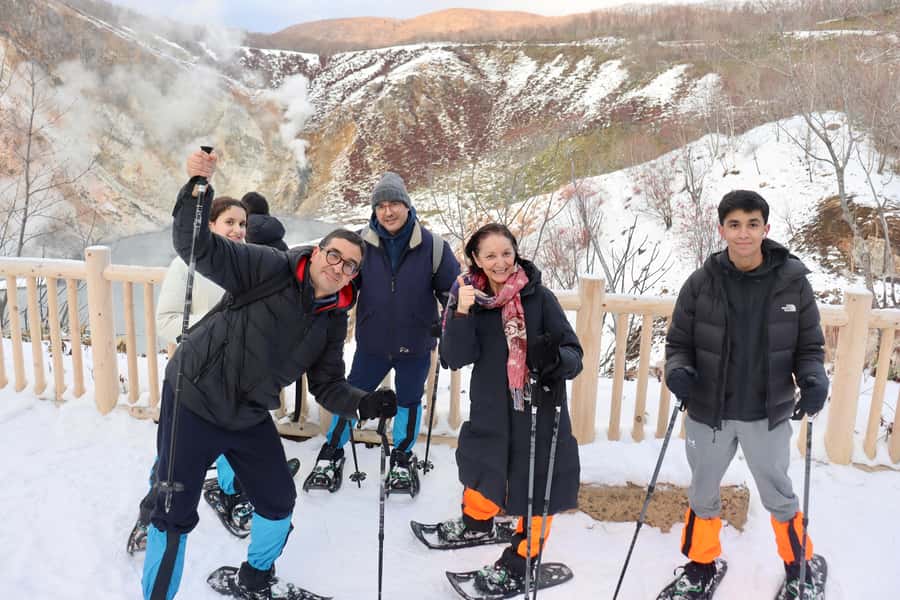
- Oyunuma and Okunoyu ponds: See two geothermal ponds in Noboribetsu’s volcanic area, linked with Hell Valley.
- About 2 kilometers on snow: Expect a moderate walk with uphill and downhill sections.
- Small group of six: A compact group gives the guide room to help with equipment and footing.
- Snowshoes or crampons included: Nordic poles are also supplied, but children’s sizes are not available.
- Hot coffee at the end: A simple, welcome warm-up after walking in the cold.
- Best for ages 9 and up: Children must be accompanied by an adult, and solo participation requires contacting the operator.
Oyunuma in winter, where hot water meets deep snow
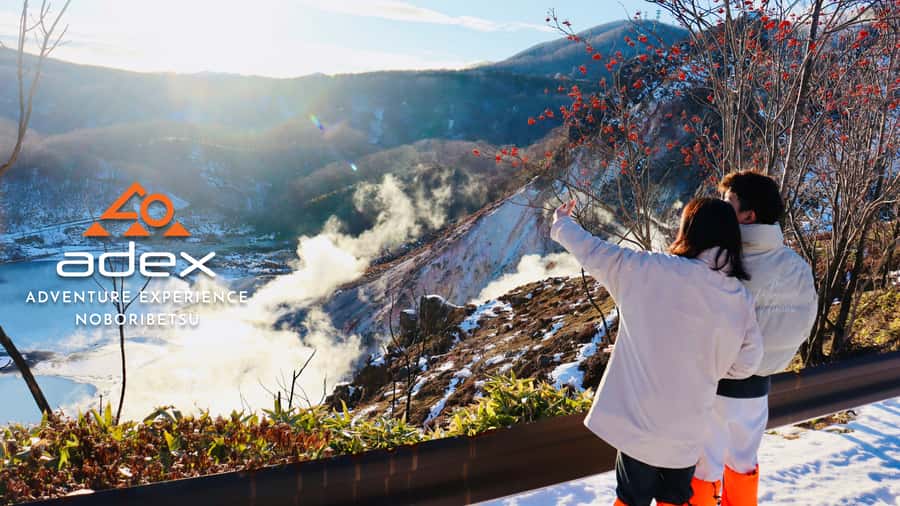
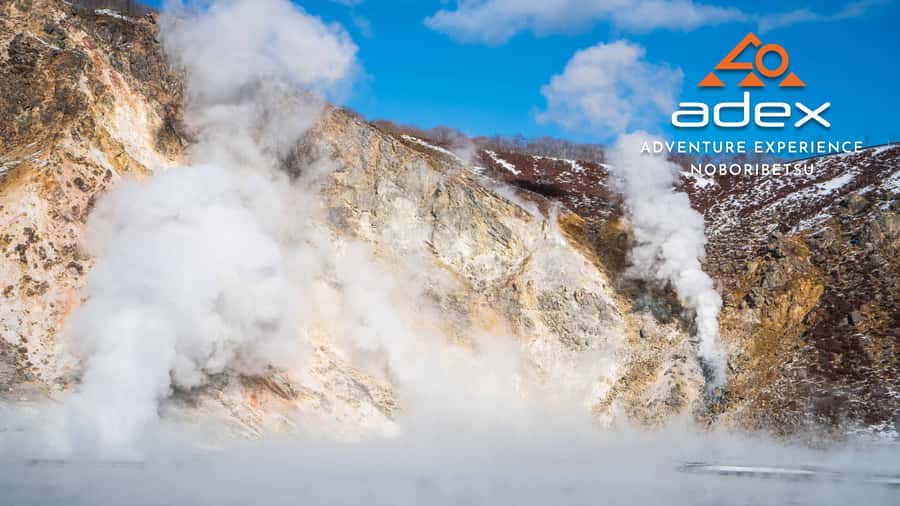
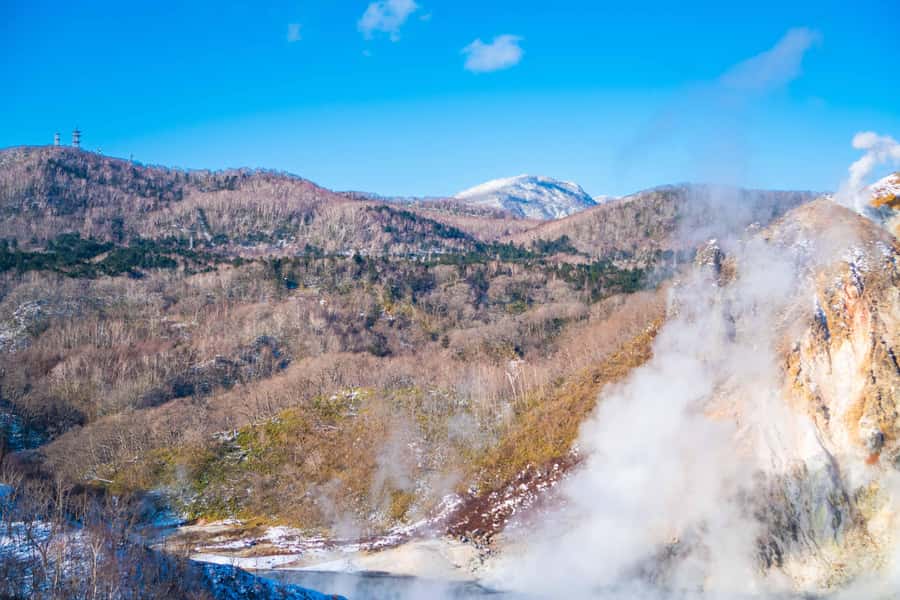
Oyunuma is the main sight on this outing, and it gives you a close look at the geothermal force below Noboribetsu. The pond sits in the volcanic area associated with Noboribetsu Onsen, and it is connected to Hell Valley, the better-known geothermal zone nearby.
In winter, the contrast does the visual work. Snow covers the ground and the surrounding forest, while the hot spring ponds remain signs of heat beneath the surface. You will be walking rather than simply stopping at a lookout, so the guide can point out the relationship between the ponds, the volcanic area, and the surrounding primeval forest.
That setting is the reason to choose this activity instead of spending all your time around the resort streets. Noboribetsu Onsen is easy to enjoy from a bathhouse, but this walk shows you the natural source of the area’s character. You see the forest and geothermal features together, rather than as separate attractions.
The tour begins at adex base and returns there after about two hours. The supplied information does not give a detailed minute-by-minute schedule, so you should expect the guide to set the pace according to snow conditions and the group.
A few more Noboribetsu tours and experiences worth a look


Okunoyu and the volcanic connection to Hell Valley
Okunoyu is the second hot spring pond included in the route. Seeing both ponds makes the outing more worthwhile than a quick visit to one scenic point, especially if you want a better sense of the geothermal area around Noboribetsu.
The two ponds are part of the same volcanic setting connected to Hell Valley. Your guide explains the geothermal features as you walk, helping you understand why the area has hot springs, steaming ground, and unusual winter scenery. This is an introductory activity, not a technical geology lesson, but it gives the landscape context that you miss from a simple photograph.
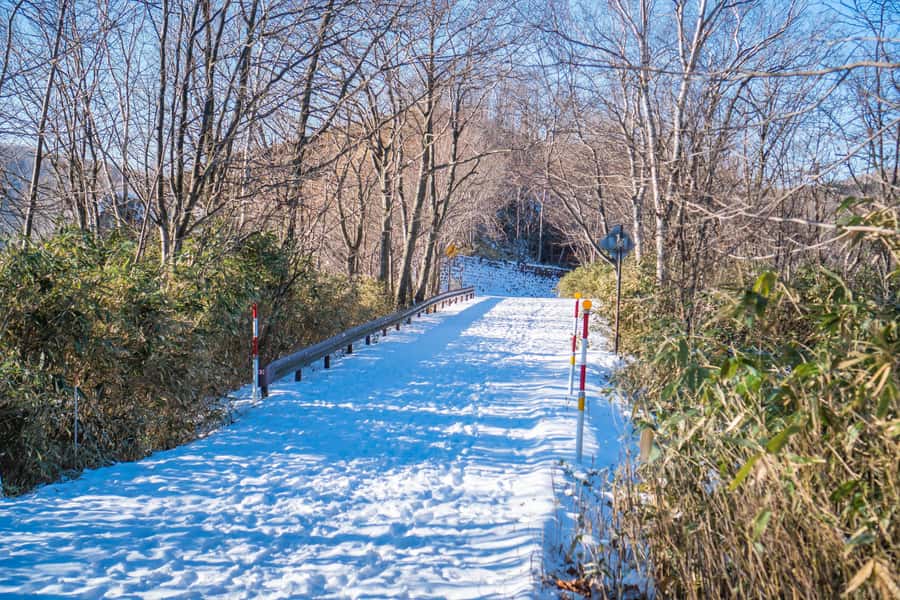
The route covers about 2 kilometers, yet snow makes that distance feel different from a normal city walk. One section may be firm enough for easy progress, while another may require more care. The changes in snow depth, along with the slopes, are the practical challenge.
If you are comfortable walking at a moderate pace and can manage uneven snowy ground, the route should be approachable. If you dislike slippery footing or tire quickly on inclines, you should treat the word moderate seriously.
Snowshoes, crampons, and the real work of winter walking
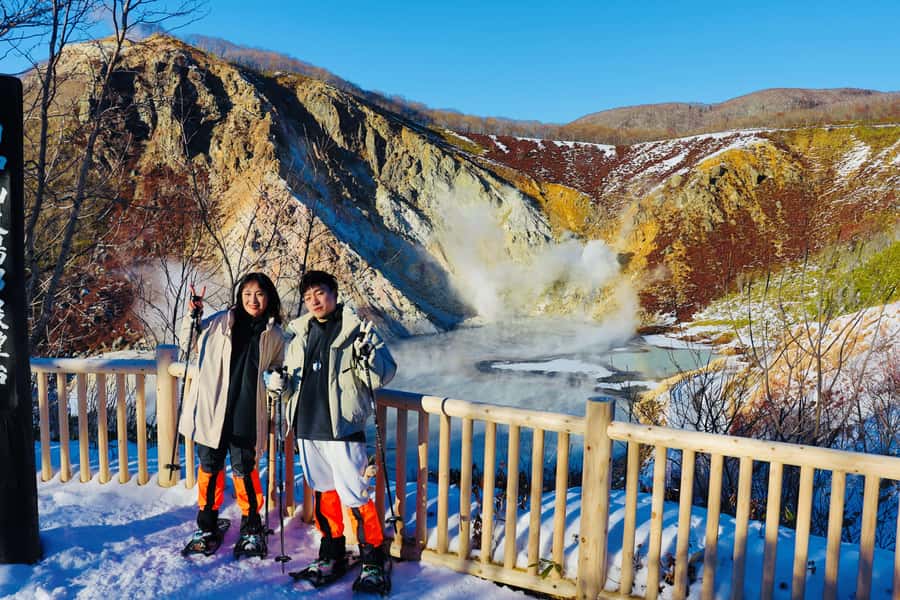
Snow equipment is included, which is a major part of the tour’s value. Depending on conditions, you receive snowshoes or crampons, along with Nordic poles. That means you do not need to arrange the basic traction equipment yourself.
The gear matters because ordinary walking shoes are not enough for every section of a snowy route. Snowshoes help spread your weight on softer snow, while crampons provide grip where the surface is firmer or icy. The guide can help you use the equipment, though the supplied details do not specify the exact model or fitting process.
There is one important limitation: children’s sizes are not available. The activity is described as suitable for school-age children through adults, but it also says children under 9 are not suitable. In practice, families should confirm that children age 9 or older can fit the equipment and manage a two-hour snowy walk.
Bring comfortable footwear that works with the supplied gear. Do not assume the operator provides boots. Footwear is specifically excluded, along with warm clothes, gloves, and headwear.
What the two hours feel like on the trail

You meet your guide at adex base, receive the needed winter equipment, and set out toward the ponds. The tour is offered with a live guide in English or Japanese, so you can learn about the geothermal features while walking rather than trying to piece everything together afterward.
The route is compact, but the snow changes its character. You may walk through deeper sections, handle modest climbs, and descend carefully in places. Nordic poles help with balance, especially when the surface is uneven.
The natural setting is a key part of the experience. Noboribetsu’s primeval forest growth surrounds the geothermal area, giving the walk more variety than an exposed viewpoint. Snow softens the forest and makes the hot ponds feel even more striking by contrast.
At the end, hot coffee is included. It is a small touch, but a useful one. After two hours outdoors in winter, a warm drink feels practical rather than decorative.
Because the group is limited to six participants, the guide has a better chance to keep the pace manageable. Small groups also make it easier to ask questions and get help with poles or snowshoes. The minimum is two participants, so solo visitors should contact the operator before counting on a departure.
The equipment praise matters more than the star rating
The strongest positive details attached to this experience are the guide’s attentive, professional approach, the quality of the equipment, and the views along the route. Those points matter here because winter conditions can make a simple walk unpleasant if the gear is poor or instructions are rushed.
You are not paying only for a marked route. The $41 price includes a guide, snowshoes or crampons, Nordic poles, hot coffee, and tax. For a two-hour activity, that is a fair package if you would otherwise need to rent snow equipment and arrange a separate visit to the ponds.
The value is best for visitors who want an active introduction to Noboribetsu’s natural side. It is less compelling if you only want a quick photograph of a hot spring pond, since the tour requires preparation and physical effort.
A single five-star booking from January 2025 praised the guide as attentive and professional, the equipment as high quality, and the views as splendid. That is encouraging, but the rating is based on only one review, so I would not treat it as a broad performance record. The practical details of the tour provide a stronger basis for deciding.
A few more Noboribetsu tours and experiences worth a look
What you need to wear and carry
The operator supplies traction equipment and poles, but you provide nearly everything that keeps you warm. Plan your clothing with the expectation that you will be outdoors for the full walk.
Bring:
- Warm winter clothing
- Snow clothing
- Gloves
- Headwear
- Comfortable footwear
- Water
- Snacks
The activity information specifically calls for comfortable shoes, warm clothing, snacks, water, and snow clothing. Since footwear is not included, check your own boots before leaving your accommodation. Cold feet can spoil an otherwise enjoyable outing quickly.
A snack is sensible even though the walk is only two hours. The route includes slopes and different snow depths, so it is more demanding than the distance suggests. Water also matters in cold weather, when you may not notice thirst as quickly.
Smoking is not allowed during the activity. The tour may be cancelled in bad weather, with a full refund, which is a sensible safety rule for a snow route.
Who will enjoy this tour most
This outing suits you if you want a short, guided outdoor activity during a Noboribetsu visit. It works especially well for people who want to see the volcanic area beyond the hot-spring hotels, but do not want a full-day hike.
Families can consider it for children age 9 and older, provided an adult accompanies each child and the equipment fits. The lack of children’s gear sizes is the detail to settle before booking. Adults of different ages can join if they are comfortable with moderate walking in snow.
It also suits first-time snowshoe users. You do not need to organize the main equipment, and the guide leads the group through the area. Still, introductory does not mean effortless. You should be ready for uneven ground, changing snow depth, and gentle climbs and descents.
This is not the best choice for anyone seeking a completely flat or fully cleared route. It is also not suitable for children under 9, according to the stated age guidance.
Timing, group size, and cancellation flexibility
The tour lasts two hours, with availability depending on the selected starting time. That makes it easy to pair with other Noboribetsu activities, though you should leave yourself enough time to get to adex base and prepare for the cold.
The small group limit of six is one of the better features. Winter walking is more comfortable when the guide can see everyone and adjust the pace. It also keeps the experience quieter and more personal than a large group outing.
You can cancel up to 24 hours before the activity for a full refund. You can also reserve now and pay later, which helps if your Hokkaido plans depend on weather. Since bad weather can cancel the activity as well, keep a backup plan for your Noboribetsu day.
Is Oyunuma worth choosing over a simple sightseeing stop?
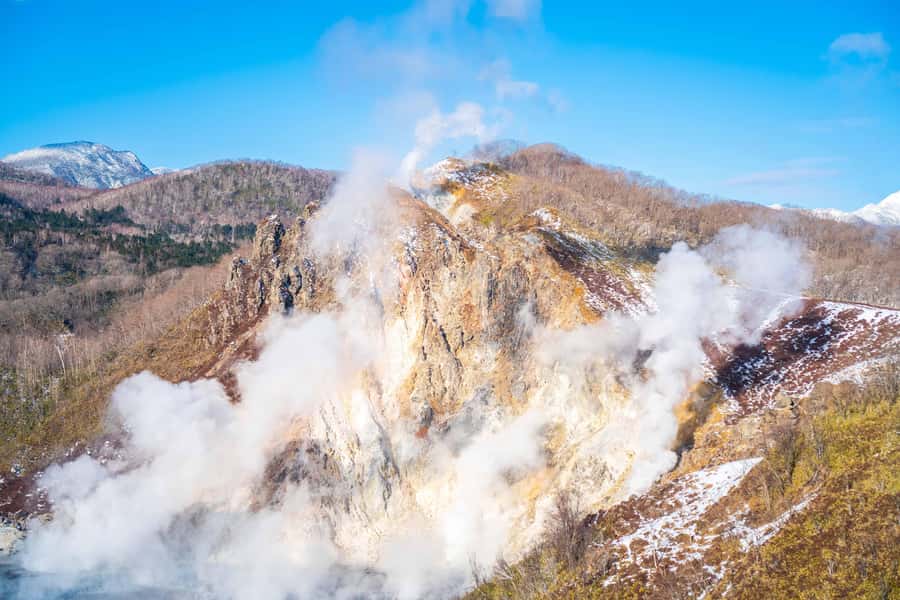
A standard sightseeing stop gives you speed and convenience. This tour gives you time on the snow, equipment, interpretation, and access to both Oyunuma and Okunoyu as part of one guided outing.
I would choose the tour if the winter setting is the main attraction. Snow changes the feel of the ponds and forest, and the walk lets you experience that change at ground level. The route is also a good fit if you prefer a modest outdoor challenge to another indoor activity.
I would skip it if your schedule is very tight or if you do not have suitable winter clothing. The tour price includes useful gear, but not the clothing and footwear you need to stay comfortable.
Should you book the Oyunuma Winter Panorama Tour?
Book it if you want a two-hour introduction to Noboribetsu’s geothermal country with a live English or Japanese guide, a small group, and winter equipment included. The combination of Oyunuma, Okunoyu, snowy forest, and hot coffee gives you a clear taste of the area without committing to a long hike.
Before booking, make three checks: you can handle uphill and downhill walking in snow, you have warm clothes and proper footwear, and every child in your group is at least 9 and can fit the available equipment. If those conditions work, $41 is a reasonable price for the guide, gear, poles, and a focused visit to two distinctive hot spring ponds.
FAQ
Where does the tour start and finish?
The tour starts at adex base and returns to adex base after the walk.
How long is the activity?
The activity lasts two hours.
How far do you walk?
The course is about 2 kilometers.
What places will I see?
You will visit Oyunuma and Okunoyu hot spring ponds in Noboribetsu’s volcanic area. The ponds are connected to Hell Valley.
Is the tour suitable for children?
It is intended for children age 9 and older, with an adult accompanying them. Children under 9 are not suitable for the activity.
Are snowshoes provided?
Yes. Snowshoes or crampons and Nordic poles are included. Children’s sizes are not available.
What should I bring?
Bring warm clothing, snow clothing, gloves, headwear, comfortable footwear, water, and snacks. Footwear and warm clothing are not included.
What happens if the weather is bad?
The activity may be cancelled because of bad weather, and you receive a full refund in that case. You can also cancel up to 24 hours in advance for a full refund.
More Winter Activities in Noboribetsu
More Snowshoe & Winter Tours in Noboribetsu
More tours in Noboribetsu we've reviewed


Snowshoe & Winter Tours, compared.
 ★ 5.0Sapporo Winter : Asahiyama Zoo (Penguin Fun & Snowmobile)From $589 hours - 1 day
 ★ 5.03.5hours Primeval Forest Snowshoe hike and Wildlife Watching TourFrom $55
 ★ 5.0Half Day – Snow View Rafting in NisekoFrom $111
 ★ 5.0Snowshoe Adventures and Onsen Bliss Winter Escape in FuranoFrom $78
 ★ 4.02026 Lake Shikotsu Ice Festival in HokkaidoFrom $58
 ★ 5.03 hours Snowshoe hike to “Furepe fall” and Wildlife WatchingFrom $44
 ★ 5.0Explore Lake Shikotsu Ice Festival (night tour)From $59
 ★ 5.0Explore Shikotsu Ice Festival (day tour)From $59
The lists this tour appears in