
Reviewed · SHIRETOKO & WILDLIFE TOURS
3.5hours Primeval Forest Snowshoe hike and Wildlife Watching Tour
Shiretoko’s wild side is the main event here. Instead of sticking to a standard walking route, you follow paths first made by animals through a primeval forest, then reach Tears of Man, a waterfall that freezes in winter. With enough snow, snowshoes let you cross areas that would otherwise be hard to reach.
In This Article
- Key points to know before booking
- Why Shiretoko feels different in winter
- Meeting the group in Utoro
- Entering the primeval forest by snowshoe
- Reaching Tears of Man waterfall
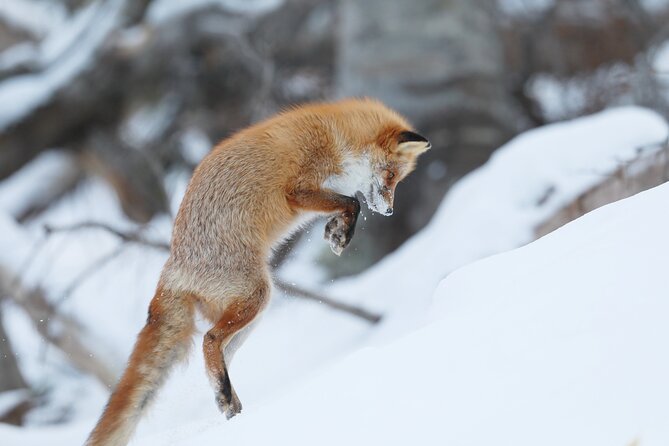
- Looking for Ezo Sika Deer and Ezo Red Foxes
- The Sea of Okhotsk and the Shiretoko Mountains
- Is $55.52 a fair price?
- Fitness, age, and winter comfort
- Who will enjoy this outing most?
- Booking, changes, and practical timing
- Should you book the Shiretoko snowshoe tour?
- FAQ
- How long does the snowshoe and wildlife tour last?
- Where does the tour begin?
- Where does the activity finish?
- Is pickup available?
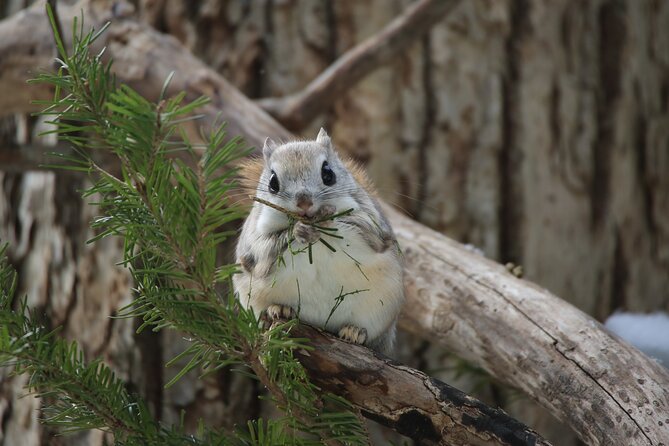
- What wildlife might I see?
- What happens if bad weather cancels the tour?
I like two things right away: the small maximum of eight people, which suits a quiet forest outing, and the chance to read animal tracks in fresh snow rather than simply walk from viewpoint to viewpoint. The possible drawback is that wildlife is never guaranteed, and the tour depends on good weather and suitable snow conditions.
Key points to know before booking
- Follow animal-made paths: The route goes beyond ordinary walking trails and gives you a stronger sense of Shiretoko’s untamed forest.
- Reach a frozen waterfall: Tears of Man is one of the tour’s main goals and freezes during winter.
- Watch for Ezo wildlife: Ezo Sika Deer and Ezo Red Foxes are often seen, though sightings cannot be promised.
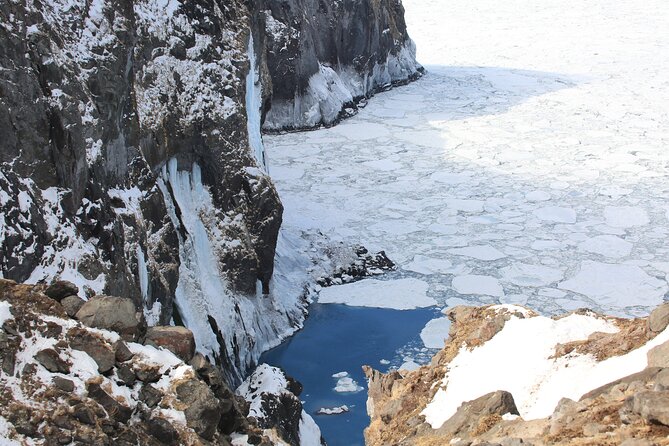
- See the Sea of Okhotsk in winter: When sea ice reaches the coast, it can form a broad white field beneath the snow-covered Shiretoko Mountains.
- Small group setting: The tour accepts a maximum of eight people, a useful limit for a quiet nature walk.
- Allow 3.5 hours: Pickup is offered, the meeting point is in Utoro, and the walk returns to the starting point.
Why Shiretoko feels different in winter
Shiretoko is one of Hokkaido’s best places for a close look at northern Japanese wilderness. In winter, snow changes the whole experience. It covers the forest floor, softens the usual routes, and makes animal signs easier to spot.
That is the appeal of this outing. You are not simply walking through a pretty stand of trees. You are moving through a place where deer, foxes, and other wild animals have already chosen their own routes. The guide follows those lines through the forest, giving you a more natural sense of how the area works.
The snow also opens up possibilities. If there is enough of it, you use snowshoes and can walk across the snow rather than remain limited to packed paths. This does not mean the outing is effortless. Snowshoeing still asks more of your legs than an ordinary walk, and the tour calls for a moderate level of fitness. But it lets you reach places that may be difficult to enter on foot.
I would choose this tour for the setting and the way it slows you down. You have time to notice footprints, changes in the snow, frozen water, and the shape of the forest. It is a better fit for someone who wants contact with nature than for someone looking for a quick sightseeing stop.
A few more Hokkaido tours and experiences worth a look


Meeting the group in Utoro
The listed starting point is the Roadside Rest Area Utoro-Shiretoku at 186-8 Utoronishi, Shari, Shari District, Hokkaido 099-4354. The activity ends back at this same meeting point, which keeps the day simple and makes it easier to plan transport afterward.
Pickup is offered, and the meeting point is near public transportation. If you are being collected from a nearby location, be ready about 10 minutes before the agreed pickup time. That small bit of discipline matters because the provider may collect a small group from several nearby places before heading out.
The maximum group size is eight. That is large enough to have company but small enough to avoid the feel of a bus excursion. A compact group also makes sense in the forest, where narrow animal routes and quiet wildlife watching work better without a crowd.
The total duration is about three and a half hours. That includes the outing from the Utoro area and the return to the meeting point. You should keep the rest of your day flexible enough that a weather-related change or slower snow conditions will not cause trouble.
Entering the primeval forest by snowshoe
The first major part of the outing is the move into Shiretoko’s forest. The route is special because it does not rely only on ordinary paths. Instead, you follow tracks and routes originally made by wild animals.
That detail changes how you see the woods. A regular trail tells you where people prefer to walk. An animal route hints at where wildlife moves through the forest, where it may find food, and which openings or slopes are easiest to cross. You are not guaranteed a sighting, but you are paying attention in the right places.
When snow conditions allow, snowshoes are used. They spread your weight across the snow and make it possible to walk away from packed routes. You may be able to cross open snow and reach parts of the forest that would otherwise be awkward or inaccessible.
The actual snow conditions are important. The tour description says snowshoes are used if there is enough snow, so the exact feel of the walk can vary. A deep, consistent covering may create the classic snowshoe outing. Less snow could mean more walking on existing ground or paths. Ask about current conditions if the snow experience is central to your plans.
The pace should suit people who want to look around. Animal tracks are easy to miss if you hurry, especially when snow is falling or the forest floor is uneven. Give yourself permission to stop, look, and listen. The point is not to cover a great distance.
Reaching Tears of Man waterfall
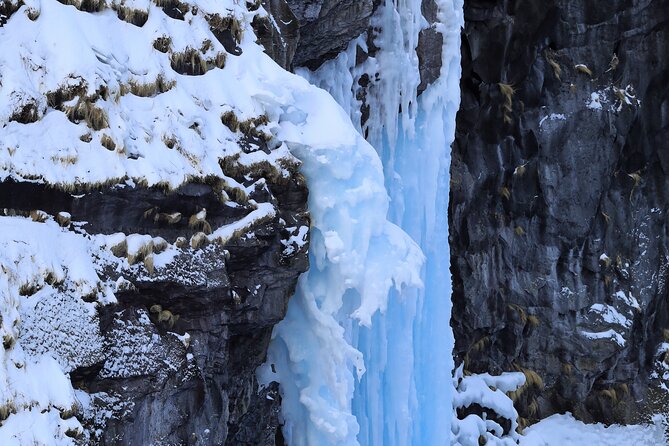
One of the clearest goals is Tears of Man, a waterfall that freezes in winter. A frozen waterfall gives the outing a destination and a visual reward beyond the general forest walk.
In summer, flowing water draws attention through movement and sound. In winter, the waterfall becomes a fixed shape of ice against the forest. That change is part of what makes this stop worth the effort. You see a familiar natural feature in a completely different season.
Do not expect an urban viewing platform or a polished attraction. This is a forest outing, and access depends on weather and snow. The walk to the waterfall is part of the experience, not just a short approach to a photo stop.
I like this structure because it gives the tour a clear middle point. You begin with the forest and animal routes, reach the frozen waterfall, then continue watching the surrounding area before returning. If you prefer a simple point-to-point stroll, the destination helps. If you want a more ambitious hike, the three-and-a-half-hour limit keeps the outing manageable.
Looking for Ezo Sika Deer and Ezo Red Foxes
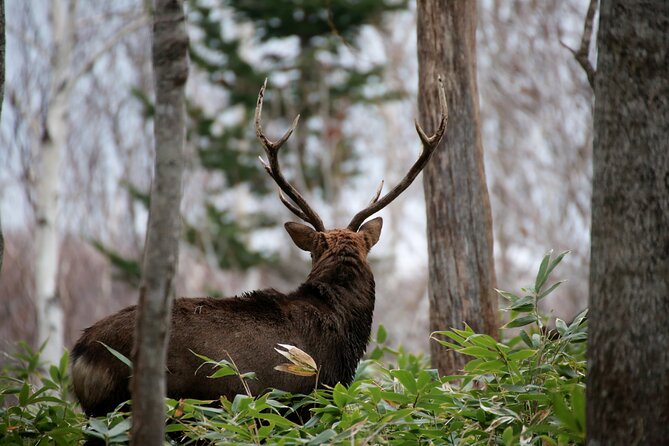
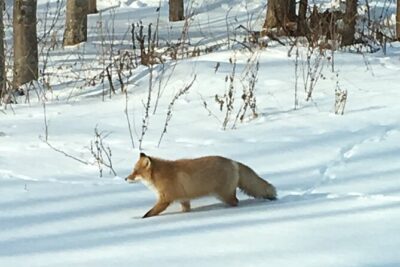
Wildlife is one of the tour’s strongest draws. Ezo Sika Deer and Ezo Red Foxes are often seen in the area, and winter can make signs of animal activity easier to read.
Still, keep your expectations sensible. A high chance of seeing wildlife is not the same as a promise. Animals choose the timing and distance. You may see a deer or fox, or you may find only tracks and other clues that wildlife passed through.
That uncertainty is not a flaw. It is part of a real wildlife outing. The forest does not perform on a schedule, and the most rewarding moment may be a line of footprints across the snow rather than a close encounter.
If you want the best chance of noticing signs, stay attentive throughout the walk. Look down at the snow as well as ahead through the trees. The tour specifically highlights animal footprints, so this is not merely a hike with wildlife added as a marketing extra. Tracking the route animals use is central to the activity.
The small group also helps here. Eight people can spread out enough to see the surroundings without creating the heavy foot traffic that would make a quiet animal encounter less likely. You should still follow the guide’s instructions and avoid expecting close access to wildlife.
A few more Hokkaido tours and experiences worth a look


The Sea of Okhotsk and the Shiretoko Mountains
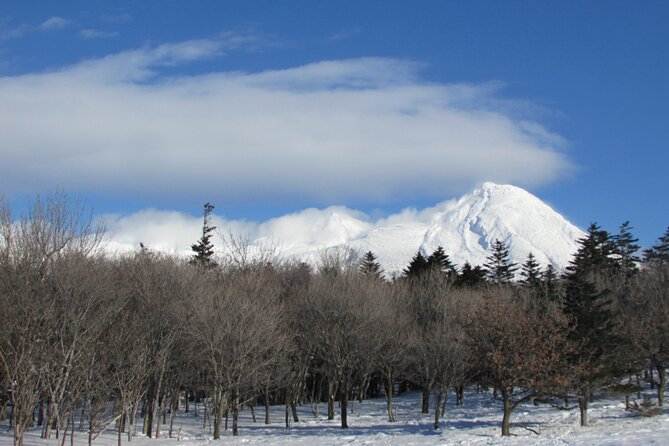
Winter adds a second major sight beyond the forest. When sea ice reaches the coast, the Sea of Okhotsk can become a broad field of ice. Against it, the Shiretoko Mountains appear covered in silver-white snow.
This is one of the tour’s most memorable visual combinations: forest, frozen coast, and mountain peaks in the same northern setting. The view depends on the timing of the sea ice, so it is not guaranteed on every date. But if the ice has arrived, it gives the outing a strong sense of place.
I would not book this activity only for the sea ice unless you have confirmed current conditions. Ice arrival changes with the season and weather. Instead, treat it as a major bonus on a tour already built around the forest and frozen waterfall.
The contrast matters. In the trees, your attention is close and detailed: tracks, branches, snow, and small movements. At the coast, the view opens wide. You move from reading the ground to taking in the scale of the sea and mountains.
Is $55.52 a fair price?
At $55.52 per person, this is reasonably priced for a three-and-a-half-hour guided winter nature outing, especially if the pickup option is useful to you. You are paying for more than a walk. The price includes a structured route into the forest, a guide, access to animal-made paths, and the chance to reach a frozen waterfall and winter coast views.
The value is strongest for people who would not feel confident choosing a route through snowy forest alone. Snowshoeing away from ordinary paths requires judgment about terrain and conditions. Having a guide also gives the outing purpose, since you are not left to guess which tracks matter or where the waterfall lies.
The value is weaker if you want a guaranteed wildlife show, a long-distance hike, or a fixed scenic itinerary. Weather can cancel the activity, and animal sightings depend on nature. Snow conditions can also affect how much of the outing is done on snowshoes.
A maximum of eight people improves the price comparison. A larger group might lower the cost, but it would also change the character of the walk. Here, you are buying a small-group experience in a difficult winter setting, not simply transportation to a viewpoint.
Fitness, age, and winter comfort
The minimum age is six, but the tour still requires moderate physical fitness. That is a useful distinction. Children may be allowed to join, yet each person must manage snow, uneven ground, and a three-and-a-half-hour outing.
You should think about how your group handles cold, walking, and changing surfaces. Snowshoeing can feel harder than the distance suggests because every step demands more effort. If you are unsure about your fitness, ask the provider about current snow conditions and the expected walking surface before booking.
The supplied details do not specify equipment, clothing, food, or restroom arrangements. Do not assume that snowshoes or other winter gear are included unless the provider confirms it. Ask what you need to bring, especially if you are visiting Hokkaido without your own cold-weather equipment.
The good-weather requirement is practical rather than surprising. Snow and ice create the setting, but poor weather can make forest travel unsafe or spoil visibility. If the provider cancels because of weather, you will be offered another date or a full refund.
Who will enjoy this outing most?
I would choose this tour if you like quiet outdoor experiences, winter scenery, animal tracks, and the possibility of seeing wildlife without needing a full-day expedition. It suits couples, families with active children aged six or older, and small groups who want a guided introduction to Shiretoko’s winter forest.
It is also a good choice if you have limited time in Utoro. Three and a half hours gives you a substantial morning or afternoon activity without taking the whole day. Returning to the same meeting point makes it easier to combine with other plans.
You may want something else if you dislike cold conditions, have difficulty walking through snow, or need guaranteed sightings. This is also not the right pick if your main goal is a long, strenuous backcountry hike. The focus is close observation and access to special winter features, not distance or speed.
Picchio Shiretoko is the provider, and the outing is limited to eight people. That combination suggests a more personal nature walk than a standard large-group excursion, though the exact guide and route details may vary with conditions.
Booking, changes, and practical timing
Confirmation is sent within 48 hours of booking, subject to availability. Since the tour depends on weather and seasonal conditions, I would avoid leaving it until the last possible day if the experience is important to your itinerary.
You can cancel for a full refund up to 24 hours before the start time. Cancellations or changes made less than 24 hours before the start are not refunded or accepted. The cutoff uses local time in Japan, so check the clock carefully if you are changing plans from another time zone.
The activity has a mobile ticket, and pickup is offered. Be ready early, particularly if you are being collected from a nearby accommodation or meeting place. The outing finishes where it begins, which is useful for both pickup arrangements and onward plans.
Should you book the Shiretoko snowshoe tour?
Book it if you want to see Shiretoko through animal routes, snow, and frozen water rather than from a roadside lookout. The strongest reasons are the small group, the unusual path choice, Tears of Man waterfall, and the chance to find Ezo deer or red fox tracks in a real winter forest.
Book with realistic expectations. Wildlife may not appear, the sea ice may not yet have arrived, and snow conditions can change the route. But if you see this as a guided search through Shiretoko’s winter wilderness, the $55.52 price offers good value for three and a half hours.
FAQ
How long does the snowshoe and wildlife tour last?
The activity lasts approximately 3 hours and 30 minutes.
Where does the tour begin?
It begins at Roadside Rest Area Utoro-Shiretoku, 186-8 Utoronishi, Shari, Shari District, Hokkaido 099-4354, Japan.
Where does the activity finish?
The tour ends back at the meeting point.
Is pickup available?
Yes. Pickup is offered, and the meeting point is near public transportation.
What wildlife might I see?
The tour often sees Ezo Sika Deer and Ezo Red Foxes. Wildlife sightings are not guaranteed.
What happens if bad weather cancels the tour?
If the activity is canceled because of poor weather, you will be offered a different date or a full refund.
More Hiking & Trekking Tours in Hokkaido

More Snowshoe & Winter Tours in Hokkaido
More Shiretoko & Wildlife Tours in Hokkaido


More tours in Hokkaido we've reviewed





Shiretoko & Wildlife Tours, compared.
 ★ 5.03hours Nature Guided Tour in Shiretoko Five LakesFrom $52
 ★ 5.03 hours Snowshoe hike to “Furepe fall” and Wildlife WatchingFrom $44
 ★ 4.5Wildlife Night Drive in Shiretoko national parkFrom $35
 ★ 5.0Furepe Waterfall Nature WalkFrom $36
 ★ 3.52hours Drift ice walk guided tour in Shiretoko National ParkFrom $54
 ★ 4.54.5 hours Snowshoe hike in Shiretoko five lakesFrom $54
 ★ 5.0Private Snow Shoe Tour in Shiretoko National ParkFrom $233
The lists this tour appears in