
Reviewed · HOKKAIDO
Salmon Watching Experience
Salmon return to Shiretoko’s rivers in autumn after years at sea, and this tour puts you close to that final, dramatic journey. At times, the water can look dark with fish as they push upstream, spawn, and complete their life cycle.
In This Article
- Key points
- Why Shiretoko’s returning salmon matter
- What happens during the two-hour outing
- Two river stops give the outing useful variety
- The guide’s explanation is a major part of the value
- Small groups make a difference at the river
- Autumn timing and weather are part of the bargain
- Meeting point, pickup, and the morning schedule
- Is $35.40 a fair price?
- Who will enjoy this salmon experience most?
- Booking, cancellation, and a few practical limits
- Should you book the Salmon Watching Experience?
- FAQ
- Where does the Salmon Watching Experience start?
- What time does the tour begin?
- Where does the activity end?
- How long does the experience last?
- How many rivers do you visit?
- When do the salmon return?
- Is pickup available?
- Is the tour available in English?
- What is the maximum group size?
- What happens if the weather is poor?
- Can I cancel for a full refund?
I like the chance to visit two rivers, not just one viewing spot, and I like the clear focus on the whole ecosystem, from birth to death. The small maximum of eight people should also make it easier to hear the guide and watch the fish without feeling crowded. The main drawback is timing: salmon activity is seasonal and weather-dependent, so the sighting may not be equally strong on every date.
Key points
- Two rivers in about two hours: You get more than a single riverbank stop, with time to compare salmon activity in two places.
- The full salmon life cycle: The guide explains the fish’s journey from birth, through years in the northern oceans, to spawning and death.
- Autumn is the key season: This experience is designed around the annual upstream return of salmon and trout.
- English-language guidance: The guide can explain the salmon ecosystem in English, including how the fish fit into Shiretoko’s natural world.
- Small group size: The tour accepts no more than eight people, a useful advantage for seeing and hearing clearly.
- Simple meeting point: The outing starts and ends at Utoro-Shiretoku Roadside Rest Area at 9:00 am, with pickup offered.
Why Shiretoko’s returning salmon matter
The most striking part of this outing is not simply seeing fish in a river. It is seeing the last stage of a long journey.
Salmon are born in rivers, spend years crossing the northern oceans, then return to the waterways where their lives began. In Shiretoko, autumn brings that return close to shore. The fish swim upstream to breed, completing a cycle that links river water, ocean travel, forest life, and the next generation of salmon.
That gives the tour a useful sense of scale. You are not just watching wildlife at one point in time. You are learning how a single fish connects several habitats. The guide explains this movement from ocean to river, then follows the fish’s life through spawning and death.
The final stage is not gentle. Salmon use their remaining strength to reach breeding areas, reproduce, and die. That may sound grim, but it is an important part of the natural process the tour aims to explain. The fish become part of the river ecosystem again, while their eggs begin the next cycle.
I think this makes the outing especially worthwhile for anyone who wants more than a quick photograph. The fish themselves are the draw, but the explanation gives the sighting meaning.
If you're still narrowing it down, here are other tours in Hokkaido we've reviewed.


What happens during the two-hour outing
The tour begins at 9:00 am at Roadside Rest Area Utoro-Shiretoku, located at 186-8 Utoronishi in Shari, Hokkaido. The activity ends at the same meeting point, which keeps the logistics simple if you are building the outing into a day around Utoro.
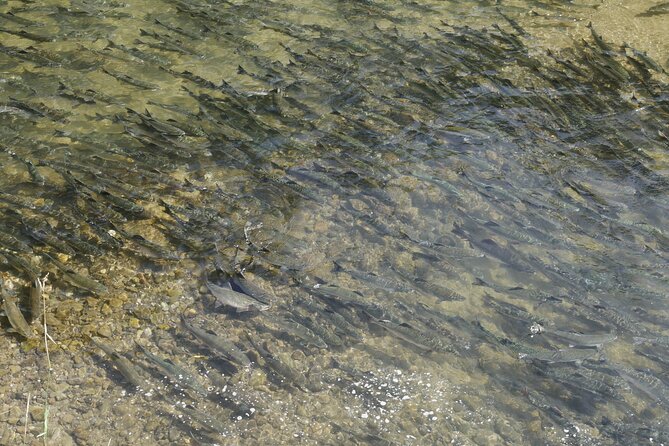
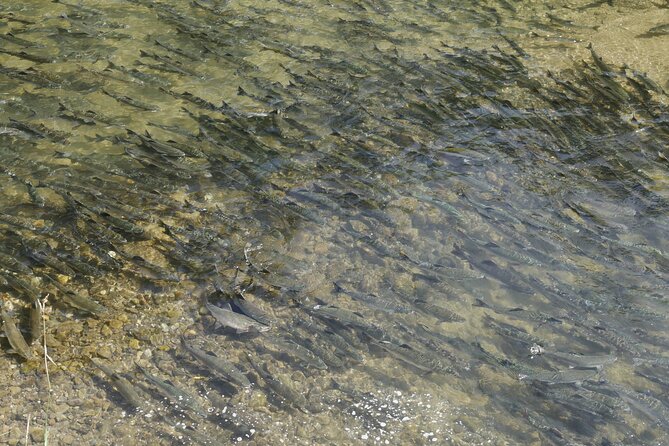
From there, you visit two rivers to watch salmon swimming upstream. The exact viewing conditions will depend on the season, water, weather, and number of fish present. At the strongest point of the breeding season, the river may look darker because of the number of salmon moving through it.
The description does not promise a fixed set of named stops or a guaranteed number of fish. That is worth keeping in mind. You are signing up for a seasonal wildlife outing, not a staged display. The reward is the chance to see natural behavior in the rivers where it happens.
The guide also explains the ecosystem rather than leaving you to identify fish on your own. One important strength is the broad story: the salmon’s birth, years in the ocean, return to the river, spawning, and death. That helps you understand why the fish matter to Shiretoko instead of treating them as an isolated attraction.
Because the tour lasts about two hours, it fits neatly into a morning. You are unlikely to lose an entire day, but you still have enough time to visit two river sites and receive a proper explanation of the salmon cycle.
Two river stops give the outing useful variety
A tour that visits one river can depend heavily on one viewing area. This outing uses two rivers, which gives you a better chance to see different conditions and salmon movements during the same morning.
I would not read this as a promise that both rivers will be packed with fish. Nature does not follow a timetable, and the information provided does not specify the river names, walking distances, or exact number of salmon at each stop. Still, two locations make practical sense. If one stretch is quiet, the second stop offers another chance to see upstream movement.
The fish can be dynamic during breeding season. You might see them working against the current or moving through darker water where several salmon are gathered. The experience is about watching behavior, so patience matters. This is not a fast stop where you simply point a camera and leave.
The two-river plan also supports the teaching side of the tour. The guide can connect what you see in the water with the larger ecosystem. That makes the second stop more than a backup location. It adds another setting in which to understand the same natural cycle.
The guide’s explanation is a major part of the value
The strongest praise focuses on the guide’s ability to explain the salmon ecosystem in clear English. You are not left with a vague story about fish returning home. The guide covers the journey from the ocean to the upstream river and explains the stages from birth through death.
That matters because salmon watching can be easy to misunderstand. You may see fish moving upstream, but without context, it is hard to know what they are doing, why the timing matters, or what happens after spawning. The guide turns those separate details into one connected story.
The English explanation is particularly useful if you do not speak Japanese. The outing is not simply a walk with occasional translation. It is designed to explain the natural role of salmon in a way that you can follow as you move between river sites.
No guide name is provided, so I cannot tell you who specifically leads your departure. I can tell you that English-language guiding is an important part of the experience, and the small group limit should help you hear the explanation and ask questions when appropriate.
Small groups make a difference at the river
The maximum group size is eight people. That is one of the better practical details here.
Small groups are useful for wildlife viewing because riverbanks can be awkward places for a large crowd. With eight or fewer people, you should have a better chance of seeing the water, staying near the guide, and following the explanation without constant noise or repositioning.
It also suits the subject. Salmon watching benefits from a little quiet and patience. A smaller group is less likely to turn the river into a busy social scene, and it gives the guide more room to explain what is happening.
The group size does not guarantee a private tour. Eight people is still a group, and the exact number on your date depends on bookings. But compared with a large coach outing, this format should feel more focused and personal.


Autumn timing and weather are part of the bargain
You need to plan this around autumn. The tour is built around the salmon and trout breeding season, when they return to rivers after years in the northern oceans.
That seasonal focus is a strength because you are visiting at the moment when the behavior is most meaningful. It is also a limitation. Fish numbers and activity can vary, and the experience is not designed as a year-round general nature walk.
Weather matters too. The outing requires good weather and may be canceled if conditions are poor. If that happens, you are offered another date or a full refund. This is fair for a river activity, especially one that depends on outdoor viewing rather than an indoor presentation.
Bring realistic expectations. You may see dramatic upstream movement, particularly when the river is dark with salmon, but no wildlife experience can promise that every visit will produce the same scene. The tour’s educational content helps protect the value of the morning if the fish are less active than hoped.
Meeting point, pickup, and the morning schedule
The meeting point is Roadside Rest Area Utoro-Shiretoku, at 186-8 Utoronishi, Shari, Shari District, Hokkaido 099-4354, Japan. The tour starts at 9:00 am and returns to that same location.
Pickup is offered, although the supplied details do not explain the pickup area, time, or conditions. Confirm those details before booking if you need transportation rather than planning to meet at the roadside rest area.
The meeting point is near public transportation, which makes the start more manageable if you are not driving. Still, the information does not give a route, fare, or exact transport schedule, so you should check your own connection and allow enough time to arrive before 9:00 am.
Returning to the starting point is convenient. You can leave your plans open for the rest of the day without arranging a second location or a separate return transfer.
Is $35.40 a fair price?
At $35.40 per person, this is a modestly priced two-hour wildlife outing. The value comes from three things: access to two rivers, a small group capped at eight, and an English-speaking guide who explains the entire salmon ecosystem.
You are not paying for a full-day excursion or a large package of included activities. The price makes more sense if you value interpretation and want a focused morning rather than simply stopping at a river on your own.
The guide’s explanation is especially important to the cost. Without it, salmon watching could be brief and uncertain. With the life-cycle story, the outing becomes a lesson in how ocean and river systems connect.
I would compare it with your own schedule rather than judging it only by the number of fish. If you already plan to be in Utoro in autumn, two hours and $35.40 is a reasonable way to add a guided wildlife experience. If you have only one chance to see salmon and require a guaranteed spectacle, the seasonal uncertainty may make the purchase feel less secure.
The activity is booked, on average, 28 days ahead. That suggests you should not leave it until the last minute if the date matters to you, especially during a short autumn visit.
Who will enjoy this salmon experience most?
This outing suits you if you like wildlife, ecology, and guided walks with a clear subject. Families and adults can take part, since most people can participate, and the experience does not list a special fitness requirement.
It should also work well for visitors who want an English explanation of Japanese wildlife. You will come away with a better understanding of what the salmon are doing and why their return matters to Shiretoko.
The tour is less suitable if you want a long hike, a broad sightseeing program, or a guaranteed close-up encounter. The stated duration is about two hours, and the focus stays on salmon and trout in two rivers.
Photographers may find the sighting rewarding, but the information does not promise ideal photo conditions or specific viewing platforms. Bring your camera if you like, but book the experience for the wildlife and explanation first.
Booking, cancellation, and a few practical limits
You receive confirmation within 48 hours of booking, subject to availability. That is useful, but it means your reservation is not necessarily instant, so leave room in your plans while waiting for confirmation.
You can cancel for a full refund up to 24 hours before the experience begins. Cancellations or changes made less than 24 hours before the start time are not accepted for a refund.
The cutoff uses local time in Hokkaido. If weather forces the operator to cancel, you can choose a different date or receive a full refund.
The tour accepts mobile tickets, and pickup is offered. The details do not state what equipment is supplied, what clothing is recommended, or the exact walking conditions, so ask the provider if you have specific needs.
Should you book the Salmon Watching Experience?
Book it if you will be in Shiretoko during autumn and want to understand the salmon run rather than simply spot fish from a roadside. The two-river route, small group, and English explanation give this short outing more substance than a quick independent stop.
I especially like it for visitors with a free morning in Utoro. At $35.40, it is an affordable way to see seasonal wildlife and learn how the salmon’s life connects the ocean, rivers, and wider ecosystem.
Skip it if you need a guaranteed number of salmon, dislike weather-dependent plans, or want a longer hike. For everyone else, this is a focused and worthwhile Shiretoko experience, with the natural drama coming from the fish themselves.
FAQ
Where does the Salmon Watching Experience start?
It starts at Roadside Rest Area Utoro-Shiretoku, 186-8 Utoronishi, Shari, Shari District, Hokkaido 099-4354, Japan.
What time does the tour begin?
The tour begins at 9:00 am.
Where does the activity end?
The activity ends back at the same meeting point, Roadside Rest Area Utoro-Shiretoku.
How long does the experience last?
The experience lasts approximately two hours.
How many rivers do you visit?
The tour visits two rivers where you can watch salmon swim upstream.
When do the salmon return?
The experience takes place in autumn, during the salmon and trout breeding season.
Is pickup available?
Pickup is offered. The supplied details do not specify the pickup area or exact pickup arrangements, so confirm those details before booking.
Is the tour available in English?
Yes. The guide speaks excellent English and explains the salmon ecosystem and life cycle in English.
What is the maximum group size?
The tour has a maximum of eight participants.
What happens if the weather is poor?
The experience requires good weather. If it is canceled because of poor weather, you are offered another date or a full refund.
Can I cancel for a full refund?
Yes. You can cancel at least 24 hours before the start time for a full refund. Cancellations or changes made less than 24 hours before the start time are not accepted for a refund.
More tours in Hokkaido we've reviewed







Hokkaido, compared.
 ★ 5.03hours Nature Guided Tour in Shiretoko Five LakesFrom $52
 ★ 4.5Hokkaido Lavender farm & Furano Flower Tour from SapporoFrom $69
 ★ 5.03hours Primeval Forest and Stunning Views of Cliff Trekking TourFrom $53
 ★ 5.03.5hours Primeval Forest Snowshoe hike and Wildlife Watching TourFrom $55
 ★ 5.0Half Day – Snow View Rafting in NisekoFrom $111
 ★ 5.0Snowshoe Adventures and Onsen Bliss Winter Escape in FuranoFrom $78
 ★ 5.03 hours Snowshoe hike to “Furepe fall” and Wildlife WatchingFrom $44
 ★ 4.5Wildlife Night Drive in Shiretoko national parkFrom $35
The lists this tour appears in