
Reviewed · NOBORIBETSU & LAKE TOYA TOURS
Noboribetsu: Snowshoe trip to Ice Caves
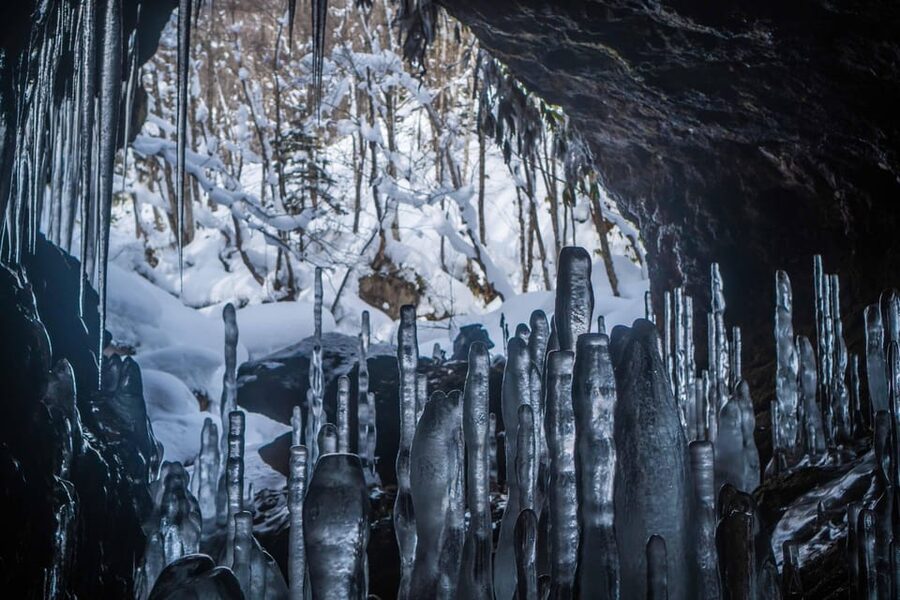
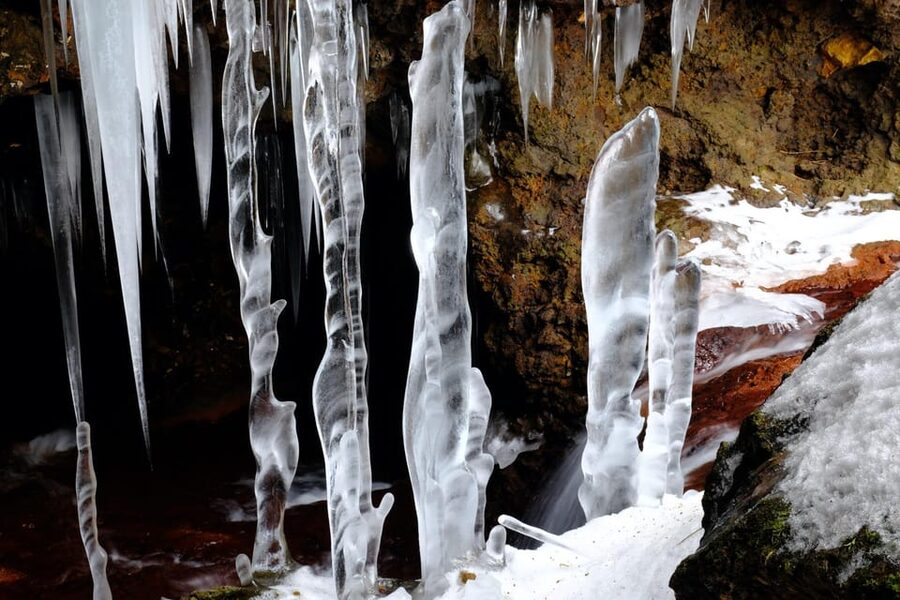
The reward at the end is a seasonal ice cave where stalactites and stalagmites can reach three meters. Heated water from the Noboribetsu River flows into the cave, then freezes into shapes that change with the weather. It is a rare sight, available for only about 10 weeks each winter.
In This Article
- Key points to know before booking
- Why Noboribetsu’s winter ice cave is worth the effort
- Meeting at adex base in central Noboribetsu
- Learning the snowshoes before the forest climb
- Through fir and native forest
- Reaching the Noboribetsu River ice cave
- How hard is the six-hour outing?
- What the $187 price covers
- Who will enjoy this snowshoe trip?
- Weather, safety, and the changing cave
- Should you book the Noboribetsu ice cave trip?
- FAQ
- Where does the tour meet?
- How long does the activity last?
- How far do I walk?
- How difficult is the snowshoe hike?
- Are snowshoes and poles included?
- Are clothing and footwear included?
- Is the tour conducted in English?
- Can I enter the ice cave?
- Can the tour be canceled because of weather?
I like the small group, limited to four people, because your English-speaking guide can set a sensible pace and help you handle the snowshoe trail. I also like that the route takes you through fir and native forest rather than delivering you straight to a viewpoint by vehicle.
The catch is the effort. This is not a flat stroll in the snow. You cover about 8 kilometers, climb roughly 750 feet according to one participant, and need enough fitness to walk that distance in about four hours. Your clothing and footwear are not included, so you must arrive properly dressed.
Key points to know before booking
- The ice cave lasts for only about 10 winter weeks, so conditions and formations change from year to year.
- The hike covers 8 kilometers in total, with gentle climbing through forest and an elevation gain of about 750 feet.
- The group is limited to four people, with an English-speaking guide leading the outing.
- Snowshoes and poles are supplied, but warm clothing and suitable footwear are your responsibility.
- Going inside the cave may be possible, but the cave changes constantly and may not be safe to enter.
- The $187 price buys a six-hour guided nature outing, not simply a short look at an ice formation.
Why Noboribetsu’s winter ice cave is worth the effort
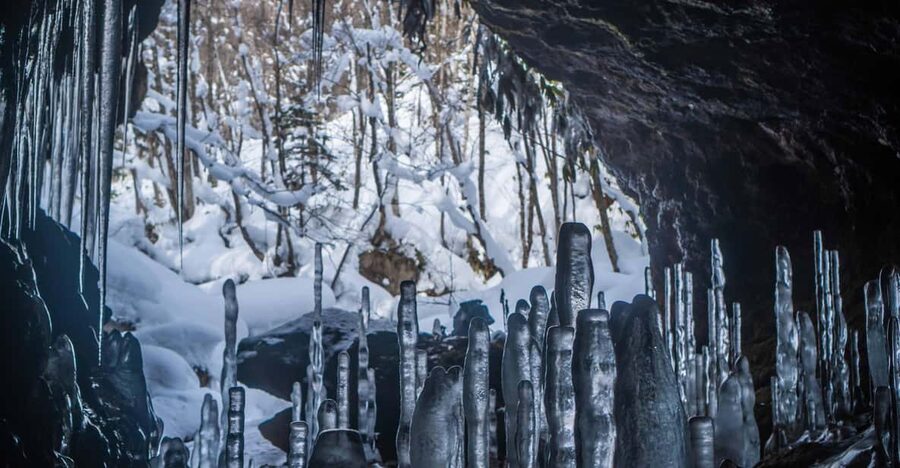
Noboribetsu is best known for its hot springs and volcanic scenery, but winter adds a different kind of spectacle. Along the Noboribetsu River, water and cold work together to create a temporary ice cave. The result is not a permanent attraction with fixed walls and polished walkways. It is a natural formation that grows, shifts, and sometimes becomes unsafe.
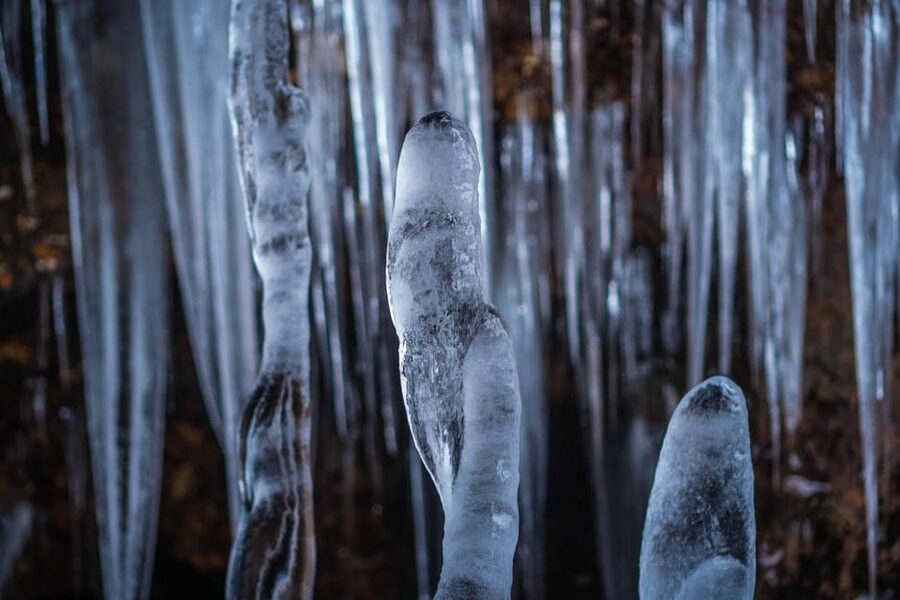
That changing quality is part of the appeal. For roughly 10 weeks each winter, water flowing into the cave freezes into hanging stalactites and rising stalagmites. Some can reach three meters high or long. You are seeing a seasonal event shaped by local geology, river flow, and temperature.
I like this kind of destination because the walk matters as much as the final stop. The forest route gives you time to adjust to snowshoes, settle into the pace, and see how much effort winter travel requires in Hokkaido. The cave then feels earned rather than delivered.
The formation is also unpredictable. You should not book this expecting a perfectly identical scene from one departure to the next. The size and arrangement of the ice can change, and the guide must decide what is safe on the day.
A few more Noboribetsu tours and experiences worth a look


Meeting at adex base in central Noboribetsu
The meeting point is adex base, opposite Daiichi Takimotokan Onsen. That is a useful landmark in Noboribetsu, particularly if you are already staying near the hot spring area. Look for the adex base sign rather than wandering around the larger resort district.
The six-hour schedule includes the guided outing, equipment use, the forest approach, and time at the ice cave. Starting times vary, so check availability for the date you want. Since the exact start time is not fixed in the information provided, give yourself enough time to arrive at adex base before departure.
This is a small operation by design. With no more than four participants, the guide can explain how to use the snowshoes, watch the group on climbs, and respond to changing snow conditions. The small group also suits a quiet natural setting better than a large procession.
Your guide speaks English. Yamamoto-san, also called Yama-san by one participant, received especially warm praise for making the day feel special. That matters here because the outing is physical, weather dependent, and centered on a natural formation rather than a formal attraction with signs and barriers.
Learning the snowshoes before the forest climb
Snowshoes spread your weight across the snow, helping you walk where ordinary boots would sink. They do not make the route effortless. You still need to lift your feet higher than normal, keep your balance, and adjust your stride on uneven or compacted snow.
Snowshoes and poles are included in the price. Clothing and footwear are not. You should arrive with winter clothing suitable for six hours outdoors, along with footwear that works with the provided snowshoes. The supplied information does not specify a clothing rental service, so do not assume you can borrow everything at the meeting point.
The first part of the outing is a useful test. Pay attention to how your legs feel before the route begins to climb. If you are comfortable walking 8 kilometers in about four hours, the stated guideline suggests you should manage the activity, but the difficulty can change sharply with fresh snow.
One participant described the effort as hard, with a compacted trail making the outing easier than it could have been. A frequent hiker from Colorado handled it comfortably, while a larger participant from Ohio found it tough but manageable with breaks. That is a fair warning: fitness, body size, recent snowfall, and trail condition all matter.
Through fir and native forest
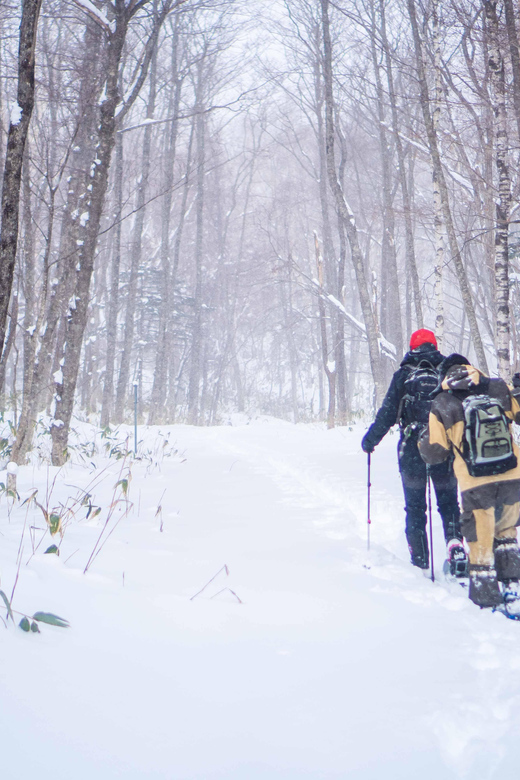
The route covers about 8 kilometers in total and includes gentle climbing through fir and native forest. The forest is not filler between the meeting point and the cave. It provides the setting for the whole outing and gives you a clear sense of Hokkaido’s winter conditions away from the onsen streets.
The climb is described as gentle, but the total elevation gain is meaningful. One participant estimated roughly 750 feet. You are not tackling a technical mountain route, yet you are partly walking up a mountain, and snow makes even modest slopes more demanding.
Your poles will help with balance and rhythm. Take the breaks you need, especially if the snow is soft or newly fallen. A steady pace is more useful than trying to stay with the strongest person in the group.
The forest section also makes the small group valuable. A guide can point out the safest line through the snow and adjust the pace without holding up a bus-sized group. You will have room to concentrate on foot placement, breathing, and the quiet around you.
Reaching the Noboribetsu River ice cave
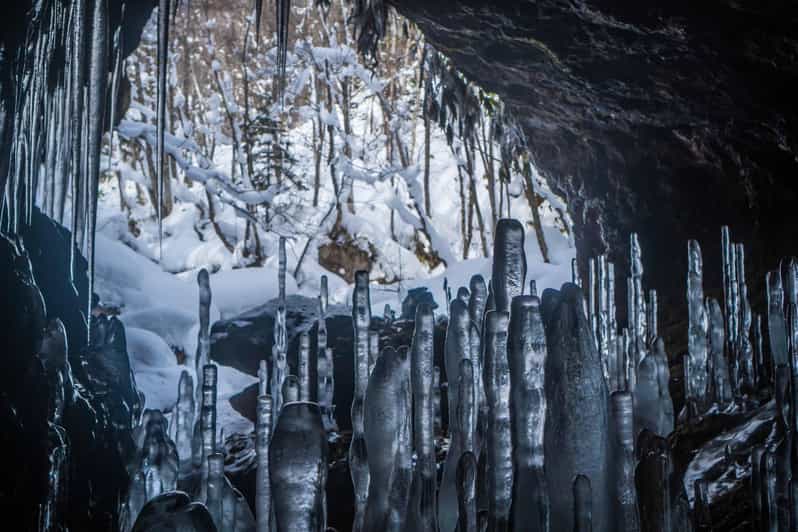
At the cave, the main attraction is the meeting of warm water and winter cold. Heated water flows into the mouth of the cave and passes through a mass of frozen formations. The result can include large hanging ice stalactites and upward-growing stalagmites, with some reaching three meters.
The sight is unusual because it does not look like an ordinary frozen waterfall or a simple wall of ice. The river’s warmth helps form the cave while the surrounding cold preserves the ice. That combination creates a fragile, short-lived space.
The ice cave is also the point where conditions matter most. The formation is always changing, and entering it may not be safe. On a suitable day, you might be able to go inside, but you should treat that as a bonus rather than a promise.
I would be happiest with a guide who keeps the group outside when the structure is unstable. A photograph from the entrance is better than a dangerous step beneath a changing ceiling. The attraction is the natural phenomenon itself, not the act of squeezing as far into the cave as possible.
Allow time to look closely. Ice formations can be easy to underestimate in a quick glance, especially when snow and river ice blend together. The guide can help you understand where the river enters, how the formations developed, and which areas are safe to approach.
A few more Noboribetsu tours and experiences worth a look


How hard is the six-hour outing?
The operator describes the activity as moderately demanding and gives a practical fitness test: you should be comfortable walking 8 kilometers in four hours. That is more useful than a vague label such as easy or moderate, although winter conditions can still make the day harder.
The total tour lasts six hours, while the walking distance is about 8 kilometers. The difference allows time for the equipment, breaks, the climb, and time at the cave. You should not plan another strenuous activity immediately afterward.
Fresh snowfall is the biggest variable mentioned in the available information. A compacted trail can make the route more manageable. Deeper, softer snow requires more effort with every step and may slow the group.
I would book this if you regularly hike, walk long distances, or feel comfortable spending several hours outside in winter. I would skip it if your normal activity is a short, level walk, even if the distance looks modest on paper.
The outing is not suitable for people with low fitness, mobility impairments, heart problems, respiratory issues, kidney problems, a cold, or other pre-existing medical conditions. It is also not suitable for pregnant women, wheelchair users, children under 18, or people over 70. These restrictions are important because the route combines cold, exertion, snow, and climbing.
What the $187 price covers
At $187 per person, this is a premium half-day nature experience. The price includes the guide fee, snowshoes, poles, and consumption tax. It does not include clothing or footwear.
The value depends on what you want from a winter outing. If you only want to see ice, the cost may feel high for one seasonal destination. If you want instruction, equipment, a guided forest route, and a rare natural formation in one small group, the price is easier to justify.
The four-person limit improves the experience in ways that are hard to measure. You are not waiting for a large group to catch up, and the guide can pay closer attention to pace and safety. That matters more on a snowshoe route than it would on a simple city walk.
You are also paying for access during a short seasonal window. The cave exists in this form for only around 10 weeks in winter, and its appearance changes. That limited timing gives the outing a special quality, but it also means you should accept that nature may not produce the exact scene you imagined.
There is no promise that the cave will be safe to enter or that poor weather will allow the activity to run. In bad conditions, cancellation may be unavoidable, and an alternative activity may be offered if possible. The free cancellation policy allows you to cancel up to 24 hours before departure for a full refund, and you can reserve now and pay later.
Who will enjoy this snowshoe trip?
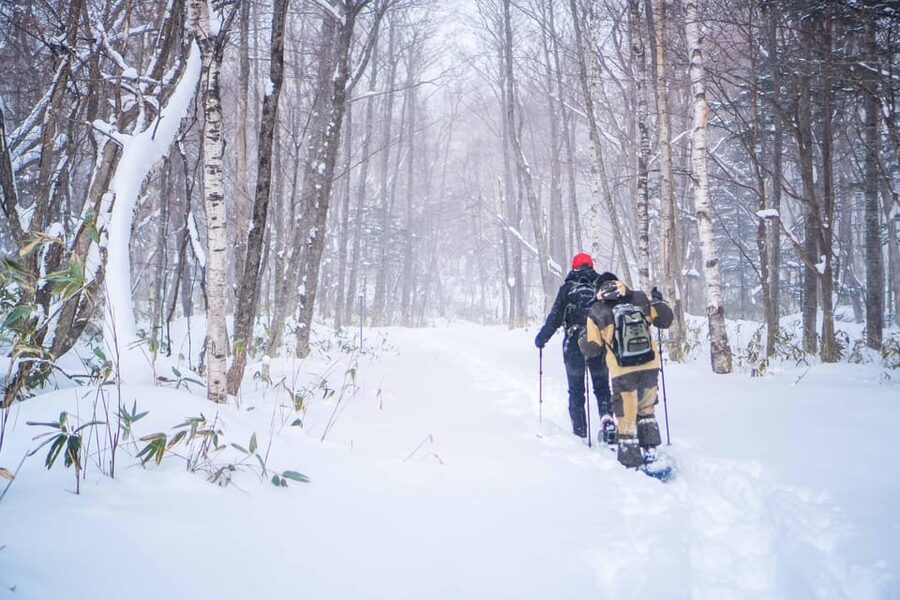
This outing suits an active adult who wants more than a quick winter photo stop. You should enjoy walking outdoors, tolerate cold conditions, and be willing to work for the destination.
It is a good match for:
- Regular hikers who want a short winter challenge
- Visitors staying around Noboribetsu’s hot spring area
- Small groups that prefer personal guidance
- People interested in seasonal geology and natural ice
- English-speaking participants who want a guided route
It is not a good match for someone seeking a relaxed sightseeing excursion. The route is too physical for that, and the weather can change the level of effort. You also need to supply your own winter clothing and footwear.
The tour may appeal to photographers, but photography is not the sole point. Snow, changing light, and the condition of the ice can affect what you see. Bring the right expectations: the cave is a living winter formation, not a decorated attraction.
Weather, safety, and the changing cave
Weather can cancel the outing. That is not a minor footnote in Hokkaido winter. Snowfall and trail conditions affect both the journey and the safety of the cave, so the guide must make decisions based on the actual day.
The cave may be safe to enter on one departure and unsafe on another. Even during the same season, the ice changes as water continues to flow and freeze. Follow the guide’s instructions and stay out if access is not approved.
The physical demands also make medical restrictions serious. This is not the place to test an old injury or push through a cold. If you have a heart, respiratory, kidney, mobility, or other pre-existing medical issue, the activity is not suitable under the stated guidance.
The best safety habit is simple: dress for a long outdoor outing, use the poles, take breaks, and let the guide set the pace. A six-hour winter activity can feel much longer if you begin too fast.
Should you book the Noboribetsu ice cave trip?
Book it if the idea of snowshoeing through a Hokkaido forest to a rare, changing ice cave sounds better than an easy afternoon near the hot springs. The cave is the headline, but the forest walk and small-group guide are what make the experience feel like an outing rather than a quick stop.
Think carefully before booking if you have low fitness, dislike winter exertion, or need guaranteed access inside the cave. The $187 fee is reasonable for a guided six-hour trip with equipment and a four-person limit, but it is not the best value for someone who wants only a simple sightseeing visit.
For an active adult with suitable clothing, realistic expectations, and an interest in seasonal nature, I would choose it. Just remember that the best part may be visible from the cave entrance, and the most responsible guide is the one who turns you around when the ice is not safe.
FAQ
Where does the tour meet?
Meet at adex base, opposite Daiichi Takimotokan Onsen in Noboribetsu.
How long does the activity last?
The tour lasts six hours.
How far do I walk?
The snowshoe route is about 8 kilometers in total.
How difficult is the snowshoe hike?
It is described as moderately demanding. You should be comfortable walking 8 kilometers in about four hours, and the route includes gentle climbing. One participant estimated an elevation gain of about 750 feet.
Are snowshoes and poles included?
Yes. Snowshoes and poles are included in the tour price.
Are clothing and footwear included?
No. You must provide your own clothing and footwear.
Is the tour conducted in English?
Yes. The tour has a live English-speaking guide.
Can I enter the ice cave?
You may be able to enter, but the cave changes constantly and may not always be safe to go inside. Access depends on conditions on the day.
Can the tour be canceled because of weather?
Yes. Cancellation may be unavoidable in adverse weather conditions. If possible, an alternative activity will be offered. You can also cancel up to 24 hours in advance for a full refund.
More Winter Activities in Noboribetsu
More Snowshoe & Winter Tours in Noboribetsu
More Noboribetsu & Lake Toya Tours in Noboribetsu

More tours in Noboribetsu we've reviewed
Noboribetsu & Lake Toya Tours, compared.
 ★ 4.7Hokkaido Seasonal: Lake Toya & Noboribetsu Jigokudani ValleyFrom $551 day
 ★ 4.0Hokkaido Noboribetsu Lake Toya Tour from SapporoFrom $66
 ★ 5.0[Departure from Sapporo] Noboribetsu Jigokudani, Lake Toya, Cape Chikyu by private carFrom $404
 ★ 3.5Hokkaido Noboribetsu Lake Toya, Otaru Panoramic Tour From SapporoFrom $120
 ★ 5.0Lake Toya and Noboribatsu Hell Valley Private Day TripFrom $365
 ★ 4.51-Day Pass for Noboribetsu Date JidaimuraFrom $19
 ★ 5.0Hike Mt. Usu and visit Lake Toya Day TourFrom $156
 ★ 5.0Noboribetsu: Orofure Pass Snowshoeing TourFrom $1545 hours
The lists this tour appears in