
Reviewed · LAKE SHIKOTSU & JOZANKEI TOURS
Mountain Bike Tour from Sapporo Including Hoheikyo Onsen and Lunch
The best part of this Sapporo outing comes after the ride: you finish at Hoheikyo Onsen, where a long soak in outdoor mineral baths takes the edge off your legs. I like the mix of river scenery and Japanese bathing culture, and I like that guides such as Jun and Hiro keep the pace friendly for families and first-time riders. The catch is simple: this is a gentle sightseeing ride, not a rugged mountain-bike challenge.
In This Article
- Quick take: what makes this tour worthwhile
- A gentle ride from Sapporo into Jozankei
- Starting with a minivan and a proper bike fitting
- Following the Toyohira River through Jozankei
- Jozankei’s hot-spring town and the onsen manju stop
- Soaking at Hoheikyo Onsen for one full hour
- Curry and naan make a better-than-expected lunch
- What the $71.16 price really covers
- Who will enjoy this ride most
- Timing, weather, and what to pack
- Should you book the Jozankei bike and onsen tour?
- FAQ
- How long does the tour last?
- Where does the tour start?
- Is transportation from Sapporo included?
- Is the ride suitable for beginners?
- How far do you cycle?
- What cycling equipment is provided?
- Is lunch included?
- What should I bring for the onsen?
I also like the useful bundle of bike gear, transport, lunch, and admission in one price. The curry and freshly baked naan are a welcome change from the usual tour meal. Still, much of the route follows paved roads or roadside paths, and early spring conditions can force changes to the course.
Quick take: what makes this tour worthwhile
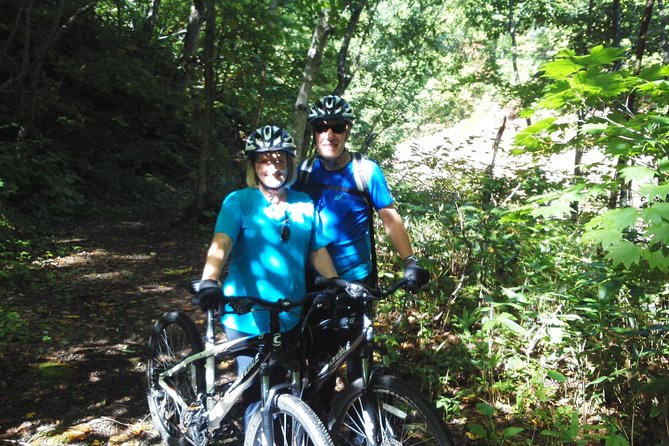
- A 10-kilometer route beside the Toyohira River: Expect canyon views, a suspension bridge, forest sections, and mostly easy riding.
- A real Japanese onsen finish: Hoheikyo Onsen has indoor baths and outdoor pools surrounded by mountain scenery.
- Curry and naan after the bath: Lunch is served at the onsen facility and is a filling part of the package.
- Guides Jun and Hiro: The guides provide riding instruction, local context, and patient help for mixed-age groups.
- Good for beginners and families: The minimum age is 10, with a recommended height of at least 1.45 meters.
- Seasonal timing matters: The tour runs from April through October, but May or later may offer better riding conditions than early spring.
A gentle ride from Sapporo into Jozankei
This half-day experience takes you from Sapporo toward Jozankei, a hot-spring town in the mountains about an hour away by minivan. The day begins around 9:00 a.m. and returns to Sapporo at about 2:40 p.m., giving you a substantial outing without using your whole day.
The ride itself lasts about 1.5 hours and covers roughly 10 kilometers, or about six miles. That distance is manageable for most reasonably active people, but the route is not perfectly flat. You should expect a steep downhill into Jozankei and a steep uphill section later in the ride.
I would describe the cycling as easy to moderate sightseeing. Some sections pass through wooded areas and along dirt roads, but much of the route is paved or follows roads near the river. If you are searching for technical singletrack, jumps, rough descents, or a demanding mountain workout, this is not the right choice. If you want to pedal through attractive countryside and learn about the area without exhausting yourself, the format makes sense.
A few more Sapporo tours and experiences worth a look


Starting with a minivan and a proper bike fitting
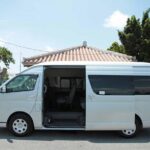
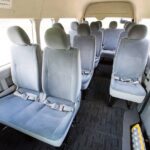
Pickup is offered from your Sapporo hotel or Sapporo Station, followed by an approximately one-hour drive in an air-conditioned minivan. The tour information also gives a Jozankei meeting point at 608-2 Jozankei, Minami Ward, so confirm the exact pickup arrangement when booking.
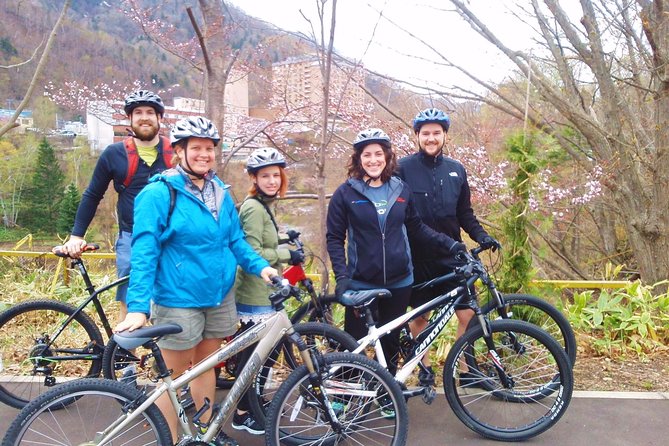
At the starting point, you receive a mountain bike, helmet, and gloves. The guide gives basic instructions and safety advice before you set off. That short introduction matters, especially if you have not ridden a mountain bike recently or if your children are joining you.
The bikes have water holders, but you need to bring your own water. You should also wear comfortable long sleeves, long pants, and exercise-friendly shoes. Jeans are specifically discouraged because they can make pedaling awkward. Sunglasses or another form of eye protection are useful, and a windbreaker is a smart addition in spring and fall.
Some riders have found the bikes to be in excellent condition and easy to handle on the hills. One reported mechanical problem led to a long repair delay, so it is sensible to check your brakes, gears, and tire before setting out. A quick check can save time later.
Following the Toyohira River through Jozankei
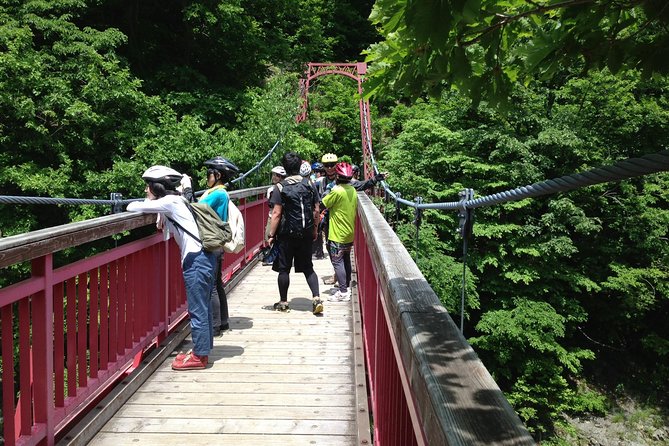
The route follows the Toyohira River, whose water can be full and fast in spring because of melting snow from the Jozankei Valley. You cross a picturesque suspension bridge and ride past river canyons with seasonal mountain views.
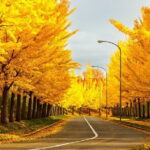
Autumn is especially appealing here. The changing leaves frame the river and make the ride feel more scenic, even though the route itself remains fairly relaxed. In spring, you may find cooler air, patches of snow, or muddy sections. The operator may alter the course when road or trail conditions require it.
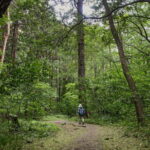
The route description emphasizes forest paths, but you should set your expectations carefully. Direct experience of the ride points to only a short wooded section, with the rest taking place on paved areas or roads beside the river. That does not make the ride poor, but it does make the name mountain bike tour sound more adventurous than the actual outing.
The guide adds value along the way by pointing out local sights and answering questions about Jozankei. Jun is noted for being patient and friendly, with enough English to explain the ride and local points of interest. Hiro is also listed among the guides. The trip works best when you treat the guide as a local companion rather than expecting a fast, athletic ride.
Jozankei’s hot-spring town and the onsen manju stop
Jozankei is known for hot springs first associated with a monk who discovered the baths in 1866. As you approach town, you can see steam rising from naturally heated water and get a feel for why this valley became a bathing destination.
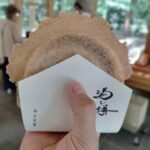
The tour includes a short snack stop for onsen manju, a soft bun filled with sweet azuki-bean paste. This is a small detail, but it gives the cycling portion a local flavor and breaks up the route. You may also have a chance to look around the town and pause at points of interest rather than simply riding straight through.
The stop is not a full sightseeing visit. If you want several hours to explore Jozankei’s bridges, foot baths, shrines, and shops, you would need a separate visit. Here, the town serves as the cultural and scenic middle section between the ride and the hot spring.
Soaking at Hoheikyo Onsen for one full hour
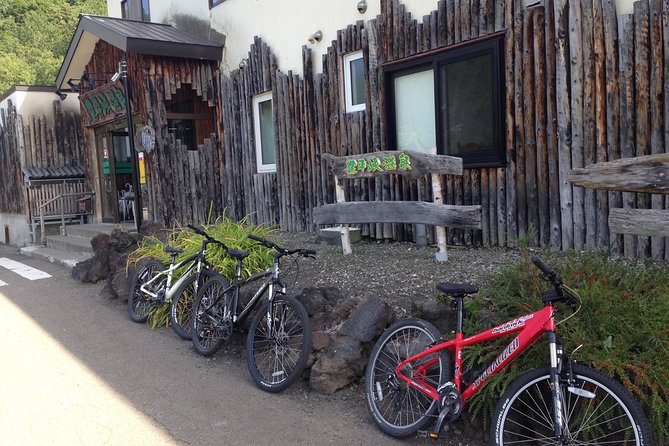
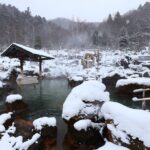
The cycling ends at Hoheikyo Onsen, where you have about an hour to bathe. The facility includes an indoor bath and three outdoor pools, with views toward the surrounding forest and mountains.
This is the experience’s strongest cultural element. Japanese onsen bathing is done without swimwear, and you wash before entering the pools. Body soap, shampoo, and conditioner are available at no extra charge. You should bring a towel, since towel rental costs about JPY 520, with JPY 300 returned when the used towel is handed back. A towel can also be purchased for about JPY 500 in cash.
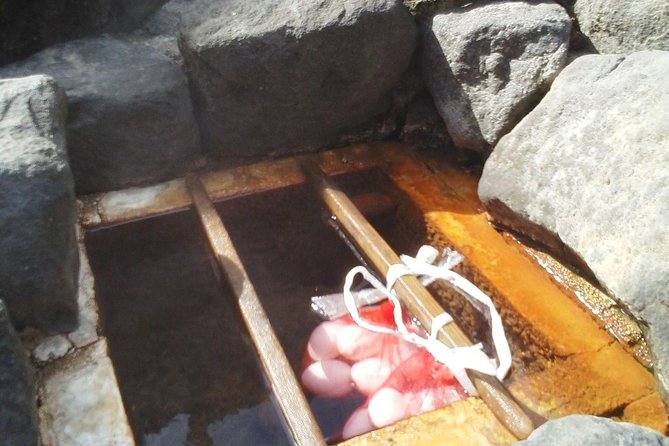
The outdoor baths are the main attraction. After the bike ride, sitting in hot mineral water while looking toward the forest is a calm way to finish the active part of the morning. The onsen is described as a more rural, traditional facility rather than a sleek modern spa, so expect a practical country bathhouse atmosphere.
You will need Japanese yen for drinks or extra purchases because credit cards cannot be used at the hot spring facility. The bath fee itself is included, which keeps the day’s costs under control.
A few more Sapporo tours and experiences worth a look


Curry and naan make a better-than-expected lunch
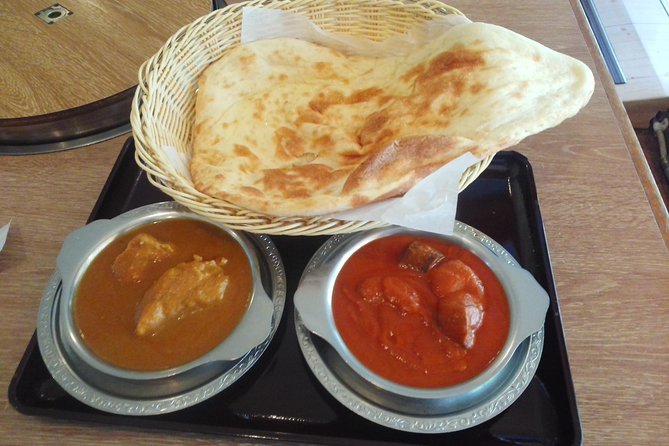
Lunch is served at the onsen restaurant after your bath. The meal is Japanese curry in the basic tour description, but the detailed experience and direct accounts describe Indian-style curry with a large piece of freshly baked naan.
That distinction matters if you are picturing a typical Japanese curry rice plate. You may receive vegetable or chicken curry with naan for dipping, rather than the thick, sweet curry usually served over rice. The meal has been a major highlight of the outing, and it is a practical choice after cycling and bathing.
The curry also gives the tour a welcome change of pace. You get local scenery, an onsen, and a hot meal, but the lunch does not pretend to be a formal regional tasting menu. It is simple, filling, and well suited to a half-day activity.
Drinks are not included, so bring money if you want something with lunch. Food and drinks outside the stated lunch and snack arrangements are also your responsibility.
What the $71.16 price really covers
At $71.16 per person, the price is reasonable if you would otherwise need to arrange transport to Jozankei, rent a bike, pay for an onsen, and find lunch. The package includes the English-speaking local guide, mountain bike, helmet, gloves, lunch, hot-spring admission, taxes, and round-trip transportation from Sapporo when pickup applies.
The value is strongest for visitors who want several different experiences in one block of time. You do not need to navigate rural roads, figure out bike rental, or work out how to reach Hoheikyo Onsen. You also avoid paying separately for the bath and a meal.
The value is weaker if cycling is your main goal. A serious rider may find 10 kilometers and 1.5 hours too short, especially when much of the route is paved. You are paying for the complete combination of transport, guide, scenery, food, and bathing, not for an intensive mountain-bike session.
The tour is commonly booked well ahead, around a month in advance on average. That makes sense for a seasonal activity with limited capacity, especially during autumn foliage season.
Who will enjoy this ride most
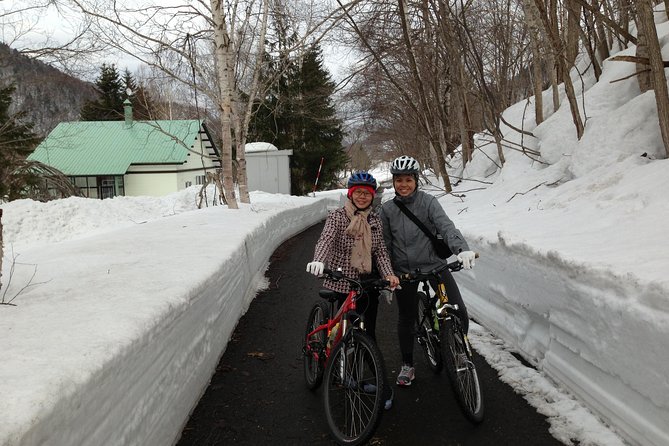
I would recommend the tour to families with older children, couples, first-time cyclists, and anyone who wants a low-stress introduction to the countryside around Sapporo. The minimum age is 10, and the suggested height is 1.45 meters or taller, which helps with bike fit.
It is also a good choice if you want to experience an onsen but prefer to combine it with an active morning. The bath feels more satisfying after the ride, and the guide makes the process easier for anyone unfamiliar with Japanese hot-spring etiquette.
You should think twice if you dislike shared bathing, need a private bath, or want a long, difficult bike ride. The tour does not mention private bathing arrangements, and the route is designed for a broad range of abilities.
Group-size details need a little care. The main description says the group is limited to 10, while the additional information gives a maximum of six participants and a maximum of six per booking. Confirm the expected group size if that affects your decision.
Timing, weather, and what to pack
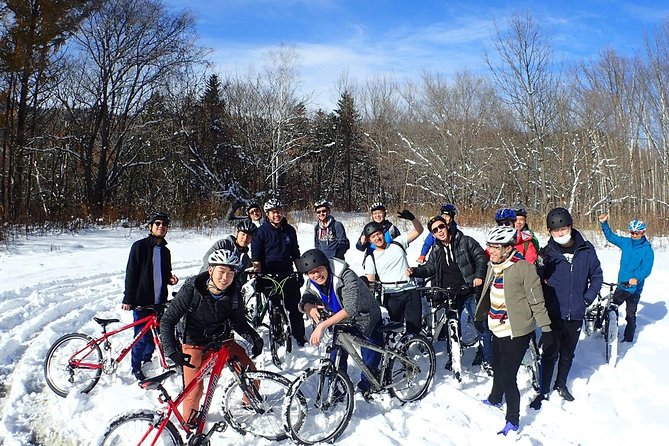
The experience runs seasonally from April through October. Weather can be cool in the mountains even when Sapporo feels mild, especially in April and early May. One early-season ride took place in very cold conditions, with some preferred off-road paths still covered in snow.
For the most reliable mix of accessible paths and comfortable temperatures, May or later may be a better bet, though conditions can change. Autumn brings attractive foliage but can also bring cooler air, so pack layers.
Bring:
- Water for the bike holder
- Comfortable shoes for exercise
- Long pants and a long-sleeved shirt
- Sunglasses or eye protection
- A change of clothes
- A bath towel, or cash for rental or purchase
- A windbreaker in spring and fall
The course can change because of road conditions. The experience also requires good weather and a minimum number of participants. If poor weather or low enrollment cancels the tour, you are offered another date, another experience, or a full refund.
Should you book the Jozankei bike and onsen tour?
Book it if you want a friendly, carefully packaged half-day that combines easy cycling, mountain scenery, a genuine onsen, and a satisfying meal. The strongest reasons are the outdoor bath, the river route, and the help of guides such as Jun and Hiro. Families and casual riders get more from this tour than experienced mountain bikers do.
Skip it if the word mountain bike makes you expect rough trails and a serious workout. Much of the ride is on paved roads or roadside paths, and mechanical trouble or poor spring conditions can reduce the cycling time.
For the right kind of day, this is a smart use of your Sapporo schedule. You leave the city, see Jozankei at a relaxed pace, soak in hot mineral water, and return with lunch already handled. That combination is the real attraction.
FAQ
How long does the tour last?
The experience lasts approximately 5 hours and 40 minutes. The stated schedule begins around 9:00 a.m. and returns to Sapporo at about 2:40 p.m.
Where does the tour start?
Pickup is offered from your staying hotel or Sapporo Station. The listed Jozankei meeting point is 608-2 Jozankei, Minami Ward, Sapporo, Hokkaido. Confirm your exact pickup details after booking.
Is transportation from Sapporo included?
Yes. Round-trip transportation by air-conditioned minivan is included when pickup applies. The drive to the cycling area takes about one hour, and the return drive takes about one hour.
Is the ride suitable for beginners?
Yes. The route is described as easy and lasts about 1.5 hours. It includes paved sections, forest areas, river views, and some steep downhill and uphill parts.
How far do you cycle?
The route covers approximately 10 kilometers, or six miles.
What cycling equipment is provided?
The tour includes a mountain bike, helmet, and gloves for rental. The bikes have water holders, but you must bring your own water.
Is lunch included?
Yes. Lunch is included at Hoheikyo Onsen. The meal is described as curry with naan bread, with vegetable and chicken options noted in the experience details.
What should I bring for the onsen?
Bring a bath towel, a change of clothes, and cash. Towel rental costs about JPY 520, with JPY 300 returned after you return the used towel. Body soap, shampoo, and conditioner are provided at the facility.
More Onsen Trips in Sapporo


More Lake Shikotsu & Jozankei Tours in Sapporo
More Sapporo Tours in Sapporo


More tours in Sapporo we've reviewed
Lake Shikotsu & Jozankei Tours, compared.
 ★ 4.9Sapporo: The Indigenous Ainu People & Jozankei walking tourFrom $1709h 30m
 ★ 5.0Full Day Indigenous Ainu of Hokkaido and JozankeiFrom $167
 ★ 4.02026 Lake Shikotsu Ice Festival in HokkaidoFrom $58
 ★ 4.5[Sapporo] Go by private car! Takino Cemetery, Hokkaido Shrine, Shiroi Koibito ParkFrom $446
 ★ 5.0Private Day Trip of Lake Shikotsu and Moss CanyonFrom $247
 ★ 4.5Autumn Leaves in AutumnSkiing in winterLet’s go to Hoheikyo Onsen by private car (from Sapporo)From $415
 ★ 4.5Clearest Lake in Japan National Park package of Shikotsu lakeFrom $175
 ★ 5.0Explore Lake Shikotsu Ice Festival (night tour)From $59
The lists this tour appears in