
Reviewed · SAPPORO
Calligraph Name in Japanese and Dress in Kimono
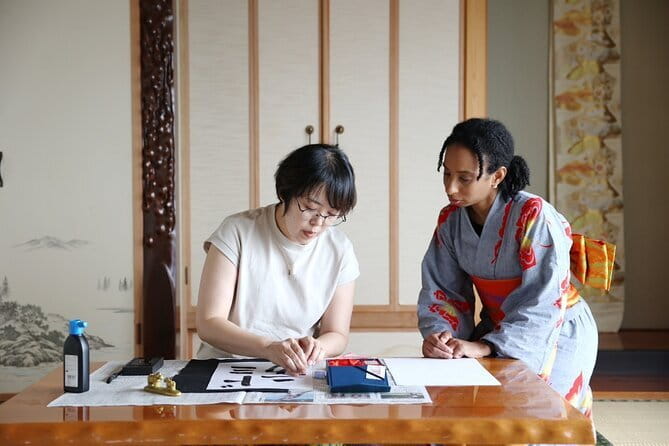
The most memorable part of this Sapporo activity is the combination of kimono dressing and calligraphy. You do not simply watch a demonstration. You learn how to sit, hold the brush, draw basic lines, and form Japanese characters while dressed in traditional clothing in a tatami room.
In This Article
- Key points to know before booking
- A quiet introduction to Japanese calligraphy
- Getting dressed in kimono before the lesson
- Learning posture, brush grip, and the first lines
- Preparing your name in Japanese
- What makes the private format useful
- Snacks and the small touches that matter
- Price and value at $42.82
- Location, meeting point, and timing
- Who will enjoy this Sapporo activity
- Practical booking advice for families
- Should you book Calligrash name in Japanese and dress in kimono?
- FAQ
- Where does the activity begin?
- Where does the activity end?
- How long does the experience last?
- Is the activity private?
- Is pickup available?
- What do I learn during the calligraphy lesson?
- Are calligraphy tools provided?
- Can I take my calligraphy work home?
- Can children wear kimono?
- What is the cancellation policy?
I like the calm, hands-on teaching and the chance to take your finished work home. I also like that Erika can photograph the session and that children from infancy through age seven may have kimono options. The main consideration is the fixed meeting point in Higashi Ward, since private transportation is not included.
Key points to know before booking
- A two-hour private lesson: Only your group participates, so the pace can be adjusted to your needs.
- Kimono and calligraphy together: You learn brush technique while dressed in Japanese traditional clothing.
- Instruction starts with the basics: Erika covers posture, brush grip, line drawing, and character form.
- Your name is prepared in Japanese: Names are confirmed ahead of time so Japanese writing can be prepared.
- Children can take part: Kimono options are available for children ages 0 to 7, even if they do not complete the calligraphy lesson.
- You take home your artwork: Calligraphy tools are provided during the lesson, and snacks are included.
A quiet introduction to Japanese calligraphy
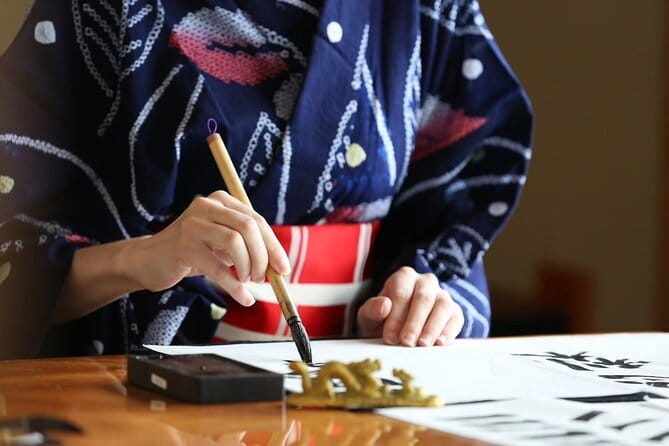
This activity gives you something more useful than a quick photo in traditional clothing. You learn why calligraphy depends on posture, brush control, and the order and shape of each stroke.
The lesson takes place in a traditional tatami room, which gives the session a clear sense of place. Sitting on tatami and working with an ink brush makes the activity feel different from a standard craft class. The setting also suits the slow pace of calligraphy, where rushing usually produces messy lines.
You can expect the lesson to last about two hours. That is enough time for dressing, basic instruction, practice, and a finished piece without turning the activity into an all-day commitment.
This is a private activity, so only your group takes part. That matters if you are traveling with children, need a slower pace, or want to ask plenty of questions without holding up a larger class.
A few more Sapporo tours and experiences worth a look


Getting dressed in kimono before the lesson
The session begins with the traditional clothing element. You are dressed in kimono before working on your calligraphy, making the activity feel like one connected cultural lesson rather than two unrelated stops.
The clothing also changes how you approach the room. You will likely become more aware of your posture and movements, which fits naturally with the calligraphy instruction that follows. The kimono is not just a costume for a photograph. It forms part of the setting and helps mark the activity as a special occasion.
Families should pay attention to the age information. Kimono are available for children from age 0 through 7. A young child who cannot manage a calligraphy trial can still wear a kimono, so younger children do not have to sit through the full brush lesson to be included.
The activity information asks you to provide a child’s age and gender if you are interested in children’s kimono. Do that ahead of time, since clothing preparation depends on the details of your group.
Photography is available if you want it. Erika can take photos during the session, which is particularly helpful when everyone in your group wants to appear in the pictures. It also lets you focus on the lesson instead of constantly handing a phone to someone else.
Learning posture, brush grip, and the first lines
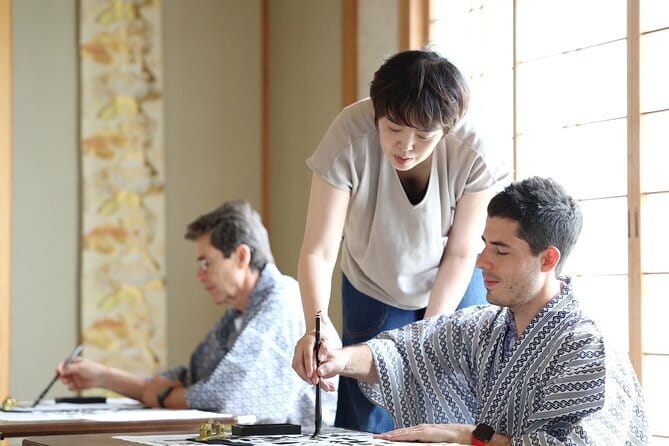
Calligraphy can look simple until you try to control a wet brush. The instructor begins with the physical basics: a calm posture, the correct way to hold the brush, and the basic method for drawing a line.
This order is sensible. If you start by copying a complicated character, you may only learn how to imitate one shape. By working on posture and lines first, you get a better feel for pressure, direction, and movement.
You practice from a prepared model. The model gives you something clear to follow, while the instructor watches your technique and guides you toward the correct form.
One particularly helpful part of the lesson is hands-on guidance. Erika may move your hand and brush together so you can feel how the stroke should be made. This is useful for beginners because brush control is hard to explain with words alone. You get a physical sense of the movement, then try to repeat it yourself.
The teacher also instructs you in the shape of the character. This keeps the activity from becoming a random painting exercise. You are learning how Japanese characters are formed, not simply making decorative marks with ink.
The calm pace is important. Calligraphy rewards control rather than speed, and the lesson is designed to help you settle into that rhythm. You should not expect a formal academic course in Japanese writing, but you will receive a practical introduction to the basic process.
Preparing your name in Japanese
Your name is confirmed in advance and prepared in Japanese for the activity. This gives your finished work a personal connection to your visit.
The arrangement is especially useful if you are unfamiliar with Japanese characters. You do not need to arrive knowing what your name looks like in Japanese or try to make up a version on the spot. The preparation is handled before the lesson, subject to confirmation.
If you are booking for several people, make sure the names are submitted accurately. A personal piece of calligraphy is more meaningful when it represents the right person, and advance preparation helps the class run smoothly.
The finished character work becomes a souvenir that is easy to carry and more personal than a shop purchase. You have made it during a guided lesson, while wearing kimono, in a traditional room. That context is what gives the paper its value.
What makes the private format useful
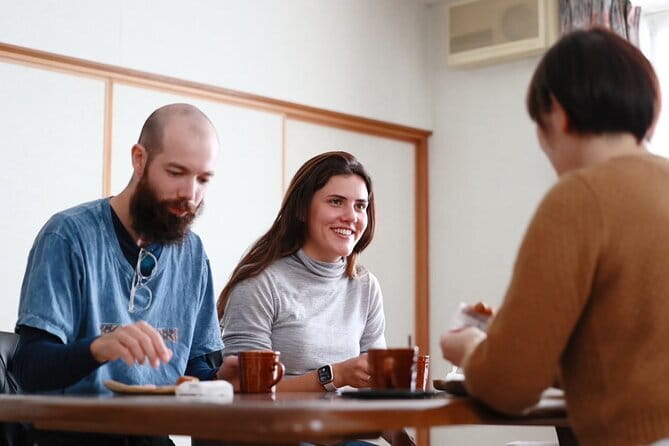
A private booking changes the feel of the activity. You do not have to match the pace of strangers, and the instructor can focus on your posture, hand position, and character form.
This format is a good fit for couples, families, and small groups with different levels of confidence. One person may want careful instruction, while another may mainly want the kimono and photographs. Since the group is private, the session can be adjusted around those different interests.
The private format can also help children. A child may need a short break or extra help holding the brush. The activity is not described as a large workshop with a strict timetable, so there is more room for individual attention.
That flexibility has limits. You still need to meet at the stated location, and the activity lasts about two hours. If you want an entirely open-ended cultural visit, this is not that. It is a focused lesson with a set meeting point and a planned sequence.
The provider says it can be flexible about lesson times. Contact the host if the available time does not fit your schedule, rather than assuming every departure is fixed.


Snacks and the small touches that matter
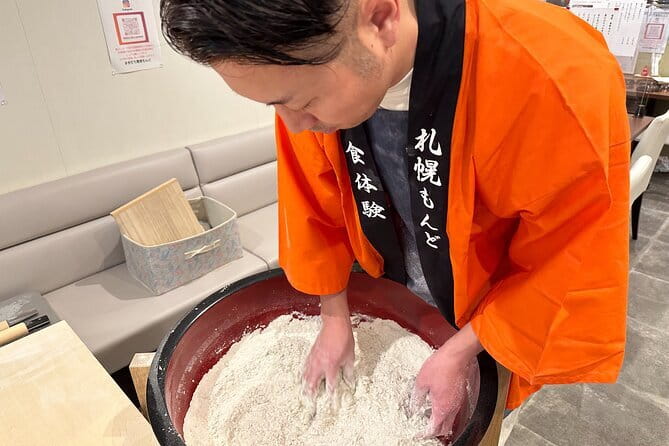
Snacks are included, along with the tools used for calligraphy. The tools are lent to you for the lesson, so you do not need to bring brushes or other equipment.
The included equipment keeps the activity simple for first-time participants. You arrive ready to learn rather than shopping for supplies or worrying about which brush to use.
Snacks are a small addition, but they suit a two-hour cultural session. They give the class a welcoming, informal feel and are useful when you are fitting the activity into a busy day in Sapporo.
Do not confuse included snacks with a full meal. The activity information only promises snacks, so plan your day accordingly.
Price and value at $42.82
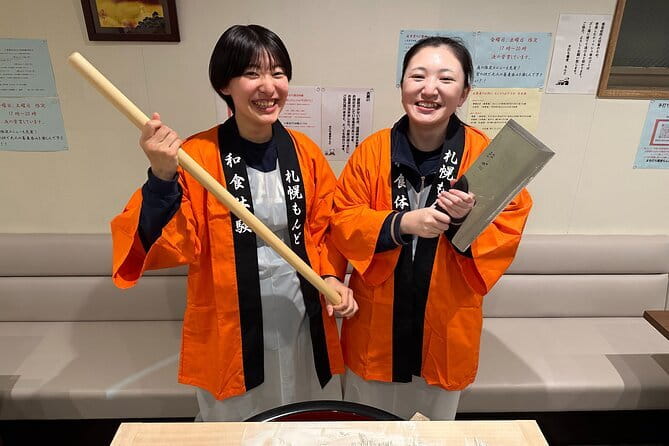
At $42.82 per person, this is priced as a hands-on cultural lesson rather than a simple kimono photo stop. The value comes from several parts being combined: clothing, instruction, calligraphy tools, personal name preparation, snacks, photography if requested, and a piece of artwork to take home.
That price makes the activity easier to justify for families and small private groups. You are not paying only for access to a room or a costume. You receive guidance from start to finish, and the instructor works with your group alone.
The value is strongest if you want participation. If your main goal is a quick photograph in kimono, you may not need a two-hour calligraphy lesson. If you want to understand the basic brush process and create something yourself, the price is more reasonable.
The finished work also gives the activity a lasting benefit. You can take it home as a reminder of Sapporo, rather than leaving with only digital photographs.
Location, meeting point, and timing

The meeting point is 16 Chome-1 Kita 34 Johigashi, Higashi Ward, Sapporo, Hokkaido 007-0834, Japan. The activity ends at the same place.
The location is near public transportation, which helps, but private transportation is not included. Pickup is offered, yet you should confirm the exact pickup arrangement before booking because the stated start and end point remains the address above.
Allow enough time to reach Higashi Ward. A late arrival could cut into dressing or instruction, and the experience has a planned two-hour duration.
The activity is available by confirmation, normally within 48 hours of booking and subject to availability. It is booked on average about 35 days ahead, so advance planning is sensible, especially if you need a particular time or are visiting during a busy period.
Mobile tickets are offered, making the arrival process straightforward. Keep the booking details available on your phone and confirm the meeting instructions with the host if pickup is important to you.
Who will enjoy this Sapporo activity
This is a strong choice if you want a cultural activity that involves doing rather than only looking. You will spend time learning a skill, wearing kimono, and creating a personal souvenir.
Families are well suited to the format. Children can take part in the clothing portion even if the calligraphy lesson is too demanding. The private setup also gives parents more control over the pace.
It also suits couples and small groups who want photographs with a purpose behind them. The kimono photos mark the occasion, while the calligraphy provides the main activity.
Beginners should feel comfortable booking. The lesson starts with posture, brush grip, and basic lines, so no previous calligraphy experience is required by the information provided.
You may want to choose another activity if you dislike sitting for a structured lesson, have very limited time in Sapporo, or mainly want sightseeing outside the city. This experience is indoors and focused. Its strength is personal instruction, not a broad tour of Sapporo.
Practical booking advice for families
When booking, provide everyone’s names in advance so the Japanese versions can be prepared. If children will wear kimono, include their ages and genders as requested.
Tell the host if some members of your group want only the kimono portion. The provider says children can wear kimono even if they cannot take the calligraphy trial, which makes the activity workable for mixed-age families.
Ask about timing if the available schedule does not suit your plans. The host is described as flexible, but you should arrange changes before the day of the activity.
Most people can participate, and the activity is near public transportation. No separate private transport is included, so check your route to the Higashi Ward address before setting out.
Free cancellation is available when you cancel at least 24 hours before the local start time. Changes or cancellations made within 24 hours are not accepted for a refund, so keep that deadline in mind when arranging your Sapporo schedule.
Should you book Calligrash name in Japanese and dress in kimono?
Book it if you want a private, personal cultural activity with a finished souvenir. The combination of kimono, a tatami room, careful brush instruction, snacks, and optional photography gives you more to do than a standard dress-up session.
It is especially suitable for families with young children because children ages 0 to 7 can have kimono options, even when they are too young for the full lesson. Couples and small groups should also appreciate the private format and personal name calligraphy.
Think twice if you want a short photo stop, a meal, or a sightseeing tour. This is a focused two-hour lesson at one Sapporo address, and you need to arrange your own transport unless pickup details are confirmed.
For the right visitor, $42.82 buys a calm introduction to Japanese calligraphy and a souvenir made with your own hands. That is a fair price for an activity that combines instruction, clothing, and a little family theater without requiring prior experience.
FAQ
Where does the activity begin?
It begins at 16 Chome-1 Kita 34 Johigashi, Higashi Ward, Sapporo, Hokkaido 007-0834, Japan.
Where does the activity end?
The activity ends back at the meeting point.
How long does the experience last?
The activity lasts approximately two hours.
Is the activity private?
Yes. Only your group participates in the activity.
Is pickup available?
Pickup is offered, but private transportation is not included. Confirm the pickup details with the provider before booking.
What do I learn during the calligraphy lesson?
You learn correct posture, how to hold the brush, the basic way to draw a line, and how to form Japanese characters.
Are calligraphy tools provided?
Yes. The tools used for Japanese calligraphy are lent to you during the lesson.
Can I take my calligraphy work home?
Yes. You can take your finished work as a souvenir.
Can children wear kimono?
Yes. Kimono are available for children ages 0 to 7. Children may wear kimono even if they cannot take the calligraphy trial lesson.
What is the cancellation policy?
You can cancel at least 24 hours before the local start time for a full refund. Cancellations or changes made less than 24 hours before the start time are not accepted for a refund.
More Sumo & Culture Shows in Sapporo
More tours in Sapporo we've reviewed








Sapporo, compared.
 ★ 5.0Sapporo Bar Hopping Food TourFrom $108
 ★ 4.7Hokkaido Seasonal: Lake Toya & Noboribetsu Jigokudani ValleyFrom $551 day
 ★ 5.0Sapporo Private Tour with a Local – Highlights & Hidden GemsFrom $109
 ★ 4.9Sapporo: Sumo Show Experience with Japanese food & PhotoFrom $772 hours
 ★ 5.0Popular in SapporoExperience authentic hand-made soba at a real soba shop!From $72
 ★ 5.0Mondo’s most popular plan! Experience making soba noodles and the king of Japanese cuisine, tempura, in Sapporo!From $85
 ★ 5.0【Private Car】Asahiyama Zoo, Blue Pond, Shirahige Falls, Ningle Terrace (from Sapporo)From $465
 ★ 4.0Hokkaido Noboribetsu Lake Toya Tour from SapporoFrom $66
The lists this tour appears in