
Reviewed · SAPPORO
A plan to try soba-noodle making and eat with 4 kinds of Japanese favorite condiments!
Soba making is the main event here, but the best surprise comes afterward: you get to try fresh noodles with four distinctly Japanese toppings, including Hokkaido yam wasabi, duck seiro, natto, and grated plum with radish. I like that this is a private class in a working Sapporo soba restaurant, held after closing, rather than a large public demonstration. I also like the tight one-hour format, which fits neatly into a busy day.
In This Article
- Key points to know before booking
- Why this one-hour Sapporo class is about more than noodles
- Hokkaido’s connection to buckwheat and soba
- What happens during the noodle-making portion
- Four toppings that change the meal
- Hokkaido yam wasabi
- Duck seiro
- Natto
- Grated plum and radish
- The meal is designed to leave you full
- Price, timing, and the question of value
- Meeting point and practical planning
- Who should book this soba experience?
- Cancellation and booking flexibility
- Should you book this private Sapporo soba class?
- FAQ
- Where does the soba-making activity begin?
- Where does the activity end?
- How long does the experience last?
- How much does the experience cost?
- Is this a private activity?
- What toppings are served with the soba?
- Is the activity held during normal restaurant hours?
- Are group discounts available?
- What is the cancellation policy?
The main drawback is the price, $120.04 per person for about an hour. That is a serious spend for a short food activity, so this makes the most sense if you care about learning a classic Japanese dish and tasting regional condiments, not simply getting a cheap bowl of noodles.
Key points to know before booking
- Private after-hours setting: Only your group participates, and the class takes place after a popular Sapporo soba restaurant closes.
- Four toppings, not just one: You eat the finished soba with Hokkaido yam wasabi, duck seiro, natto, and grated plum with grated radish.
- A taste of Hokkaido food culture: Hokkaido is Japan’s leading buckwheat-producing region, so soba has a strong local connection.
- Short, focused schedule: The full activity lasts about one hour and returns you to the meeting point.
- Come hungry: You are told to expect a filling meal after the noodle-making session.
- Flexible booking terms: Confirmation is provided at booking, group discounts are available, and cancellation is free up to 24 hours before the start.
Why this one-hour Sapporo class is about more than noodles
Soba can look simple on the table: thin buckwheat noodles, a dipping sauce, and perhaps a little wasabi. The point of this class is to show you how much variety can fit around that basic dish.
You begin with the classic Japanese food itself, making soba noodles in a restaurant setting. The supplied details do not give a step-by-step breakdown of the preparation, so I would not book this expecting a long culinary school course. Think of it as a compact, hands-on introduction followed by a substantial tasting.
The restaurant is normally open to the public, but this activity is held after closing. That gives your group a private setting and removes the usual pressure of sharing the room with a regular lunch or dinner crowd. You can focus on the process, then sit down to try the noodles in several different ways.
That private format matters most if you are traveling with family or friends. You do not have to fit into a mixed group, and the booking is limited to your own party. Group discounts are also listed, which may make the per-person cost easier to manage for a larger booking, although the exact discount amount is not provided.
If you're still narrowing it down, here are other tours in Sapporo we've reviewed.


Hokkaido’s connection to buckwheat and soba
Hokkaido is described as Japan’s largest buckwheat-producing region. That makes soba a sensible food focus in Sapporo, rather than a random cooking activity chosen simply because it is easy to demonstrate.
Buckwheat gives soba its earthy flavor and firm texture. The class lets you connect the noodle on your plate with the ingredient and food culture of northern Japan. You are not just eating a familiar Japanese dish in an abstract setting. You are learning about a food with a clear regional link.
Sapporo has many soba restaurants, and this venue is presented as a popular local restaurant during its normal operating hours. The class uses that restaurant after service ends. You should see this as a chance to encounter soba in the place where it is normally prepared and served, even though the available information does not identify the chef or provide a full restaurant menu.
For me, that is more appealing than a generic cooking studio. The setting gives the food some context. At the same time, you should keep your expectations in check: the activity is only about an hour, and the description does not promise a broader lesson about Hokkaido cuisine.
What happens during the noodle-making portion
The first part centers on making soba, the traditional buckwheat noodle that gives the activity its name. You should expect a practical session rather than a lecture. The exact equipment, recipe, and amount of hands-on work are not specified, so the safest assumption is that the staff will guide you through the basic process and help you produce noodles for the meal.
That lack of detail is worth noting before you pay. If you want a highly technical class covering buckwheat ratios, dough hydration, cutting technique, and noodle storage, ask the provider for more information before booking. The supplied description clearly promises soba making, but it does not spell out the depth of instruction.
The short duration can be a benefit. You get a focused activity without giving up half a day of sightseeing in Sapporo. It should suit you if you want one memorable food stop between other plans, especially if you prefer a meal-based activity to a long museum visit.
It can also feel rushed if you want plenty of time to practice. At one hour, the noodle-making and meal must share the schedule. The value depends on what you want from the class: a taste of the craft and a filling meal, or a serious lesson in Japanese noodle production.
Four toppings that change the meal
The tasting is the most distinctive part of the plan. The four toppings are not four versions of the same sauce. Each brings a different texture, flavor, and idea of how Japanese diners enjoy soba.
Hokkaido yam wasabi
The first topping is yamawasabi, described as wasabi limited to Hokkaido. This gives the meal a strong regional marker. Instead of treating wasabi as a small garnish on the side, the activity presents it as one of the flavors to explore with soba.
You should expect a sharper, more distinctive condiment than the mild green paste often associated with restaurant sushi. The provided information does not describe its heat level, so it is sensible to try a small amount first. This is likely the topping that most clearly connects the meal to Hokkaido itself.


Duck seiro
Duck seiro pairs the soba with duck meat and warm soup. It offers a completely different style from a cold noodle plate with a sharp condiment.
The warm broth and duck make this the heartier option of the four. If you like savory meat-based dishes, this may be the easiest topping to appreciate right away. It also shows how soba can work as a full meal, not just a light side dish.
The name seiro usually refers to soba served with a separate dipping broth, but the description specifically highlights duck meat in warm soup. Because the exact serving style is not explained further, you should follow the staff’s instructions at the table rather than assume the dish will arrive in one particular form.
Natto
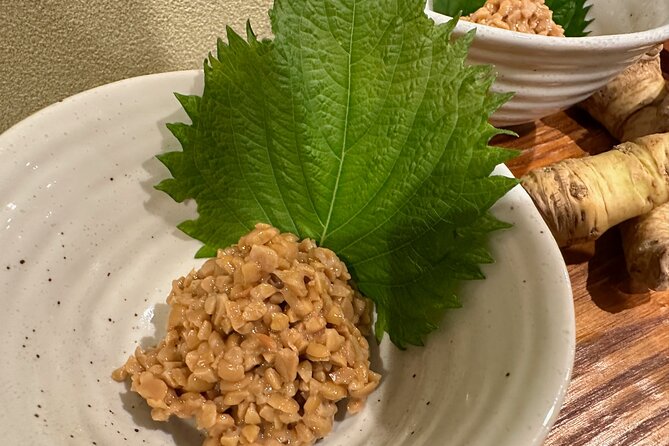
Natto is fermented soybeans, famous in Japan for its sticky texture and strong smell. The activity specifically points out that natto and soba are an excellent match and that many Japanese people enjoy natto soba.
This is the topping to approach with an open mind. If you already like natto, you will have a chance to compare it with freshly made noodles. If you have never tried it, start with a small portion and pay attention to how the beans change the texture of the soba.
Natto is valuable here because it introduces a favorite Japanese food combination that may not appear on a standard tourist menu. It is also the most likely to divide the table. That is not a flaw, but it does mean this part of the meal is better for curious eaters than for anyone who wants familiar flavors only.
Grated plum and radish
The final topping combines pickled plums and grated radish, served with a fresh dipping sauce. The plum brings a sour, salty note, while the radish adds a clean bite.
This is probably the lightest and freshest of the four combinations. After duck and natto, the grated plum and radish can reset your palate. It also gives you another way to eat soba without relying on a rich broth.
The combination shows why the tasting works well as a group activity. You are not simply asked to choose one topping and hope it suits you. You can move among four different styles and decide which pairing fits your taste.
The meal is designed to leave you full
The instructions tell you to go hungry. That is useful advice, especially because the price includes both the class and the meal. You are not paying $120.04 for a tiny sample followed by a search for dinner.
The duck seiro adds warmth and substance. Natto contributes protein and a dense texture. The four toppings also mean that the finished noodles can be eaten in several ways, which should make the meal feel more varied than a single bowl of soba.
Still, the exact portion size is not stated. I would not assume this replaces a large multi-course dinner for every appetite. The wording suggests a filling meal, but your experience will depend on portion sizes and how much soba your group produces.
The best approach is to arrive ready to eat, but not to treat the meal size as the main reason to book. The real value is the combination of making the noodles and learning how Japanese diners pair them with less familiar toppings.
Price, timing, and the question of value
At $120.04 per person, this sits in the premium category for a one-hour food activity. The price is easier to justify if you place a high value on privacy, a hands-on lesson, and a full tasting built around regional food.
A normal restaurant meal would cost far less. You could order soba in Sapporo and try a familiar topping without committing to an activity fee. The difference here is the access to the restaurant after closing and the chance to make the noodles yourself.
The one-hour length cuts both ways. You will not lose a full morning, and the activity can fit into a packed Sapporo itinerary. But the short schedule also limits how much instruction and practice you can receive.
Group discounts may improve the calculation for families or friends. Since the discount amount is not given, check the final booking price rather than assuming a large reduction. For a solo visitor, the cost is harder to defend unless soba is a major personal interest.
I would compare this with the cost of other cooking classes in Sapporo, but make the comparison carefully. This is not advertised as a broad Japanese cooking course. It is a narrow, focused soba session with an unusually specific topping tasting.
Meeting point and practical planning
The meeting point is 9-chōme-17-29 Hassamu 6 Jō, Nishi Ward, Sapporo, Hokkaido 063-0826, Japan. The activity ends at the same location, so you do not need to arrange a separate return point.
It is near public transportation, which should help with access, but the exact station, walking distance, and recommended route are not provided. Check the route before setting out, and allow enough time to locate the address. The meeting point is in Hassamu, in Sapporo’s Nishi Ward, rather than being described as a central downtown pickup.
The booking confirmation arrives at the time of reservation. Keep that confirmation available, since the schedule is tied to a restaurant’s after-hours operation.
Service animals are allowed. The activity is private, and only your group participates. Those details make it a practical choice for a party that wants a quieter setting, although the available information does not describe seating, kitchen access, or other mobility arrangements.
Who should book this soba experience?
I would recommend it most strongly to you if food is one of the main reasons you visit Japan. You do not need to be an expert cook, but you should be willing to try natto and other toppings that may be unfamiliar.
It also suits families and friend groups that want a private activity. The class is short enough for children or first-time cooking participants in principle, but no minimum age or child policy is provided, so confirm that point if it affects your plans.
Soba fans will get the most from the regional angle and the chance to compare four combinations. The Hokkaido yam wasabi is especially useful if you want to taste something tied to the region rather than simply ordering a standard noodle dish.
I would be more cautious if you have a tight budget, dislike fermented foods, or want a long technical lesson. You might enjoy the duck and plum combinations, but the natto portion is part of the advertised appeal, not an optional side detail.
Cancellation and booking flexibility
You can cancel for a full refund up to 24 hours before the experience begins. Inside that 24-hour window, the amount paid is not refunded, and changes are not accepted.
The cutoff uses local time in Sapporo. That matters if you are booking from another time zone or adjusting plans while traveling in Japan.
This policy is reasonably flexible for an activity tied to a private restaurant session. Still, check your schedule before booking, particularly if your Sapporo plans depend on weather, transport, or another timed attraction.
Should you book this private Sapporo soba class?
Book it if you want a compact, food-centered activity with real regional character. Making soba after a restaurant closes, then eating it with Hokkaido yam wasabi, duck seiro, natto, and grated plum, gives you more than a standard restaurant order.
Skip it if your main goal is an inexpensive meal or an advanced cooking course. At $120.04 for about an hour, the price asks you to value the private setting and hands-on format.
For the right person, this is a memorable way to understand soba culture in Hokkaido. Arrive hungry, expect four very different toppings, and confirm the precise teaching format if the noodle-making lesson matters more to you than the meal.
FAQ
Where does the soba-making activity begin?
It begins at 9-chōme-17-29 Hassamu 6 Jō, Nishi Ward, Sapporo, Hokkaido 063-0826, Japan.
Where does the activity end?
The activity ends back at the meeting point.
How long does the experience last?
The experience lasts approximately one hour.
How much does the experience cost?
The listed price is $120.04 per person.
Is this a private activity?
Yes. Only your group participates.
What toppings are served with the soba?
The four listed toppings are Hokkaido yam wasabi, duck seiro, natto, and grated plum with grated radish.
Is the activity held during normal restaurant hours?
No. The soba-making session takes place after the restaurant closes.
Are group discounts available?
Yes. Group discounts are listed as a feature of the activity.
What is the cancellation policy?
You can cancel at least 24 hours before the start time for a full refund. Cancellations or changes made less than 24 hours before the start are not refunded or accepted.
More tours in Sapporo we've reviewed


Sapporo, compared.
 ★ 5.0Sapporo Bar Hopping Food TourFrom $108
 ★ 4.7Hokkaido Seasonal: Lake Toya & Noboribetsu Jigokudani ValleyFrom $551 day
 ★ 5.0Sapporo Private Tour with a Local – Highlights & Hidden GemsFrom $109
 ★ 4.9Sapporo: Sumo Show Experience with Japanese food & PhotoFrom $772 hours
 ★ 5.0Popular in SapporoExperience authentic hand-made soba at a real soba shop!From $72
 ★ 5.0Mondo’s most popular plan! Experience making soba noodles and the king of Japanese cuisine, tempura, in Sapporo!From $85
 ★ 5.0【Private Car】Asahiyama Zoo, Blue Pond, Shirahige Falls, Ningle Terrace (from Sapporo)From $465
 ★ 4.0Hokkaido Noboribetsu Lake Toya Tour from SapporoFrom $66
The lists this tour appears in