
Reviewed · HAKODATE TOURS
Make Piroshki in Hakodate and Visit Hidden Spots While Baking
Hakodate’s Russian connection comes to your table in the form of oven-baked piroshki, filled with Japanese ingredients and made by your own hands. You shape the dough, choose from sweet and savory fillings, and eat the finished pastries while learning more about the city’s mixed cultural past.
In This Article
- Key points before you book
- Why piroshki fits Hakodate so well
- Starting at Marutamagoya at 11 a.m.
- Rolling dough and choosing the fillings
- Baking time becomes a Motomachi walk
- Eating the finished piroshki
- What the two-hour schedule really gives you
- Food restrictions and practical limits
- Who will get the most from this class
- How this compares with an ordinary Hakodate meal
- Should you book the Hakodate piroshki experience?
- FAQ
- Where does the experience begin?
- What time does the activity start?
- How long does the experience last?
- Where does the experience end?
- How many people can join?
- Is the activity suitable for beginners?
- What kind of piroshki will I make?
- Is gluten-free food available?
- Is Wi-Fi available at the café?
- Can I cancel or change my booking?
I like the small café setting and the chance to taste local Ezo deer and Ezo-maitake mushroom in a dish with Russian roots. I also like the useful use of baking time: instead of sitting around, you walk to churches, parks, and lesser-known spots near Motomachi. The main consideration is the firm cancellation policy, and the class cannot handle gluten-free requests.
Key points before you book
- Bake, rather than deep-fry, Hakodate-style piroshki in the cooking method still used locally.
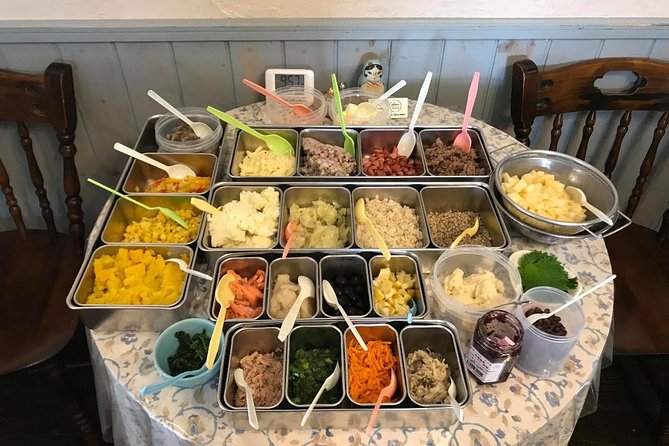
- Use unusual Hokkaido fillings, including Ezo deer and Ezo-maitake mushroom, along with sweet and savory choices.
- Walk during the dough’s fermentation time, with an English city guide showing churches, parks, and places not usually printed in guidebooks.
- Work in a renovated 80-year-old house, now a café used as a relaxed meeting place by the local community.
- Keep the group small, with a maximum of 10 people and a two-hour schedule beginning at 11 a.m.
- Try homemade borscht if available, an extra treat noted as part of several individual sessions, though food and drinks beyond the workshop are not included in the listed price.
Why piroshki fits Hakodate so well
Hakodate was opened to international settlement earlier than much of Japan, and its port brought people, food, religion, and architecture from several countries. The city was also home to Japan’s first Russian consulate. That background gives this class more purpose than a standard pastry lesson.
Piroshki arrived through Russian influence, but the version here is shaped by Hokkaido. In many parts of Japan, piroshki are deep-fried. Hakodate keeps the oven-baked style alive, producing a softer bread exterior and a different feel from the crisp, fried version you may find elsewhere.
I like this kind of food experience because it connects a recipe to a place. You are not simply making a familiar dish in a rented kitchen. You are learning why this particular city has a Russian-style pastry and how local ingredients have changed it over time.
The fillings make the class especially interesting. Ezo-shika means Hokkaido deer, and Ezo-maitake is a local mushroom. These are not standard tourist-menu ingredients. They give the piroshki a clear regional identity, while the range of sweet and savory fillings lets you make several different versions rather than one identical pastry.
A few more Hakodate tours and experiences worth a look


Starting at Marutamagoya at 11 a.m.
The meeting point is Marutamagoya, at 2-3 Motomachi, Hakodate, Hokkaido 040-0054. The activity begins at 11 a.m. and finishes back at the same place, so you do not need to arrange a second pickup point or find your way to another part of town.
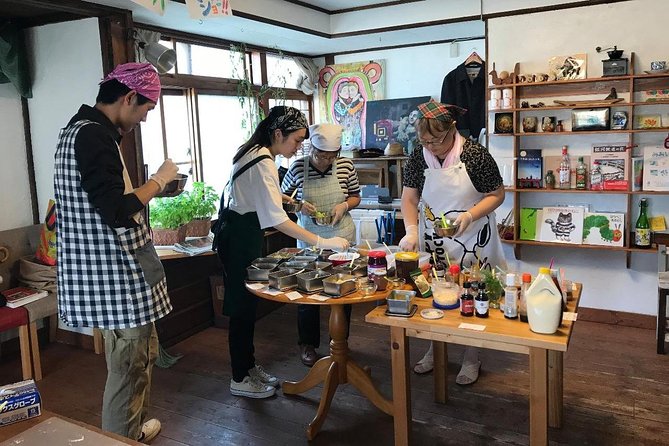
The café is in a renovated house about 80 years old. That matters because the setting feels tied to Hakodate’s old streets rather than designed only for short-term visitors. The space is described as a local place to relax, which should make the two-hour class feel more like a visit to a neighborhood café than a formal culinary school.
The group limit is 10 people. That is small enough for the instructor to give hands-on help, especially if you are unsure about kneading, rolling, or sealing the dough. It also means the atmosphere may vary by date. A full group can feel social and lively, while a quiet day may be almost private. One person had the class run with only one participant, so a solo booking can still go ahead if the session is confirmed.
The site is near public transportation, which makes it practical to fit into a day of sightseeing in Motomachi. The location also works well before or after a visit to the churches and older streets in the area. Free Wi-Fi is not provided at the café. Wi-Fi is available near the Mt. Hakodate Ropeway, but that should not be treated as a feature of the workshop itself.
Rolling dough and choosing the fillings
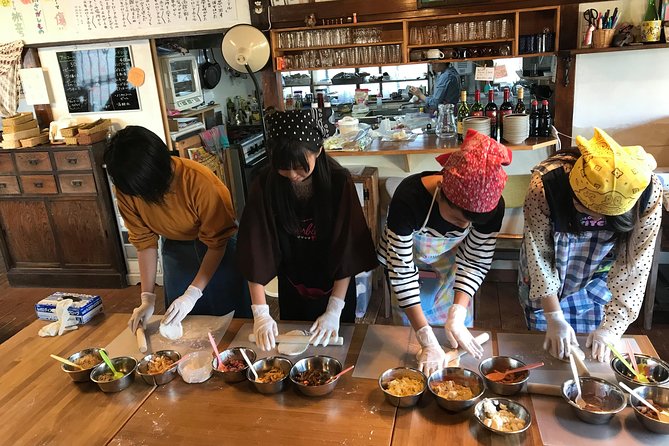
The hands-on part begins with the dough and fillings. You will roll out the dough, add your chosen filling, and shape the piroshki for baking. The class is designed for beginners, with a friendly and careful explanation rather than an expectation that you already know bread-making techniques.
That beginner-friendly approach is important. Stuffed breads can look simple until the filling leaks or the seams fail. A clear demonstration and direct help can save you from producing a tray of misshapen pastries. The point is not professional precision. It is learning the method and making something you can eat soon afterward.
The choice of fillings is one of the class’s strongest features. You can expect a mix of sweet and savory options, with enough variety to make the shaping process feel creative. The exact menu is not specified, so do not book expecting one guaranteed filling beyond the stated local ingredients. The original recipe includes Ezo deer and Ezo-maitake mushroom, making those the most distinctive possibilities.
This also suits different kinds of companions. A couple can turn the shaping into a relaxed shared activity. Friends can compare fillings and forms. A solo visitor gets a structured way to meet people without committing to a long group excursion. Children may enjoy the food-making aspect, but the supplied information does not give an age policy, so families should confirm that point before booking.
Baking time becomes a Motomachi walk
Piroshki dough needs time to ferment before baking. Here, that waiting period is used for a short guided walk around Hakodate. You will be taken to well-known churches as well as spots that are not usually shown in guidebooks.
The church area matters because it reflects the foreign communities that helped shape Hakodate. The walk gives the food a setting and helps explain why Russian influence appears in the city’s cooking. Parks and quieter corners add another layer, showing you parts of the neighborhood beyond the most photographed buildings.
I like this structure. A cooking class can become repetitive if you spend the full session waiting for dough or an oven. A short walk breaks up the activity and lets you see the nearby area while the food develops. It also gives you a useful orientation if you plan to keep exploring Motomachi afterward.
The walk is described as safe and enjoyable, but the exact route and distance are not provided. You should be prepared for ordinary outdoor walking and for the possibility that weather affects the experience. The activity remains centered at the café, so this is not a full sightseeing tour of Hakodate. Its value comes from adding local context to the baking rather than covering many attractions.
Eating the finished piroshki
After the walk and baking, you can eat the piroshki you made. That immediate payoff is part of the appeal. You see the dough at the beginning, work with the filling, watch the pastries bake, and then taste the finished result.
The oven-baked method should give the pastries a different character from the deep-fried piroshki common in other parts of Japan. The precise texture depends on the recipe and your own shaping, but the class gives you a chance to understand that distinction firsthand.
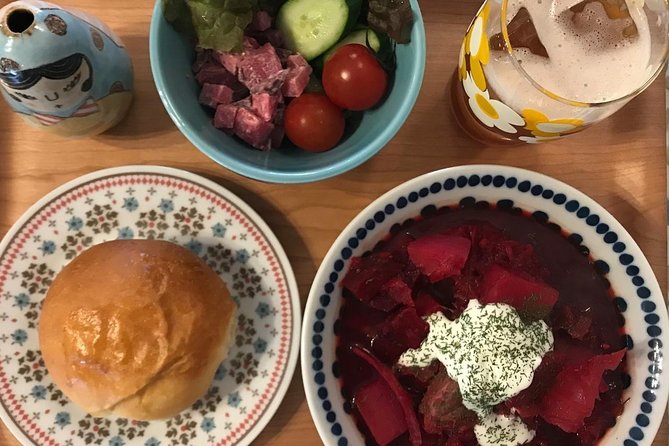
Homemade borscht may also be served for tasting. It was included in several individual experiences, and one person specifically enjoyed trying homemade borscht alongside the piroshki. Still, the formal inclusions say that food, drinks, and personal expenses outside the workshop are not covered. Treat borscht as a possible extra or sample, not a guaranteed part of the $43.57 package.
That distinction is useful when judging the price. At $43.57 per person, you are paying for instruction, ingredients, the use of the café, the baked food, and the short city walk. If you value only the amount of food, you may find cheaper meals in Hakodate. If you want a meal plus a local activity and some cultural explanation, the price is more reasonable.


What the two-hour schedule really gives you
The stated duration is about two hours. That is long enough for a proper introduction, hands-on preparation, fermentation, a walk, and baking, but short enough to fit neatly into a sightseeing day.
I would schedule it early in your Motomachi plans or at a point when you want a break from outdoor sightseeing. The 11 a.m. start can lead naturally into lunch and an afternoon around Hakodate’s churches, old streets, and Mt. Hakodate area. Because the class ends at the starting point, you have a clear base for the next part of the day.
The timing is also good for visitors with limited time in Hakodate. You get a food activity and a neighborhood walk without giving up half a day. On the other hand, the experience will not cover the full story of Hakodate or provide a broad cooking curriculum. You are learning one dish and seeing nearby cultural sites.
A mobile ticket makes arrival simple. Confirmation is sent within 48 hours of booking, subject to availability, so do not assume the reservation is final until you receive it. Since the activity is non-refundable and cannot be changed for any reason, check your date, meeting point, and schedule carefully before paying.
Food restrictions and practical limits
The workshop cannot accommodate gluten-free requests. If you need gluten-free food, this is not the right class. The information provided does not address other allergies, so you should ask the operator before booking if you have any serious dietary concern.
A Western-style toilet is available. The venue is near public transportation, and the tour ends where it begins. Those simple details make the class fairly easy to add to an independent Hakodate itinerary.
The price does not include unrelated food, drinks, or personal expenses. Since the main food is made during the class, you should not expect a separate full restaurant meal beyond what you prepare and any included tasting. If you have a large appetite, plan your next meal accordingly.
There is no stated accessibility information beyond the transport and toilet details. If you need specific assistance with walking, standing, kitchen work, or the short city walk, contact Attractive JAPAN before booking rather than guessing.
Who will get the most from this class
I would choose this for someone who wants a small, local activity with a clear connection to Hakodate. It suits curious eaters, home cooks, couples, solo visitors, and anyone who prefers making food over simply photographing it.
It is also a good fit if you have already seen the city’s main sights and want something less standard. The church and park walk can show you a side of Motomachi that you might otherwise pass by. The English city guide provided during fermentation is useful for visitors who want context without booking a separate walking tour.
The class may be less suitable if you want a fast meal, a large menu, or a polished restaurant demonstration where you simply watch. You will handle the dough and fillings yourself. That is the point, but it also means the final pastries may reflect your own beginner technique.
People seeking a fully private experience should note the maximum group size of 10. A small group is likely, but private booking is not stated. Likewise, the names of the guide and café staff are not provided, so you should not book based on a particular instructor.
How this compares with an ordinary Hakodate meal
A plate of piroshki at a café would take less time and probably cost less. This activity earns its price through participation, local explanation, and the walk between preparation stages.
The strongest value is the combination of three things: a dish tied to Russian history in Hakodate, ingredients tied to Hokkaido, and a small neighborhood visit. Remove any one of those and the experience becomes less distinctive. Together, they create a compact introduction to how outside influences became part of local culture.
The food itself is also more memorable because you have shaped it. Even if your piroshki are not perfectly sealed, you will understand the dish in a way you would not from ordering one at a counter. The optional borscht tasting adds another Russian connection, though you should confirm what is included for your date.
The high rating from the three available ratings is encouraging, but the sample is small. I would treat that as a sign that the format can work very well, not as a guarantee that every session will match the best possible experience. Your enjoyment will depend on how much you like hands-on cooking, small-group conversation, and a short walk.
Should you book the Hakodate piroshki experience?
Book it if you want a practical cultural activity, enjoy trying unusual local ingredients, and have two hours free near Motomachi. The Ezo deer and maitake fillings, oven-baked method, old-house café, and church walk give it more character than a generic cooking lesson.
Skip it if you need gluten-free food, dislike hands-on kitchen work, or want a flexible reservation that can be changed later. The non-refundable policy makes careful planning important.
At $43.57, I consider it a fair buy for the right person. You receive food, instruction, a small-group setting, and a guided look at nearby Hakodate culture. It is not the cheapest way to eat piroshki, but it is a thoughtful way to understand why this pastry belongs in Hakodate.
FAQ
Where does the experience begin?
It begins at Marutamagoya, located at 2-3 Motomachi, Hakodate, Hokkaido 040-0054, Japan.
What time does the activity start?
The scheduled start time is 11 a.m.
How long does the experience last?
The activity lasts approximately two hours.
Where does the experience end?
It ends back at the Marutamagoya meeting point.
How many people can join?
The maximum group size is 10 participants.
Is the activity suitable for beginners?
Yes. The workshop provides a friendly and careful lecture intended to make it easy for beginners to participate.
What kind of piroshki will I make?
You will make oven-baked piroshki, using a traditional style associated with Hakodate. The recipe includes local ingredients such as Ezo deer and Ezo-maitake mushroom.
Is gluten-free food available?
No. The workshop cannot accommodate gluten-free requests.
Is Wi-Fi available at the café?
Free Wi-Fi is not available at the café. Wi-Fi is available near the Mt. Hakodate Ropeway close to Marutamagoya.
Can I cancel or change my booking?
No. The experience is non-refundable and cannot be changed for any reason after booking.
More Hakodate Tours in Hakodate
More tours in Hakodate we've reviewed



Hakodate Tours, compared.
 ★ 5.0Hakodate Rickshaw TourFrom $35
 ★ 5.0Hakodate 6hr Private Tour with Government-Licensed GuideFrom $269
 ★ 4.5Hakodate Exploration Tour with Private GuideFrom $407
 ★ 5.0Hakodate 4hr Private Tour with Government-Licensed GuideFrom $221
 ★ 4.4Hakodate: 4-Hour Cultural and Historical Highlights TourFrom $4164 hours
 ★ 5.0Hakodate Highlights Shore Excursion (5h) for Cruise GuestsFrom $5215 hours
 ★ 5.0Half Day Hakodate Tour with Government Licensed English guideFrom $312
 ★ 5.0Taught by a professional! Making sushi with Hakodate’s Fresh FishFrom $86
The lists this tour appears in