
Reviewed · HAKODATE TOURS
Hakodate 4hr Private Tour with Government-Licensed Guide
Hakodate makes a strong first impression with its mix of Japanese, European, Russian, and Ainu influences. This private four-hour tour lets you choose two or three sights, then explore them with a multilingual, government-licensed guide who can explain the city instead of simply pointing at it.
In This Article
- Key points to know before booking
- Why Hakodate works so well for a private city tour
- Mount Hakodate: a short stop with a big view
- Goryokaku Park and the final chapter of the shogun era
- Hakodate Morning Market: seafood before the city wakes up
- Motomachi and the city’s foreign connections
- Kanemori Red Brick Warehouse and Bay Hakodate
- The Museum of Northern Peoples and Ainu culture
- Onuma Quasi-National Park: beautiful, but difficult to fit
- What the guides add to the day
- Price, time, and what you actually receive
- Who should book this Hakodate tour?
- Should you book it?
- FAQ
- How long is the Hakodate private tour?
- How many sights can I choose?
- Is the tour private?
- Is the guide government licensed?
- Is an English-speaking guide included?
- Is transportation included?
- Where do I meet the guide?
- Is food included?
- Is admission included at every stop?
- Can I cancel for a refund?
I like the freedom to shape the outing around your interests, and I like the chance to pair a major sight such as Goryokaku with smaller historic areas such as Motomachi. Guides including Akira, Meji, Fumiko, Fumi, and Yumiko have led guests through the city, with Akira especially helping people get around by heritage tram.
The main caution is transportation. This is a walking tour with no private vehicle, and you pay separately for trams, taxis, admission fees, and other transport. Onuma Quasi-National Park is also about 20 kilometers from Hakodate, so it may not be a sensible choice within four hours unless you arrange efficient transport.
Key points to know before booking
- Choose two or three sights: The tour is customized rather than locked to one fixed route.
- Meet on foot: Pickup means meeting the guide within a designated Hakodate area, not a private car collecting you.
- Use your guide for context: Goryokaku, Motomachi, the port, and the Ainu collection all benefit from explanation.
- Plan transport costs: Trams, taxis, entrance fees, meals, and personal purchases are extra.
- Consider the morning market early: It operates from 5 a.m., or 6 a.m. in winter, until noon.
- Expect a private outing: Only your group participates, so you can ask questions and adjust the pace.
Why Hakodate works so well for a private city tour
Hakodate is not a city you understand from one postcard view. Its character comes from several layers sitting close together: a port opened to foreign trade in 1854, Western-style buildings, churches, red-brick warehouses, a star-shaped fortress, seafood stalls, and reminders of Ainu culture.
That mix makes a private guide useful. You can see a church or old warehouse on your own, but the larger story becomes clearer when someone explains why Hakodate looks different from many other Japanese cities.
The four-hour format is best treated as a focused introduction, not a complete survey. You choose two or three stops from a longer menu. That is a good arrangement if you already know your priorities, but you should not expect to visit all eight places listed for possible stops.
The guide can adjust the day to your interests. Ask for history at Goryokaku, foreign influence in Motomachi, food at the Morning Market, or cultural context at the Museum of Northern Peoples. The private format also gives you room to ask follow-up questions, something that is often lost in a larger group.
A few more Hakodate tours and experiences worth a look


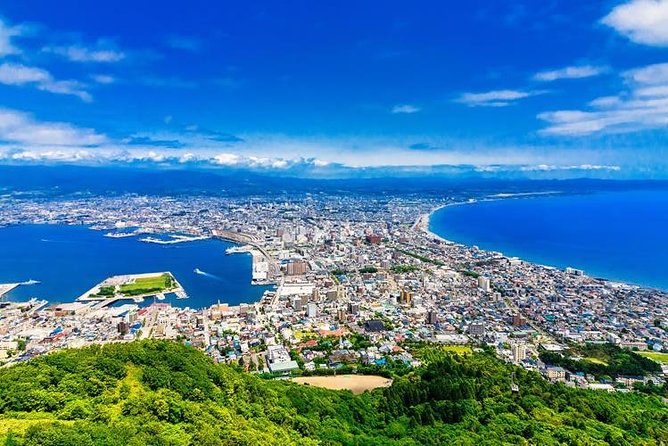
Mount Hakodate: a short stop with a big view
Mount Hakodate rises 334 meters at the southern end of the peninsula. It is wooded, and its position beside the water makes it one of the city’s most recognizable viewpoints.
The suggested stop lasts about 30 minutes, with no admission ticket listed. That short time works best if you mainly want to take in the view and hear your guide explain Hakodate’s position. On a clear day or night, the view is the main event.
There is an important practical point here: the tour does not include a private vehicle. Reaching Mount Hakodate may require transport, and transportation fees are not included. Ask your guide in advance how this stop fits with your meeting point and the other sights you want to see.
I would choose Mount Hakodate if the view is a top priority and the weather looks favorable. If clouds block the outlook, Goryokaku or Motomachi may offer better use of a short four-hour visit.
Goryokaku Park and the final chapter of the shogun era
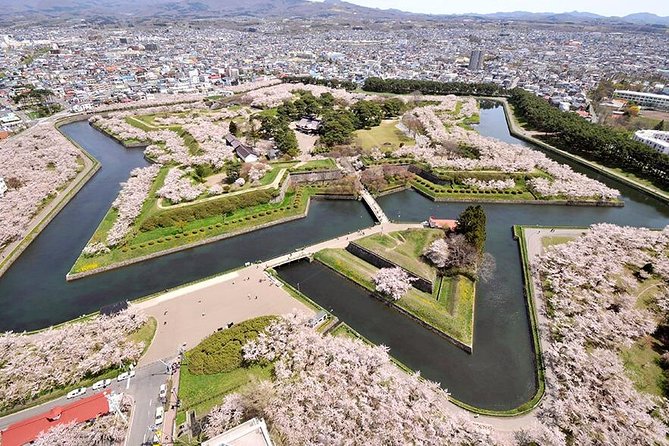
Goryokaku Park gives you one of Hakodate’s most distinctive sights: a Western-style, star-shaped fort built during the late Edo Period. Today, the former fortress is a public park, but its shape and surviving structures point to a period when Japan was adopting new military ideas and facing major political change.
The fort later became the site of the final battle between the Tokugawa forces and the new government. That makes it more than a pleasant green space. It is a place where the end of the shogunate becomes easier to picture.
A guide can help you understand the fort’s purpose, the former magistrates’ offices, and the battle that took place here. One particularly useful tour arrangement paired Goryokaku with a view of the city from the tower, followed by the historic warehouse district. The tower itself may involve a separate admission charge, so confirm what is included before you arrive.
Goryokaku is a strong choice for first-time visitors who want Hakodate’s political and military story. It also pairs well with the Morning Market or Motomachi, giving you a fuller sense of the city instead of focusing only on one era.
Hakodate Morning Market: seafood before the city wakes up
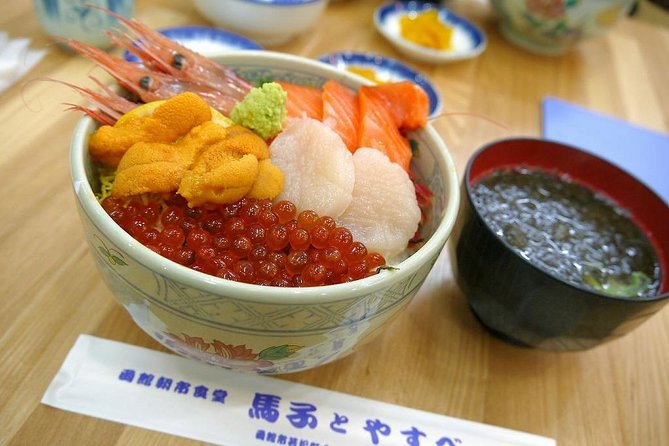
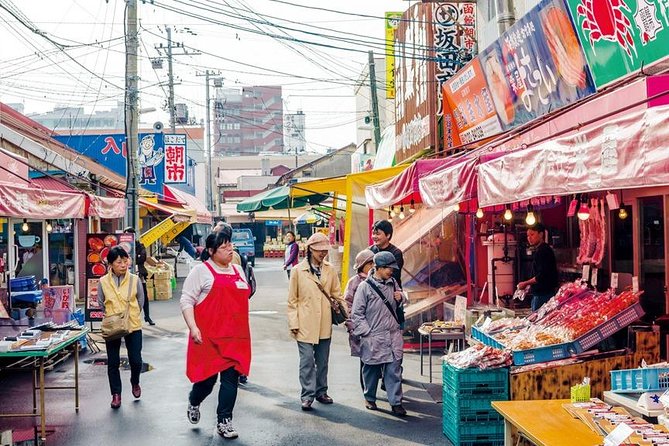
The Hakodate Morning Market sits a short walk from JR Hakodate Station. It opens daily from 5 a.m., or 6 a.m. during winter, and closes at noon.
This timing matters. The market is not a late-morning attraction that you can casually add after a long breakfast. If you want seafood early in the day, make the market the first stop and book a suitable start time.
The market area covers about four city blocks, giving you more than a single stall or shop. You can look at local seafood and consider a fresh seafood breakfast, but the meal is not included in the tour price.
This is a good stop for people who want a taste of daily Hakodate rather than only monuments. It also makes practical sense near the station, especially if you have just arrived by train. Still, a 30-minute visit is brief. If you want to browse, eat, and ask questions about many products, you may need to limit the number of other stops.
Motomachi and the city’s foreign connections
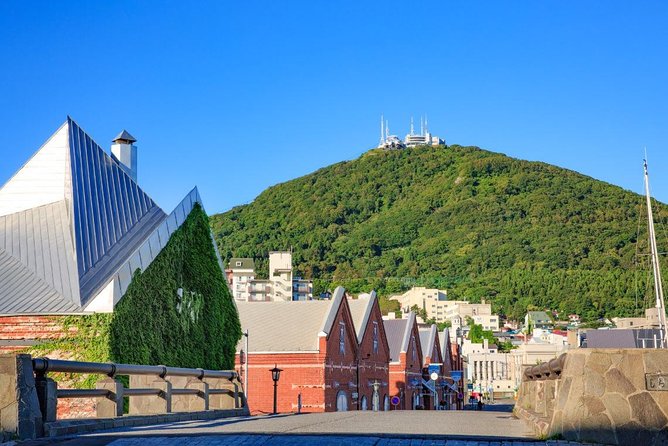
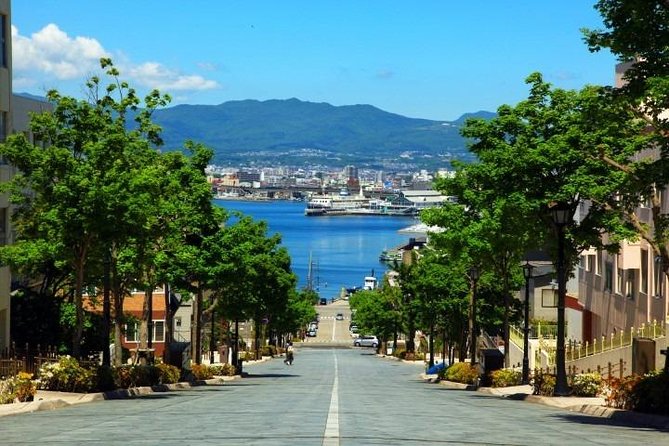
Motomachi shows why Hakodate has such a different visual character. The harbor was among the first in Japan opened to foreign trade after the country’s long period of isolation ended. Russian, Chinese, and Western traders came to the area, leaving behind buildings and religious sites that look unlike standard Japanese temple-and-shrine districts.
This is one of the best parts of the tour for anyone interested in architecture and international history. Your guide can connect the streets and buildings to Hakodate’s role as a port, rather than treating each structure as an isolated photo stop.
Motomachi is also a useful place to slow down. Instead of rushing from one major attraction to another, you can look at the street pattern, building styles, and harbor connection. Since the tour is private, tell your guide if you prefer architecture, religious buildings, photography, or historical explanation.
The drawback is that this area rewards attention more than speed. A quick 30-minute stop can introduce it, but it cannot cover every building in detail. Choose Motomachi when you want atmosphere and context, not a long list of formal attractions.
Other guided tours in Hakodate


Kanemori Red Brick Warehouse and Bay Hakodate
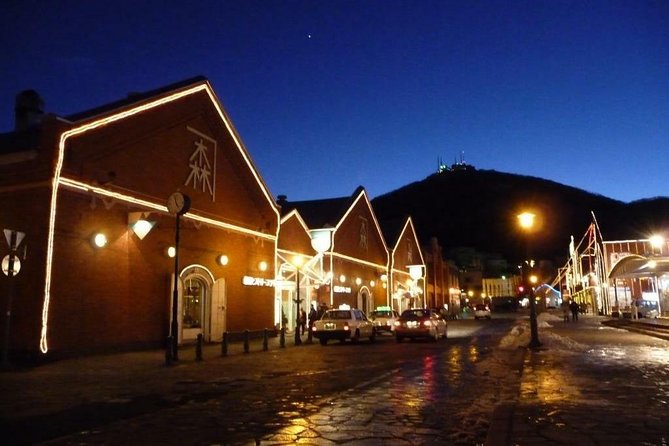
Hakodate’s old port warehouses have been reused as shopping and dining spaces. The Kanemori Red Brick Warehouse area preserves the look of the trading port while giving you a practical place to browse.
The nearby Bay Hakodate area faces the harbor and includes a row of old red-brick buildings converted into a shopping mall. It is easy to combine these two stops, since both focus on the waterfront and the city’s trading past.
I would choose this pair if you want a relaxed part of the tour with time for photos and shopping. It also works well after Goryokaku, which has a more formal historical focus.
Keep in mind that the buildings now serve modern commercial purposes. You are not visiting a preserved warehouse district frozen in time. The value is in seeing how old port structures remain part of daily city life.
A guide can add meaning by explaining how Hakodate’s port developed and why these warehouses survived. If your main interest is shopping, you may prefer to spend the full half-hour here. If your main interest is architecture, pair the area with Motomachi.
The Museum of Northern Peoples and Ainu culture
The Hakodate Museum of Northern Peoples occupies a building that once served as the Japan Bank, constructed in 1926. Inside, the museum focuses on Ainu culture and other northern peoples.
This is the most distinct cultural stop on the menu. It takes you beyond Hakodate’s port history and European-style buildings, offering a chance to learn about the Ainu, the Indigenous people of northern Japan.
The museum is the only suggested stop that specifically lists an admission fee as not included. Confirm the current cost and opening arrangements before making it a centerpiece of your four-hour plan.
A 30-minute visit can provide an introduction, especially with a guide explaining what you are seeing. It is less suitable if you want to read every display at length. Choose it when cultural history matters more to you than scenic views or shopping.
Onuma Quasi-National Park: beautiful, but difficult to fit
Onuma Quasi-National Park lies about 20 kilometers north of Hakodate. It is known for lakes dotted with islands and views toward Mount Komagatake.
The park offers a change from the city. Instead of port buildings, fortifications, and trams, you get water, islands, and a mountain setting. The listed stop is about 30 minutes and has no admission ticket listed.
The problem is time and transport. This is a walking tour, and no private vehicle is provided. Since Onuma is outside central Hakodate, reaching it and returning to the city can consume a large part of a four-hour tour. Transportation fees are also extra.
I would select Onuma only after confirming the route with the guide. It could make sense for someone with a strong interest in scenery and a taxi plan, but it is not the easy choice for a first overview of central Hakodate. For most people, Goryokaku, Motomachi, the market, or the waterfront will use the limited time more efficiently.
What the guides add to the day
The tour is led by a government-licensed local guide who speaks English and may speak other languages. The guide names connected with this experience include Akira, Meji, Fumiko, Fumi, and Yumiko.
The strongest feature is not simply language ability. It is the chance to ask questions and reshape the route around your priorities. Meji is described as tailoring the visit closely to the group’s interests, while Akira has taken groups around by heritage tram and helped them see several parts of the city.
Another guide, Fumiko, suggested using a taxi to make better use of the four-hour window. That advice points to an important strength of a private tour: a guide can help you make a practical decision when walking alone would take too long. The taxi cost remains yours.
The guides have also handled detailed questions about Hakodate’s past and Ainu culture. If you have done some research before arriving, bring your questions. The tour will be more useful if you tell the guide what you already know and what you want clarified.
Price, time, and what you actually receive
The listed price is $221.52 per person. That is a serious cost for four hours, but the price buys a private outing rather than a standard group walk. The value depends heavily on group size and how well you use the customization.
For a couple or small family, the guide’s attention can make the price reasonable, especially if Hakodate is a key stop on your trip and you want more than a quick city walk. For a solo visitor, the per-person cost is harder to justify unless you place a high value on licensed guidance and personal planning.
The price does not include:
- Transportation fees, including taxis or trams
- Entrance fees
- Lunch or breakfast
- Personal expenses
- A private vehicle
You meet the guide on foot within a designated area of Hakodate. This means you should think about the starting point, the distance between your chosen stops, and the cost of getting farther afield.
The tour is booked, on average, 134 days ahead, which suggests that advance planning is sensible. Confirmation is provided at booking. Free cancellation is available up to 24 hours before the start time, but changes or cancellations inside that window are not accepted.
Who should book this Hakodate tour?
I would recommend it to you if you want a flexible introduction to Hakodate and prefer asking questions to following a fixed script. It suits couples, families, and small private groups with different interests.
It is especially useful if you want to combine two contrasting stops, such as Goryokaku and Motomachi, or the Morning Market and the waterfront warehouses. You can build a day around food, architecture, political history, or local culture.
It is less suitable if you want a fully escorted tour with transport included. It is also a poor match if you expect to visit every suggested attraction in four hours. Onuma requires particular care because of its distance from central Hakodate.
Most participants can take part, and service animals are allowed. Since this is a walking tour, consider your comfort with walking between stops and discuss transport plans with the guide before settling on an itinerary.
Should you book it?
Book this tour if you want personal guidance and a flexible route, and if you are willing to pay separately for transport and admissions. The best plan is to choose two central areas with different flavors, such as Goryokaku plus Motomachi, or the Morning Market plus Bay Hakodate.
For a short port call, ask the guide to build the most efficient route and confirm how you will reach any distant stop. For a food-focused visit, start early and choose the Morning Market. For history, choose Goryokaku. For architecture and foreign influence, choose Motomachi and the red-brick warehouses.
Skip it if you only need a cheap orientation walk or want a vehicle included. At $221.52 per person, this tour earns its value through the guide’s attention, local explanation, and ability to adapt the day, not through the number of places checked off.
FAQ
How long is the Hakodate private tour?
The tour lasts approximately four hours.
How many sights can I choose?
You can choose two or three sites from the available selection.
Is the tour private?
Yes. Only your group participates in the activity.
Is the guide government licensed?
Yes. The tour is led by a government-licensed, multilingual local guide.
Is an English-speaking guide included?
Yes. A licensed local English-speaking guide is included.
Is transportation included?
No. Transportation fees are not included, and the tour does not provide a private vehicle.
Where do I meet the guide?
You meet the guide on foot within a designated area of Hakodate.
Is food included?
No. Lunch, breakfast, and other personal expenses are not included. The Hakodate Morning Market is available as a stop, and you can consider buying a seafood breakfast there.
Is admission included at every stop?
No. Entrance fees are not generally included. The Museum of Northern Peoples specifically lists admission as not included, while guide entry fees are covered only for sights named in the tour details.
Can I cancel for a refund?
You can cancel up to 24 hours before the experience start time for a full refund. Cancellations or changes made less than 24 hours before the start time are not accepted.
More Private Tours in Hakodate
More Guided Tours in Hakodate
More Hakodate Tours in Hakodate


More tours in Hakodate we've reviewed



Hakodate Tours, compared.
 ★ 5.0Hakodate Rickshaw TourFrom $35
 ★ 5.0Hakodate 6hr Private Tour with Government-Licensed GuideFrom $269
 ★ 4.5Hakodate Exploration Tour with Private GuideFrom $407
 ★ 4.4Hakodate: 4-Hour Cultural and Historical Highlights TourFrom $4164 hours
 ★ 5.0Hakodate Highlights Shore Excursion (5h) for Cruise GuestsFrom $5215 hours
 ★ 5.0Private Full Day Guided Tour In HakodateFrom $370
 ★ 5.0Make Piroshki in Hakodate and Visit Hidden Spots While BakingFrom $43
 ★ 5.0Half Day Hakodate Tour with Government Licensed English guideFrom $312
The lists this tour appears in