
Reviewed · HAKODATE TOURS
Hakodate Private Walking Tour with Government-Licensed Guide
Hakodate’s best story is its opening to the outside world, and this private walking tour lets you follow that story at your own pace. You can link old churches, European-style buildings, red-brick warehouses, markets, parks, and viewpoints with a guide who explains how foreign trade changed the city.
In This Article
- Key points to know
- Why Hakodate works so well with a private guide
- Choosing between four and six hours
- Motomachi, where foreign influence is easiest to read
- Kanemori Red Brick Warehouse and Bay Hakodate
- Hakodate Morning Market for an early start
- Goryokaku Park and the city’s political past
- Mount Hakodate and the value of a viewpoint
- Onuma Quasi-National Park for a change of pace
- Hakodate Museum of Northern Peoples
- What the guide adds to the day
- Price, transport, and the real cost
- Who should book this Hakodate tour
- Should you book it?
- FAQ
- How long is the Hakodate private walking tour?
- Is the tour private?
- Is an English-speaking guide included?
- Can I choose the places I visit?
- Is a private vehicle included?
- Are entrance fees included?
- Where does the guide meet me?
- Is the tour wheelchair accessible?
- What should I bring?
- Can I cancel the tour for a refund?
I like the custom itinerary, since you choose the sights that matter most to you. I also like the chance to ask questions as you go, rather than follow a fixed group route. The main catch is practical: $219 per person does not include transport, entrance fees, lunch, or a private vehicle, so the final cost can rise.
Key points to know
- Choose your own route: Pick 2 to 3 sites for four hours, or 3 to 4 sites for six hours.
- See Hakodate through its foreign connections: Motomachi, Kanemori Red Brick Warehouse, and Bay Hakodate reveal the city’s trading past.
- Use the guide for context: Fumiko, one guide associated with this experience, is praised for shaping the day around her guest’s interests and adding useful historical detail.
- Expect a walking tour, not a chauffeured tour: Public transport or local taxis may connect distant stops, with fares paid separately in Japanese yen.
- Keep the group private: The tour is limited to your own party, with a maximum of seven passengers.
- Plan carefully: Your guide should contact you after booking, and changes made within 24 hours of the start time are not accepted.
Why Hakodate works so well with a private guide
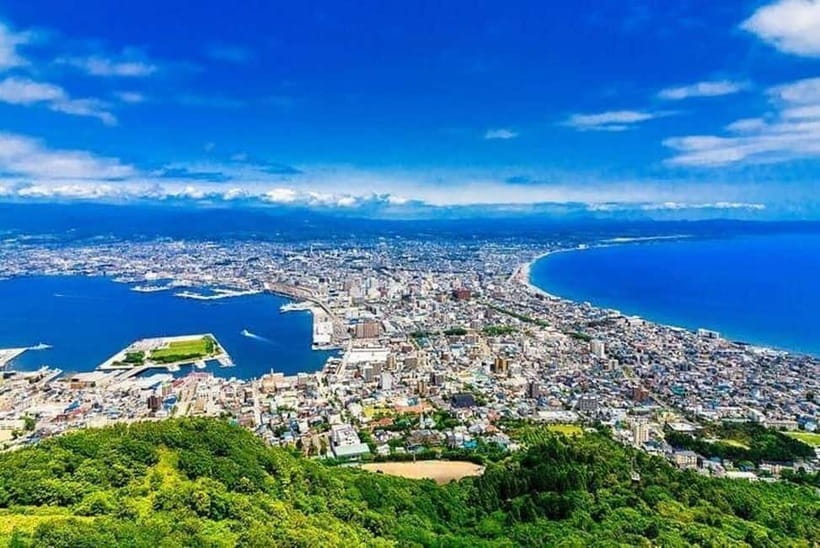
Hakodate can feel like several cities joined together. There is a morning market near the station, a former foreign settlement on the hillside, a harbor district lined with warehouses, and major historical sites farther away. A guide helps you make sense of those pieces instead of treating them as unrelated photo stops.
The city’s location made it an early center of international trade in Japan. That past still shows in the churches, Western-style buildings, red-brick warehouses, and streets around Motomachi and the bay. You will not simply be looking at old architecture. You will be hearing how Hakodate developed a small foreign community and how that changed its streets and institutions.
I find the private format especially useful here because your interests can shape the day. If you care most about architecture, you can concentrate on Motomachi and the waterfront. If you want food and local life, the morning market can take priority. If military and political history appeal to you, Goryokaku Park deserves more attention.
The four-hour option gives you a focused half-day. The six-hour option is better if you want to combine central Hakodate with a site farther away, such as Onuma Quasi-National Park. You will need to be realistic about distances, though. This is not a private-car tour, and each added transfer takes time.
A few more Hakodate tours and experiences worth a look


Choosing between four and six hours
For four hours, you select two or three sites. That sounds generous, but Hakodate’s attractions are not all beside one another. A route centered on Motomachi, the bay, and the red-brick warehouses should feel manageable. Adding Mount Hakodate or Goryokaku may require more attention to transport and timing.
I would choose four hours if Hakodate is one stop on a larger Hokkaido trip and you want a clear introduction. It is also a sensible choice if you prefer time to talk with your guide instead of rushing through four or five places.
The six-hour option allows three or four sites. It gives you more room to combine historic Hakodate with a market, park, or museum. Still, do not read six hours as six hours of nonstop walking. Public transportation or taxis may be needed, and those transfers count as part of your day.
Before the tour, send your guide your preferred sites from the available list. Be specific about what interests you. Saying that you like architecture, food, or Japanese military history gives the guide a better basis for arranging the route than simply naming several places.
Motomachi, where foreign influence is easiest to read
Motomachi is likely to be the most rewarding choice if you want to understand Hakodate’s international past. The district is known for European buildings and churches, reminders of the foreign community that developed after the city opened to trade.
A guide can add the missing layer of explanation. You can look at a church or old building on your own, but you may not know why it is there, how it fits into Hakodate’s port history, or how the district differs from older Japanese urban areas.
This is also a good place for a slower walking pace. Streets on the hillside can make the area feel more personal than a quick stop at a major attraction. Wear comfortable shoes, especially if your route includes several uphill or downhill sections.
Motomachi is not the best choice if you want a purely food-focused morning or a broad day covering distant sites. It rewards attention rather than speed. I would pair it with Kanemori Red Brick Warehouse or Bay Hakodate for a strong four-hour route.
Kanemori Red Brick Warehouse and Bay Hakodate
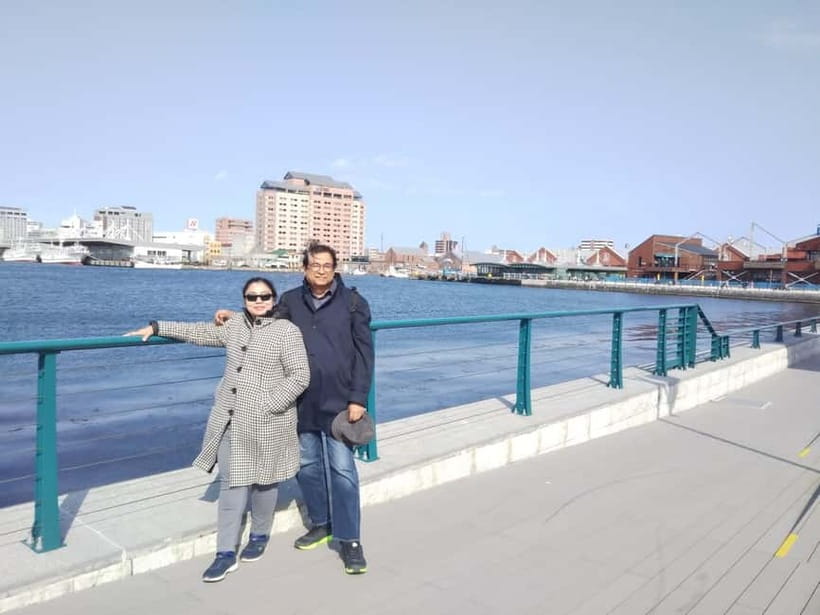
The Kanemori Red Brick Warehouse area gives you another view of Hakodate’s trading past. Its brick buildings connect the old port to the city you see today, and the nearby Bay Hakodate area keeps the focus on the waterfront.
These stops make sense for visitors who enjoy architecture, commercial history, and a walk with a clear visual theme. The red brick is easy to recognize, and the bay helps you understand why Hakodate grew as a port.
The drawback is that a waterfront visit can become a quick photo stop if your route is too crowded with other sites. Ask your guide to explain the buildings and the port’s role, rather than simply moving from one warehouse to the next.
I like this pair for a first visit because it is easy to connect with Motomachi. Together, the three areas show how foreign residents, trade, and port activity shaped the city. They also keep your four-hour tour fairly focused, though exact walking and transport times depend on your meeting point and chosen route.
Hakodate Morning Market for an early start
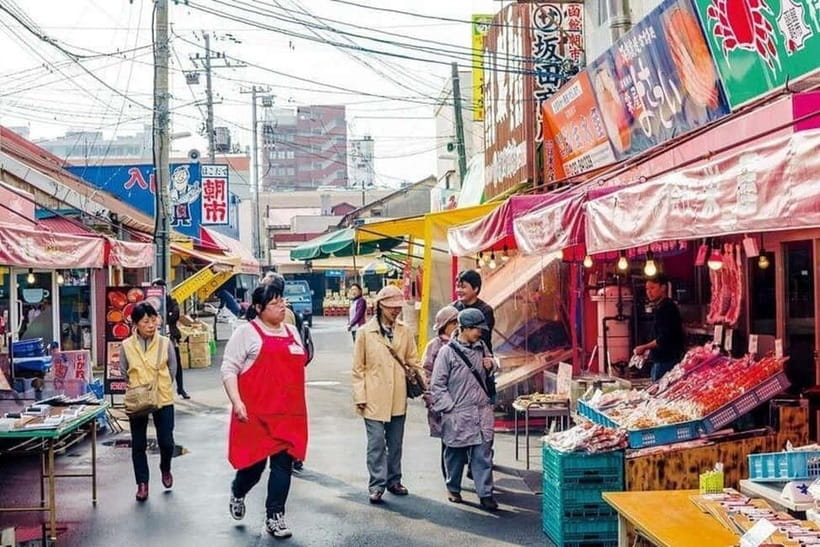
Hakodate Morning Market is the natural choice if food and local commerce matter more to you than formal monuments. Its place on the itinerary also affects the start time, so confirm the timing with your guide before booking or finalizing your route.
The market can give your day a practical local beginning. You can ask your guide about what you are seeing and how the market fits into life in Hakodate. Lunch is not included, and personal food purchases are your responsibility, so bring Japanese yen.
A market visit works best when you want flexibility. You might spend more time browsing, eating, or asking questions, which can leave less time for a distant park or museum. I would combine it with Motomachi or the bay rather than trying to add several far-flung stops.
The market may not suit you if you want a quiet, uninterrupted historical walk. It is also worth remembering that this is a guided visit, not a meal package. Your guide can help with context, but your food and other purchases are separate.
Other walking tours we've reviewed in Hakodate
Goryokaku Park and the city’s political past
Goryokaku Park offers a different side of Hakodate. Instead of foreign buildings and port warehouses, the focus is the city’s political and military past.
The park is not naturally paired with every central walking route. Allow time for transport, and ask your guide how it fits with your other choices. If Goryokaku is your main reason for booking, a six-hour tour gives you more breathing room.
I would choose this site if you want a stronger historical framework for Hakodate. It can balance a route focused on architecture by showing how the city also figured in Japan’s political changes.
The limitation is simple: you cannot cover every major district in depth during one half-day. A four-hour itinerary that includes Goryokaku, Motomachi, the market, and Mount Hakodate may feel hurried. Pick fewer places and let the guide explain them properly.
Mount Hakodate and the value of a viewpoint
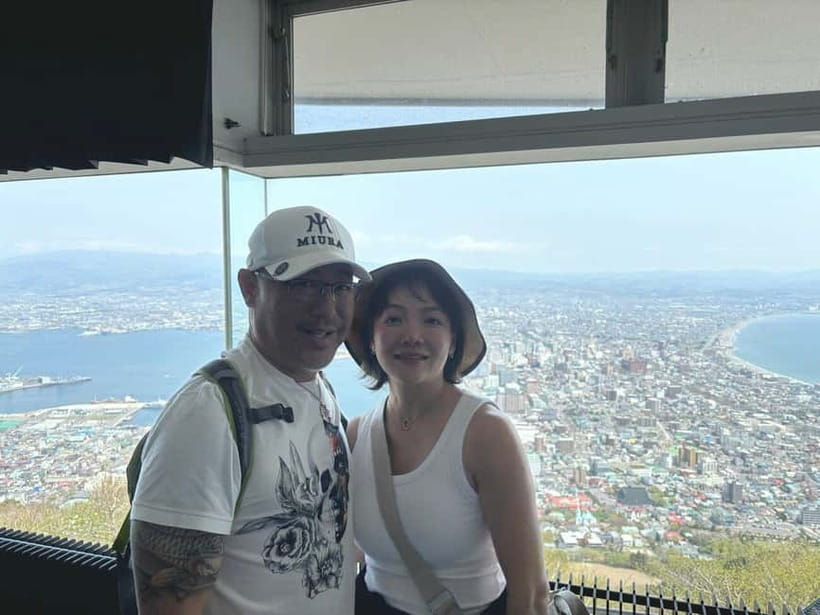
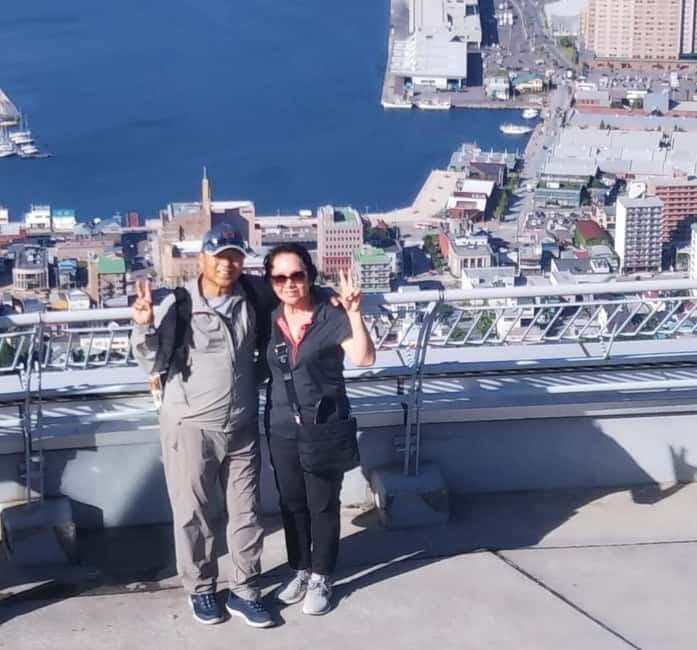
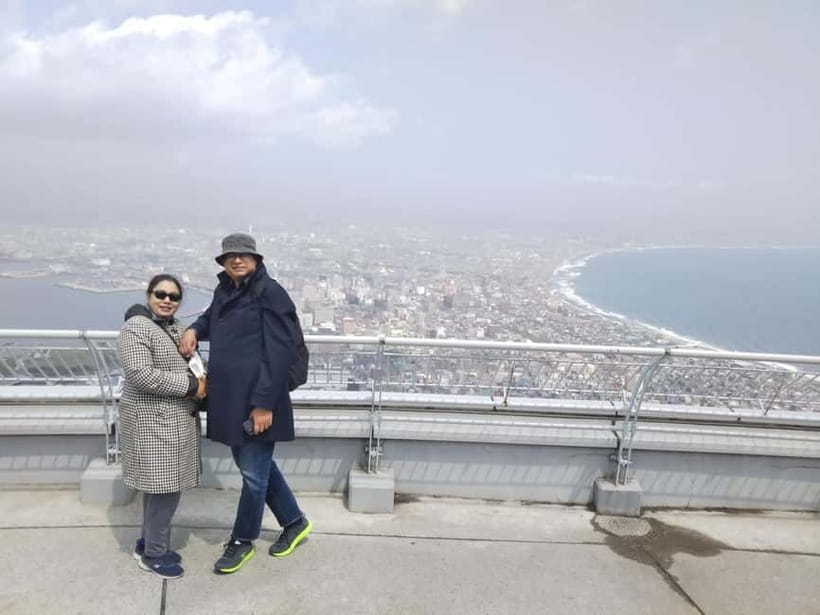
Mount Hakodate is the choice for broad views and a sense of the city’s setting. It can help you understand Hakodate as a port city shaped by water and geography.
Because the tour does not include a private vehicle, getting to Mount Hakodate may involve public transportation or a local taxi. Those costs are separate, and you should carry Japanese yen. Discuss the route and transport expense with the guide after your reservation is finalized.
A mountain viewpoint also depends more on conditions than a museum or historic street. The supplied details do not promise any particular visibility, so treat it as a useful option rather than the only reason to book the tour.
I would add Mount Hakodate to a six-hour plan if views matter to you and you are comfortable giving up one or two other stops. For a compact four-hour introduction, Motomachi and the bay may offer more historical explanation per minute.
Onuma Quasi-National Park for a change of pace
Onuma Quasi-National Park is the most distinct option on the list. It takes you away from central Hakodate and gives the day a more open, natural setting.
That distance is also the key issue. A walking tour can include Onuma, but transport will be needed and your guide will need to plan the timing carefully. You should not expect to combine it casually with every central Hakodate site.
Choose Onuma if you want a break from city streets and prefer a broader day outside the historic core. Choose central sites instead if your main goal is to understand Hakodate’s international trade and foreign influence.
The six-hour tour is the sensible format for Onuma. Even then, ask exactly how the guide proposes to connect it with your other selected stops. The tour is customizable, but customization works best when you accept that every extra destination has a time cost.
Hakodate Museum of Northern Peoples

The Hakodate Museum of Northern Peoples adds a museum option to the list. It may suit you if you want a more focused cultural visit rather than a route built around streets and buildings.
A museum is also useful when weather makes a long outdoor walk less appealing. The tour is wheelchair accessible, though you should still discuss the precise route and transport needs with your guide in advance, especially if several sites are being combined.
The museum may not be the first choice for a short introduction if you are most interested in Hakodate’s port architecture. It becomes more attractive when you already plan to see Motomachi or the bay and want a contrasting indoor stop.
Since entrance fees are not included for you, confirm the expected admission cost before the day. The guide’s entry fees are covered only for sights listed in the description, while your own entrance fees remain separate.
What the guide adds to the day
The main value here is not simply reaching eight possible sights. It is having an English-speaking, government-licensed local guide adjust the day as you go and explain connections that are easy to miss.
One guide associated with this experience is Fumiko. If she is assigned to your tour or available by request, you can expect a guide who takes your preferences seriously and adds context, including small historical comments that may not appear on a standard route.
That personal exchange is the strongest reason to choose a private tour over a general group outing. You can ask why a building looks European, how the port affected Hakodate, or whether a particular site is worth the travel time. The answer can shape the next stop.
The quality of a customized tour depends partly on the conversation before the day begins. Send a short list of priorities after booking, and explain what you do not care about. A guide can build a better route when you say, for example, that you want architecture and food but are less interested in museums.
The tour is offered in English or Japanese. Pickup can be arranged at a requested hotel lobby or train station, where the guide waits 10 minutes before the scheduled pickup time. The meeting area is on foot within the designated Hakodate area.
Price, transport, and the real cost
At $219 per person, this is not a budget walking tour. The price makes more sense for a private group that values a licensed guide and a route designed around its own interests.
The maximum group size is seven, so the per-person cost becomes easier to justify when several people share the private experience. For one or two people, you should compare the price with a standard group tour or self-guided day.
Remember to budget separately for entrance fees, public transportation or taxis, lunch, and personal expenses. A private vehicle is not included. If you want one, it must be arranged directly and booked at least five days in advance.
I see the best value in the guide’s flexibility. You are paying for local explanation, route planning, and private attention, not for bundled meals or transport. If you want an all-inclusive vehicle tour, this is the wrong product unless you arrange the extra vehicle yourself.
Bring cash in Japanese yen. Transportation costs can be discussed after the reservation is finalized, but having cash ready keeps small transfers from becoming a nuisance.
Who should book this Hakodate tour
I would recommend this experience to you if you want to choose the day’s focus, have questions about Hakodate’s past, or are visiting with family or friends who do not all want the same type of sightseeing.
It is especially useful for first-time visitors who want a clear introduction without surrendering the whole day to a fixed schedule. It can also work well for repeat visitors who already know the main sights and want a guide to connect them in a more thoughtful way.
You should think twice if you want a private car, fixed admission costs, or a route that covers every major attraction. You should also avoid overloading the itinerary. Two or three well-matched sites will usually produce a better day than a hurried list of four distant destinations.
The tour is wheelchair accessible, but the walking format and possible transfers make advance discussion important. Tell the provider about your needs when arranging the route.
Booking is flexible, with payment available later and free cancellation up to 24 hours before the start time. The booking is not confirmed until the guide contacts you, usually within seven days. If no guide is available, the activity provider will contact you.
Should you book it?
Book this tour if personal attention and historical context matter more to you than a low price. The strongest plan is a focused route such as Motomachi, Kanemori Red Brick Warehouse, and Bay Hakodate, with the morning market added if food is a priority.
Choose six hours for Goryokaku, Mount Hakodate, Onuma, or any plan that crosses several parts of the city. Keep Japanese yen ready, ask about transport before the day begins, and send your guide a clear list of interests.
Skip it if you want a private vehicle included or prefer to explore independently at a lower cost. For everyone else, this is a practical way to turn Hakodate’s scattered sights into one connected story, provided you accept the extra expenses and plan the route sensibly.
FAQ
How long is the Hakodate private walking tour?
The tour lasts four to six hours. A four-hour tour includes two to three selected sites, while a six-hour tour includes three to four sites.
Is the tour private?
Yes. It is a private group tour, and the maximum number of passengers is seven. Multiple tour groups cannot be combined.
Is an English-speaking guide included?
Yes. A licensed local guide who speaks English is included. Japanese-language guiding is also available.
Can I choose the places I visit?
Yes. You should choose your preferred sites after booking so the guide can customize the route. The listed options include Mount Hakodate, Onuma Quasi-National Park, Goryokaku Park, Hakodate Morning Market, Motomachi, Kanemori Red Brick Warehouse, Bay Hakodate, and Hakodate Museum of Northern Peoples.
Is a private vehicle included?
No. This is a walking tour. Public transportation or local taxis may be used between sites, and those costs are paid separately.
Are entrance fees included?
Your entrance fees are not included. Guide entry fees are covered only for sights listed in the activity description.
Where does the guide meet me?
Pickup can be arranged at a requested hotel lobby or train station within the designated Hakodate area. The guide waits there 10 minutes before the scheduled pickup time.
Is the tour wheelchair accessible?
Yes, the activity is listed as wheelchair accessible. Discuss your specific route and transportation needs with the guide in advance.
What should I bring?
Bring cash, preferably Japanese yen, for transportation and personal expenses. Lunch, entrance fees, and other personal costs are not included.
Can I cancel the tour for a refund?
You can cancel up to 24 hours in advance for a full refund. Changes made less than 24 hours before the start time are not accepted.
More Guided Tours in Hakodate


More Walking Tours in Hakodate
More Hakodate Tours in Hakodate


More tours in Hakodate we've reviewed



Hakodate Tours, compared.
 ★ 5.0Hakodate Rickshaw TourFrom $35
 ★ 5.0Hakodate 6hr Private Tour with Government-Licensed GuideFrom $269
 ★ 4.5Hakodate Exploration Tour with Private GuideFrom $407
 ★ 5.0Hakodate 4hr Private Tour with Government-Licensed GuideFrom $221
 ★ 4.4Hakodate: 4-Hour Cultural and Historical Highlights TourFrom $4164 hours
 ★ 5.0Hakodate Highlights Shore Excursion (5h) for Cruise GuestsFrom $5215 hours
 ★ 5.0Private Full Day Guided Tour In HakodateFrom $370
 ★ 5.0Make Piroshki in Hakodate and Visit Hidden Spots While BakingFrom $43
The lists this tour appears in