
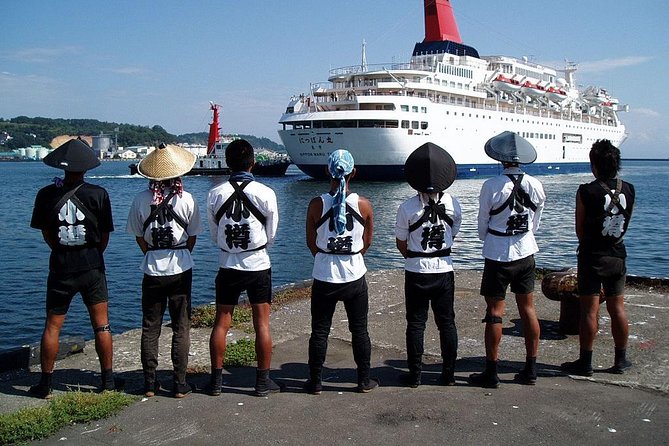
Reviewed · OTARU TOURS
Otaru Rickshaw Tour
Otaru’s canal district is made for a slow ride. From the rickshaw, you see the old warehouses, piers, rail tracks, and sea air without spending your first hour guessing where to walk. The route also slips into small corners that are easy to miss on your own.
In This Article
- Key Points
- Why a Rickshaw Works So Well in Otaru
- Starting at Chuo Bridge
- The North Canal and Otaru’s Iconic View
- Inside the Former Nippon Yusen Kaisha Branch
- Old Rail Tracks and Small Alleys
- A Short Stop at Otaru Marina
- What the Guides Add
- Choosing 30 Minutes, 90 Minutes, or Two Hours
- Is $42.90 Good Value?
- Seating, Families, and Pregnancy Rules
- Timing, Weather, and Cancellation
- Who Should Book This Otaru Ride?
- Should You Book the Otaru Rickshaw Tour?
- FAQ
- Where does the Otaru Rickshaw Tour begin?
- Where does the tour end?
- How long does the rickshaw ride last?
- Is hotel pickup included?
- Is food included?
- Is admission to the Former Nippon Yusen Kaisha Otaru Branch included?
- How many adults can ride in one rickshaw?
- Can young children ride in the rickshaw?
- Can I cancel for a full refund?
I like the personal local guide and the chance to stop for photographs at the canal’s best viewpoints. I also like the range of tour lengths, from a quick 30-minute introduction to a fuller two-hour circuit. The main consideration is comfort: two adults can share a rickshaw, but the seat is only 74 centimeters wide, so some passengers will be happier booking one rickshaw each.
Key Points
- A smart first look at Otaru: Use the ride to get your bearings before exploring the canal district on foot.
- Strong guide-led experience: Guides including Koto and Kuma have provided clear, self-taught English and lively local explanations.
- Classic Otaru views: The route includes the north canal, old warehouses, historic rail tracks, and the city’s most popular canal bridge.
- Several tour lengths: Choose a short introduction or allow up to two hours for a more relaxed ride and extra stops.
- Private for your group: Only your party rides together, with group discounts available.
- Plan the seating carefully: A maximum of two adults fit in one rickshaw, and larger passengers may need separate vehicles.
Why a Rickshaw Works So Well in Otaru
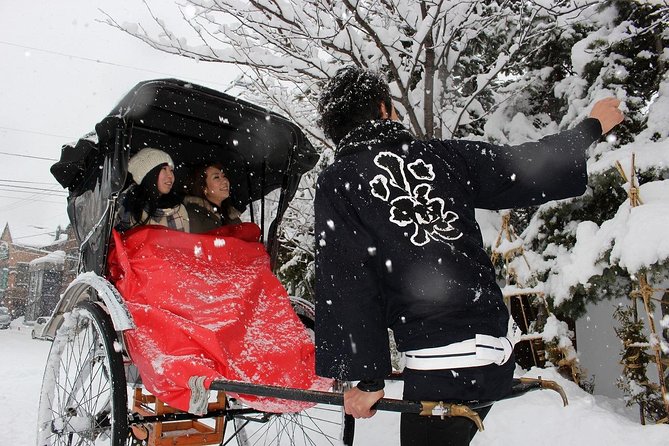
Otaru is easy to associate with its canal, but the city’s character reaches beyond the main postcard view. Old stockyards, former shipping offices, rail lines, narrow alleys, and the marina all point to the port town that grew around trade and fishing.
A rickshaw gives you a moving introduction without turning the outing into a long walking tour. Your driver handles the route while you look around, ask questions, and take photographs. You also get a raised view of the streets, which can make the old warehouses and canal frontage easier to appreciate.
I see this as a particularly useful first activity in Otaru. After the ride, you can return to the places that caught your eye, browse the canal shops, or continue toward the marina and other parts of town with a better sense of direction.
The ride is private, so you are not being folded into a large group. That matters here. Your guide can adjust the pace of conversation and stop for photographs without waiting for a crowd, though the exact route and timing will depend on the length you book and the conditions on the day.
A few more Otaru tours and experiences worth a look


Starting at Chuo Bridge
The meeting point is Chuo Bridge, written as 中央橋 in Japanese, in central Otaru. This is a practical place to begin because the route is centered on the canal district and its historic streets.
There is no hotel pickup or drop-off included. You’ll need to make your own way to the bridge, and the meeting point is near public transportation. A map and photo of the pickup area are useful, especially if you are arriving from the cruise terminal or train station and have limited time.
The activity ends back at the meeting point unless you arrange another finishing location. A different drop-off can bring an extra charge, payable on the day, so ask about this before setting your plans around a cruise departure or another timed booking.
Your selected start time is not automatically final. The confirmed time is sent by email within 24 hours of booking. I would avoid making tight connections until that confirmation arrives.
The North Canal and Otaru’s Iconic View
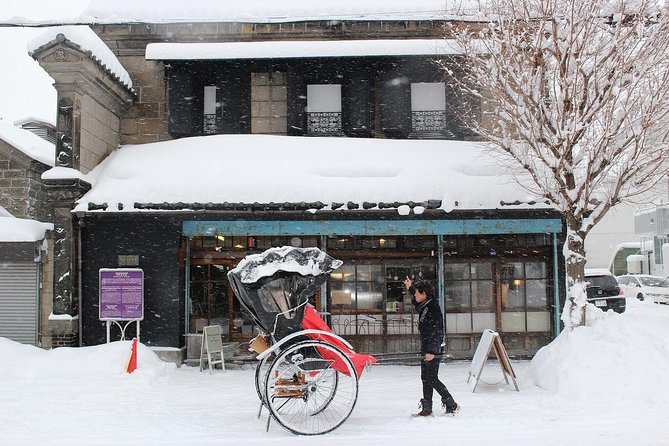
The ride begins among Otaru’s best-known canal scenery. The north part of the canal gives you a close look at the old warehouse frontage and the waterway that helped define the city’s working identity.
This is not simply a photo stop. The canal is valuable because it connects several parts of Otaru’s past in one compact area. You see the water, the storage buildings, the old commercial streets, and the routes that once moved goods through the port.
One of the strongest moments comes at Otaru’s most popular bridge. From here, you get a broad view along the canal, with the old warehouses lining the water. Your driver can help position the rickshaw and take photographs, a useful benefit if you are traveling as a couple or family and want everyone in the picture.
Do not expect every minute to be spent moving. The ride includes short stops and explanations, and those pauses are part of the value. A 30-minute option gives you a quick look, but it will not allow the same relaxed rhythm as a 90-minute or two-hour tour.
Inside the Former Nippon Yusen Kaisha Branch
The route includes the Former Nippon Yusen Kaisha Otaru Branch, with a visit inside the old post office. Admission is not included, so be prepared to pay separately if entry is part of your confirmed route.
This stop adds an indoor layer to the ride. The canal and warehouses show Otaru from the outside, while the former office helps you think about the companies, shipping work, and communication systems that supported the port.
The visit is listed at about 15 minutes. That makes it a manageable addition rather than a long museum stop. If you are choosing the shortest tour, ask how this visit fits into the schedule. On a longer ride, it gives you a welcome change from sitting outdoors, especially in winter or during a cool sea breeze.
The route description uses both the former Nippon Yusen Kaisha name and the old post office description, so you should ask the guide for clarification if you want precise details about the building before entering. The important point for planning is simple: the stop is optional in cost, and the entry ticket is not part of the $42.90 fare.
Old Rail Tracks and Small Alleys
Otaru’s old rail tracks offer one of the tour’s most useful reminders that this was a working port, not just a pretty canal town. The tracks connect the waterfront story with the movement of goods and people through the city.
This kind of stop is exactly where a local driver earns the fare. A quick photograph alone would tell you little. A guide can explain what you are looking at and show you how it fits with the warehouses and canal.
The small alley stop changes the mood again. Instead of staying on the most obvious route, the rickshaw moves into narrower spaces where you can get a feel for Otaru beyond its main attraction. You might find the alley more interesting for atmosphere than for a single famous sight.
The trade-off is that a rickshaw cannot take you everywhere. Some narrow or busy areas may require a short walk, and the driver will decide what is suitable on the day. Think of the ride as a guided sampler, not a replacement for exploring Otaru on foot.
A few more Otaru tours and experiences worth a look

A Short Stop at Otaru Marina
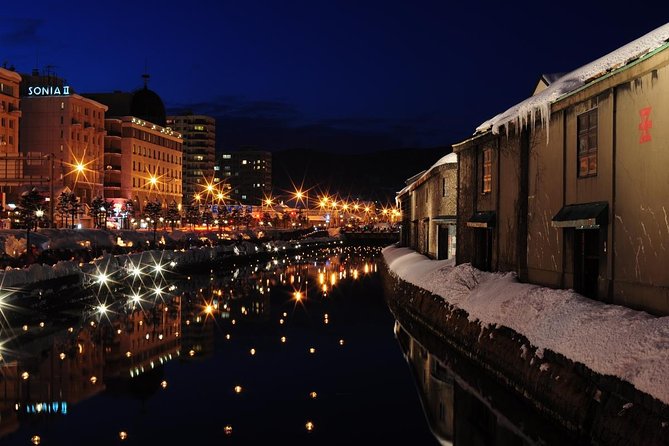
The itinerary finishes with a quick stroll through Otaru Marina, an active part of this fishing town. This stop broadens the view beyond the canal and old commercial buildings.
The marina helps you connect Otaru’s past with its continuing relationship to the sea. It is also a sensible place to slow down after the more concentrated canal stops, though the description makes clear that this is a quick stroll rather than a long marina visit.
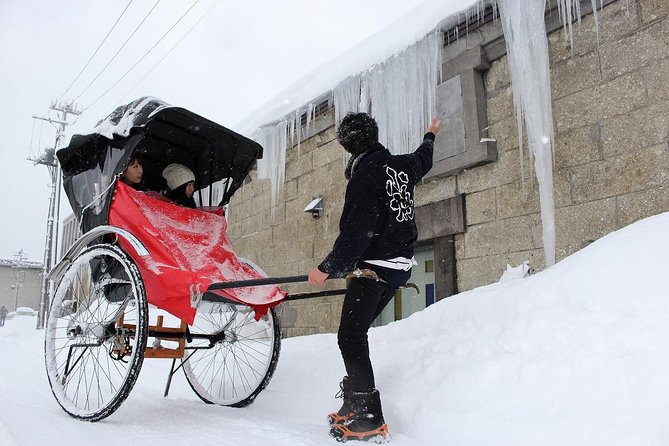
The seasonal setting matters here. Otaru has four distinct seasons, from a pleasant summer sea breeze to snow-covered winter views. The ride can feel quite different depending on when you visit, so dress for the weather and remember that a rickshaw leaves you exposed to wind and cold.
Winter scenery may be the most dramatic, but it also makes comfort more important. The operator will determine whether conditions allow the ride to operate safely. No special winter route is promised, so treat snow views as a seasonal possibility rather than a guaranteed feature.
What the Guides Add
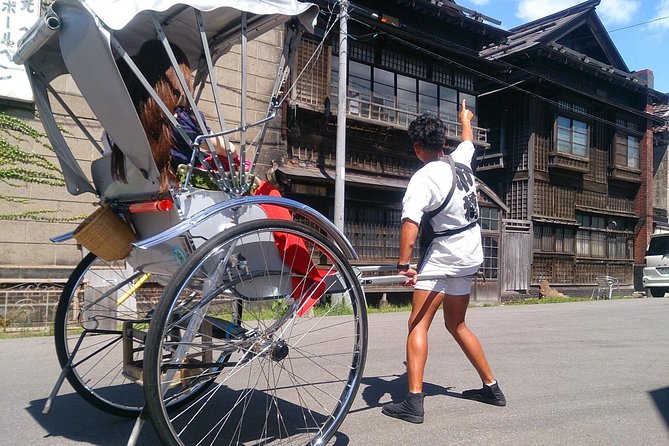
The strongest part of this activity is the driver-guide. Koto has led a 90-minute ride with clear self-taught English and a polite, warm manner. Kuma has also guided the route with strong English, local information, and a talent for setting up photographs.
English is available subject to guide availability, not as an absolute guarantee. The operator may assign a multilingual driver, and you can ask for your preferred language at the departure point. If clear English explanations are important to you, mention that when booking and confirm again when you arrive.
I especially value the photography help. A rickshaw driver who knows where to stop can save you from taking a dozen rushed canal pictures with half the group cut out of the frame. The guide may also know less crowded viewpoints, though no specific photo locations are guaranteed.
The ride is informative without requiring you to study Otaru before arriving. Still, it helps to ask questions. If you want more than a basic sightseeing loop, ask about the rail tracks, the former shipping offices, the canal warehouses, or how the marina fits into the city today.
Choosing 30 Minutes, 90 Minutes, or Two Hours
The advertised duration ranges from 30 minutes to about two hours. That is a wide spread, and your choice should match your plans rather than simply your budget.
A 30-minute ride suits you if you have only a short stop in Otaru, are visiting from a cruise ship, or want a quick orientation before walking. It should cover the central highlights, but there is less time for leisurely conversation, extra photo stops, or a longer route.
An hour gives you more breathing room. You can see the canal area, pause at key views, and hear more about the old rail lines and buildings without making the rickshaw the entire day’s activity.
The 90-minute option appears to be the sweet spot for many schedules. It gives the guide time to explain the city and lets you explore afterward. A full two-hour ride makes sense if you want a gentler pace, have limited mobility for walking, or prefer to let the guide carry most of the sightseeing work.
Remember that the tour finishes at the starting point unless another arrangement is made. If you need to end elsewhere, ask about the additional drop-off fee before the ride begins.
Is $42.90 Good Value?
At $42.90 per person, this is not the cheapest way to move around Otaru. You are paying for a private ride, a local driver-guide, route planning, photo help, and a short history lesson, not simply transportation.
The value improves if you use the ride as an orientation. Afterward, you can spend your walking time on the places that interest you most instead of wandering between disconnected sights. That can be especially helpful during a short port call.
The price also makes more sense for couples or small groups that want a private outing. Group discounts may help reduce the total cost, but remember that two adults share one rickshaw only if the narrow seat is comfortable for both.
Food, drinks, admission to the former office, and hotel transfers are not included. Budget for those separately. A different ending point may also cost extra.
Seating, Families, and Pregnancy Rules
Each rickshaw is 74 centimeters wide. Two adults fit according to the operator, but the seat can feel tight, particularly for larger passengers or anyone who wants extra room.
You can book one rickshaw per passenger for more comfort. If two people in your party cannot comfortably share but want to ride at the same time, reserve the extra rickshaw in advance. An additional vehicle may not be available on the day with an English-speaking guide, and booking later does not guarantee space.
Children aged six and over pay the adult price. Children aged five and under can ride without occupying a separate seat only when sitting on an adult’s lap. Two adults can ride with up to two young children in this arrangement.
Expecting mothers within their first 16 weeks of pregnancy are not permitted to ride. Most other participants can take part, but you should consider the narrow seating and the outdoor conditions when deciding.
Timing, Weather, and Cancellation
Confirmation is sent at booking, but the exact start time is confirmed by email within 24 hours. Check your inbox before finalizing the rest of your Otaru schedule.
The tour is subject to guide and operating conditions. A multilingual driver may be available, but a particular language is not guaranteed. Ask at the departure point if you need a guide who speaks your language.
Free cancellation is available when you cancel at least 24 hours before the local start time. Cancellations or changes made inside that window are not refunded or accepted. That rule is worth noting if you are visiting by cruise ship, since port schedules and weather can change.
Who Should Book This Otaru Ride?
I would choose this tour for a first visit, a short day in port, or a family group that wants an easy introduction before tackling the city on foot. It also suits anyone who enjoys local stories and photographs more than a fixed list of indoor attractions.
It is a good fit for couples who want a private outing, provided the seating is comfortable. The option to book separate rickshaws is important for larger passengers, and I would not leave that decision until arrival.
You may prefer to skip it if you already know Otaru well, want a long walking tour, or dislike sitting in an exposed vehicle. The canal district is walkable, and the ride does not include meals, hotel transfers, or admission tickets.
Should You Book the Otaru Rickshaw Tour?
Book it if you want a friendly guide, a quick sense of Otaru’s old port district, and dependable stops for canal photographs. Koto and Kuma are examples of the kind of guide you may get: clear English, local explanations, and a bit of personality.
Choose the 30-minute option for a tight schedule, 90 minutes for the best balance, or up to two hours if you want the ride to carry most of your sightseeing day. Confirm your start time, check the seating dimensions, and reserve separate rickshaws when needed.
For a compact, private introduction to Otaru, this is a sensible use of your time and money. Just remember that the ride is an overview. Leave room afterward to walk the canal, explore the alleys, and return to the places that made you curious.
FAQ
Where does the Otaru Rickshaw Tour begin?
The tour begins at Chuo Bridge, written as 中央橋, in Otaru, Hokkaido.
Where does the tour end?
The activity ends back at the meeting point unless you arrange another finishing location. A different drop-off may require an additional fee payable on the day.
How long does the rickshaw ride last?
The duration is approximately 30 minutes to two hours, depending on the option you book.
Is hotel pickup included?
No. Hotel pickup and drop-off are not included.
Is food included?
No. Food and drinks are not included unless specifically stated.
Is admission to the Former Nippon Yusen Kaisha Otaru Branch included?
No. Admission to the building is not included in the tour price.
How many adults can ride in one rickshaw?
A maximum of two adults can ride in one rickshaw. Each vehicle is 74 centimeters wide, so booking separate rickshaws may be more comfortable for some passengers.
Can young children ride in the rickshaw?
Children aged five and under can ride on an adult’s lap without occupying a seat. Up to two young children can ride with two adults in this arrangement. Adult pricing applies from age six.
Can I cancel for a full refund?
Yes, if you cancel at least 24 hours before the experience start time, based on the local time. Cancellations or changes made less than 24 hours before the start are not refunded or accepted.
More Rickshaw Tours in Otaru
More Otaru Tours in Otaru


More tours in Otaru we've reviewed


Otaru Tours, compared.
 ★ 3.5Hokkaido Noboribetsu Lake Toya, Otaru Panoramic Tour From SapporoFrom $120
 ★ 4.9Sapporo: Otaru Asarigawa Ski Resort Day Trip with GearFrom $1859 hours
 ★ 5.0[Otaru & Yoichi] Let’s go to Otaru Canal, Sakaimachi Street, Music Box Hall, and Yoichi Nikka Whiskey by private car (arriving and departing from Sapporo)From $372
 ★ 4.4Hokkaido, Sappro, Otaru & Cape Kamui One-day TourFrom $66
 ★ 4.5Otaru 4hr Private Trip with Government-Licensed GuideFrom $108
 ★ 5.0Otaru 6hr Private Trip with Government-Licensed GuideFrom $153
 ★ 5.0Sea Kayaking Tour – Otaru Coastal AdventureFrom $97
 ★ 4.8From Sapporo: Private Day Trip to OtaruFrom $1916 hours
The lists this tour appears in