
This article contains affiliate links. If you book through these links, I earn a small commission at no extra cost to you.
In This Article
- Getting to Shiretoko (It’s Far — Be Ready for That)
- Utoro vs Rausu — Two Very Different Sides
- Shiretoko Five Lakes
- Bears — They Are Everywhere, and That Is the Point
- Cruise Boats from Utoro
- Kamuiwakka Hot Falls
- Furepe Falls and the Nature Centre
- Winter: Drift Ice and Eagles
- What Else to See: Marine Wildlife
- Where to Stay
- The Hiking
- The Food
- Best Time to Visit
- Practical Information
I drove five hours from Sapporo to get here. Five hours through flat farmland, past volcanic lakes, along empty two-lane roads where the only other traffic was delivery trucks and the occasional tour bus. And when I finally reached the edge of the Shiretoko Peninsula, pulling into a convenience store parking lot in Utoro as the sun dropped behind the mountains, my first thought was: this is genuinely the end of the road.
Which is exactly what the Ainu people called it. “Sir etok” — the end of the earth. The Shiretoko Peninsula juts 70 kilometers into the Sea of Okhotsk from eastern Hokkaido, a volcanic spine of mountains and old-growth forest that does not have a single road crossing its interior. The only way between the two sides is a seasonal mountain pass that closes from November to April. Beyond the road’s end, there is nothing but bears, cliffs, and ocean until Russia’s Kuril Islands.
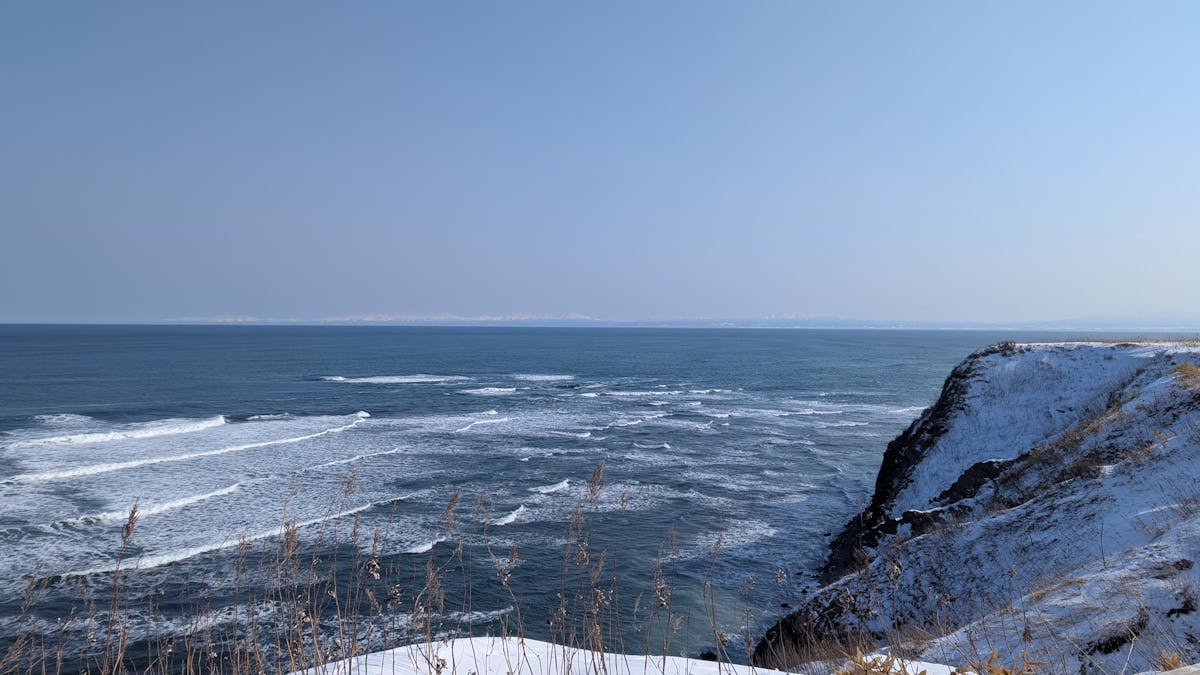
Shiretoko became a UNESCO World Natural Heritage Site in 2005, recognized for the relationship between its marine and terrestrial ecosystems. In plain language: the drift ice that arrives from Russia every winter brings nutrients that feed plankton, which feeds fish, which feeds bears and eagles. It is one of those rare places where you can actually see the food chain working in real time.
But here is the thing nobody tells you upfront: getting to Shiretoko takes real commitment. This is not a day trip from Sapporo. It is not even a convenient detour. You need to plan your entire Hokkaido road trip around it, or fly into the regional airport and rent a car from there. And once you arrive, you will want at least two full days — three if you want to see both sides of the peninsula.
Is it worth the effort? Absolutely. But go in with your eyes open about what “remote” actually means in Hokkaido.
Getting to Shiretoko (It’s Far — Be Ready for That)
There is no quick way to reach Shiretoko. Let me just be honest about that.
From Sapporo, you are looking at roughly 330 kilometers by car — about 5 to 6 hours depending on how fast you drive and whether you stop at the volcanic lakes around Akan. The expressway runs east to Ashoro, but after that it is regular roads through small towns and farmland. The drive is not unpleasant, but it is long. If you are doing a Hokkaido car rental trip, plan to break the journey somewhere in eastern Hokkaido — maybe Abashiri or the Akan-Mashu area.
The faster option is flying from Tokyo Haneda or Sapporo New Chitose to Memanbetsu Airport on Hokkaido’s eastern coast. From Memanbetsu, it is still a 2-hour drive to Utoro. There is a bus service (Shari Bus) from the airport, but it is infrequent and slow. Honestly, renting a car at the airport is really the only practical option.
You can also take the JR train to Shari Station (the nearest town), but the train from Sapporo takes roughly 7 hours with transfers, and you still need a car or bus from Shari to the peninsula itself. The train ride through eastern Hokkaido is beautiful in a desolate sort of way, if you have the time.
Utoro vs Rausu — Two Very Different Sides
Shiretoko Peninsula has two towns, one on each side, and they could not be more different in character.
Utoro (west side) is where most tourists go. It has the better hotels, the Shiretoko Nature Centre, access to the Five Lakes, and the summer cruise boats. Most package tours and bus groups stop here. The harbor is small but functional, with several boat tour companies operating from the waterfront. Restaurants cluster along the main road, and there are a couple of decent hotels — the Kitakobushi Shiretoko Hotel and Resort being the most upscale option, with an onsen and views over the port.
Rausu (east side) is the quieter, rougher, more interesting side. It is a working fishing town facing the Nemuro Strait, with Russia’s Kunashiri Island visible on clear days — just 25 kilometers across the water. The winter eagle-watching cruises leave from here, and the town has a raw, end-of-the-line feeling that Utoro has mostly polished away. If I had to pick one side, I would pick Rausu every time. But most visitors choose Utoro for convenience.
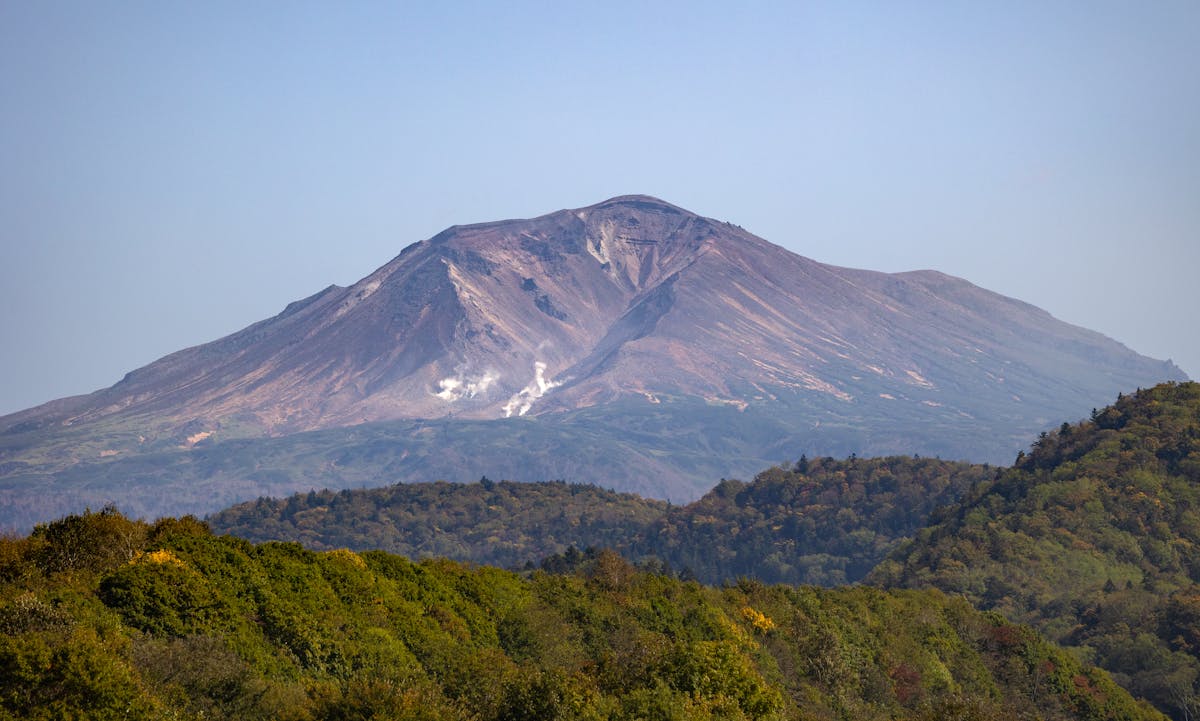
The Shiretoko Pass (Route 334) connects the two sides, climbing over the volcanic mountains at 738 meters. The drive takes about 30 minutes and the views are genuinely stunning on both sides — you can see the Sea of Okhotsk from the Utoro side and the Pacific from the Rausu side. But the pass is only open from around late April to early November. Outside that window, to get from Utoro to Rausu by car you have to drive the long way around via Shari and Route 244 — about 70 kilometers and well over an hour.
Shiretoko Five Lakes
This is the single most popular attraction in Shiretoko, and it genuinely lives up to the attention. Five small lakes sit in a plateau of old-growth forest, reflecting the mountains of the Shiretoko Range when the weather cooperates. The whole area is pristine — no buildings visible from the trails, no powerlines, nothing but water, trees, and mountains.
There are two ways to see the lakes:
The elevated boardwalk is free, takes about 40 minutes, and gives you access to the first lake only. It is wheelchair accessible and open year-round (when the road to the trailhead is open, at least). The boardwalk keeps you above the ground and away from bears, which is the whole point. Good views, easy walking, done in under an hour.
The ground-level trail loops through all five lakes and takes about 90 minutes to 3 hours depending on your pace and how long you stop to photograph things. From May to July — peak brown bear season — you can only walk this trail with a licensed guide. Guided groups are limited in size and frequency, so book ahead. From August to October, you can walk it freely after attending a short lecture about bear safety at the Shiretoko Five Lakes Field House. The lecture takes about 10 minutes and is available in English.
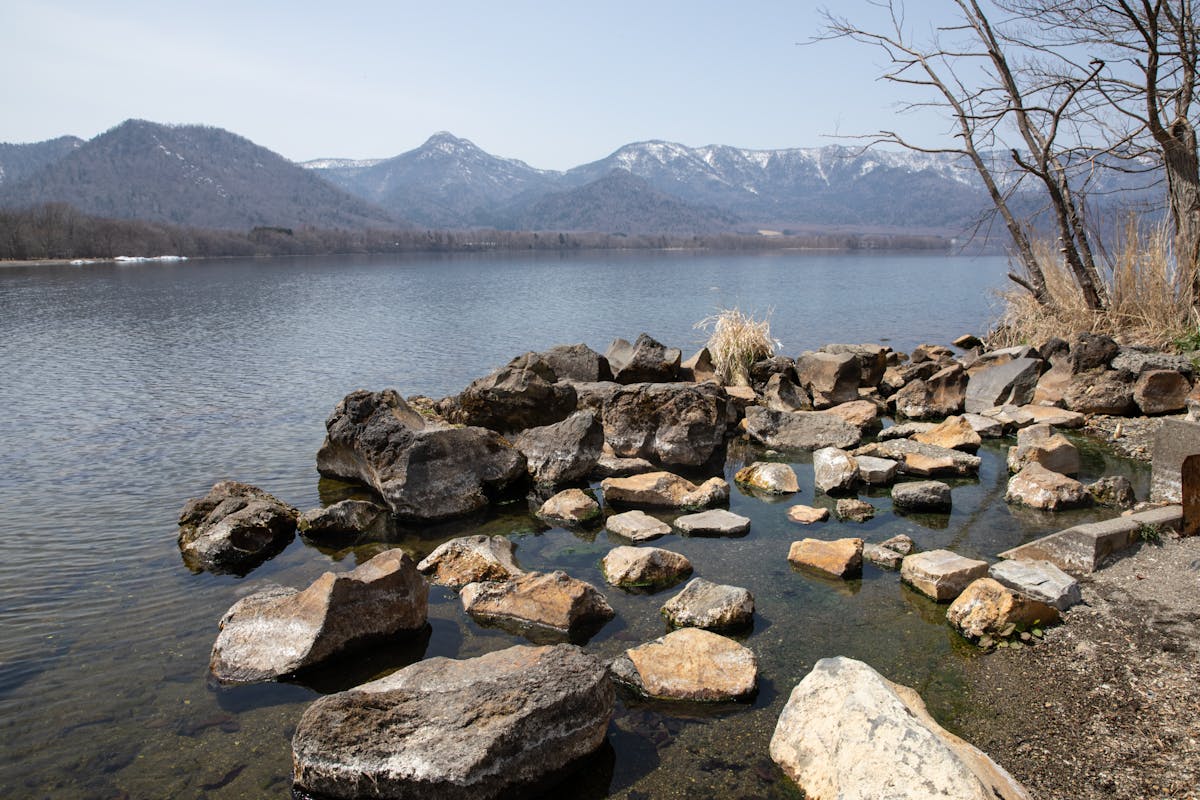
The ground-level trail is worth the extra effort. You are walking through genuine bear habitat, and the closeness to the water at each lake gives you reflections and angles that the boardwalk just cannot match. I went in early October and had stretches of the trail completely to myself. Late October brings autumn colors that add another layer entirely — the Japanese maples and birch trees along the shore turn gold and red against the dark green conifers.
Bears — They Are Everywhere, and That Is the Point
Shiretoko has one of the highest brown bear population densities in the world. Some estimates put over 500 bears on the peninsula — in an area of just over 700 square kilometers. You will almost certainly see one if you visit between May and October. From the road, from the Five Lakes trails, from the cruise boats. They are around.
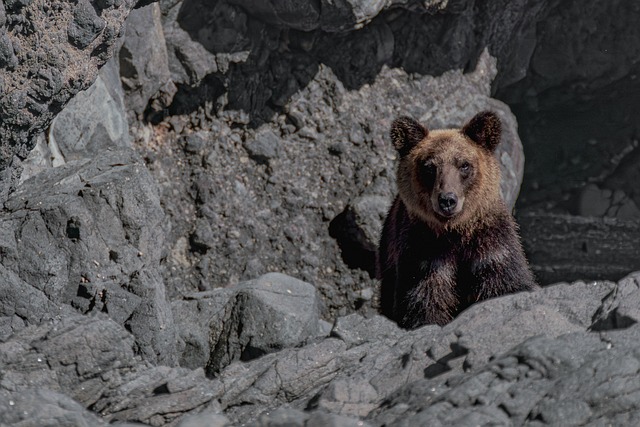
The Shiretoko Nature Centre (on Route 334, between Utoro and the Five Lakes) has information about recent bear sightings and current trail closures. Check in here before heading to any trailhead. Bears occasionally wander into Utoro itself, and trail sections close temporarily when bears are spotted nearby. This is not theoretical — closures happen regularly throughout summer.
Picchio Shiretoko runs guided nature tours that specifically look for bears and other wildlife. Their guides know where the bears tend to feed at different times of year, and they carry bear spray and tracking equipment. If wildlife watching is your main reason for visiting, a guided tour with Picchio is probably the best money you will spend in Shiretoko.
Bear safety rules: carry a bell, make noise on trails, do not store food in your tent, do not approach bears (obviously), and do not run if you see one. The bears here are mostly habituated to humans at a distance, but they are wild animals that weigh 200-400 kilograms. Respect the distance.
Cruise Boats from Utoro
In summer (roughly late April through October), several companies run boat tours along the western coast of the peninsula from Utoro harbor. These range from short 1-hour trips along the coast to full 3-hour voyages that go all the way to Cape Shiretoko at the peninsula’s tip.
The longer cruises are the ones worth taking. The coastline beyond the road’s end is stunning — sheer cliffs, waterfalls dropping directly into the ocean, and sea caves carved by centuries of wave action. You can see the Kamuiwakka Hot Falls from the water, and on calm days the boat gets surprisingly close to the rock formations. Bears are often visible on the shore, fishing in the streams or wandering the beach.
Cruises cost roughly 4,000 to 8,000 yen depending on the route and operator. The smaller boats (typically under 50 passengers) get closer to the cliffs but roll more in rough water. The larger vessels are more comfortable but keep more distance. I would recommend the smaller boats if you are not prone to seasickness — the close-up views of the waterfalls are worth the bounce.
Weather cancellations are common. The Sea of Okhotsk can get rough quickly, and operators cancel trips regularly when the swell is too high. Do not plan your entire visit around a single cruise departure. Have a backup day.
Kamuiwakka Hot Falls
About 15 kilometers past the Five Lakes parking area, a rough gravel road leads to the Kamuiwakka Hot Falls — a series of warm waterfalls where hot spring water mixes with a mountain stream. You can walk (carefully — the rocks are slippery) up the streambed to pools of naturally heated water. The temperature varies by pool and season, but the lower pools are typically lukewarm while the upper ones get genuinely hot.
Access is seasonal and controlled. The road to Kamuiwakka is only open during certain weeks in summer (typically late July through August), and a shuttle bus runs from the Five Lakes area during peak periods. Private cars are restricted during the busiest weeks. Check the Shiretoko Nature Foundation website for current access schedules before you go.
Bring water shoes — the streambed is volcanic rock, slippery with algae in places, and you will be ankle to knee-deep in warm water. Changing facilities are nonexistent. People swim in their clothes or bring swimwear to change into behind rocks. It is all quite informal and a bit chaotic, which is part of the charm.
Furepe Falls and the Nature Centre
The Furepe Falls trail starts from the Shiretoko Nature Centre and takes about 20 minutes each way on a well-maintained path through grassland and forest. The waterfall itself — sometimes called “Maiden’s Tears” — drops about 100 meters from a cliff face directly into the sea. It is fed by underground springs rather than a surface stream, so it flows year-round. In winter, it sometimes freezes into a dramatic ice sculpture.
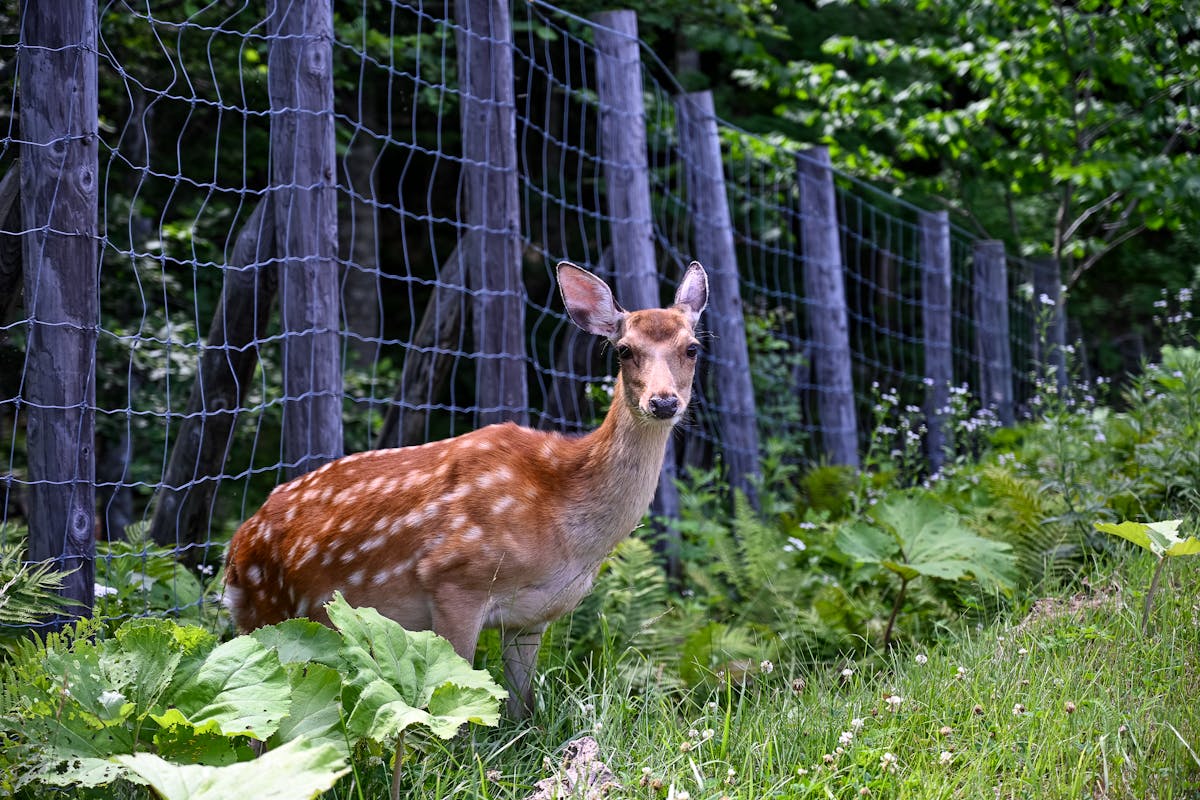
The walk is easy and flat, and it is one of the best places to spot Ezo deer grazing in the open meadows, especially early morning or late afternoon. The Nature Centre itself has exhibits about Shiretoko’s ecosystems, a film theater showing nature documentaries, and a small shop. It is worth stopping in for 30 minutes to get oriented before heading to the Five Lakes or other trailheads.
Winter: Drift Ice and Eagles
Shiretoko in winter is a completely different experience from summer, and honestly, it might be the better one.
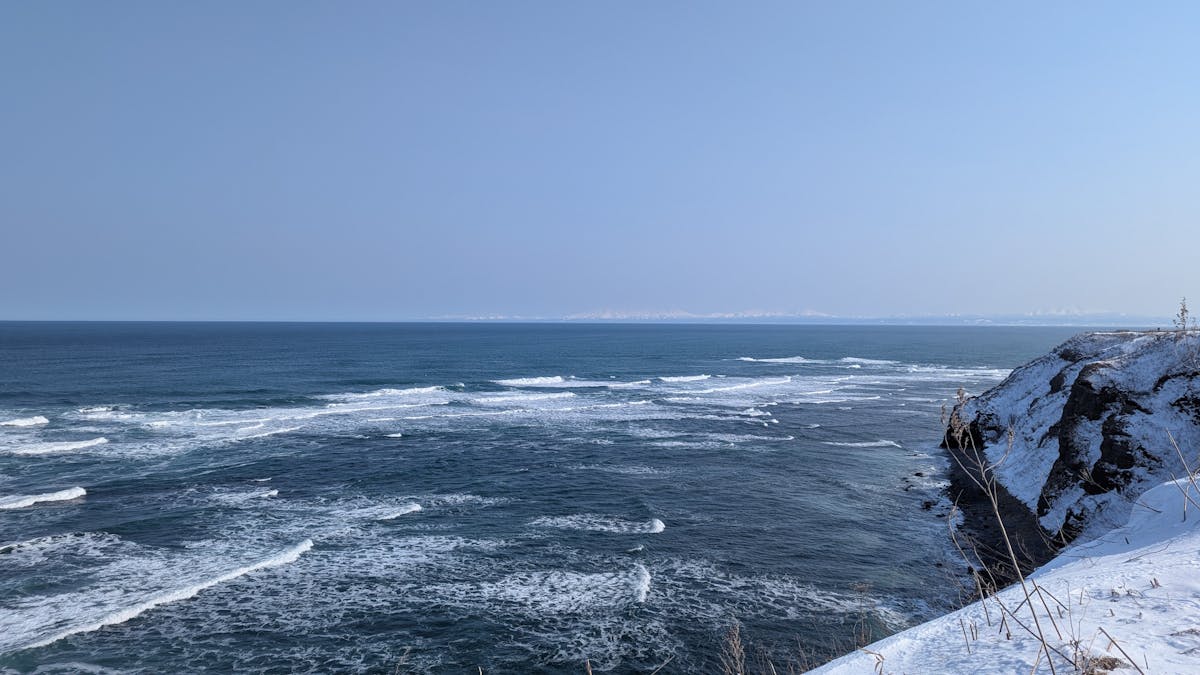
Every year from late January to around mid-March, drift ice floats down from Russia and the coast of China, covering the Sea of Okhotsk in a vast white expanse. The ice reaches the Shiretoko coast and packs tightly against the shore, sometimes stretching to the horizon. It is one of the southernmost places in the Northern Hemisphere where this happens, and it looks absolutely otherworldly.
Drift ice walking is the big draw on the Utoro side. You put on a dry suit (provided by the tour operator) and walk out onto the ice floes in the harbor. Depending on ice conditions, you might walk on solid sheets or hop between floating chunks. Some tours include a “swim” in the icy water between ice floes — the dry suit keeps you buoyant and (mostly) warm. It is bizarre and thrilling and something you will not do anywhere else in Japan. Tours run roughly 6,000 yen for 90 minutes.
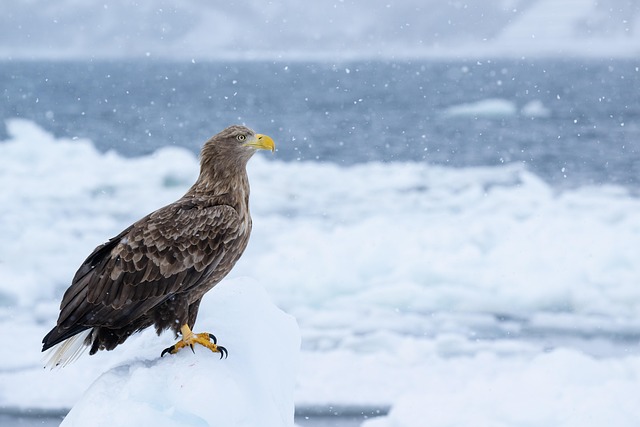
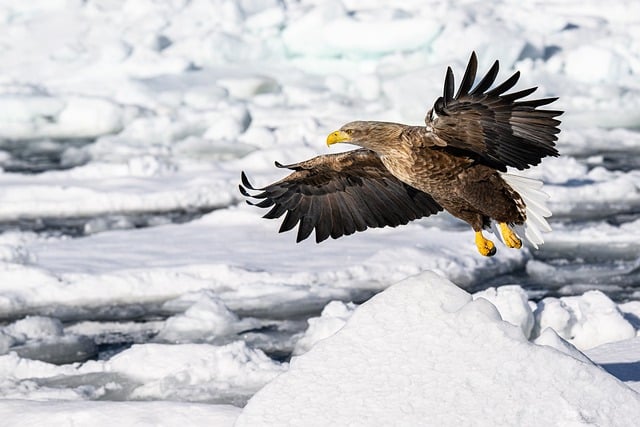
Eagle watching is the big draw on the Rausu side. The drift ice brings food, and the food brings eagles. Both white-tailed eagles and Steller’s sea eagles — two of the largest raptor species in the world — gather along the Rausu coast in huge numbers from January through March. Nature cruise boats from Rausu harbor take you out among the ice floes where the eagles hunt, and you can get remarkably close. Steller’s sea eagles have wingspans over 2.5 meters and bright orange beaks — they are absolutely massive birds. Even if you are not a birder, seeing dozens of them perched on ice floes and diving for fish is something you will not forget.
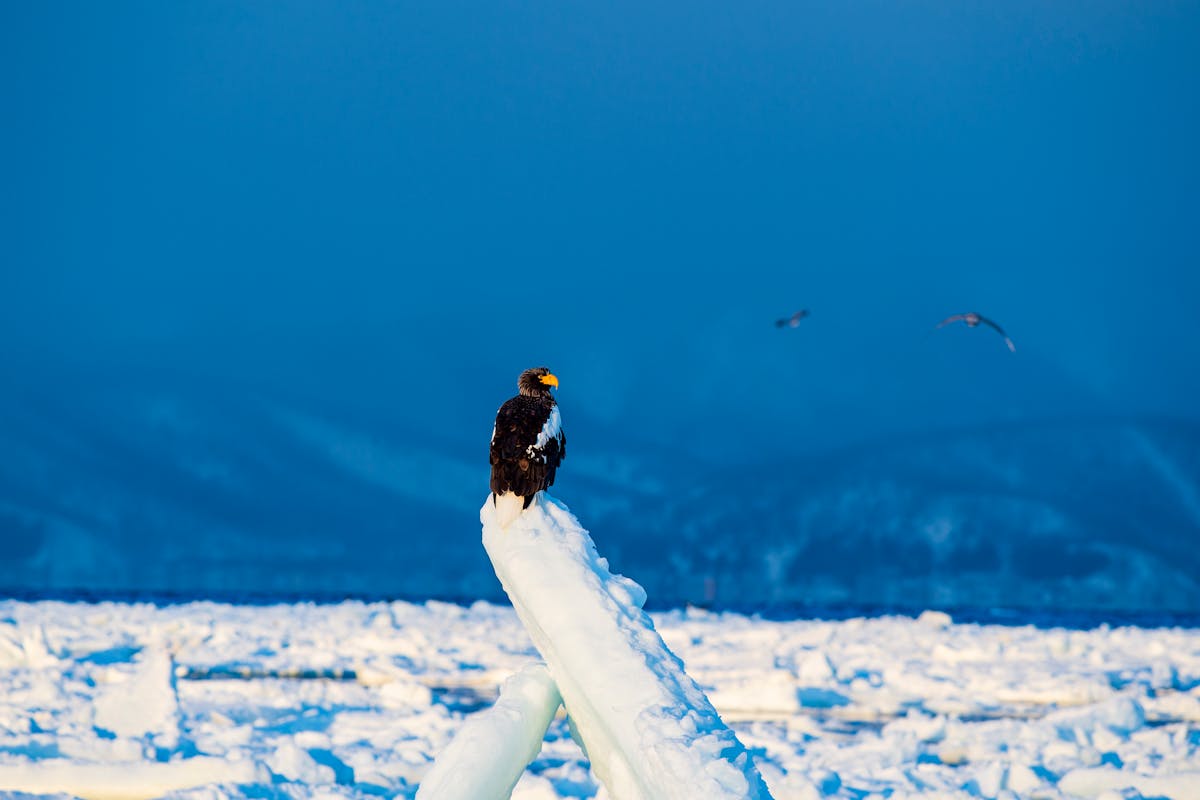
Shiretoko Nature Cruise runs eagle-watching boats from Rausu harbor. Book ahead — the good seats on the smaller boats fill up fast, especially on weekends. Winter in Hokkaido is magical in general, but the Shiretoko drift ice season is something else entirely.
Winter driving warning: the roads in Shiretoko are icy and occasionally impassable. Route 334 between Utoro and Rausu (over the pass) is closed from November to April. Even the coastal roads can be treacherous. If you are not confident driving in snow and ice, consider hiring a driver or joining an organized tour. Renting a car in winter in eastern Hokkaido is manageable with studded tires (standard on winter rentals), but the conditions are real.
What Else to See: Marine Wildlife
Beyond the eagles, Shiretoko’s waters are rich with marine life. Orca (killer whales) are spotted from Rausu between April and October — the Nemuro Strait is one of the more reliable places in Japan to see them. Sperm whales pass through in summer. Seals (both spotted seals and Kuril harbor seals) are common on the rocks along both coasts.
If marine wildlife is your thing, Rausu is again the better base. The fishing boats that take tourists whale-watching are smaller and more personal than the large cruise boats on the Utoro side, and the guides tend to be local fishermen who know the waters intimately. For a proper Hokkaido wildlife experience, combining Shiretoko with the crane-watching at Kushiro wetlands to the south makes a fantastic eastern Hokkaido circuit.
Where to Stay
In Utoro: The Kitakobushi Shiretoko Hotel and Resort is the top-end option, right on the harbor with an onsen (hot spring bath) on the top floor and solid seafood dining. Rooms run from about 15,000-25,000 yen per night depending on season. There are several mid-range hotels and guesthouses along the main road — nothing particularly exciting, but clean and functional. Booking in advance is strongly recommended for July-August and the drift ice season (February-March).
In Rausu: Options are more limited. A few small inns and minshuku cater mainly to fishermen and nature photographers. The experience is more authentic but less comfortable. If you want a truly remote hot spring experience, Yuyado Daiichi — located inland along a river about 20 minutes from Rausu town — is fantastic. It is a traditional ryokan with outdoor baths right along the riverbank.
In Shari: If you want a cheaper base, the town of Shari (about 40 minutes from Utoro) has budget hotels and is closer to the train station. You will need a car to get to the peninsula from here, but accommodation costs are lower.
For summer visitors camping is also possible at the Shiretoko National Campground near Utoro. It is basic — toilets and water but no showers — but the location is hard to beat. Bear boxes are provided for food storage. Yes, you need them.
The Hiking
Beyond the Five Lakes, Shiretoko has serious hiking for experienced trekkers. The Rausu-dake trail is the most popular — a full-day hike to the summit of Mount Rausu (1,661 meters), the highest peak on the peninsula. The trailhead is on the Rausu side near the Shiretoko Pass, and the round trip takes 7-10 hours. Views from the summit cover the entire peninsula, the Sea of Okhotsk, and on clear days, the Kuril Islands. This is not a casual walk — it is a mountain hike with steep sections, possible snow patches even in summer, and no facilities beyond the trailhead.
For the truly adventurous, multi-day treks to Cape Shiretoko (the tip of the peninsula) are possible but require serious preparation, bear-country experience, and ideally a guide. There are no trails, no huts, and no cell service. Some people attempt the cape circumnavigation on foot, swimming around headlands where necessary. This is extreme backcountry travel and not something to attempt casually.
For less intense hiking in Hokkaido, the Furepe Falls trail and the Five Lakes ground walk are perfect half-day options that give you a real taste of the Shiretoko wilderness without the commitment of a full mountain ascent.
The Food
Shiretoko’s location means seafood, and specifically the kind of seafood that comes from cold, nutrient-rich waters. The Utoro side is known for salmon (especially autumn salmon in September-October), uni (sea urchin), and various shellfish. Rausu is famous for its kombu (kelp) — the kombu harvesting operation along the east coast is massive and the dried kombu from Rausu is prized across Japan.
In Utoro, the restaurants along the main road serve standard tourist fare — seafood rice bowls (kaisen-don), grilled fish sets, and ramen. Nothing extraordinary, but the ingredients are fresh and local. If you are staying at the Kitakobushi or another larger hotel, the dinner buffets tend to have an excellent Hokkaido seafood spread.
In Rausu, eat at one of the small izakaya near the harbor. The crab in particular — caught locally in the Nemuro Strait — is outstanding. Do not expect English menus or tourist-friendly service. Point at what looks good, nod, and trust the kitchen. This is fishing-town Japan at its most real.
One heads-up: restaurants in both towns close early by city standards. Most kitchens shut down by 8 PM, some by 7. Do not wander in at 9 PM expecting dinner. Buy snacks and drinks at the convenience store in Utoro (there is one Lawson-style shop) before everything closes.
Best Time to Visit
There is no wrong time, but each season offers something completely different.
Summer (July-August): Peak season. All roads open, all trails accessible, cruise boats running, longest daylight hours. Also the busiest period and the most bugs. The Five Lakes can feel crowded midday. Best for: hiking, boat cruises, Kamuiwakka Hot Falls, general exploring.
Autumn (September-October): My personal favorite. Crowds thin dramatically, the autumn colors around the Five Lakes are spectacular, salmon run up the rivers (and bears come to catch them), and the weather is crisp and clear. Kamuiwakka road closes by early September usually. The best time to visit Hokkaido for many people is early October, and Shiretoko is no exception.
Winter (January-March): Drift ice season. Eagle watching from Rausu, drift ice walking from Utoro. The pass is closed, many hotels close, and it is bitterly cold (regularly -15 to -20 degrees Celsius). But the landscape is extraordinary and the wildlife viewing is world-class. Not for the unprepared.
Spring (April-June): Transitional. Snow melts, wildflowers appear, bears emerge from hibernation. June is green and lush but the Five Lakes ground walk requires a guide until late July due to bear activity. The pass typically reopens in late April.
Practical Information
| Detail | Information |
|---|---|
| Nearest airport | Memanbetsu Airport (2 hours by car to Utoro) |
| Drive from Sapporo | 5-6 hours (about 330 km) |
| Shiretoko Pass | Open late April to early November |
| Five Lakes boardwalk | Free, 40 minutes |
| Five Lakes ground walk | Guided only May-July (around 5,000 yen), self-guided Aug-Oct (free after lecture) |
| Cruise boats (Utoro) | 4,000-8,000 yen, operates April-October |
| Drift ice walking (Utoro) | Around 6,000 yen, late January-March |
| Eagle cruises (Rausu) | 8,000-10,000 yen, January-March |
| Car rental needed? | Yes. Public transport is minimal. |
| Cell service | Intermittent outside towns. No service beyond road ends. |
One last thing. Shiretoko is not a quick stop. It is not the kind of place where you tick off three attractions and move on. The whole point is that it is hard to reach, sparsely visited, and genuinely wild in a way that almost nowhere else in Japan is. If you only have a few days in Hokkaido, you might need to save Shiretoko for a dedicated trip. But when you do go — and you should go — give it the time it deserves.
 DestinationsShakotan Peninsula: Hokkaido’s Most Dramatic CoastlineThis article contains affiliate links. If you make a purchase through these links, I may earn a small commission at…
 DestinationsTomamu Resort: Sea of Clouds, Skiing, and Whether It Is Worth the HypeThis article contains affiliate links. If you book through them, I earn a small commission at no extra cost to…
 DestinationsLake Akan and Lake Mashu: Hokkaido Volcanic Lakes and Ainu HeartlandThis article contains affiliate links. If you book through them, I earn a small commission at no extra cost to…