
This article contains affiliate links. If you book through these links, I earn a small commission at no extra cost to you.
In This Article
- Brown Bears (Higuma) in Shiretoko
- What about Noboribetsu Bear Park?
- Red-Crowned Cranes (Tancho)
- Where and when to see them
- Steller’s Sea Eagles and White-Tailed Eagles
- The drift ice eagle cruise
- Blakiston’s Fish Owl
- Ezo Deer
- Ezo Red Fox
- Northern Pika (Nakiusagi)
- Where to find them
- Whales and Orca off Rausu
- Other Wildlife Worth Knowing About
- Siberian flying squirrels (Momonga)
- White-fronted geese (Magan) at Miyajima Marsh
- Harbor seals at Cape Erimo
- Sea otters at Cape Kiritappu
- Shima Enaga (Hokkaido long-tailed tit)
- Best Seasons for Wildlife Watching
- Planning a Wildlife Trip
I spent the better part of a February morning on a boat off Rausu, hands numb inside two pairs of gloves, watching a Steller’s sea eagle tear apart a fish on a chunk of drift ice about fifteen meters away. The bird was enormous. Wingspan wider than I am tall, yellow beak like something out of a nature documentary. Except this wasn’t a documentary. This was just a Tuesday in eastern Hokkaido.
Hokkaido is not like the rest of Japan. The island was geographically separated from Honshu by the deep Tsugaru Strait long enough ago that its wildlife evolved on a completely different track. An English naturalist named Thomas Blakiston figured this out in the 1800s, and the boundary between Hokkaido’s fauna and mainland Japan’s is still called Blakiston’s Line. Brown bears instead of black bears. Giant sea eagles instead of… well, nothing comparable down south. Red foxes the size of small dogs roaming through towns like they own the place.
What makes Hokkaido special for wildlife watching is that you don’t need to trek into some impossibly remote wilderness. Some of these animals come to you. Others require a boat ride, a cold morning hike, or a night at the right onsen. Here’s what you can realistically see, where to find it, and what requires genuine luck versus what’s practically guaranteed.

Brown Bears (Higuma) in Shiretoko
The Hokkaido brown bear is one of the largest in the world. Adult males regularly exceed 200 kilograms. The Ainu, Hokkaido’s indigenous people, called them Kimun Kamuy – the god of the mountains – and they played a central role in Ainu spiritual life for centuries.
Today there are somewhere between 10,000 and 12,000 brown bears on Hokkaido. They live across the island, but Shiretoko National Park has one of the densest populations anywhere. The peninsula has seen minimal human development, so the bears roam the coastline pretty freely.
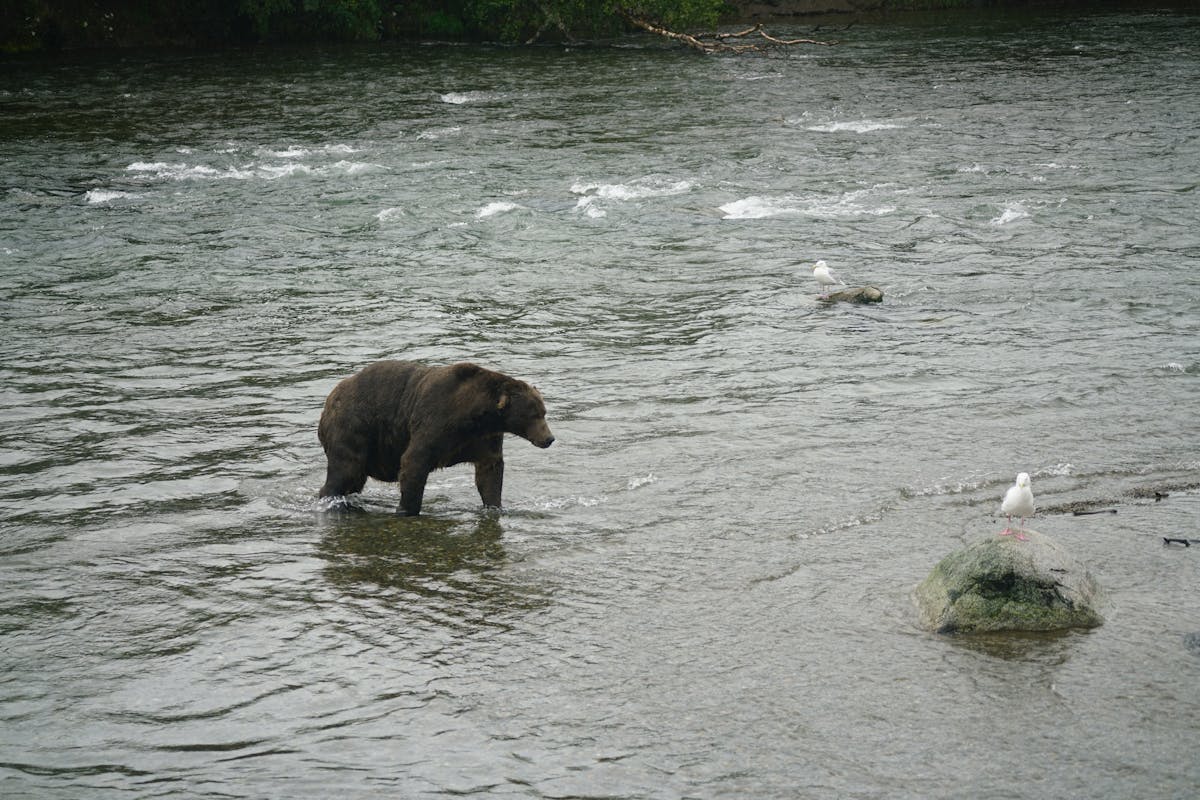
The best way to see them is on a nature cruise from Rausu. Small boats head along the coast toward the tip of the peninsula, passing below cliffs where bears forage on the shoreline. Mid-summer to early autumn is peak season – the salmon are running and the bears are fattening up. A round trip takes about two hours and your odds are roughly 50/50 on any given day. Not guaranteed, but when you do see one it’s from a comfortable distance with zero stress on either side.
You can also see bears at Kogen Numa in the eastern part of Daisetsuzan National Park, though sightings are less predictable there.
What about Noboribetsu Bear Park?
I’m going to be honest here. Noboribetsu Bear Park is a tourist attraction where bears live in concrete enclosures and beg visitors for food. You ride a ropeway up, throw biscuits down, and the bears stand on their hind legs to catch them. It’s popular with families and it’s certainly a guaranteed bear sighting. But if you care about seeing bears behaving like actual wild animals, skip it and go to Shiretoko instead. The two experiences are not comparable.
Red-Crowned Cranes (Tancho)
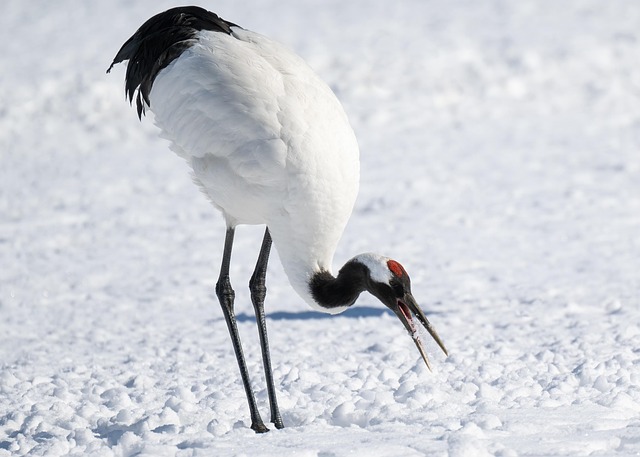
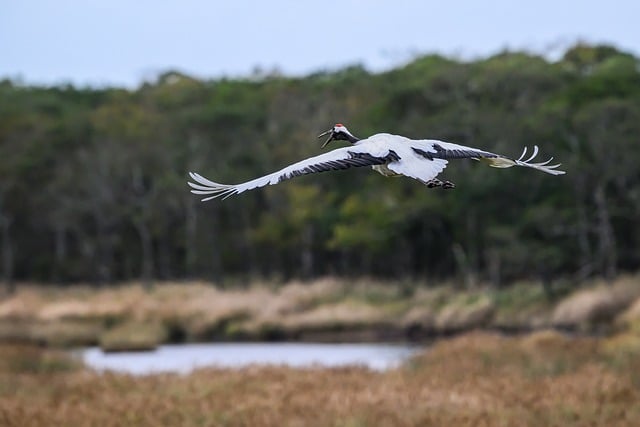
If there is one piece of wildlife in Hokkaido that will genuinely take your breath away, it’s the red-crowned crane dancing in winter snow. These are big birds – standing about 150 centimeters tall – and their mating dance is something else. Synchronized bows, leaps, wing spreads, paired calls echoing across frozen marshland. They mate for life and can live 40 years, so each pair has had decades to get their choreography right.
They were nearly wiped out by the early 1900s. By 1924, there was apparently just one flock of around 20 birds left, hanging on in the Kushiro Marshlands. A local farmer started feeding them through the harsh winters, and that act of stubborn kindness basically saved the species in Japan. The population has recovered to over 1,000 birds now, with about half the global population living in Hokkaido.
Where and when to see them
The Tsurui Ito Tancho Red-Crowned Crane Sanctuary is the most reliable spot. It’s about 45 minutes from Kushiro in eastern Hokkaido. In winter (December through March), the cranes gather at feeding stations and in the surrounding farm fields. Seeing them is essentially guaranteed during this period – they come every day at feeding time.
But the real magic happens at Otowa Bridge, just outside Tsurui village, first thing in the morning. The cranes roost in the Setsuri River overnight, and at dawn the mist rises off the water while the birds start their morning routines. Rows of photographers line up in the pre-dawn cold waiting for this exact moment, and honestly, it’s worth every frozen minute.
In summer, the cranes retreat into the marshes to breed and are much harder to spot. Stick to the winter months for crane watching.
Steller’s Sea Eagles and White-Tailed Eagles
Two of the most powerful raptors on earth share Hokkaido’s winter sky, and seeing them together on the drift ice is one of those wildlife experiences that ruins you for birdwatching anywhere else.
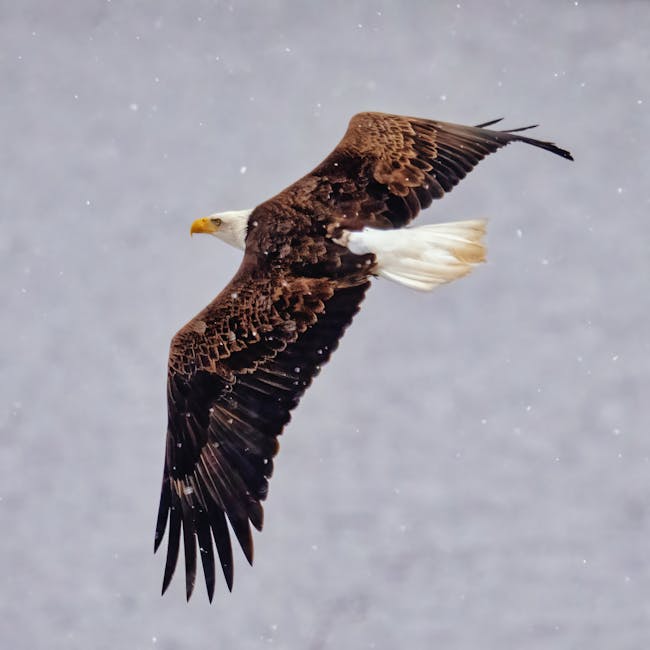
The Steller’s sea eagle is the star. Its Japanese name, Owashi, literally means “big eagle” and that’s not an exaggeration. Wingspan over two meters, bright yellow beak that looks almost cartoonishly large, jet black body. They breed along the Siberian coast and winter in Hokkaido, Sakhalin, and the Kuril Islands.
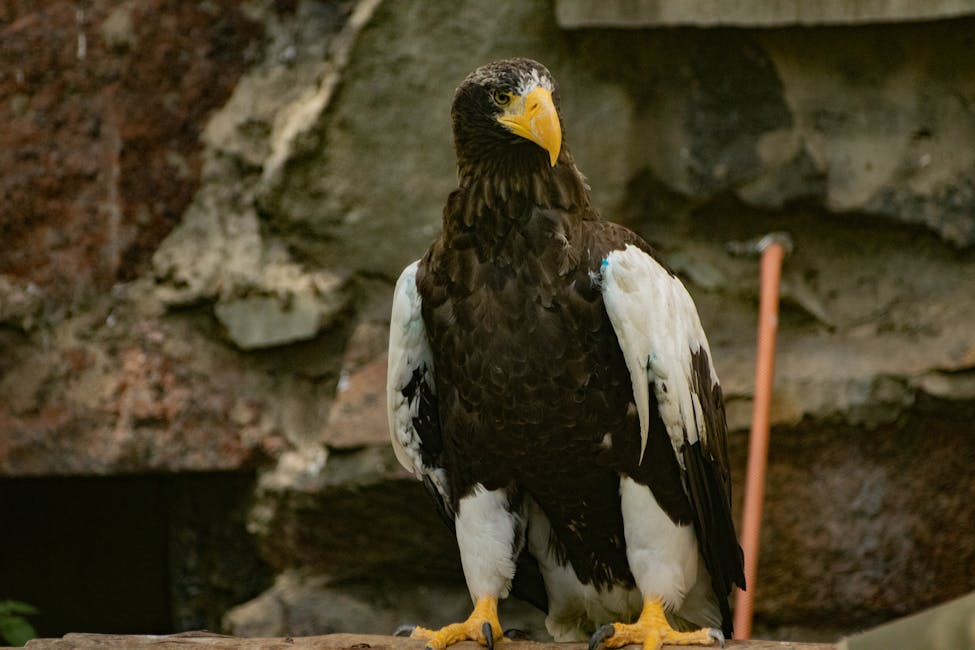
The white-tailed eagle is slightly smaller but lives in Hokkaido year-round, with over 150 breeding pairs. Both species patrol the drift ice off the coast near Rausu in winter, diving for fish in the freezing water.
The drift ice eagle cruise
The wildlife watching cruises from Rausu run from late January to mid-March. A former fisherman pilots the boat through the drift ice while the eagles congregate on the ice floes around you. They have learned that boats mean fish, so they come remarkably close. The whole trip takes a few hours.
One practical warning: dress like you are going skiing. You are on an open boat on a frozen ocean with a biting wind. Thick down layer, waterproof and windproof outer layer, warm hat, insulated boots, and gloves you can operate a camera in. There is a heated cabin on board, but you will want to be outside for the best views. Bring a spare camera battery and keep it warm in your pocket – cold kills batteries fast.
Blakiston’s Fish Owl
This is the rarest animal on this list and arguably the most special to see. The Blakiston’s fish owl is the largest living species of owl, and there are only about 160 to 180 of them left in Japan, all in eastern Hokkaido and Kunashiri Island. They hunt fish at night in ice-free rivers, moving silently through old-growth forest like something out of a ghost story.
The Ainu called them Kotan koru Kamuy – the god that protects the village. They feature heavily in Ainu folk stories, always watching from the forest.
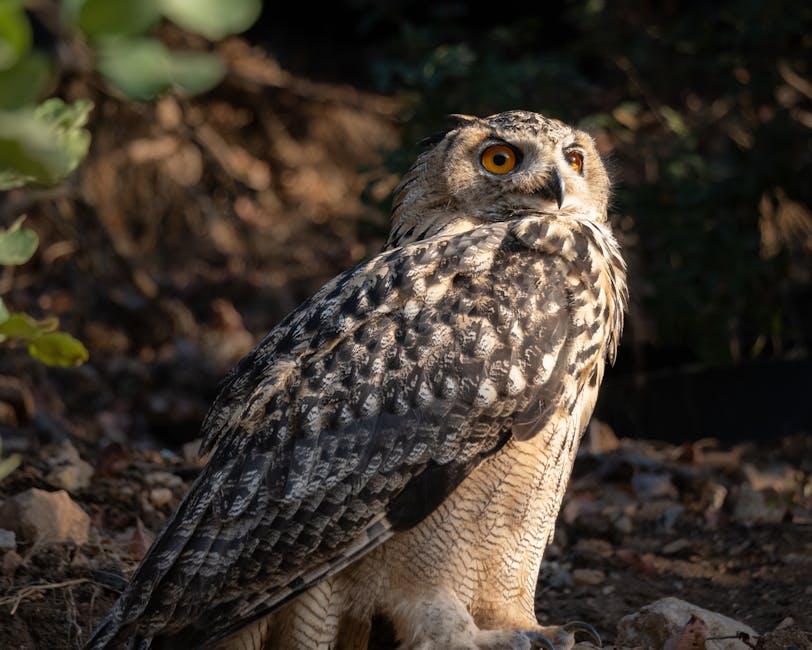
The best chance of seeing one is at Yoroushi Onsen in northeast Hokkaido. The hot-spring rivers here don’t freeze, and the surrounding old-growth forest is exactly the habitat these owls need. A local hot spring hotel called Yuyado Daiichi has a warm viewing room where guests can watch the owls that visit the hotel’s backyard in the evening. You stay the night, sit in the viewing area after dark, and wait. Your odds on any given night are maybe 50/50.
If you’re a photographer, bring a tripod and turn off your flash and autofocus lights. Artificial light spooks the owls, and the last thing anyone wants is to scare away one of the 180 remaining individuals for the sake of a photo.
Ezo Deer
Okay, I’m going to level with you. You are not going to need a guide to find Ezo deer. They are everywhere. Drive through eastern Hokkaido after dark and you will spend half your time braking for deer standing in the road like they have nowhere to be.
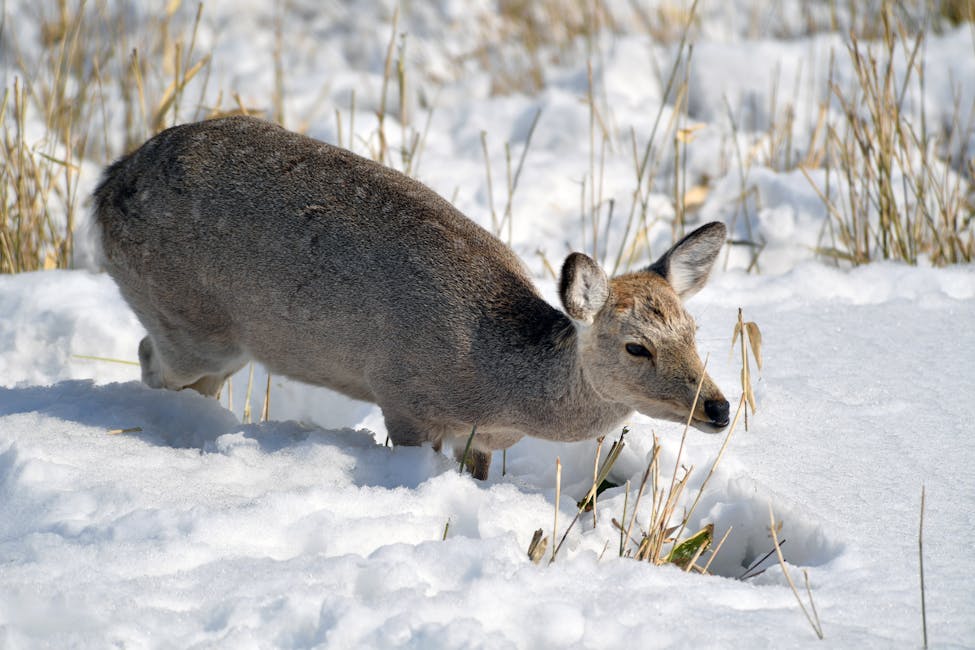
The Ezo sika deer (Cervus nippon yesoensis) is a subspecies found only in Hokkaido. They are larger than the deer on Honshu – the males carry impressive antlers and can weigh up to 140 kilograms. Their population has exploded in recent decades due to fewer predators and milder winters, and they cause significant damage to agriculture and forests.
For actual wildlife watching (as opposed to just accidentally seeing them), the grasslands and coastal areas of eastern Hokkaido are good. The deer herds around Shiretoko and the Nemuro Peninsula are particularly photogenic in winter when they stand against the snow. But seriously – if you are driving around Hokkaido, you will see deer. It’s a question of when, not if.
Ezo Red Fox
The Ezo red fox (Vulpes vulpes schrencki) is another animal that is far more common than you might expect. They are larger than foxes on mainland Japan, with thick winter coats that make them look almost cuddly. They are not cuddly. They are wild predators that have simply figured out that humans are not a threat.
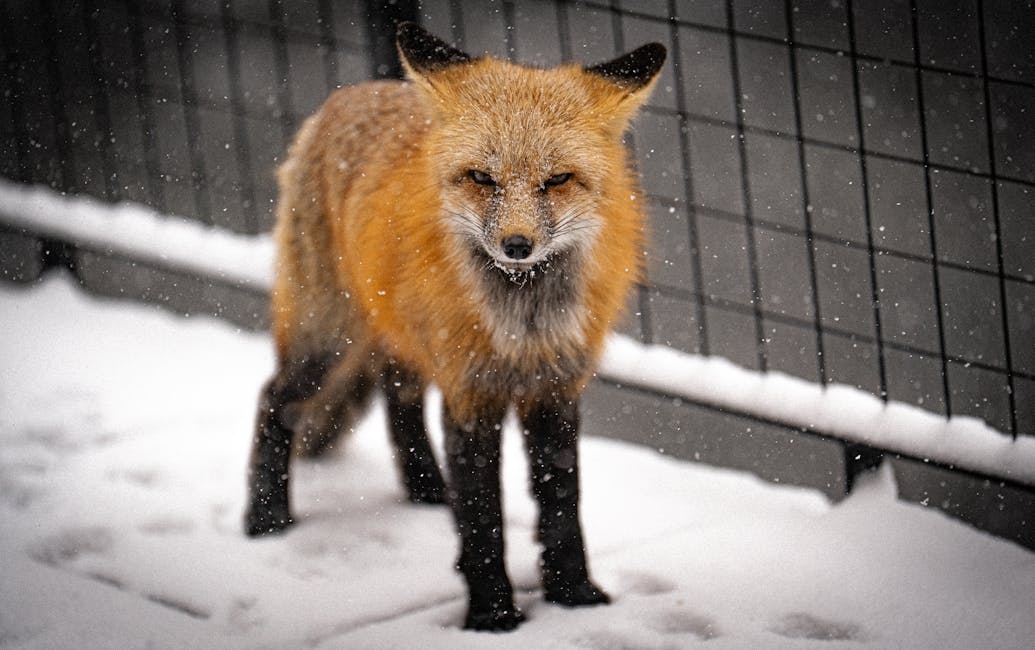
You’ll see foxes along roadsides, in car parks, outside convenience stores, basically anywhere in rural Hokkaido. They are especially common near the national parks and in farming areas. Winter is prime fox-watching season because their orange coats contrast beautifully against the snow.
Please do not feed them. I know they look adorable when they tilt their head at you. But foxes that get used to human food lose their hunting instincts, start approaching cars, and end up getting hit. It’s also illegal. Just watch, take photos, and drive on.
Northern Pika (Nakiusagi)
These tiny animals are one of Hokkaido’s best-kept wildlife secrets. The northern pika is thought to have arrived from Siberia during the last ice age, and when sea levels rose again they were stranded in Hokkaido’s mountains. As temperatures have slowly increased, they’ve pushed higher and higher into the alpine zone. They’re essentially living fossils from a colder time.
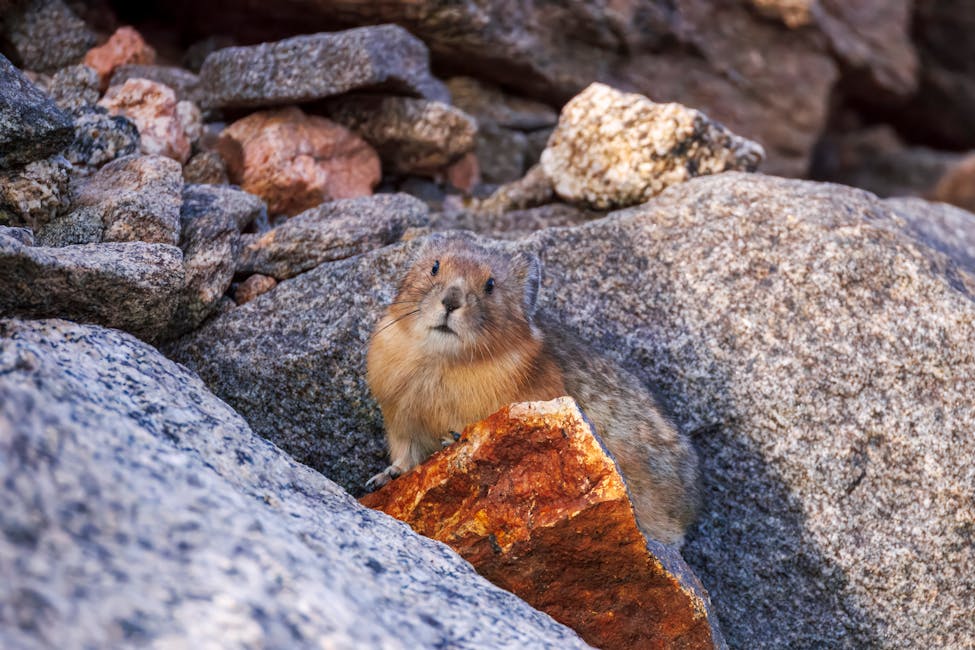
Their Japanese name, Nakiusagi, means “crying rabbit” and it’s the squeaky kitz calls from the boulder fields that give them away. They look like a cross between a hamster and a rabbit, they’re about the size of your fist, and they have an infuriating habit of disappearing behind rocks the moment you spot them.
Where to find them
Mt. Hakuunzan at the southern end of Daisetsuzan National Park is one of the best spots. The hike climbs through old forest above Lake Shikaribetsu and the rocky summit is prime pika territory. Budget a half day to a full day – you will need patience.
If you don’t want a big hike, there’s an easier option: Senjokuzure, just off the road at Shirakaba Pass south of Mt. Hakuunzan. The rocky terrain is also home to pika and you can reach it without much effort. Near Biei, Bogakudai at the foot of Mt. Tokachi has pika in the rocks next to the car park.
They’re active spring through autumn but don’t hibernate, so technically you could find them in winter too. Practically though, the snow covers their rocky habitat and makes summer and early autumn much better for spotting them.
Whales and Orca off Rausu
The Nemuro Strait between the Shiretoko Peninsula and Kunashiri Island is ridiculously rich with marine life. The drift ice that fills the Sea of Okhotsk each winter brings plankton south, which attracts fish, which attracts everything else up the food chain.
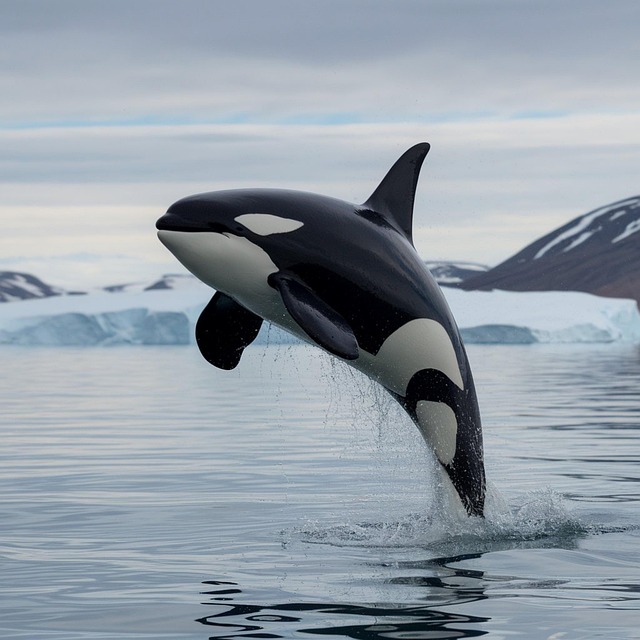
Up to 300 orca visit the strait each year, travelling in family groups. The same families return annually, and the local boat operators recognize individual whales. The Ainu called them Repun Kamuy – god of the ocean.
Whale watching cruises from Rausu run from May through July. The same company that runs the winter eagle cruises does the summer whale trips. You’ll spend about 2.5 hours on a two-story boat scanning the wide strait. I’ll be straight with you: seeing orca requires luck. The strait is wide and deep, and even with hundreds of whales out there, they may not surface close to the boat on your day. But when they do appear – a dorsal fin cutting through the water twenty meters away – it’s extraordinary.
Minke whales and Dall’s porpoises are more commonly seen. Humpback whales occasionally breach out of the water, though that’s a rare bonus. If you strike out on the boat, head to Kujira-no-mieru-oka Park, a hilltop with open views across the strait where the local guides go to track whale movements when they’re not on the water.
Other Wildlife Worth Knowing About
Siberian flying squirrels (Momonga)
White balls of fluff with enormous black eyes that glide up to 50 meters between trees. They are adorable and almost impossible to see. They are nocturnal, and a viewing trip means strapping on snowshoes before sunrise and heading into freezing dark forest near Higashikawa. Even with a guide, you need several attempts and serious luck. Kitoushi Forest is the best-known spot. Cute? Absolutely. Guaranteed? Not even close.
White-fronted geese (Magan) at Miyajima Marsh
Every spring and autumn, up to 70,000 migratory geese stop over at Miyajima Marsh near Bibai, about an hour north of Sapporo. They spend the day feeding in rice fields and return to the marsh at dusk. The dawn departure is the real spectacle – all 70,000 birds launch into the sky simultaneously in an explosion of noise and wings. Timing: April and late September to early October. Arrive 30 minutes before sunrise.
Harbor seals at Cape Erimo
The southernmost point of Hokkaido is home to a colony of harbor seals. You can watch them from the cliffs year-round, though you’ll need binoculars. Cape Erimo is remote and windy (it claims to be the windiest point in Japan), so combine it with a road trip rather than making a special trip.
Sea otters at Cape Kiritappu
Harbor seal numbers have been recovering along Hokkaido’s coast, but the real surprise is sea otters. They had nearly vanished from Japanese waters, but small numbers have been showing up at Cape Kiritappu in eastern Hokkaido. You can spot them from the clifftop walking path, hunting for sea urchin or lounging on the rocks. Bring binoculars – the cliffs are about 40 meters high.
Shima Enaga (Hokkaido long-tailed tit)
These tiny white birds look like cotton balls with tails. They’re found only in Hokkaido and have become something of a mascot for the island. They’re common in forests and parks but move fast, so getting a good look (let alone a photo) takes patience. You might spot them anywhere with trees, any time of year.
Best Seasons for Wildlife Watching
Hokkaido’s wildlife calendar splits roughly into winter and summer, with very different experiences in each season.
| Animal | Best Season | Location | Difficulty |
|---|---|---|---|
| Red-crowned cranes | Dec – Mar | Tsurui / Kushiro | Easy (guaranteed in winter) |
| Steller’s sea eagles | Late Jan – mid Mar | Rausu | Easy (drift ice cruise) |
| Brown bears (boat) | Jul – Sep | Shiretoko / Rausu | Moderate (50/50) |
| Orca | May – Jul | Rausu | Moderate (luck needed) |
| Blakiston’s fish owl | Year-round (winter best) | Yoroushi Onsen | Moderate (50/50) |
| Northern pika | May – Oct | Daisetsuzan | Moderate (patience needed) |
| Ezo deer | Year-round | Everywhere | Guaranteed |
| Ezo red fox | Year-round (winter best) | Everywhere | Guaranteed |
| White-fronted geese | Apr / late Sep – Oct | Miyajima Marsh | Easy (70,000 birds) |
| Sea otters | Year-round | Cape Kiritappu | Moderate (50/50) |
| Flying squirrels | Winter | Higashikawa | Hard (very lucky) |
Winter is the standout season. Cranes, eagles, and the drift ice create a combination that doesn’t exist anywhere else. But summer brings bears, whales, pika, and the geese migrations. If you can only come once, I’d pick February for the concentration of spectacles. If you can come twice, add late July.
Planning a Wildlife Trip
Most of Hokkaido’s best wildlife is in the east – Shiretoko, Rausu, Kushiro, Tsurui. This is a long way from Sapporo. You’re looking at 5-6 hours of driving or a domestic flight to Memanbetsu or Kushiro airport.
I strongly recommend renting a car. Public transport exists to major towns, but the wildlife spots are often off the main routes. A car also lets you stop for the random fox or deer that appears by the road.
A reasonable winter wildlife itinerary might look like this:
- Day 1: Fly into Kushiro. Drive to Tsurui. Afternoon crane watching at the sanctuary.
- Day 2: Dawn at Otowa Bridge for cranes in mist. Drive to Yoroushi Onsen area. Night: owl watching at Yuyado Daiichi.
- Day 3: Drive to Rausu. Afternoon drift ice eagle cruise.
- Day 4: Morning eagle cruise (different light). Drive south via Cape Kiritappu for sea otters. Head to Kushiro airport.
In summer, swap the eagle cruise for a whale watching trip from Rausu (May-July) and add a day in Shiretoko for the bear watching boat cruise.
Hokkaido’s wildlife doesn’t require fancy safari equipment or weeks of expedition travel. A car, a pair of binoculars, a warm jacket, and four days in the east will show you things you won’t see anywhere else in Japan. Some of the best moments are the unplanned ones – the fox trotting across the road at dusk, the eagle circling overhead while you eat lunch at a roadside rest stop. The animals are here. You just have to slow down enough to notice.