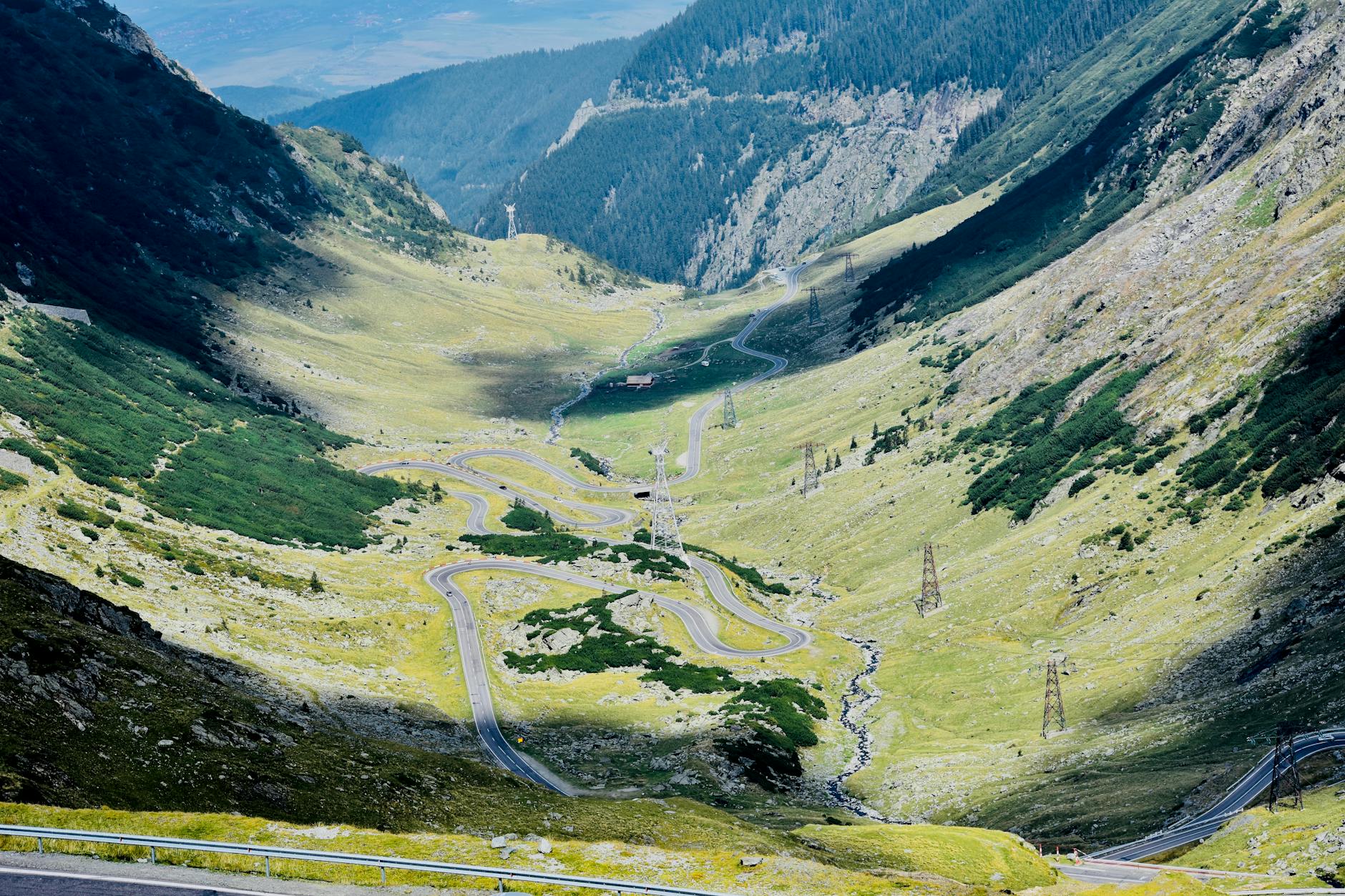
Hokkaido is the best place in Japan for a road trip. The roads are wide, the traffic is light (by Japanese standards), the speed limits are reasonable, and the scenery changes dramatically every hour. Unlike the dense highway networks of Honshu, Hokkaido’s roads pass through vast agricultural landscapes, volcanic mountain ranges, coastal cliffs, and dense forests with minimal congestion.
In This Article
- Should You Rent a Car in Hokkaido?
- Renting a Car in Hokkaido
- Where to Pick Up
- Major Rental Companies
- Costs
- What You Need
- Navigation Tip
- Driving in Hokkaido: What to Expect
- The Good
- Things to Know
- Winter Driving in Hokkaido
- What Rental Companies Provide
- Winter Driving Tips
- Should You Drive in Winter?
- Best Hokkaido Driving Routes
- Route 1: Sapporo – Otaru – Shakotan Peninsula (1–2 Days)
- Route 2: Sapporo – Furano – Biei – Asahikawa (2–3 Days)
- Route 3: Sapporo – Noboribetsu – Lake Toya – Niseko (2–3 Days)
- Route 4: Eastern Hokkaido Grand Loop (5–7 Days)
- Route 5: Northern Hokkaido (3–4 Days)
- Michi-no-Eki: Hokkaido’s Roadside Rest Stops
- Fuel and Practical Tips
- Suggested Road Trip Itineraries
- 3-Day Summer Road Trip
- 5-Day Autumn Road Trip
A rental car also solves Hokkaido’s biggest transport challenge: the island is huge (roughly the size of Austria or Ireland) and many of its best attractions are far from train stations. The flower fields of Biei, the coastal cliffs of Shakotan, the wildlife of eastern Hokkaido guide, and countless onsen towns are difficult or impossible to reach by public transport alone.
Should You Rent a Car in Hokkaido?
Not everyone needs one. Here’s a quick decision guide:
| Situation | Car Needed? |
|---|---|
| Staying only in Sapporo | No — subway and buses are excellent |
| Sapporo + Otaru + Hakodate by train | No — JR trains connect these well |
| Visiting Furano and Biei guide/Biei flower fields | Strongly recommended — attractions are spread out |
| Eastern Hokkaido (Shiretoko, Akan, Kushiro) | Essential — minimal public transport |
| Shakotan Peninsula or coastal routes | Essential — no practical bus service |
| Winter skiing at where to stay in Niseko | Optional — shuttle buses available, but a car adds flexibility |
| Onsen hopping across multiple towns | Strongly recommended |
| Multi-day circuit of the island | Essential |
Renting a Car in Hokkaido
Where to Pick Up
The two most practical pick-up locations are:
- New Chitose Airport — Most rental companies have counters in the terminal or free shuttle buses to nearby lots. Pick up on arrival, drop off before your flight. The most convenient option.
- Sapporo Station — Several rental offices within walking distance. Good if you want to spend a few days in Sapporo first and then pick up a car for the road trip portion.
Major Rental Companies
- Toyota Rent a Car — Largest fleet, reliable vehicles, English support available
- Nippon Rent-A-Car — Good coverage across Hokkaido
- Times Car Rental — Competitive pricing, good for smaller vehicles
- Orix Rent a Car — Often the best online prices
- Budget / Europcar — International brands with English booking systems
Book through ToCoo! or RentalCars.com for English-language booking and price comparison across multiple Japanese rental companies.
Costs
- Compact car: ¥5,000–¥8,000/day ($35–$55)
- Standard sedan: ¥7,000–¥12,000/day ($50–$85)
- SUV/wagon: ¥10,000–¥18,000/day ($70–$125)
- Expressway tolls: Budget ¥3,000–¥6,000/day for highway driving. The Hokkaido Expressway Pass (HEP) offers unlimited tolls for a fixed price — check eligibility for foreign visitors.
- Fuel: Approximately ¥170–¥180/litre. A full tank lasts 400–600km depending on the car.
- Parking: Hotels usually include parking or charge ¥500–¥1,500/night. City centre parking in Sapporo costs ¥200–¥400/hour.
What You Need
- International Driving Permit (IDP) — Required for most foreign licenses. Get this in your home country before traveling. Japanese police do check.
- Valid driver’s license from your home country (carry alongside the IDP)
- Credit card for the rental deposit
- GPS navigation — All rental cars include Japanese GPS. Set it to English or use Google Maps on your phone (a phone mount is usually provided or available to rent).
Navigation Tip
Japanese GPS units work best when you enter the phone number of your destination (called “mapcode” or phone number search). Hotels, attractions, and restaurants almost always have a phone number you can enter directly. This is faster and more reliable than typing addresses. Google Maps works well as a backup.
Driving in Hokkaido: What to Expect
The Good
- Roads are wide, well-maintained, and clearly signposted (Japanese and English on major routes)
- Traffic is light outside Sapporo — open highways with minimal congestion
- Roadside rest stops (michi-no-eki) are excellent — clean toilets, local food, regional products, and tourist information. There are over 120 across Hokkaido
- Speed limits are 60–80 km/h on expressways, 40–60 km/h on regular roads. Drivers generally go 10–20 km/h over.
- Fuel stations are easy to find along major routes (less so in remote eastern Hokkaido — fill up when you can)
Things to Know
- Drive on the left (right-hand drive vehicles)
- Expressway tolls are charged at toll gates — take a ticket on entry, pay on exit. ETC cards (electronic toll) are available from rental companies.
- Speed cameras are common on expressways. Stick close to the flow of traffic.
- Wildlife crossings — Deer are a serious hazard, especially at dawn and dusk in rural areas. Slow down in forested sections. Foxes and occasionally bears also cross roads.
- Distances are deceptive — Sapporo to Kushiro is 300km but takes 4+ hours. Plan for slower average speeds than you might expect.
Winter Driving in Hokkaido
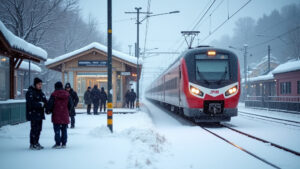
This section matters. Hokkaido winters are serious — heavy snowfall, ice, blizzards, and temperatures well below zero. If you’re not experienced with winter driving, think carefully before renting a car between December and March.
What Rental Companies Provide
All winter rental cars come equipped with studded snow tires (or studless winter tires). This is automatic — you don’t need to request them. The tires handle well on packed snow and light ice.
Winter Driving Tips
- Reduce speed significantly — braking distances on ice are 3–5 times longer than dry roads
- Avoid sudden movements — gentle acceleration, gentle braking, gentle steering
- Clear all snow from your car before driving (roof, hood, lights, mirrors)
- Keep headlights on at all times during snow
- Fill up frequently — getting stuck with an empty tank in a blizzard is dangerous
- Check road conditions before setting out: the Hokkaido Road Information site shows real-time closures and conditions
- Major highways are usually cleared quickly — mountain passes and rural roads may close during heavy snowfall
- White-out conditions can occur suddenly during blizzards. If visibility drops, pull over safely and wait.
Should You Drive in Winter?
If you have winter driving experience (from northern Europe, Canada, northern US, etc.), Hokkaido driving is manageable. The roads are well-maintained and locals drive carefully. If you’ve never driven on snow or ice, consider sticking to trains and buses in winter — there’s no shame in it, and the JR network connects the major cities well.
Best Hokkaido Driving Routes
Route 1: Sapporo – Otaru – Shakotan Peninsula (1–2 Days)
A stunning coastal drive along the Sea of Japan coast. Start with Otaru’s canal and sushi, continue northwest along the coast to the Shakotan Peninsula where the water turns an unreal shade of blue. Cape Kamui at the tip offers dramatic clifftop views.
- Distance: ~180km round trip
- Driving time: 4–5 hours (without stops)
- Best season: June–September (coastal scenery, uni season)
- Highlights: Otaru Canal, Shakotan Blue water, Cape Kamui, fresh uni in summer
Route 2: Sapporo – Furano – Biei – Asahikawa (2–3 Days)
The classic Hokkaido interior route through rolling agricultural landscapes. Farm Tomita’s lavender fields (July), Shikisai no Oka’s patchwork flower fields, the Blue Pond near Biei, and Asahikawa for ramen and the zoo.
- Distance: ~250km one-way
- Driving time: 3–4 hours (without stops, but you’ll want many stops)
- Best season: Late June–August (flowers), September–October (harvest/foliage)
- Highlights: Farm Tomita, Shikisai no Oka, Blue Pond, Asahikawa Ramen Village, Asahiyama Zoo
Route 3: Sapporo – Noboribetsu – Lake Toya – Niseko (2–3 Days)
A volcanic and onsen-themed loop south of Sapporo. Hell Valley at Noboribetsu, the caldera lake at Toya, Mt. Usu ropeway, and the mountain scenery around Niseko. Return via the Nakayama Pass for views of Mt. Yotei.
- Distance: ~300km loop
- Driving time: 5–6 hours (without stops)
- Best season: Year-round (onsen and volcanos don’t depend on season)
- Highlights: Jigokudani, Lake Toya, Mt. Usu, Niseko, onsen everywhere
Route 4: Eastern Hokkaido Grand Loop (5–7 Days)
The ultimate Hokkaido road trip for those with time. East of Sapporo, the landscape shifts dramatically — wide grasslands, volcanic lakes, coastal cliffs, and genuine wilderness. This route covers ground that very few international tourists see.
- Route: Sapporo → Obihiro → Kushiro → Akan → Shiretoko → Abashiri → Asahikawa → Sapporo
- Distance: ~1,200km loop
- Driving time: 18–20 hours total (spread across days)
- Best season: June–October (roads open, wildlife active), January–March (drift ice at Abashiri)
- Highlights: Kushiro Marshland (red-crowned cranes), Lake Akan, Shiretoko National Park (UNESCO), drift ice at Abashiri, Tokachi butadon in Obihiro, Daisetsuzan mountains
Route 5: Northern Hokkaido (3–4 Days)
The road to Wakkanai and Japan’s northernmost point. Remote, wild, and barely touristed. The islands of Rishiri and Rebun are accessible by ferry from Wakkanai and offer hiking, wildflowers, and genuine remoteness.
- Route: Asahikawa → Wakkanai → (ferry to Rishiri/Rebun) → return
- Distance: ~600km round trip (mainland only)
- Best season: June–September (Rishiri/Rebun wildflowers peak in June–July)
- Highlights: Cape Soya (northernmost point of Japan), Wakkanai, Rishiri Island (volcanic island with stunning hiking), Rebun Island (wildflowers), sarobetsu grasslands
Michi-no-Eki: Hokkaido’s Roadside Rest Stops
Japan’s roadside rest stations are a road trip highlight in themselves. Hokkaido has over 120 michi-no-eki, each featuring clean restrooms, local produce shops, restaurants serving regional specialties, and tourist information. Many have hot spring baths, playgrounds, or small museums.
Some standouts:
- Michi-no-Eki Niyama (between Niseko and Sapporo) — great views of Mt. Yotei
- Michi-no-Eki Utanai (Hidaka area) — famous for its horse culture and racehorse farms
- Michi-no-Eki Abashiri — drift ice museum and Sea of Okhotsk views
Plan to stop at michi-no-eki every 1–2 hours. They break up long drives, and the local food at each one is part of the experience.
Fuel and Practical Tips
- Self-service vs full-service: Both exist. Self-service (“self” in English on the sign) is cheaper. At full-service stations, stay in the car — attendants fill up for you. Say “mantan” for a full tank or “san-zen en bun” for ¥3,000 worth.
- Fuel type: Most rentals use “regular” (reghyuraa). Confirm with the rental counter if unsure.
- Sparse stations in eastern Hokkaido: Between Kushiro and Shiretoko, fuel stations can be 50–80km apart. Don’t let the tank drop below half.
- Return the car with a full tank — rental companies charge a premium to refuel for you.
Suggested Road Trip Itineraries
3-Day Summer Road Trip
Day 1: Pick up car at New Chitose Airport → drive to Furano/Biei (flower fields, Blue Pond) → stay in Furano
Day 2: Furano → Asahikawa (zoo, ramen) → drive to Sounkyo Gorge → stay in Sounkyo or Asahikawa
Day 3: Return via Otaru (canal, sushi) → Shakotan if time → drop off car in Sapporo
5-Day Autumn Road Trip
Day 1: Sapporo → Jozankei Onsen (autumn foliage) → Lake Shikotsu → stay lakeside
Day 2: Lake Shikotsu → Noboribetsu (Hell Valley) → Lake Toya → stay at Lake Toya
Day 3: Lake Toya → Niseko (Mt. Yotei views) → Yoichi Distillery → Otaru → stay in Otaru
Day 4: Otaru → Shakotan Peninsula (cape drive) → return to Sapporo → stay in Sapporo
Day 5: Sapporo → Biei (autumn patchwork fields) → return to Sapporo or airport
For accommodation along these routes, check our Sapporo guide and the broader First Time in Hokkaido planning guide.