This article contains affiliate links. If you book through these links, I earn a small commission at no extra cost to you.
In This Article
- Why Hokkaido Works So Well for Cycling
- The Best Routes (And What They’re Actually Like)
- Furano to Biei (The Famous One)
- Lake Shikotsu Loop
- Eastern Hokkaido (The Big Empty)
- Tokachi Plains
- Shakotan Peninsula (Coastal Drama)
- Converted Rail Trails
- Bike Rental Options
- E-Bikes Changed Everything
- Road Conditions and What to Expect
- When to Go
- Practical Stuff That Matters
- Luggage Forwarding
- Where to Sleep
- What to Pack
- Getting Your Bike Around
- Is It Worth It? Honestly.
I didn’t plan to become a cyclist in Hokkaido. It happened the way most good things happen on trips — by accident. A cancelled car reservation in Furano, a rental shop with a spare touring bike, and suddenly I was pedalling through rolling hills with lavender fields on both sides and absolutely no idea where I’d sleep that night.
That was four years ago. I’ve been back on two wheels in Hokkaido every summer since.
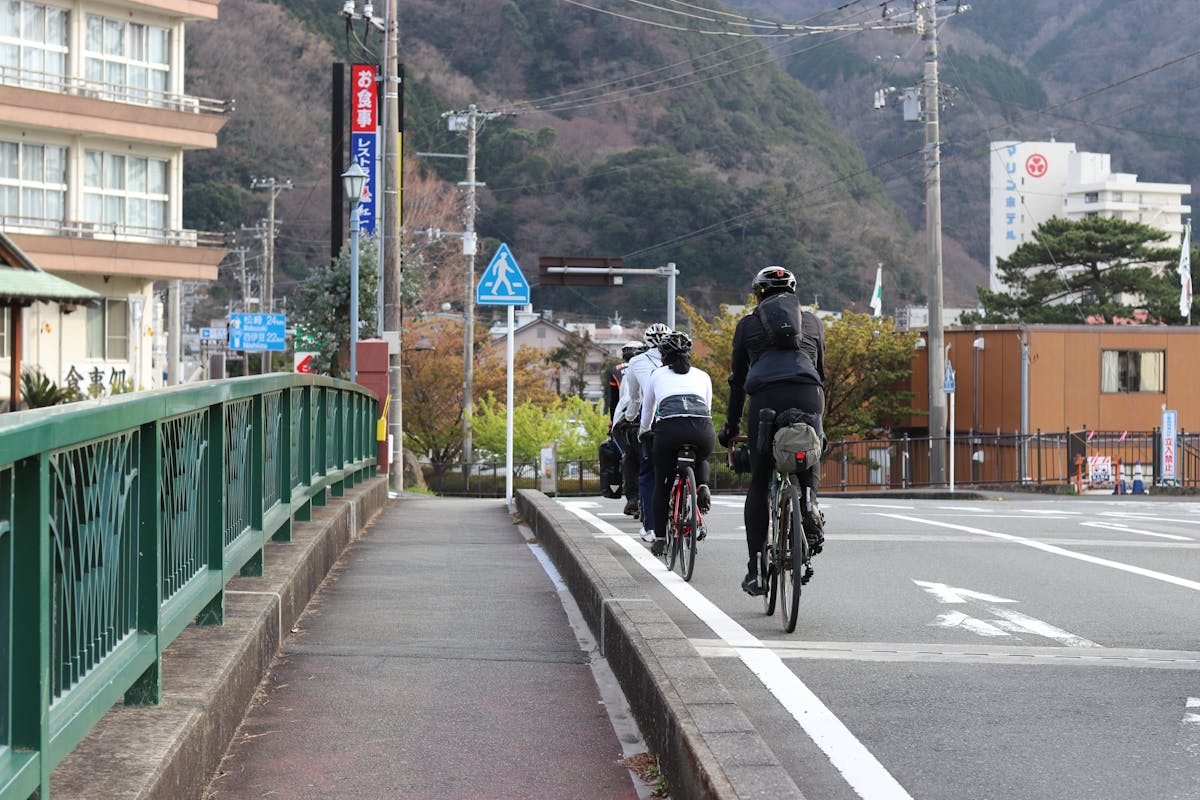
Hokkaido is, in my honest opinion, the single best place to cycle in Japan. And I say that having also ridden the Shimanami Kaido (which gets all the press). The reasons are simple: wide roads built to handle winter snowploughs, polite drivers who give you a ridiculous amount of space, cool summer temperatures, and scenery that changes from volcanic mountains to wheat fields to coastline in a single day. The roads here were practically designed for cycling, even if that wasn’t the intention.
But it’s not all postcard-perfect. There are brutal headwinds on the coast. Some routes have 40km stretches with no convenience store. And unless you’re on an e-bike, the hills in certain areas will test your patience and your knees. This guide covers what I’ve actually learned riding these roads — the good parts and the parts nobody warns you about.
Why Hokkaido Works So Well for Cycling
The first thing you notice on a Hokkaido road is the space. Most roads outside Sapporo have wide shoulders, sometimes wider than the car lane itself. This is a leftover from snow management — the ploughs need somewhere to push the banks — but it means cyclists basically get their own lane on most rural routes. Compare that to cycling around Kyoto or Tokyo, where you’re sharing narrow streets with taxis and delivery trucks, and you’ll understand why people fly up here specifically to ride.
Drivers in Hokkaido are remarkably patient with cyclists. In hundreds of kilometres of riding, I’ve never had a close pass. Not once. They swing wide, they slow down, they wait. It might be because cycling tourists are good for the local economy, or it might just be the Hokkaido temperament. Either way, it’s a massive relief if you’ve ever cycled in a city where drivers treat you as an obstacle.
Then there’s the weather. July through September in Hokkaido sits around 20-25 degrees Celsius, occasionally pushing to 30 in August during particularly hot stretches. But the humidity is dramatically lower than Honshu. You’ll sweat, sure, but it’s the kind of sweat that actually dries. Down in Osaka at the same time of year, you’d be swimming through the air. Hokkaido’s summer feels like cycling weather. You can ride all day and not feel completely destroyed by the heat.
The flipside: mornings can be surprisingly cool, especially in June and late September. I’ve started rides at 8 degrees in eastern Hokkaido in early June. Pack arm warmers and a light windbreaker even in summer. You’ll need them for the first hour and for any mountain descents.
The Best Routes (And What They’re Actually Like)
Furano to Biei (The Famous One)
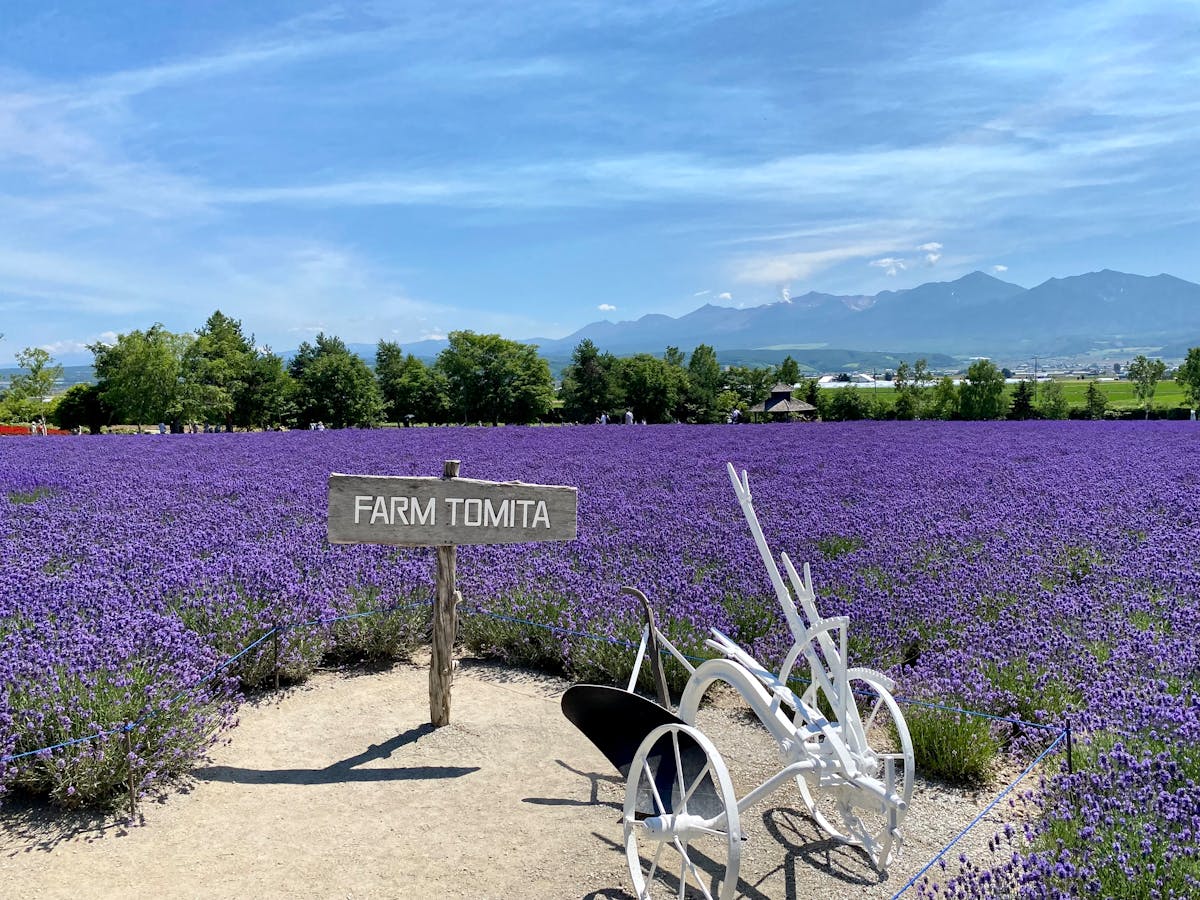
This is the route everyone starts with, and honestly, it earns its reputation. The 30-40km loop between Furano and Biei takes you through what people call the “patchwork hills” — rolling fields of lavender, wheat, potatoes, and sunflowers, each a different shade, laid out across gentle slopes with the Tokachi mountain range in the background. In July, the lavender at Farm Tomita is at its peak and the whole area smells incredible.
The terrain is rolling, not flat. You’ll hit some 5-8% grades between the valleys, which sounds manageable until you’ve done ten of them in a row. The total elevation gain over the full loop is around 500-700m depending on your exact route. Not mountainous, but you’ll feel it in your legs by afternoon.
The route is well-signed. Convenience stores and vending machines appear every 10-15km. There’s a great rest stop at Ken and Mary’s Tree (a famous lone poplar in a field) where half the cyclists you see will be stopped, eating onigiri from the Seicomart down the road. Budget about 3-5 hours depending on how many photo stops you make. You will make many photo stops.
One warning: Furano-Biei is popular with tour buses in July and August. The roads themselves aren’t crowded, but the viewpoints and parking areas get packed between 10am and 3pm. Start early.
Lake Shikotsu Loop
Lake Shikotsu sits about an hour south of Sapporo by car, and cycling around it is one of the most accessible day rides from the city. The loop around the lake is roughly 40km, mostly flat to gently rolling, with one significant climb on the south side.
The lake itself is stunningly clear — it’s a caldera lake, one of the deepest in Japan, and the water has that deep blue-green colour that photos never quite capture. The road hugs the shoreline for most of the circuit, dipping in and out of forest. There are a few onsen hotels on the east shore where you can stop for a soak and lunch.
The catch with Shikotsu is the road to get there. Route 453 from Sapporo is the main access road, and it’s a proper mountain pass — narrow, winding, with logging trucks. I wouldn’t ride it. Instead, take the bus from Sapporo to Shikotsu Kohan village (about 1,200 yen, bikes allowed if boxed) and start your loop from there.
Eastern Hokkaido (The Big Empty)
This is where things get serious. Eastern Hokkaido — the stretch from Kushiro up to Shiretoko and along the Okhotsk Sea coast — is cycle touring paradise for people who like solitude. And I mean real solitude. You can ride for 30-40km on a perfectly paved road and see maybe five cars.
The landscape shifts constantly: the Kushiro wetlands (Japan’s largest, home to red-crowned cranes), the volcanic ridges around Lake Kussharo, the wild coastline of Shiretoko Peninsula, and the dead-straight roads cutting through dairy farmland that look like they belong in New Zealand. The scale is hard to describe until you’re in it. Everything is big.
But eastern Hokkaido is not beginner-friendly. Towns are far apart. You’ll find stretches of 40-50km with no services — no konbini, no vending machine, nothing. Bears are a real consideration in the Shiretoko area; I carry a bear bell and make noise on blind corners. The wind coming off the Okhotsk Sea can be brutal, especially heading north. I’ve had days where I averaged 12km/h into a steady headwind, and that’s demoralising no matter how pretty the view is.
If you want to ride eastern Hokkaido, plan your distances carefully. Carry extra water and snacks. And check the wind forecast before deciding which direction to go — riding with the prevailing wind makes the difference between an amazing day and a miserable slog.
Tokachi Plains
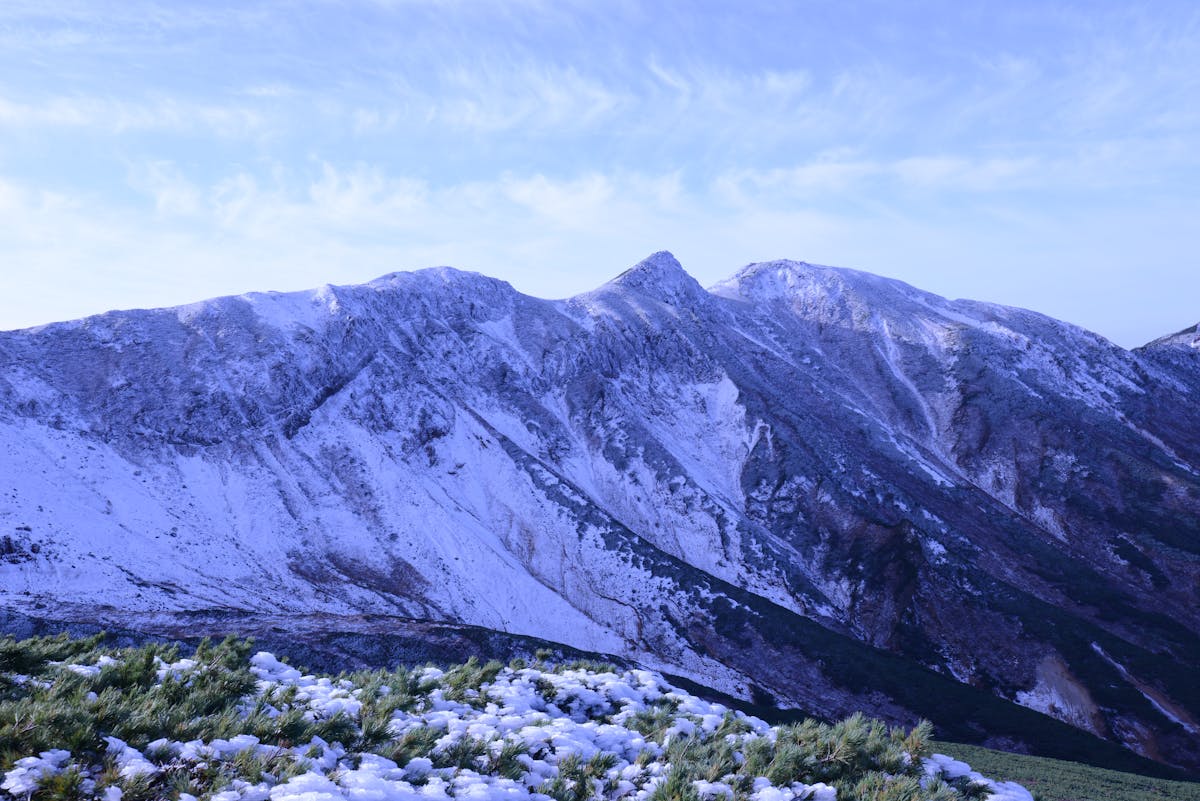
The Tokachi region, centred around the city of Obihiro, offers some of the flattest riding in Hokkaido. The plains are Hokkaido’s agricultural heartland — massive fields of wheat, sugar beet, beans, and corn stretching to the horizon with the Daisetsuzan mountain range as a distant backdrop. If you like flat, fast riding with big skies, this is your spot.
The Tokachi area also has some of the best food stops on any Hokkaido cycling route. Obihiro’s butadon (grilled pork bowl) is legendary, and the dairy farms scattered around the region sell fresh soft-serve ice cream that tastes nothing like what you get at a convenience store. There’s a cheese factory near Shintoku where you can stop mid-ride for a tasting.
The downside of flat terrain is exposure. There’s very little shelter from wind or sun out on the plains. On a calm day it’s dreamy riding. On a windy day you’ll feel like you’re pedalling through mud with no hills to hide behind. Also, the straight roads can get monotonous — some stretches run dead straight for 15-20km, which sounds fine until you’re on kilometre 12 and the horizon hasn’t moved.
Shakotan Peninsula (Coastal Drama)
If you want coastal riding with actual cliffs and deep blue water, Shakotan Peninsula delivers. It juts out into the Sea of Japan northwest of Otaru, and the road around it — Route 229 — clings to the coastline with views that remind me of Big Sur, minus the traffic.
The full loop from Otaru and back is about 120-140km, which most riders split over two days. The coast road has some genuine climbs — the section around Cape Shakotan involves switchbacks with ocean views that make you forget you’re suffering. The water below is an absurd shade of blue they call “Shakotan Blue.” On a clear day it looks tropical, which is confusing when the air temperature is 18 degrees.
Food options are better here than in eastern Hokkaido. Fishing villages along the route serve uni (sea urchin) and grilled squid. Bikuni and Furubira both have small restaurants. Camp at one of the free (or very cheap) municipal campgrounds along the coast — they’re basic but clean, and some sit right on the water.
Converted Rail Trails
Hokkaido has been shutting down rural railway lines for decades, and some of those old rail beds have been converted into cycling paths. These are completely car-free, flat (rail grades rarely exceed 2%), and often run through beautiful countryside.
The most notable is the old Furusato Ginga Line between Kitami and Rubeshibe in eastern Hokkaido. It follows a river valley through forests, crossing old railway bridges. The surface is a mix of packed gravel and asphalt. A hybrid or gravel bike works best — skinny road tyres will be uncomfortable.
These rail trails are excellent for families or beginners who aren’t comfortable riding on roads. They’re also completely flat, which is rare in Hokkaido. The trade-off is that they’re isolated — if you have a mechanical issue, there’s nobody around to help.
Bike Rental Options
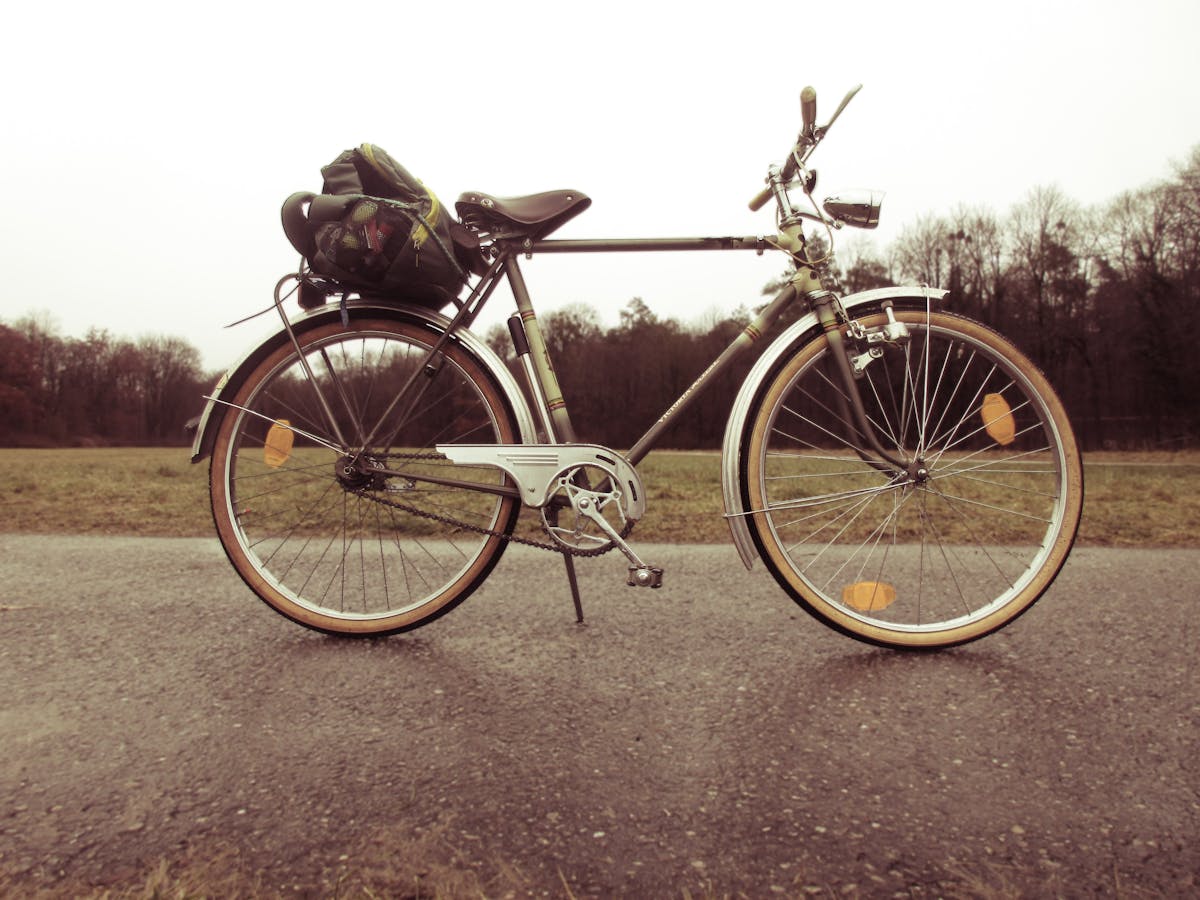
Renting a bike in Hokkaido is straightforward in the tourist areas and nearly impossible in the rural ones. Here’s what’s available:
Sapporo: Several rental shops near Sapporo Station offer road bikes and cross bikes from around 3,000-5,000 yen per day. Multi-day rentals bring the price down. Some shops offer one-way rental (pick up in Sapporo, drop off in Furano or Asahikawa) for an extra fee, typically 3,000-5,000 yen. This is worth it if you want to ride point-to-point rather than loops.
Furano/Biei: Tourist rental shops operate from late April to October. Prices are around 1,500-3,000 yen for a half day, 3,000-5,000 yen for a full day. Most of these are “mama-chari” style city bikes or basic cross bikes. Fine for the Furano-Biei loop but not great for longer distances. A few places now rent e-bikes for 4,000-6,000 yen/day, which I’d strongly recommend for the hills.
Adventure Hokkaido runs guided cycling tours out of Obihiro/Tokachi with quality bikes included. If you don’t want to plan logistics yourself, their multi-day tours cover the best of eastern Hokkaido with support vehicles, luggage transport, and local knowledge. Not cheap, but you get access to routes and insider knowledge you’d never find on your own.
Bringing your own bike: If you’re flying into New Chitose Airport, most airlines accept bikes as checked luggage (usually no extra charge on ANA/JAL domestic flights if it’s under 20kg total). You’ll need a bike bag or box. There are also Kuroneko Yamato shipping counters at most airports and convenience stores — you can ship a boxed bike to your hotel for about 2,000-3,000 yen within Hokkaido.
E-Bikes Changed Everything
I’ll be honest: I was a snob about e-bikes. Then I rode one through the Furano-Biei hills and arrived at the end actually enjoying myself instead of just surviving. The assisted pedalling doesn’t make it effortless — you still work — but it takes the edge off the climbs enough that you can actually look around and appreciate where you are instead of staring at your stem and counting pedal strokes.
E-bike rentals have exploded across Hokkaido’s tourist areas in the last two years. Furano, Biei, Niseko, and even some of the smaller towns now offer them. Expect to pay 4,000-6,000 yen per day. Battery range on most rental e-bikes is 60-80km on the “eco” assist mode, less if you use high assist on every hill. That’s enough for the Furano-Biei loop and the Shikotsu circuit, but not enough for a long-distance day.
If you’re not a regular cyclist and you want to enjoy the Hokkaido summer scenery without destroying yourself physically, rent an e-bike. Seriously. The experience is so much better when you’re not gasping up every hill.
Road Conditions and What to Expect
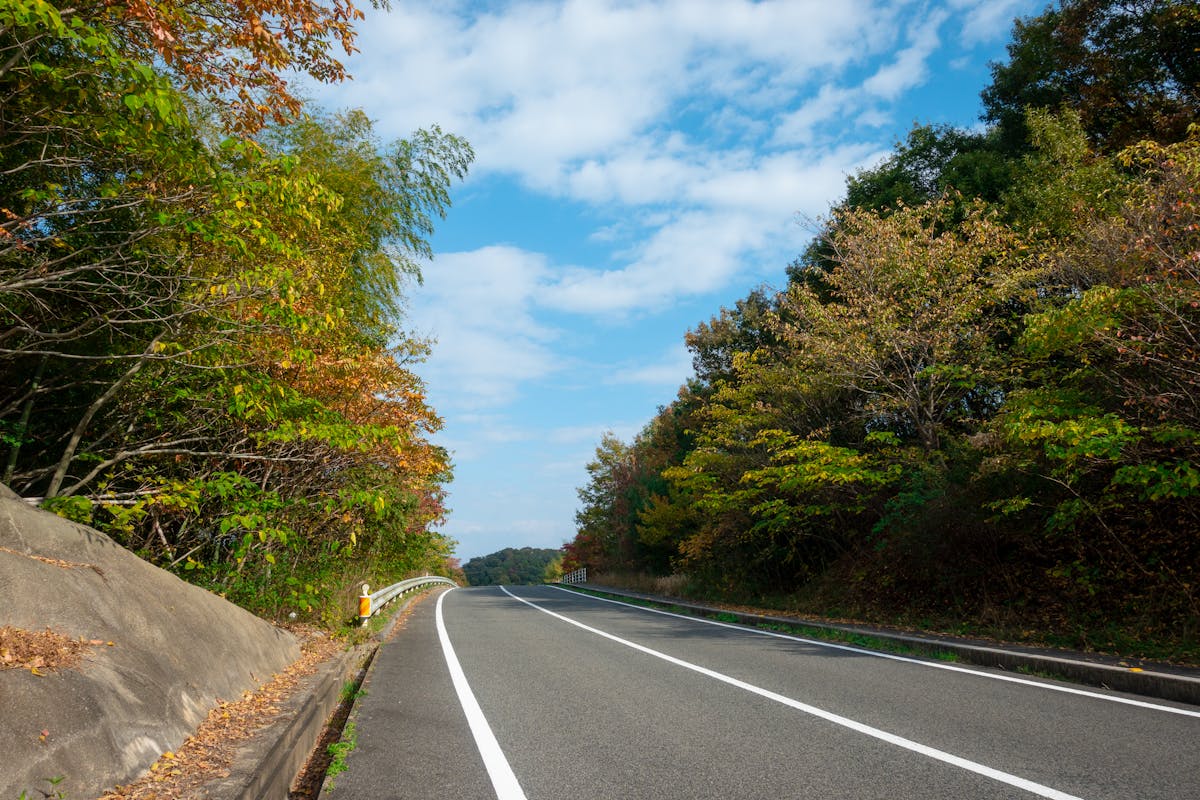
Road surfaces in Hokkaido are generally excellent. Japan maintains its roads obsessively, and even secondary rural roads are smooth asphalt. The occasional rough patch or pothole exists, usually from frost heave over winter, but it’s nothing like riding in Southeast Asia or even some parts of Europe. You can confidently ride on 25mm tyres without worrying about your wheels.
What might surprise you is the wildlife. Yezo sika deer are everywhere in Hokkaido, and they have a habit of standing in the road and staring at you like you’re the one who’s lost. In eastern Hokkaido especially, watch for deer at dawn and dusk. They’re not aggressive, just dumb about traffic. Foxes (the Ezo red fox) also appear on rural roads but they scatter quickly.
In the Shiretoko area and parts of the Daisetsuzan range, brown bears are a real presence. They rarely approach cyclists — the noise and speed scare them off — but you should know the protocol. Make noise, don’t stop near fresh bear signs (droppings, claw marks), and store food properly at campsites. Local tourist offices have current bear sighting information.
Convenience stores (Seicomart is Hokkaido’s chain — better than 7-Eleven for food) and vending machines are your lifeline for water and snacks. In populated areas they appear every few kilometres. In eastern and northern Hokkaido, gaps of 30-40km without services are normal. I carry two water bottles minimum and top up at every opportunity.
When to Go
The cycling season runs roughly from late May to mid-October, with each period having a different character:
Late May to mid-June: Cool temperatures (10-18 degrees), long daylight hours, wildflowers blooming. Roads are quiet because the tourist season hasn’t kicked in yet. Some mountain passes may still have snow on the shoulders. This is my favourite window — the roads are empty, the air is clean, and the green is electric.
Late June to mid-July: Warming up nicely (18-25 degrees). Lavender season begins in Furano. This is the sweet spot for most riders — warm enough to be comfortable in shorts, cool enough to ride all day.
Late July to mid-August: Peak tourist season. Temperatures can hit 30 degrees, which is hot for Hokkaido. The Furano-Biei area gets crowded. Eastern Hokkaido remains uncrowded but the bugs are at their worst. Biting flies are a nuisance, and you will collide with insects at speed. Protective eyewear is not optional.
September to mid-October: The autumn colours roll through Hokkaido earlier than the rest of Japan, starting in the Daisetsuzan mountains in late August and reaching the lowlands by October. Temperatures drop back to 10-20 degrees. Tourist numbers thin out. Some of the best riding conditions of the year, but daylight hours are shorter and cold weather gear becomes necessary for mornings.
Practical Stuff That Matters
Luggage Forwarding
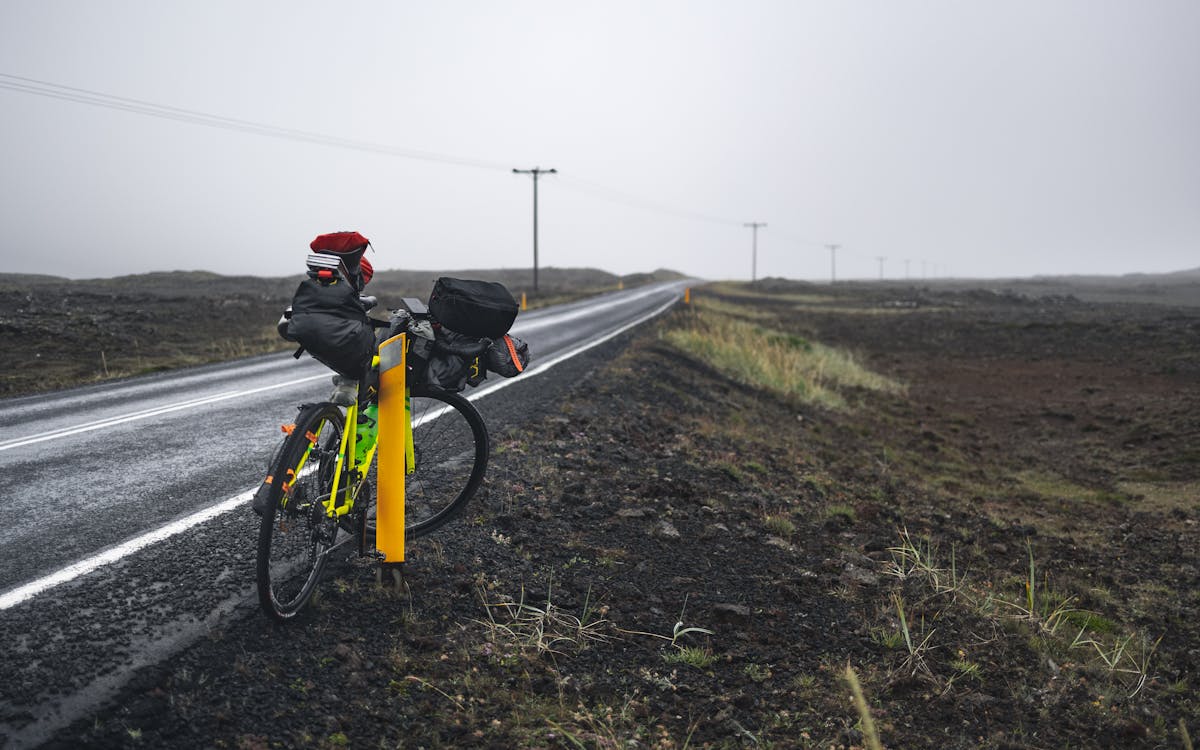
Japan’s luggage forwarding system is a gift for cyclists. Kuroneko Yamato (look for the black cat logo) will ship a bag from any convenience store or hotel to your next accommodation for about 1,500-2,000 yen per piece. This means you can ride with just a handlebar bag and a jersey pocket while your big bag waits at tonight’s hotel. Drop it off the night before, pick it up the next evening. It works flawlessly.
For multi-day routes, this changes everything. Instead of loading your bike with 15-20kg of camping gear, you can ride light and fast, staying in budget hotels or rider houses along the way.
Where to Sleep
Hokkaido has a cycling-friendly accommodation culture. “Rider houses” (raida hausu) are basic hostels specifically for cyclists and motorcyclists, charging 500-2,000 yen per night for a floor space and shared facilities. They’re scattered across Hokkaido’s touring routes, especially in eastern Hokkaido. Some are run by retired cyclists who’ll give you route advice over beer.
Municipal campgrounds cost 300-1,000 yen per night, sometimes free. Quality varies from excellent (hot showers, covered cooking areas) to basic (a flat patch of grass and a tap). The website hatinosu.net lists most of them with reviews.
Budget hotels run 5,000-8,000 yen per night. Business hotels in the larger towns (Asahikawa, Obihiro, Kushiro, Kitami) all have secure bike storage if you ask at check-in.
What to Pack
Beyond the obvious cycling kit, here’s what I bring specifically for Hokkaido that I wouldn’t necessarily pack elsewhere:
Arm warmers and a packable windbreaker (mornings are cold, mountain descents are freezing). Protective glasses — the bugs will fly into your eyes, guaranteed. Sunscreen — you’re at 43 degrees north latitude but the UV is strong in summer, and you’re exposed all day. A bear bell if you’re riding eastern Hokkaido or the Daisetsuzan area. Two water bottles minimum. Basic repair kit including a spare tube, pump, and tyre levers — bike shops outside Sapporo and Asahikawa are rare. Insect repellent for the rest stops and campsites. A full packing list for Hokkaido is worth checking before you go.
Getting Your Bike Around
If you don’t want to ride every kilometre (and some sections genuinely aren’t worth riding — industrial areas around ports, featureless highways between regions), Hokkaido’s trains accept bagged bikes for free. Renting a car with a bike rack is another option for accessing remote trailheads.
JR Hokkaido trains require your bike to be in a bag (rinko bukuro). Some stations have bike assembly areas near the platform. The limited express trains between Sapporo, Asahikawa, and Obihiro are the most useful for cyclists — they cover ground fast and connect major riding areas.
Some local bus routes, particularly those serving tourist areas, allow boxed bikes. The Sapporo to Lake Shikotsu bus is one. Check with the operator in advance — policies vary and change seasonally.
Is It Worth It? Honestly.
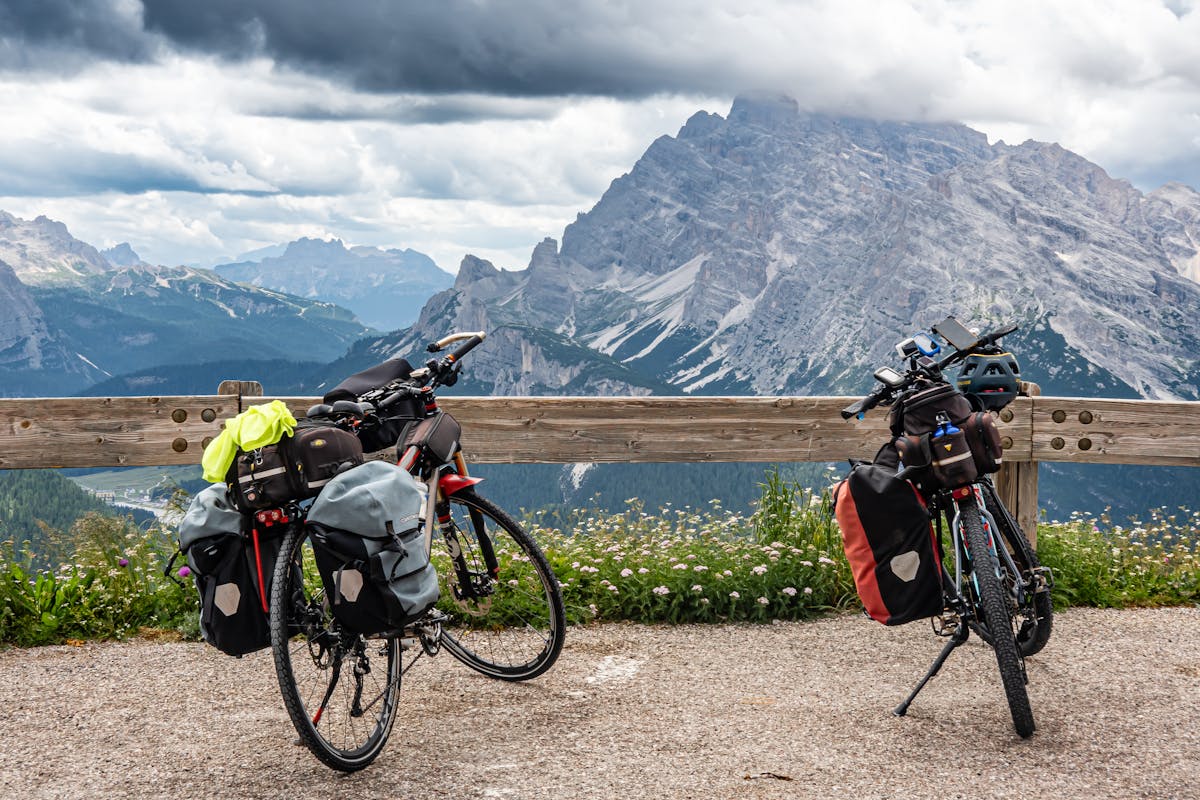
If you’re a cyclist, Hokkaido should be on your list. Full stop. The combination of safe roads, manageable traffic, stunning scenery, and excellent food makes it one of the best cycling destinations in Asia. It doesn’t have the fame of the Shimanami Kaido, but it’s a more complete experience — you can ride here for a week or two and never repeat yourself.
If you’re not a cyclist but you’re curious, the Furano-Biei loop on an e-bike is the perfect entry point. You get the scenery without the suffering, and you’ll understand why people get obsessed with this.
And if you’re the kind of rider who wants empty roads, big skies, and the feeling of being genuinely far from everything — eastern Hokkaido is waiting. Just pack extra water and check the wind forecast first.