Sapporo is a city that consistently surprises visitors. Japan’s fifth-largest city doesn’t feel like a metropolis — it feels like a well-organized town that happens to have 2 million people. Wide streets laid out on a grid pattern (unusual for Japan), abundant green space, excellent public transport, and a food scene that rivals cities three times its size.
In This Article
- Getting to Sapporo
- Getting Around Sapporo
- Subway
- Streetcar
- Walking
- IC Cards
- Top Things to Do in Sapporo
- Odori Park
- Sapporo Beer Museum and Garden
- Nijo Market
- Susukino Entertainment District
- Tanukikoji Shopping Arcade
- Hokkaido Shrine (Hokkaido Jingu)
- Shiroi Koibito Park
- Mt. Moiwa Night View
- Moerenuma Park
- Sapporo Snow Festival
- Best Day Trips from Sapporo
- Otaru (30–45 minutes by JR train)
- Jozankei Onsen (60 minutes by bus)
- Noboribetsu Onsen (90 minutes by JR limited express)
- Asahiyama Zoo, Asahikawa (85 minutes by JR limited express)
- Nikka Whisky Yoichi Distillery (60 minutes by JR train)
- Where to Eat in Sapporo
- Sapporo Station Area
- Odori/Tanukikoji
- Susukino
- Practical Tips for Sapporo
- Wi-Fi and Connectivity
- Winter Survival
- Cash and Cards
- Luggage Storage
- How Many Days in Sapporo?
Most visitors to Hokkaido start and end in Sapporo, and for good reason. It’s the transport hub for the island, has the widest range of accommodation, and there’s enough to fill several days without leaving the city limits. Here’s how to make the most of it.
Getting to Sapporo
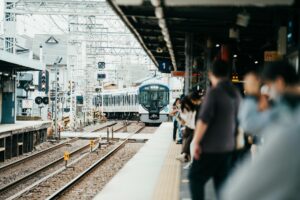
New Chitose Airport (CTS) is Sapporo’s main airport, located about 40km south of the city center. The JR Rapid Airport train reaches Sapporo Station in 37 minutes and costs around ¥1,150. Trains run every 15 minutes from early morning until late evening.
If arriving by Shinkansen from Honshu, you’ll arrive at Shin-Hakodate-Hokuto station and transfer to a limited express to Sapporo (approximately 3.5 hours onward). Once the Sapporo Shinkansen extension opens, this will become much faster.
Airport shuttle buses to central Sapporo hotels take about 70–80 minutes and cost around ¥1,100 — slower than the train but convenient if your hotel is far from Sapporo Station.
Getting Around Sapporo
Sapporo is one of the easiest Japanese cities to navigate. The entire city is laid out on a numbered grid system — addresses use compass directions and block numbers (North 3, West 4, for example), making it almost impossible to get lost.
Subway
Three lines cover central Sapporo efficiently. The Namboku Line (green, north-south) is the most useful for tourists, connecting Sapporo Station, Odori, Susukino, and Nakajima Park. A single ride costs ¥210–¥320. A day pass (¥830 weekdays, ¥520 weekends) pays for itself after three rides.
Streetcar
A single tram line loops through the southern part of the city. It’s charming and useful for reaching certain neighborhoods, but the subway is faster for most journeys.
Walking
Central Sapporo is very walkable. Sapporo Station to Susukino is about 20 minutes on foot, with covered underground walkways connecting most of the route — invaluable in winter and rain. The underground network extends from Sapporo Station south to Susukino, lined with shops and restaurants.
IC Cards
Pick up a Kitaca card at Sapporo Station (or use any existing Suica, PASMO, or ICOCA). It works on subway, buses, trams, JR trains, and most convenience stores.
Top Things to Do in Sapporo
Odori Park
This 1.5km green corridor running east-west through the city center is Sapporo’s social heart. In summer, office workers picnic on the grass and the beer gardens set up shop. In winter, it transforms into the main venue for the Snow Festival. The TV Tower at the eastern end offers views across the park and city (admission ¥1,000, but the view from below is nearly as good for free).
Sapporo Beer Museum and Garden
Housed in a handsome red brick building in the former Sapporo Brewery, the museum traces the history of Japanese beer from its origins in Hokkaido. The free self-guided tour covers the brewing process and history. The real draw is the tasting hall where you can sample limited beers unavailable elsewhere, including the original Kaitakushi Beer. The adjacent beer garden serves all-you-can-eat jingisukan with unlimited beer.
Getting there: 7-minute walk from Higashi-Kuyakusho-Mae station or take the factory district shuttle bus from Sapporo Station.
Nijo Market
Sapporo’s central seafood market, operating since 1903. It’s smaller and more accessible than Tokyo’s fish markets, and you can eat at stalls and small restaurants right inside. This is where to have your morning kaisen-don (seafood rice bowl) — choose your toppings from the display and watch them assemble it. Fresh crab, uni, and seasonal catches are available to eat on the spot or buy to take away.
Susukino Entertainment District
Northern Japan’s largest entertainment district lights up at night with restaurants, bars, izakayas, and nightlife venues packed into a dense grid of streets. This is where to eat ramen at Ramen Yokocho (Ramen Alley), drink at standing bars, explore izakaya culture, and experience Sapporo after dark. During the Snow Festival, Susukino hosts the ice sculpture displays.
See our Hokkaido Food Guide for specific restaurant recommendations in the area.
Tanukikoji Shopping Arcade
A covered shopping arcade stretching about 1km through the heart of the city. Seven blocks of shops, restaurants, cafes, and entertainment. It’s not as famous as Osaka’s shopping streets, but it’s authentically local and great for rainy or snowy day browsing. Block 2 and 3 have the most interesting food options.
Hokkaido Shrine (Hokkaido Jingu)
Set in the forested Maruyama Park, Hokkaido’s most important Shinto shrine is a peaceful escape from the city. The approach through tall trees is beautiful in every season — cherry blossoms in May, deep green in summer, golden leaves in autumn, snow-laden branches in winter. The shrine grounds are free to enter. Maruyama Park also has a small zoo popular with families.
Getting there: Maruyama-Koen station (Tozai Line), then a 10-minute walk through the park.
Shiroi Koibito Park
The factory and theme park for Hokkaido’s most famous souvenir — Shiroi Koibito (White Lover) chocolate biscuits. It’s more interesting than it sounds: the European-style buildings are photogenic, you can watch biscuits being made on the factory tour, and there’s a workshop where you make your own. Kids enjoy it, and adults appreciate the chocolate samples. Admission around ¥800.
Getting there: Miyanosawa station (Tozai Line), 7-minute walk.
Mt. Moiwa Night View
While Hakodate’s night view gets all the fame, Sapporo’s view from Mt. Moiwa is stunning and far less crowded. A ropeway and mini cable car take you to the 531m summit where the city grid stretches out below in a blanket of lights. Go on a clear night for the best experience. The ropeway operates until 22:00 (last ascent 21:30). Round trip costs around ¥2,100.
Moerenuma Park
Designed by Japanese-American sculptor Isamu Noguchi, this park is an artwork in itself. Geometric hills, a glass pyramid, fountains, and open spaces create something between a sculpture garden and a landscape park. It’s outside the central city (best reached by bus or car) but worth the trip for photography and a different side of Sapporo. Free entry.
Sapporo Snow Festival
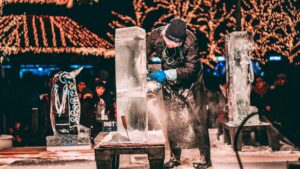
Japan’s most famous winter festival transforms Odori Park, Susukino, and the Tsudome community site into a showcase of massive snow and ice sculptures every February. Over 2 million visitors come to see the enormous creations, some reaching 15 metres tall and intricately detailed.
If you’re planning to attend, book accommodation at least 3–4 months in advance — Sapporo fills up completely during festival week. See our Best Time to Visit Hokkaido guide for exact dates and planning tips.
Best Day Trips from Sapporo
Otaru (30–45 minutes by JR train)
The most popular day trip from Sapporo. A charming port city famous for its canal, glass workshops, music boxes, and exceptional sushi. Walk the canal (especially atmospheric in the evening or with snow), eat sushi on Sushi Street, visit the glass shops, and grab LeTAO cheesecake before heading back. A full day is ideal, but you can cover the highlights in a half day.
Jozankei Onsen (60 minutes by bus)
Sapporo’s nearest hot spring resort, set in a river valley surrounded by forest. Excellent for autumn foliage (October) and a winter onsen experience. Several hotels offer day-use bathing. The Hoheikyo Dam area nearby is scenic for walks.
Noboribetsu Onsen (90 minutes by JR limited express)
Hokkaido’s most famous hot spring town, known for Jigokudani (Hell Valley) — a dramatic volcanic crater with steaming vents, bubbling pools, and the smell of sulphur. The variety of water types here (nine different mineral compositions) is rare even by Japan’s standards. Worth an overnight stay but doable as a long day trip.
Asahiyama Zoo, Asahikawa (85 minutes by JR limited express)
Book a guided day trip including zoo + Biei on Klook from ~$39
Japan’s northernmost zoo, famous for its innovative enclosure designs that let you observe animals from unique angles — walking through a tunnel with penguins overhead, watching polar bears swim past an underwater window. The winter penguin walk (penguins parading through the snow) is one of Hokkaido’s most photographed scenes.
Nikka Whisky Yoichi Distillery (60 minutes by JR train)
Free tours and tastings at the birthplace of Japanese whisky. The stone buildings and grounds are beautiful, and the tasting includes distillery-exclusive whiskies. Book in advance. Combine with a visit to nearby Otaru for a full day out.
Where to Eat in Sapporo
Sapporo’s food scene is covered in detail in our Hokkaido Food Guide, but here’s a quick hit list by area:
Sapporo Station Area
- Ramen Republic — collection of ramen shops on the top floor of Esta building
- Daimaru/Stellar Place — department store basement food floors for bento, sweets, and prepared foods
Odori/Tanukikoji
- Suage — one of Sapporo’s best-known soup curry restaurants
- Nijo Market — seafood bowls and fresh crab in the morning
Susukino
- Ramen Yokocho — the original ramen alley, operating since the 1950s
- Daruma — legendary jingisukan shop (expect a queue)
- Standing bars — dozens of affordable standing izakayas for after-work drinks and snacks
Practical Tips for Sapporo
Wi-Fi and Connectivity
Free Wi-Fi is available at Sapporo Station, subway stations, and many cafes. For constant connectivity, pick up a SIM card or eSIM at New Chitose Airport before heading into the city.
Winter Survival
Sapporo gets approximately 5 metres of snowfall annually. Footwear with good grip is essential — the sidewalks are icy. Many locals attach clip-on spikes to their shoes. The underground walkway system lets you move between Sapporo Station and Susukino without going outside. Most buildings are well-heated, so dress in removable layers.
Cash and Cards
Credit cards are accepted at hotels, department stores, and chain restaurants. Smaller izakayas, ramen shops, and market stalls are often cash-only. 7-Eleven ATMs accept international cards. Carry at least ¥10,000 in cash.
Luggage Storage
Coin lockers are available at Sapporo Station (including large sizes for suitcases). If lockers are full, the station’s luggage storage counter can hold bags for the day.
How Many Days in Sapporo?
2 days: Enough for the city highlights — Odori, Nijo Market, Sapporo Beer Museum, Susukino at night. Add one day trip (Otaru is the obvious choice).
3–4 days: Comfortable pace. Cover the city plus 2 day trips. Time to explore neighborhoods, try multiple ramen shops, and soak in an onsen.
5+ days: Use Sapporo as a base for wider Hokkaido exploration. Day trip to Furano/Biei, Noboribetsu, Asahikawa, and Yoichi while returning to Sapporo each evening.
For accommodation advice, see our Where to Stay in Sapporo guide, or jump to First Time in Hokkaido for broader trip planning.