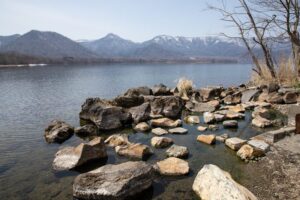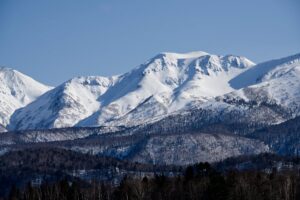
Lake Shikotsu sits about 40 minutes south of New Chitose Airport, and most people drive right past it on the way to Sapporo. That’s a mistake.
This caldera lake is Japan’s second deepest at 363 meters, and its water clarity is borderline absurd — visibility reaches 25 meters on a good day. The locals call the colour “Shikotsu Blue,” and while that sounds like tourist board marketing, it’s genuinely one of those things that stops you mid-sentence when you see it.
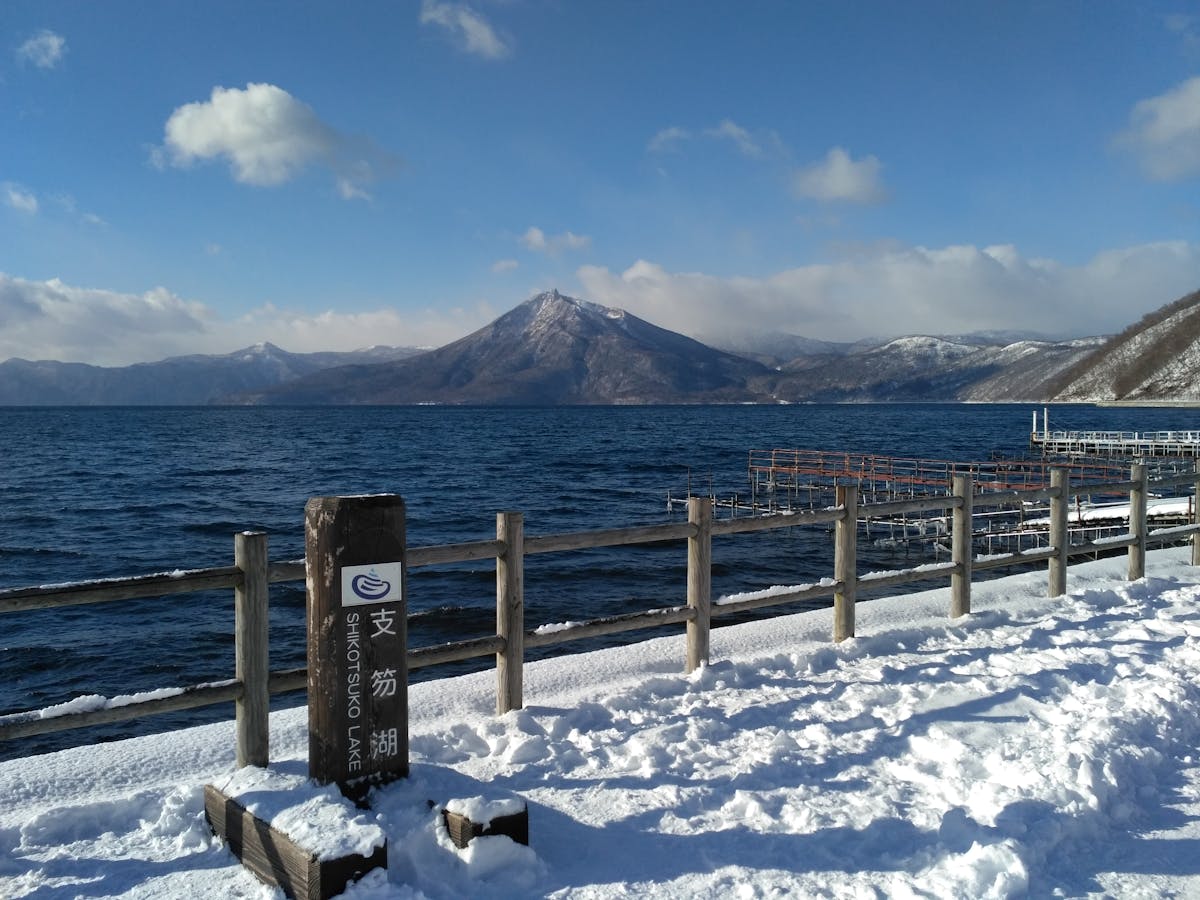
The lake never freezes, even when Hokkaido’s winters hit -15°C. Geothermal heat from the volcanic activity below keeps the water moving year-round, which makes it the northernmost ice-free lake in Japan. So whether you’re paddling a clear kayak in August or watching ice sculptures at the February festival, the lake itself stays liquid.
Getting to Lake Shikotsu
From New Chitose Airport: The Hokkaido Chuo Bus runs to Shikotsu Kohan (the small lakeside town) and takes about 55 minutes. Buses leave from both the international and domestic terminals but only run every 2-3 hours, so check the schedule before you land. The fare is ¥1,260 one way.
From Chitose Station: Same bus line, 45 minutes, ¥1,140.
From Sapporo: There’s no direct bus anymore — that line was cut back in 2010. You’ll need a car. The drive takes about an hour on well-maintained roads, and honestly, having a car is the way to go here. Public transport around the lake itself is basically nonexistent, so without wheels you’re stuck in Shikotsu Kohan. If you’re planning a Hokkaido road trip, the lake makes a perfect first or last stop.
From Lake Toya: About an hour by car. No direct public transport between the two lakes, which is annoying — they’re both in the same national park. If you’re combining both, see our Lake Toya guide for the other half of the trip.
Getting Around the Lake
Here’s the thing about Lake Shikotsu: Shikotsu Kohan (the onsen town on the east shore) has everything within walking distance — hotels, restaurants, the visitor centre, boat tours. But beyond that, you need a car.
The western and northern shorelines have no road access at all. The southern shore has Highway 453 running alongside it, but there are no bus stops along the lake road itself. Bike rentals are available in summer if you want to explore the eastern shore, but for the trailheads (especially Mt. Tarumae), a car is essential.
Things to Do at Lake Shikotsu
Get on the Water
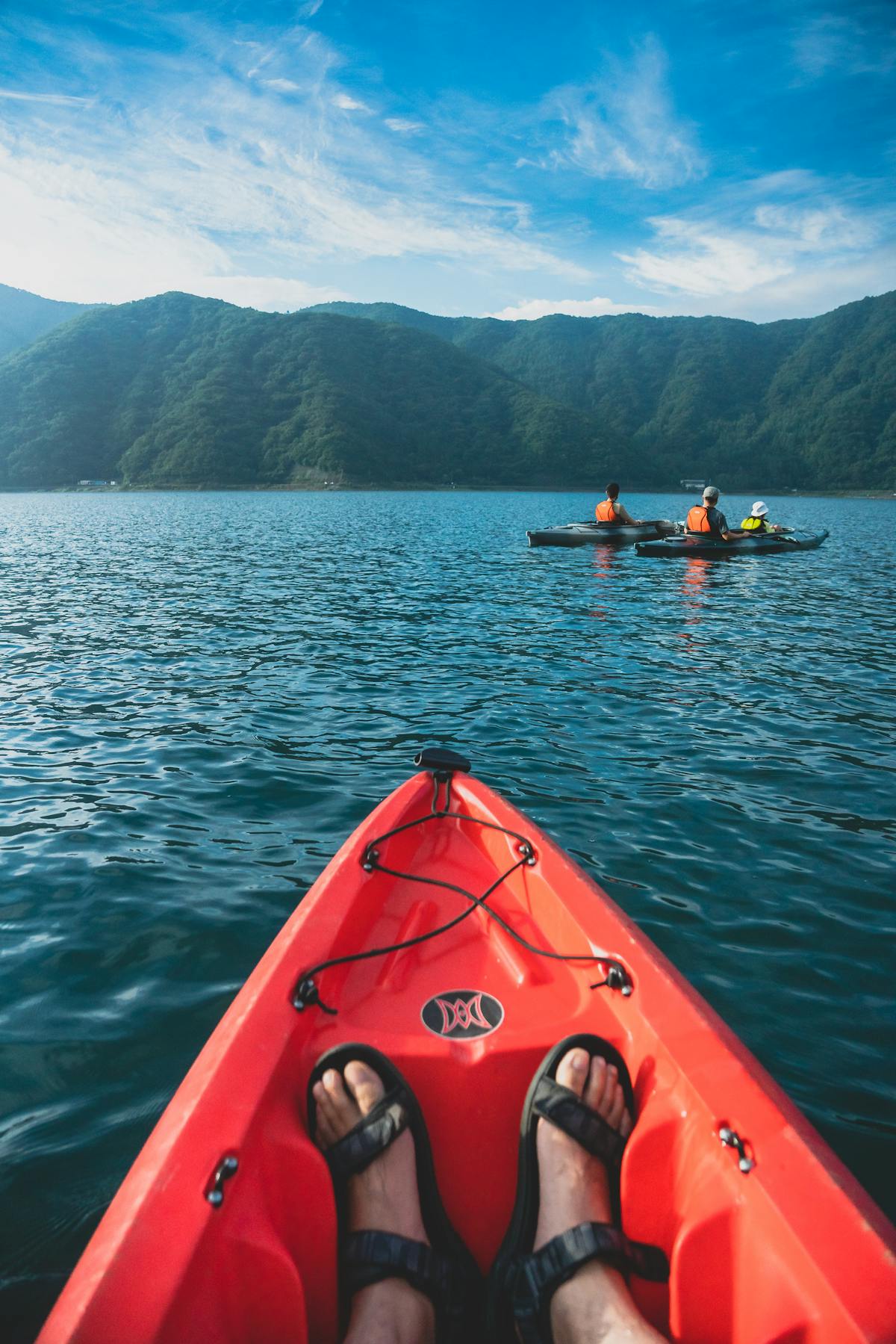
The main draw in summer. The lake’s clarity makes water activities here unlike anywhere else in Hokkaido.
Clear kayaking is the standout — transparent kayaks let you see straight to the lake floor while you paddle. Several operators run guided tours from Shikotsu Kohan from around ¥7,000 per person. Even first-timers handle the paddling fine.
Glass-bottom boat tours run from late April to early November if you want to stay dry. The underwater viewing windows sit about 2 metres below the surface, and on clear days you can spot columnar joints (volcanic rock formations) and aquatic plants through them. Tours last about 30 minutes.
Canoeing, SUP, and scuba diving are all available in season. The lake’s low currents make it beginner-friendly for diving, and the visibility is Japan’s best. You might spot kokanee salmon (called himemasu locally) or the rare Chitose water buttercup (Chitose-baikamo), which only grows in extremely clean water.
Climb Mount Tarumae
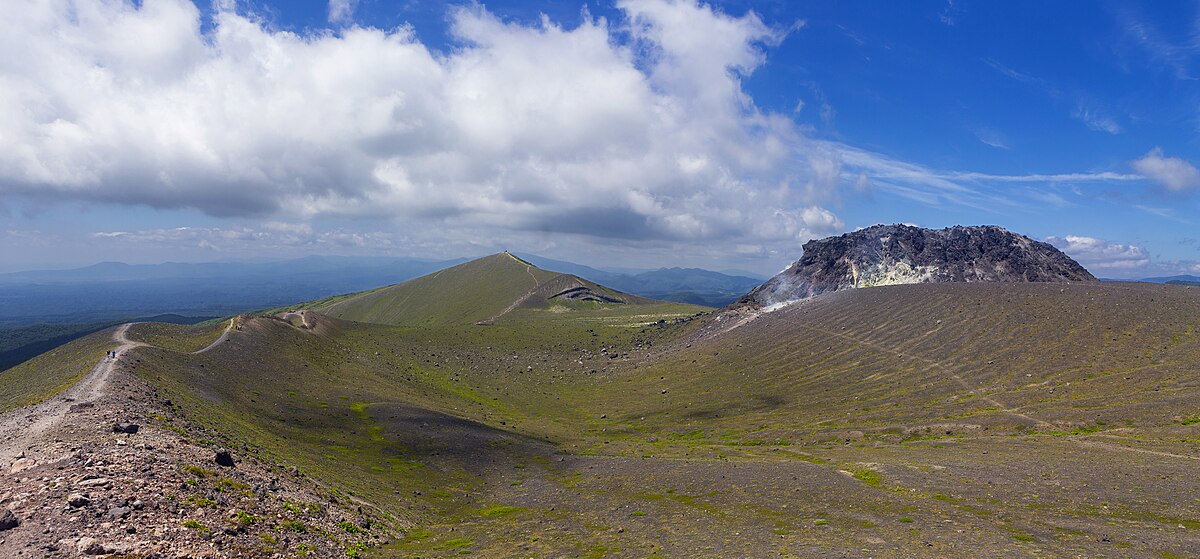
The most popular hike in the area, and for good reason. Mt. Tarumae (1,041m) is one of Japan’s most active volcanoes — it last erupted in 1981 — and the trail to the crater rim takes under an hour from the seventh station. The views over Lake Shikotsu from the top are spectacular.
You can circle the crater in about two hours, but you can’t enter it (poisonous gases). The landscape up top is otherworldly — barren volcanic rock, steam vents, and the distinctive lava dome from the 1909 eruption sitting in the middle of the crater.
Practical info: The trailhead is only accessible by car, open roughly late May to October. No public transport reaches it. The hike itself isn’t technically difficult, but the ascent is steep and exposed — bring sun protection and water.
The other two mountains around the lake — Mt. Eniwa (1,320m) and Mt. Fuppushi (1,102m) — offer more challenging hikes with fewer crowds. Fuppushi is the cone-shaped one dominating the southern shore view; Eniwa is the highest peak to the northwest.
Visit the Moss Corridor
At the foot of Mt. Fuppushi, a narrow gorge with 10-metre-high walls covered entirely in moss. Over 80 species grow here on rock formed from Mt. Tarumae’s 1739 eruption. The place looks like something from a Ghibli film.
Fair warning: the gorge itself is currently closed to foot traffic to prevent rock falls and protect the moss. You can still view it from an observation platform, which is worth the short walk, but don’t expect to stroll through it.
Soak at Marukoma Onsen
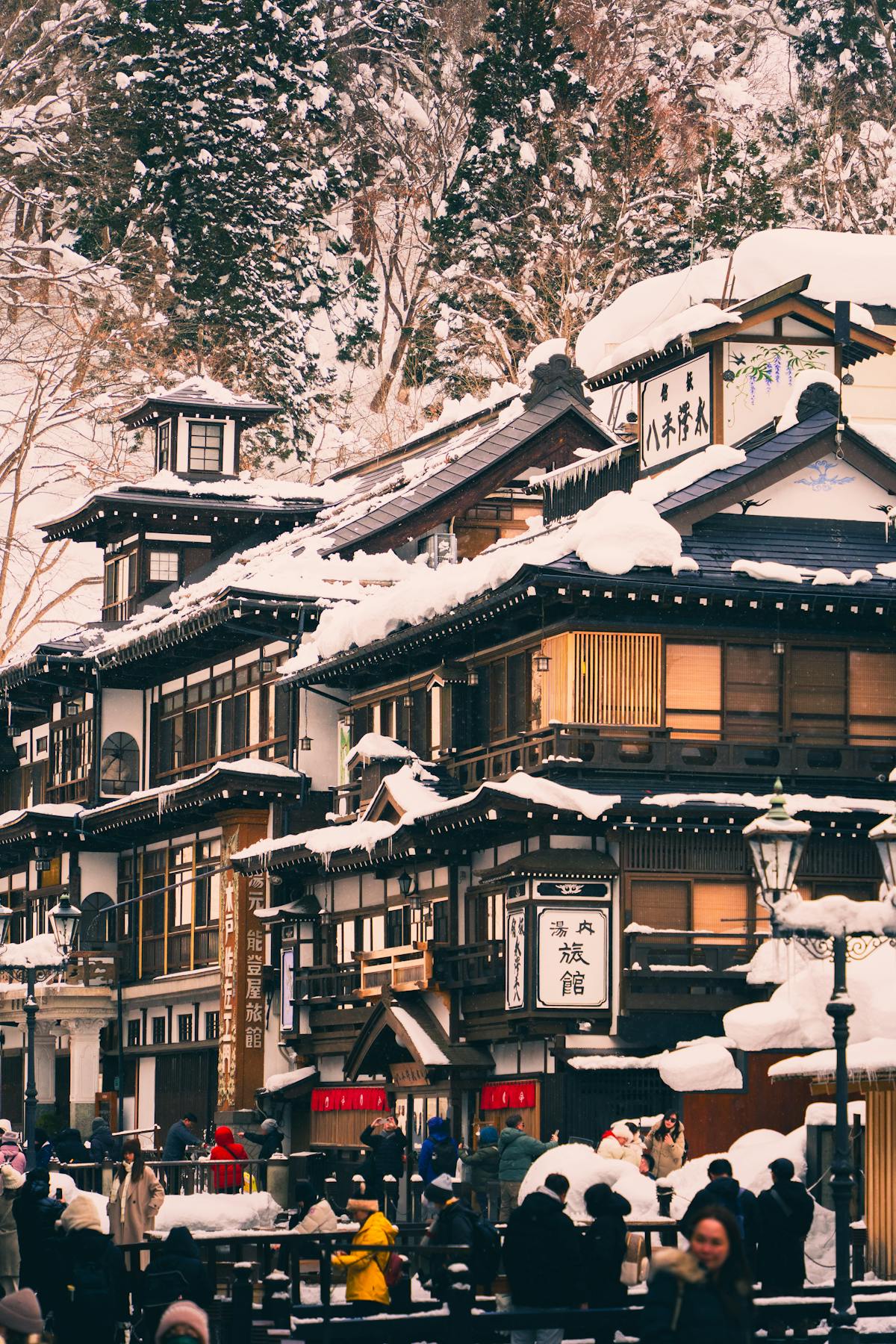
On the northern shore of the lake, Marukoma Onsen is one of Hokkaido’s most unique hot spring experiences. The outdoor baths sit right at the lake’s edge, connected to the lake by small channels. The water level in the pools actually changes with the lake level, which means in some seasons the baths are deeper than you’d expect.
The baths are gender-segregated, and day visitors can use them on Fridays, Saturdays, Sundays, and holidays from 10:00 to 15:00 (last entry 14:00) for ¥1,200. Closed Monday through Thursday to non-guests.
If you’re into onsen etiquette, this is an advanced-level soak — the pools are open to the elements and right next to the lake. Unforgettable on a clear day. A bit exposed on a rainy one.
Lake Shikotsu in Winter
The Ice Festival (Hyōtō Matsuri)
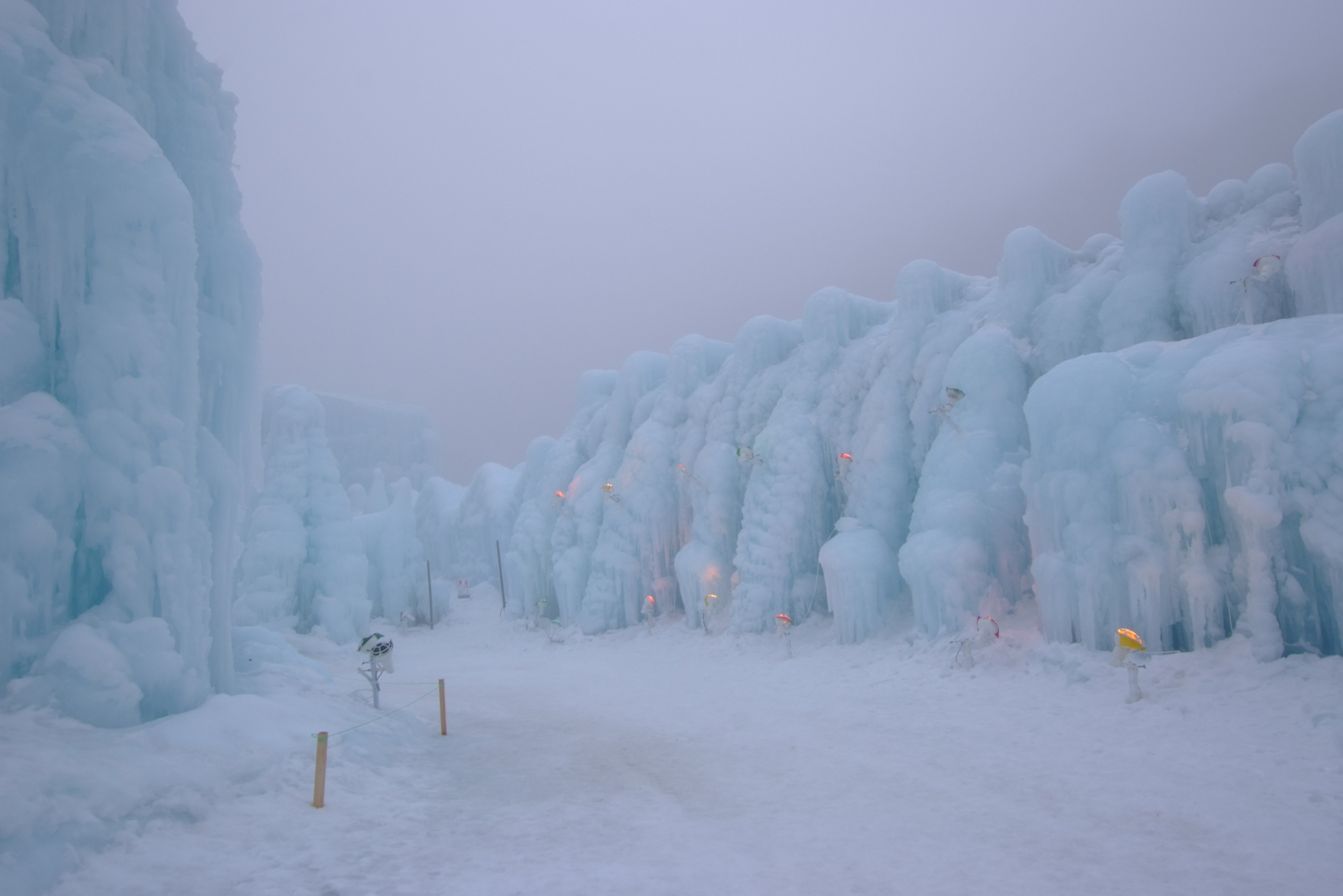
Running through most of February at the Shikotsu Kohan event space, this is the area’s biggest winter draw. Artists pump water directly from the lake and let it freeze into towering ice sculptures. Because the water is so clear, the ice takes on that distinctive Shikotsu Blue during daylight.
At night, the sculptures get lit up with coloured lights — it’s genuinely impressive, not just a tourist trap. The venue is small enough to walk through in 30-40 minutes, but most people linger longer.
There are food stalls selling hot corn soup, roasted marshmallows, and other warm snacks. You’ll need them — temperatures at the festival regularly drop below -10°C.
The festival’s been running since 1976, so they know what they’re doing. It’s much smaller and less crowded than Sapporo’s Snow Festival, which is exactly why some people prefer it.
Other Winter Activities
Snowshoe trekking around the lake is popular, with guided tours visiting Shichijō Ōtaki Falls, where 10-metre icicles form in the coldest months.
Ice walks are a newer offering — you wear a dry suit and literally walk on thin ice, break through it, and float in the lake. It’s available when ice forms on the shallower shore areas (the lake itself doesn’t freeze, but the edges sometimes do). Open to kids 140cm and taller.
Lake Okotanpe: The Secret Lake
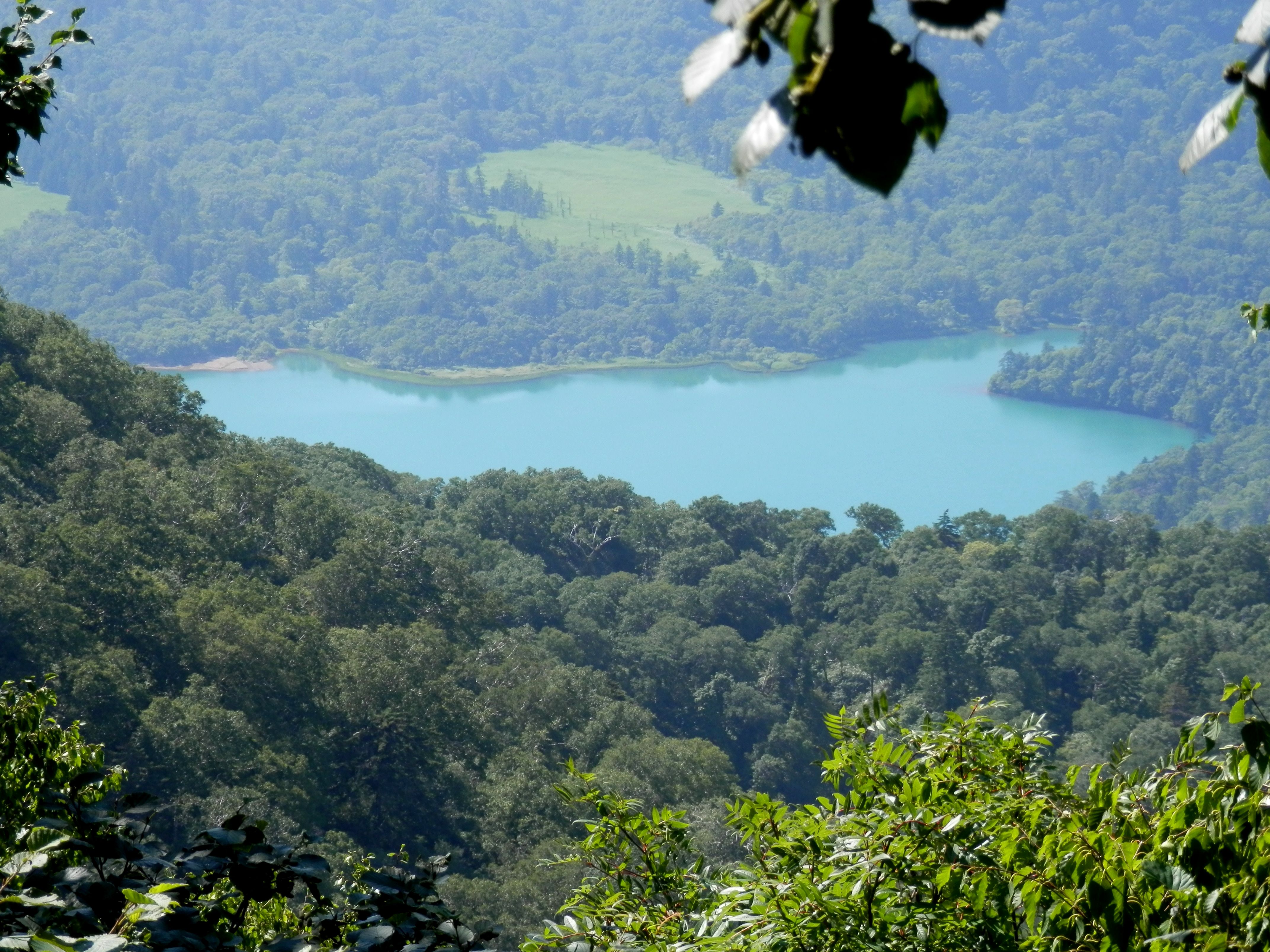
About 7km northwest of Lake Shikotsu, at the foot of Mt. Eniwa, sits a tiny lake that most visitors never hear about. Lake Okotanpe shifts between cobalt blue on clear days and emerald green when it’s overcast — the colour change is real, not exaggerated.
You can’t actually go down to the shore (it’s a specially protected area within the national park), but there’s an observation deck with a clear view. The autumn foliage reflected on the surface is particularly striking.
Lake Okotanpe is considered one of Hokkaido’s “three mysterious lakes” alongside Lake Onneto near Akan and Lake Shinonome near Lake Shikaribetsu. It’s a 15-minute detour by car and worth it if the weather’s clear.
Where to Eat
Let’s be honest — Lake Shikotsu isn’t a food destination. Shikotsu Kohan has a handful of restaurants and cafes, but don’t come expecting a culinary scene.
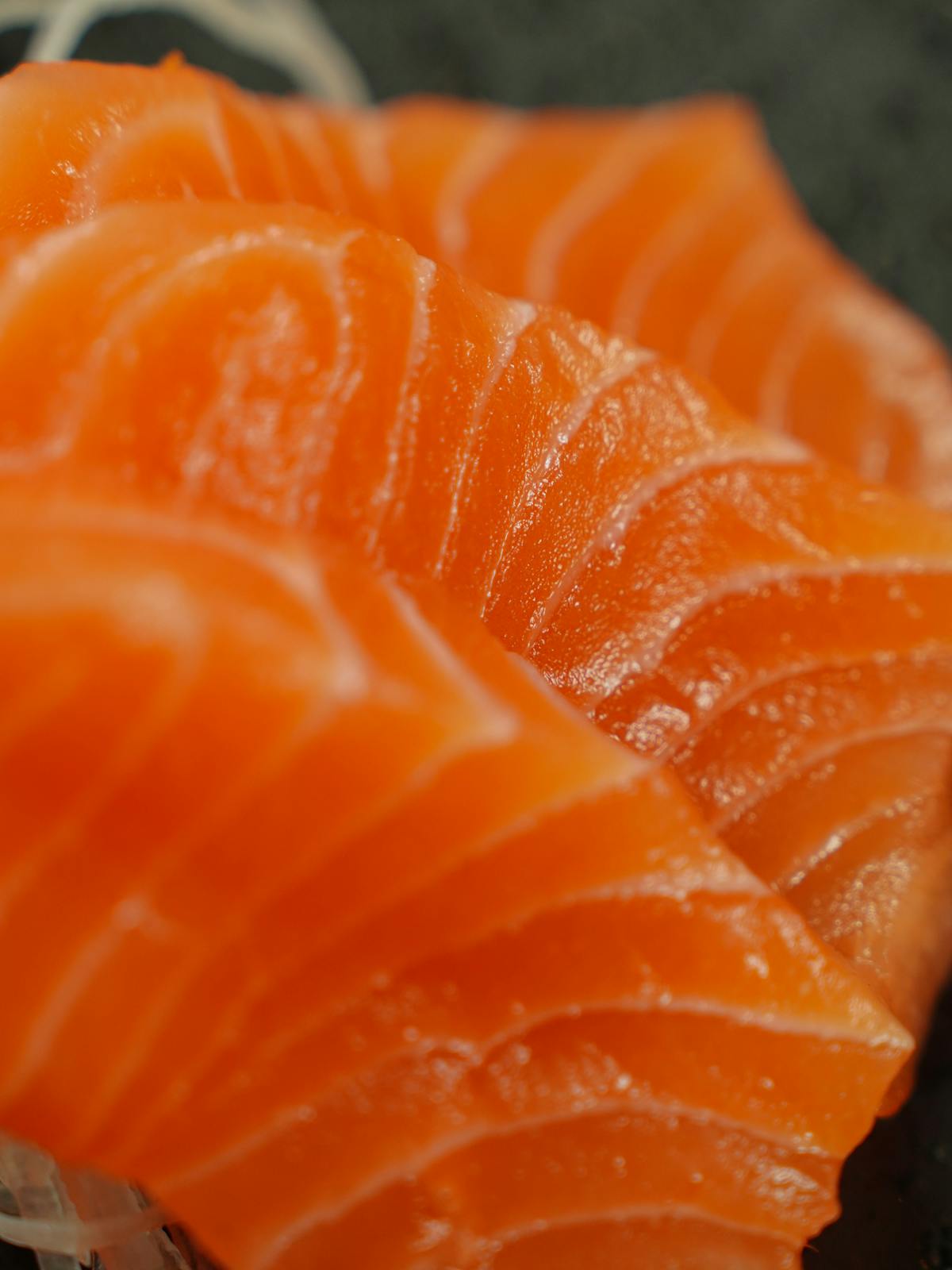
The one thing to try is himemasu (kokanee salmon, also called “princess salmon”). It’s the lake’s signature dish, served as sashimi, grilled, or fried at several of the local restaurants. The fish is delicate and mild — different from regular salmon.
Beyond that, your options are the hotel restaurants (Mizu no Uta has a solid buffet) and a few noodle shops in town. If you’re day-tripping from Sapporo, eat before you come or after you get back. The Hokkaido food scene is incredible — just not at the lake specifically.
Where to Stay
There are only a handful of places to stay, all clustered around Shikotsu Kohan.
Tsuruga Resort Spa Mizu no Uta — The nicest option. Modern rooms, a big spa complex with indoor and outdoor hot springs, and decent buffet dining. Suites have private onsen baths. It’s right on the lake and works well as a base. From around ¥25,000/night for two.
Lake Shikotsu Marukoma Onsen Ryokan — The atmospheric choice. Traditional Japanese inn on the northern shore with those famous lakeside outdoor baths. Kaiseki dinner included. Getting here without a car is tricky (it’s across the lake from Shikotsu Kohan). From around ¥20,000/night per person with meals.
Shikotsuko Onsen Lakeside Villa Suimeikaku — Mid-range, 7-minute walk from the visitor centre. Mix of Japanese and Western rooms. The private open-air hot spring bath overlooking the lake is the selling point. From around ¥15,000/night for two.
For budget travellers: in summer, Morappu Campground (¥1,000/person, May-Sep) and Bifue Campground (¥1,000/person, May-Oct) are both lakeside. Morappu is closer to town but gets packed on weekends. Bifue is more remote on the western shore — quieter, better facilities (coin showers, covered cooking areas), but you’ll need a car to reach it.
The Chitose River
The only outflow from Lake Shikotsu, the Chitose River runs 108km east through Chitose City before joining the Ishikari River. Because it’s fed by the lake, the water is remarkably clear.
The river is popular for rafting in summer and fishing year-round. But the most interesting thing happens in September and October, when salmon run upstream to spawn. The Salmon Hometown Chitose Aquarium (Indian Aquarium Bridge) near Chitose has an underwater observation room where you can watch salmon through glass — during peak season, the window is solid fish.
The Ainu people have a deep connection to this river. Every autumn, a ceremony called asir cep nomi (“ritual for the new fish”) is held in Chitose to honour the returning salmon. It’s been running since 1991 as part of the broader Ainu cultural revival.
If you’re passing through New Chitose Airport, the aquarium is a 15-minute drive and makes a surprisingly good detour.
A Bit of History
The name “Shikotsu” comes from the Ainu word si-kot, meaning “large hollow” — a straightforward description of the caldera. The Japanese pronunciation, though, sounds like the characters for “dead bones” (死骨), which wasn’t exactly great for tourism. So the river flowing from the lake was renamed “Chitose” (千歳, “a thousand years”), inspired by the red-crowned cranes that used to live in the area. The city took the river’s name. The lake, being less important at the time, kept the original.
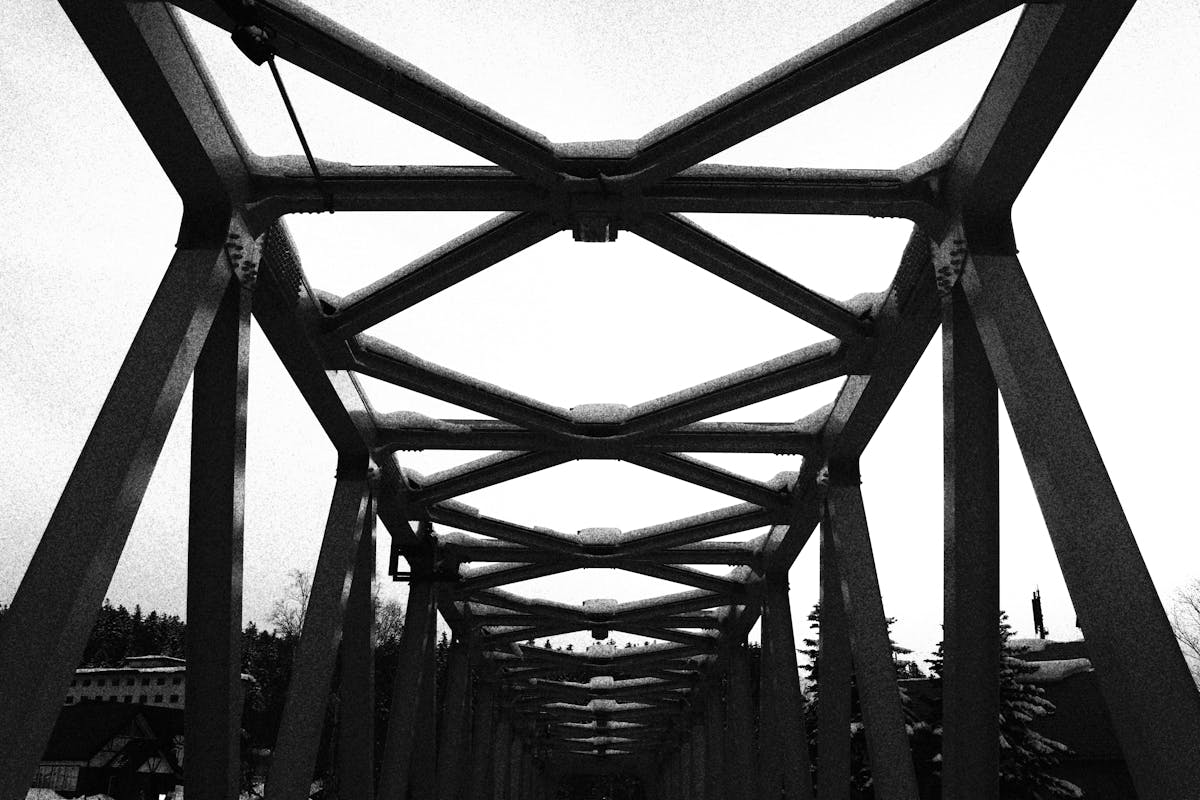
Before the national park designation in 1949, the area saw logging and mining. A railway line (the Yamasen line) was built in 1908 to haul timber from the lakeshore to a paper mill in Tomakomai. The old Yamasen Railway Bridge still crosses the Chitose River near Shikotsu Kohan — it’s a British-designed Double Warren Truss bridge from 1899, the oldest iron bridge in Hokkaido, and now a walking path.
Best Time to Visit
Summer (June-September) is when you get the full range of activities — kayaking, hiking, diving, camping. July and August are warmest (highs around 20-22°C) but also the busiest. Weekends at the campgrounds are packed.
Autumn (October) is arguably the most beautiful time. The foliage around the lake and at Lake Okotanpe is stunning, and the crowds thin out dramatically.
Winter (January-February) is worth it for the Ice Festival and snowshoe trekking, but options are limited. Many activities and some accommodations shut down.
Spring (April-May) is the quietest season. Snow is still melting, hiking trails open gradually, and boat tours resume in late April. Good if you don’t like crowds but want some options.
For day-tripping from Sapporo, check our guide to the best day trips from Sapporo — Lake Shikotsu is one of the closest and most rewarding options.
Quick Tips
- Bring cash. Some of the smaller shops and the campgrounds are cash-only.
- Check bus schedules in advance. Services are limited, especially in winter and shoulder seasons.
- Don’t plan to eat late. Restaurant options in Shikotsu Kohan close early, and there’s no convenience store.
- Drive if you can. Public transport gets you to the town, but everything interesting beyond it requires a car.
- Layer up in winter. The lake area is exposed and wind off the water drops the wind chill fast.
- Visit Lake Okotanpe on a clear day — overcast ruins the view from the deck.