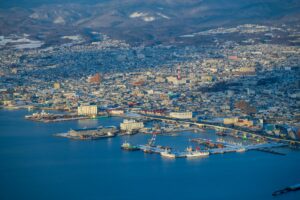
Hakodate doesn’t feel like the rest of Hokkaido. While Sapporo runs on a grid and Niseko caters to skiers, Hakodate has the atmosphere of a city that’s been looking outward for centuries. It was one of the first Japanese ports opened to foreign trade in 1854, and that history is everywhere — Russian Orthodox churches next to Buddhist temples, European-style buildings climbing the slopes above the harbour, and a food culture that blends Japanese precision with outside influence.
In This Article
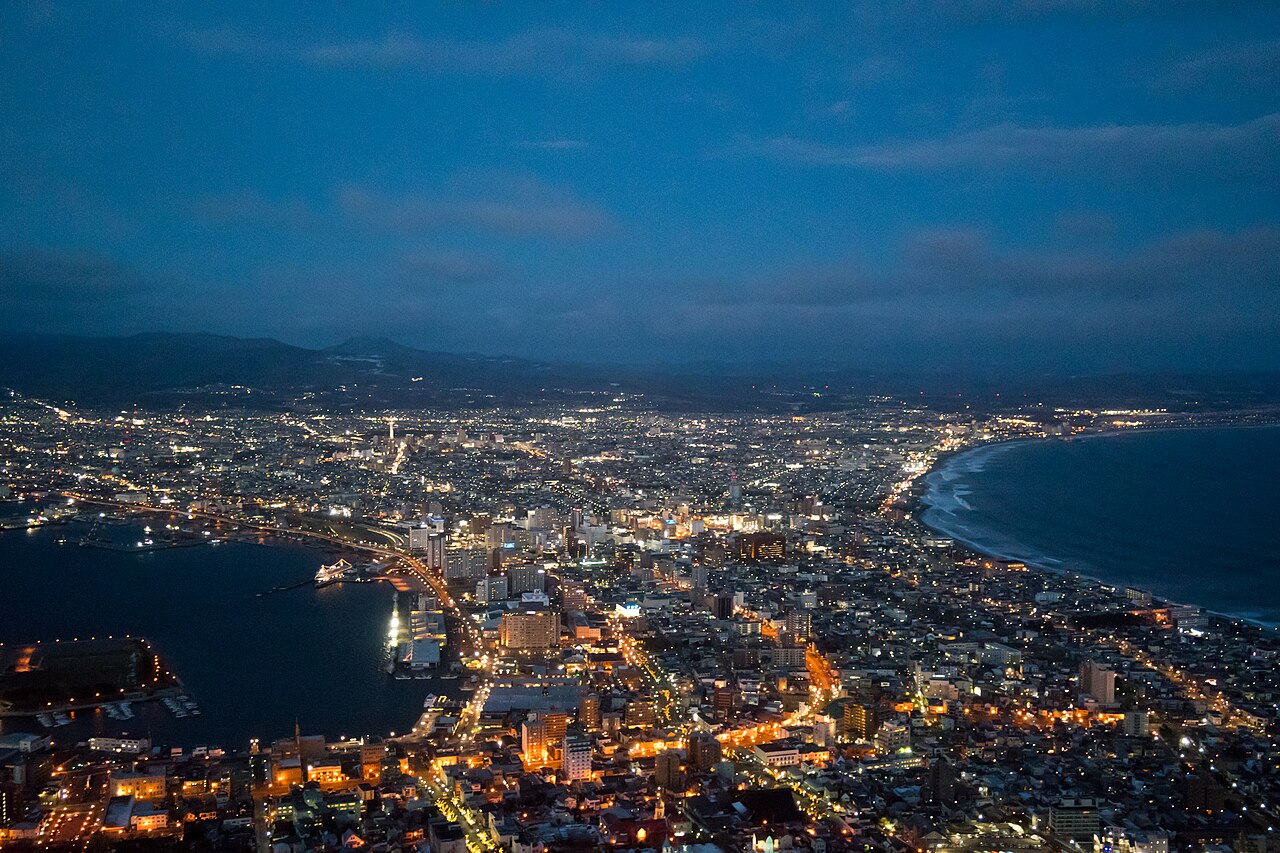
Then there’s the night view. From Mt. Hakodate, you look down at a fan-shaped peninsula outlined by the lights of two coastlines, and it’s consistently ranked among the top three night views in Japan. It’s the reason most people first hear about Hakodate, though the morning market seafood is the reason they come back.
Getting to Hakodate
From Sapporo
JR Limited Express Hokuto: approximately 3.5–4 hours, ¥9,440 one-way. Covered by JR Hokkaido Rail Pass. Trains run roughly every hour. It’s a long day trip — an overnight stay is strongly recommended.
By car: about 4 hours via expressway. Faster but tiring; the train lets you arrive rested.
From Tokyo
Hokkaido Shinkansen to Shin-Hakodate-Hokuto Station (approximately 4 hours from Tokyo). From there, a local JR Hakodate Liner connects to Hakodate Station (15–20 minutes). Covered by the Japan Rail Pass.
Domestic flights to Hakodate Airport are also available from Tokyo (Haneda), about 80 minutes.
The Night View
Mt. Hakodate (334m) provides the view that defines the city. The ropeway runs from the base station in the Motomachi district to the summit in 3 minutes. At the top, a viewing platform looks down at the narrow peninsula of central Hakodate, with the harbour on one side and the bay on the other, both coastlines traced in lights.
It’s genuinely impressive. The shape of the city and the way it narrows between the two bodies of water creates a natural hourglass of light that is unlike any other city view in Japan.
Ropeway hours: Runs until 22:00 (last ascent 21:50). Round trip approximately ¥1,800.
When to go: Arrive 30 minutes before sunset for the transition from daylight to illumination. This is the most popular time and it gets crowded — claim a spot at the railing early.
Bad weather backup: Cloud and fog can completely obscure the view. Check the ropeway’s live webcam before going. If it’s socked in, don’t waste the trip — go the next evening instead (another reason to stay overnight).
Hakodate Morning Market (Asaichi)
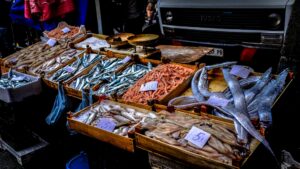
Open from roughly 05:00 to 12:00, this market sits directly next to Hakodate Station. Around 250 stalls sell seafood, produce, dried goods, and ready-to-eat food. The main draws for visitors:
- Kaisen-don — seafood rice bowls assembled from display cases. Choose your toppings (uni, ikura, crab, scallop, shrimp) and they build the bowl in front of you. Prices range from ¥1,500 for a basic bowl to ¥4,000+ for premium uni-topped versions.
- Live squid fishing — several stalls have small tanks where you catch your own squid with a hook, and they prepare it as sashimi immediately. The freshness is obvious — the squid is still translucent and slightly moving when served. Around ¥1,500–2,000.
- Hakodate’s crab — whole boiled crabs, crab legs, and packaged crab available for eating on the spot or buying to take away. Horsehair crab (kegani) is the local specialty.
Go early. By 09:00 the tourist groups arrive and it gets tight. Before 07:00 you’ll share the market with locals and early-rising visitors, which is a better experience.
More on what to eat in our food guide and ramen guide (Hakodate has its own shio ramen style).
Motomachi and the Slopes
The hillside district of Motomachi is where Hakodate’s foreign trade history is most visible. Streets climb steeply from the harbour toward Mt. Hakodate, lined with a mix of Japanese, European, and Russian buildings from the late nineteenth and early twentieth centuries. Key stops:
- Old British Consulate — now a museum and tea room, with views across the harbour
- Russian Orthodox Church (Harisutosu Sei Kyokai) — the green domes and white walls are one of Hakodate’s most photographed buildings
- Roman Catholic Motomachi Church — Gothic-style church a few steps from the Orthodox one
- Old Public Hall of Hakodate Ward — a blue-and-yellow Victorian building with city views from the balcony
The slopes themselves are the attraction as much as individual buildings. Walking uphill, the harbour appears behind you between the old buildings, and the changing perspective at each cross street is worth the climb. On a clear day, the combination of historic architecture and sea views is hard to beat.
Bay Area (Red Brick Warehouses)
A row of converted red brick warehouses along the waterfront, now housing shops, restaurants, and a beer hall. The area is touristy but well done — the buildings are handsome, the waterfront walk is pleasant, and there are worse places to have a beer. The Hakodate Beer Hall in one of the warehouses serves decent craft beer.
In December, the Hakodate Christmas Fantasy event places a large illuminated tree in the bay area, creating one of Hokkaido’s most atmospheric winter scenes.
Goryokaku
A star-shaped Edo-era fort — actually more of a late-era military installation built in Western style, with five pointed bastions forming a star when viewed from above. The ground-level experience is a pleasant park with a moat; the real payoff is from the Goryokaku Tower observation deck (¥900), where the full star shape becomes visible.
In late April to early May, cherry blossoms line the moat and the star-shaped fort outlined in pink is one of Hokkaido’s most distinctive spring images.
Yunokawa Onsen
Hakodate’s hot spring district sits on the eastern coast, about 30 minutes by streetcar from the station. Several hotels offer day-use bathing, and a night at a Yunokawa ryokan with kaiseki dinner is one of Hokkaido’s best traditional Japanese experiences.
In winter, the Hakodate Tropical Botanical Garden within Yunokawa has wild Japanese macaques that bathe in the hot springs — smaller crowds and a more relaxed atmosphere than the famous monkey parks elsewhere in Japan.
See our Hakodate hotel guide for ryokan recommendations.
Getting Around Hakodate
Hakodate’s streetcar (tram) system covers most tourist areas efficiently. Two lines run from Yunokawa through the station, Bay Area, and up to the Motomachi slopes. Single rides ¥210–¥260. A one-day pass (¥600) is worth it after three rides.
The city is also very walkable. Station to Bay Area is 15 minutes. Bay Area to the ropeway base is another 10. Motomachi is best explored on foot regardless of transport options.
How Long in Hakodate?
Day trip: Technically possible from Sapporo but you’ll spend 7–8 hours on trains. Not recommended unless you’re passing through on the way to/from Honshu via Shinkansen.
1 night (recommended minimum): Arrive by afternoon, night view that evening, morning market the next day, Motomachi walk, depart after lunch. This covers the essentials.
2 nights: Adds time for Goryokaku, Yunokawa onsen, the Bay Area at leisure, and a proper hakodate shio ramen meal without rushing. The more relaxed pace suits the city’s character.
For accommodation, see our Where to Stay in Hakodate guide covering all four areas and specific hotel picks with pros and cons.